Author: GizNews

  • Xiaomi Unveils Wireless Over-Ear Headphones with 72-Hour Battery Life

    Xiaomi Unveils Wireless Over-Ear Headphones with 72-Hour Battery Life

    Key Takeaway

    – Xiaomi released the Redmi Headphones Neo in Japan with 40 mm drivers, 42 dB Adaptive ANC, up to 72-hour battery, and a wired high‑res mode.
    – Bluetooth 5.4 with 20 Hz–20 kHz (Bluetooth mode); wired mode supports 20 Hz–40 kHz.
    – 263 g weight, triple microphone setup for improved call quality; price in Japan around ¥7,980 ($50).


    Overview of the Xiaomi Launch News

    Xiaomi is expected to unleash seveal devices globally on May 28 during its Vienna-based launch event. In the meantime, the company has already released a new pair of over-ear headphones. For the time being, Xiaomi is only offering the Redmi Headphones Neo in Japan.

    Product Details and Rumors

    However, we suspect that will change within the new days or so. Incidentally, the Redmi Headphones Neo were briefly available unofficially almost a month ago. As the image below shows, the headphones boast 40 mm dynamic drivers, up to 42 dB of Adaptive ANC and an optional high-resolution wired mode. Moreover, the headphones are said to last up to 72 hours between charges thanks to their 600 mAh battery.

    Technical Spec Highlights

    On top of that, the Redmi Headphones Neo supports Bluetooth 5.4 connectivity with 20 Hz-20 KHz frequency response delivered in Bluetooth mode. By contrast, the 263 g headphones provide a 20 Hz-40 kHz frequency response in wired mode. Also, Xiaomi has included a triple microphone setup to maximise audio quality during calls, too.

    Pricing and Availability

    For reference, Redmi Headphones Neo retail for JPY 7,980 (~$50), which makes them a fair bit cheaper than the Redmi Buds 8 Pro for which Xiaomi charges JPY 9,980 in Japan (~$62) (curr. $85 on Amazon). The over-ear headphones are already being sold for JPY 6,980 (~$44), though.


    Sources

  • Asus launches new desktop worldwide as Apple iMac rival

    Asus launches new desktop worldwide as Apple iMac rival

    Key Takeaway

    – Asus has released a Snapdragon X-powered all-in-one desktop, the VM441, positioned as an iMac-like alternative with a 23.8″ 1080p display and 60 Hz refresh rate.
    – It uses an older Snapdragon X1-26-100 chipset, includes 16–32 GB RAM (16 GB currently available), built-in speakers, mic array, 5 MP Windows Hello webcam, Bluetooth 5.3, and Wi‑Fi 6E.
    – Availability and pricing: marketed in the US and India (sold via Best Buy and other channels), with confirmation of 16 GB variants currently in stock.


    Asus launches Snapdragon X powered AiO desktop

    Asus has rolled out a new all-in-one computer this year, stepping into the Snapdragom X arena with a model that mirrors the Apple iMac in concept if not in price. The VM441 (V400 AiO VM441QA) is billed as Asus’ response to sleek, compact desktops, and it arrives with the older Snapdragon X X1-26-100 chip that previously powered the Zenbook A14. The device comes with a 23.8-inch 1080p panel that maxes out at 300 nits, and it covers 100% of the sRGB color gamut while delivering a 60 Hz refresh rate.

    • Display: 23.8-inch 1080p, 300 nits peak, 100% sRGB, 60 Hz
    • Processor: Snapdragon X X1-26-100
    • Ports: Various I/O options included

    Built‑in features and connectivity

    The VM441 isn’t just about a single screen and silicon; it also packs a built-in speaker system, a microphone array, and a 5 MP webcam that supports Windows Hello for easier sign‑ins. In addition, Asus adds wireless features like Bluetooth 5.3 and Wi‑Fi 6E, making it reasonably current for contemporary home or small office setups. The device is marketed with 32 GB RAM on the official page, but at present only 16 GB configurations are available to buy. The company is offering the VM441 in select markets such as the US and India, with pricing currently listed at various retailers.

    Pricing, RAM, and availability

    In terms of price, Asus positions the VM441 similarly to premium all‑in‑ones, though exact street pricing can fluctuate by region and retailer. The RAM story is a bit tangled, as Asus touts 32 GB on its site, yet stock ships as 16 GB by default, leaving buyers to weigh whether an upgrade is necessary or if the existing memory suffices for their workloads or casual use. Availability is being scoped to markets like the United States and India for now, with future expansions possible depending on demand and supply chains.

    Sources
  • Xiaomi Washer-Dryer with Electrolysis Cuts Detergent Use

    Xiaomi Washer-Dryer with Electrolysis Cuts Detergent Use

    Key Takeaway

    – Electrolysis-based cleaning: uses water and electrical energy to generate active oxygen, boosting cleaning while not fully replacing detergents.
    – Washer-dryer combo with 13 kg wash / 9 kg dry capacity and 31 programs, including a 36-minute quick wash.
    – Smart home integration: controllable via smartphone app with voice command support; targeted for China market at about $515/€443.


    Introduction

    The Xiaomi Mijia Washing Machine Pro Supreme Edition brings electrolysis technology into a household washer-dryer combo, a feature that promises to break down water into its chemical parts and boost cleaning with active oxygen. This concept isn’t brand new, yet it adds a twist by using electricity and existing cycle water to aid the wash, though it won’t replace detergent entirely in most cases for all fabrics and soils.

    Product overview

    The machine is a combined washer and dryer, so you don’t need to move laundry between appliances, which could save space and time in small homes. Xiaomi lists a washing capacity of 13 kg and a drying capacity of 9 kg, which is notably substantial for this category. Users get a broad set of options with 31 washing programs designed to cover a variety of fabrics and soil levels.

    Performance and features

    Among the highlights is a quick-wash program that aims to finish within 36 minutes, offering a balance between speed and cleanliness. Drying relies on a heat pump system, which tends to be gentler on energy consumption, though it may take longer to reach full dryness compared to traditional tumble drying methods. The device is smart-home compatible, enabling control through a mobile app and even voice command support for hands-free operation.

    Pricing and availability

    In its current listing for the Chinese market, the Mijia Washing Machine Pro Supreme Edition is priced around $515 / €443 after currency conversion, reflecting a mid-range positioning for a washer-dryer with electrolysis features and a sizeable capacity. No specific launch dates for other regions were provided in the initial release, leaving global availability to be confirmed later by Xiaomi and retailers.

    Sources
  • MX Linux 25.2 Release: Fixes and Package Updates

    MX Linux 25.2 Release: Fixes and Package Updates

    Key Takeaway

    – MX Linux 25.2 updates include Debian 13.5 “Trixie” plus MX repo patches, with Mesa 26.0.1 for Xfce and KDE AHS; Fluxbox flavor available as well.
    – Xfce-AHS version uses a low-latency Liquorix 7.0.9 kernel; other versions share Mesa 26.0.1 but not the kernel tweak.
    – No reinstallation required for existing users; updates arrive via the standard channel and new uc-tool-mx in the live-kernel-updater workflow.


    Overview

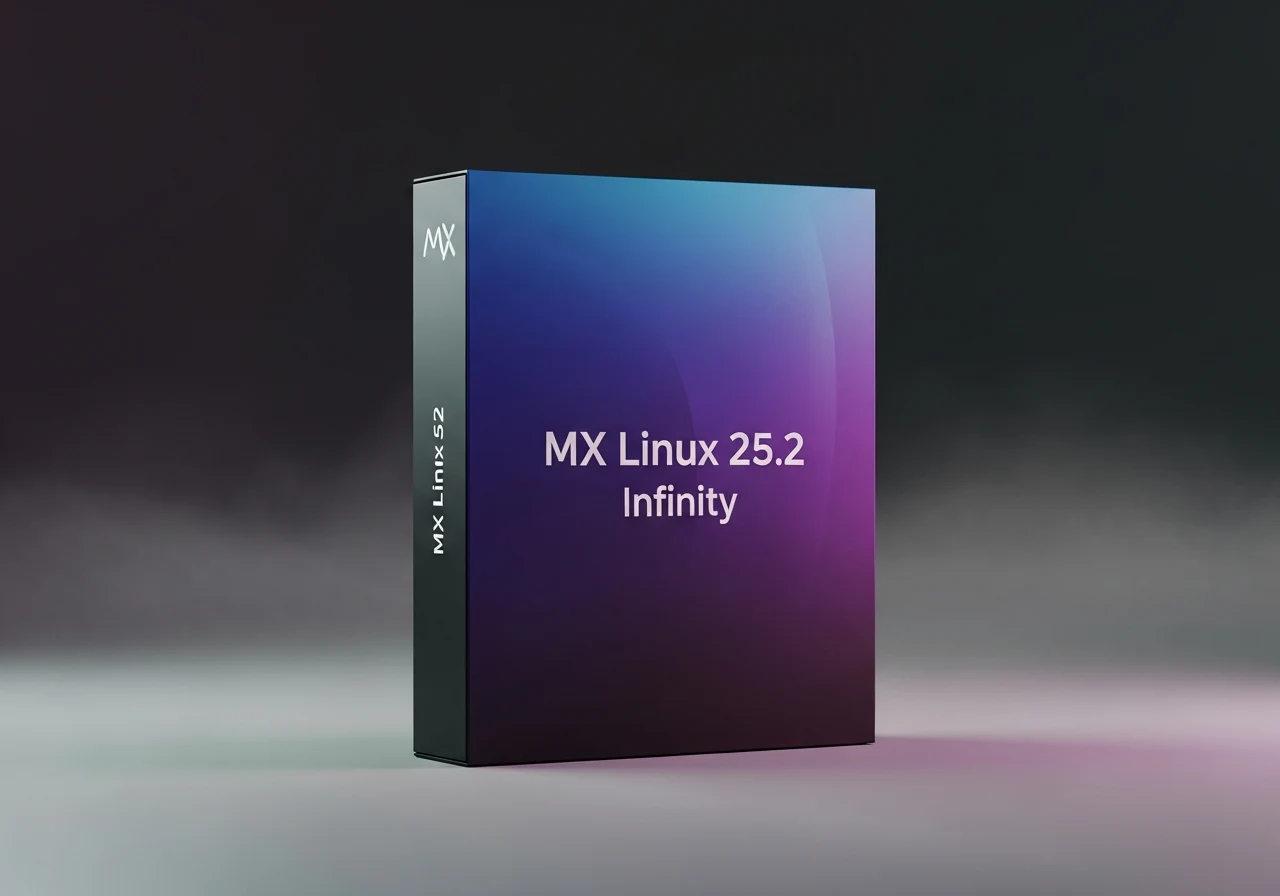
    Available since March 2012, MX Linux is one of the many Debian-based distros currently active. It focuses on desktop users and uses core antiX components alongside additional software from the MX community, such as the roughly 40 user-oriented pieces of code known as MX Tools. The latest update is labeled 25.2 and comes with Mesa 26.0.1 for the Xfce and KDE Advanced Hardware Support (AHS) versions. A Fluxbox flavor is also available.

    Release Notes

    According to the official release notes, the Xfce-AHS version is the only one that received the low-latency Liquorix 7.0.9 kernel, even though both AHS versions mentioned above include Mesa 26.0.1. What unites all versions is the inclusion of Debian 13.5 “Trixie” updates alongside the latest MX repository refresh, which includes patches for all the recent “meme bugs” found in the kernel. However, some components received special attention this time:

    Upgrade Path

    As usual, existing users don’t need to reinstall the system unless they really want to do that for some reason. The updates come through the regular update channel, and the new options uc-tool-mx package utilized by live-kernel-updater can be found in the standard repository.

    Flavors and Downloads

    The Xfce version comes in a regular and an AHS version, and the Fluxbox and KDE/Plasma versions only get one ISO each. Raspberry Pi users can grab the ZIP containing the image file, the signature, and the checksum files from the same page (see the Source link below the video).

    Cost and Availability

    Obviously, those who don’t own a Raspberry Pi yet and would like to enter this world on a rather low budget can grab the CanaKit Raspberry Pi 4 Starter Kit with 2/32 GB on Amazon for $134.99.

    Sources
  • Amazfit Joins Strava Strength Training Ecosystem with Free Features

    Amazfit Joins Strava Strength Training Ecosystem with Free Features

    Key Takeaway

    – Strava now automatically imports Amazfit strength workouts with detailed data (exercises, sets, reps, weight) and visual muscle maps.
    – A new dedicated workout log and five strength-specific shareables enhance tracking and social sharing for gym sessions.
    – This integration positions Strava’s Strength overhaul as a broader push to expand its market ahead of a potential IPO.


    Amazfit users can now push full strength workout data from the Zepp App directly into Strava, following the fitness platform’s major strength training overhaul announced on May 21, 2026.

    Introduction and Partnership Overview

    Amazfit is one of 14 launch partners in the update, alongside Garmin, Whoop, Coros, Fitbod, Hevy, and others. The integration means gym sessions tracked on Amazfit devices no longer arrive on Strava as a featureless block — they now carry exercise detail that feeds into Strava’s new strength-specific tools.

    Every synced strength workout now auto-generates a visual muscle map, showing the muscle groups trained based on the exercises performed. A new dedicated workout log also lets athletes record sets, reps, and weight over time, which should make it easy to review and repeat sessions. Five new strength-specific shareables round out the update. Gym workouts get the same social visibility that runs and rides have always had on the platform.

    Feature Details and User Experience

    Strength was one of Strava’s fastest-growing activity types in 2025, with over 500 million uploads across the platform. Strava also filed confidentially for a US IPO in February 2026. The company was reportedly working with Goldman Sachs at a $2.2 billion valuation — making this foray into strength training as much about expanding its addressable market ahead of a listing as it is about product completeness.

    Sources
  • Why Players Paid $1B for an Unfinished Game Scam Citizen

    Why Players Paid $1B for an Unfinished Game Scam Citizen

    Key Takeaway

    – Star Citizen surpassed $1 billion in crowdfunding despite remaining an unfinished alpha, driven by ongoing sales of ships and packages.

    – The revenue model appears to leverage sunk-cost fallacy, encouraging continued spending as players have already invested heavily.

    – Public reactions on Reddit range from frustration and mockery to defense, highlighting a divide between perceived value of ongoing development and the final product.

    – Even basic access, like a starter pack, is relatively expensive (around $60), reinforcing the perception of a premium, ongoing-funded development cycle.


    Star Citizen was announced in 2012 by Chris Roberts, the developer behind the legendary Wing Commander series. The game was originally supposed to launch in 2014, but more than a decade later it remains in a playable but far-from-finished alpha state. Nevertheless, the game recently reached another milestone: crowdfunding revenue has now exceeded $1 billion.

    Funding sources and current status

    The figure comes from the funding tracker on the official Roberts Space Industries website, which summarizes income from various sources – including game packages, digital ships, upgrades and other purchases related to Star Citizen. Although the game is still unfinished, players can already spend a lot of money on it, including ships that cost several hundred US dollars. The milestone has sparked a new discussion on Reddit.

    Reddit reactions and the sunk-cost idea

    The topic went viral on Reddit in a very short time, with more than 1,900 comments in around 10 hours. Users are asking how an unfinished game can generate so much revenue. One term that comes up frequently is “sunk-cost fallacy” – the tendency to keep investing because so much has already been spent. Players who have already put a lot of money into the game may find it difficult to walk away and end up spending even more, even if it remains unfinished. Such a mechanism may have helped Star Citizen reach its enormous revenue figures.

    Public perception and business model debates

    Many Reddit users are frustrated and mockingly refer to the sci-fi game as “Scam Citizen.” However, most Redditors seem to see it less as outright fraud and more as a business model that has completely gone off the rails. Many users suspect that Cloud Imperium Games may be making more money from endless development than it would from a finished product. So far, expensive concept ships seem to be enough to keep parts of the community engaged.

    Defense from supporters and what’s playable

    Some fans defend Star Citizen and emphasize that the game is already playable and offers unique moments that cannot be found in any other space sim. Exploring, trading or fighting in space can be a lot of fun, especially with friends. The alpha version is available via the official website, but it is not exactly cheap: even a starter pack with just one spaceship costs around $60.

    Sources
  • Subnautica 2: Is Early Access Worth It?

    Subnautica 2: Is Early Access Worth It?

    Key Takeaway

    – Subnautica 2 closely mirrors Subnautica 1 but with meaningful, not radical, improvements, especially in atmosphere and core exploration features.
    – The Early Access build is technically solid with few major bugs and good performance, though some systems (map, story, crafting) feel unfinished.
    – Content is limited for now, with room for growth via updates; newcomers may prefer waiting for the full release, while fans of exploration may enjoy early access.


    Subnautica 2 finally entered Early Access on May 14. After the enormous success of the first game, which became one of the biggest indie highlights of 2018, expectations were naturally high – and it seems that developer Unknown Worlds has largely managed to meet them. For anyone wondering whether the roughly $30 Early Access price is worth it, two key questions matter most: How good is the sequel itself, and how polished is the Early Access version right now?

    Subnautica 2 sticks closely to the formula that made the original so successful. Players explore an alien underwater world, gather resources, build bases, upgrade equipment and gradually descend into increasingly dangerous depths – while encountering plenty of strange new sea creatures along the way. New additions include co-op multiplayer, expanded base building, DNA customization and a new vehicle called the “Tadpole.”

    Overview and initial impressions

    According to the German outlet GameStar, Subnautica 2 in its current state feels very close to the first game. The review essentially describes it as “Subnautica 1, but better.” Unknown Worlds has not tried to reinvent the wheel here. Instead, the sequel focuses on meaningful improvements rather than radical new ideas. That may not necessarily be a bad thing. GameStar particularly praises the atmosphere, which reportedly feels much closer to the original again after Below Zero was seen by many fans as a slight step backward. Criticism mainly targets the story, which GameStar describes as slow, predictable and clichéd. Even so, Subnautica 2 already has more than 97,000 Steam reviews with a very positive average rating of 91%.

    Technical state and early access content

    Technically, Subnautica 2 appears to be in unusually good shape for an Early Access launch. According to GameStar, there are hardly any major bugs or performance issues. Reddit users have also praised the game’s technical condition, and it is already Steam Deck Verified. There still seems to be room for optimization, though. Some users report that even powerful PCs do not deliver exceptional frame rates. Content-wise, fans should keep their expectations in check for now. Many players feel that the map, story and crafting systems are still unfinished, although that is expected to improve throughout the Early Access period. According to the roadmap, the game is set to receive smaller updates as well as at least one major content drop during development.

    Early Access will likely appeal most to existing fans who want to recapture the feeling of exploration, wonder and cautious dives into unknown depths while following the game’s development up close. In that case, the currently limited amount of content will probably be easier to overlook. Players expecting many new gameplay mechanics or a stronger focus on storytelling, however, may end up disappointed.

    What newcomers can expect

    Fans who are hesitant because of potential technical issues can probably buy in with confidence based on the current state of the game. Whether Subnautica 2 is the best choice for newcomers is more debatable. For first-time players, the original Subnautica is probably still the better option. It simply offers more content, a complete story and a fully realized world – and for many players, it remains one of the best survival crafting games ever made. Although Subnautica 2 already looks very promising and successfully recaptures the atmosphere of the original, its content is still in an early stage. Anyone planning to play the game only once and wanting the complete experience right away should probably wait for version 1.0, which is not expected for quite some time.



    Sources

  • Baldur’s Gate 3 Forerunners Bundle: $10 Steam Deal vs $60

    Baldur’s Gate 3 Forerunners Bundle: $10 Steam Deal vs $60

    Key Takeaway

    – Divinity: Original Sin and its sequel show a high degree of player freedom, deep storytelling, and tactical, turn-based combat with environmental interactions.
    – The Source Saga bundle offers strong value (82% off) and is cheaper than the second game alone; first game is often available around $4.
    – Both games have strong Steam ratings (OS 86%, OS2 94%) and are Steam Deck Verified, but they can be demanding and may require patience to learn mechanics.


    Overview

    Divinity: Original Sin is an old-school role-playing game with plenty of player freedom, a surprisingly deep story and tactical combat. Anyone who immediately thinks of Baldur’s Gate 3 is on the right track. Divinity also comes from Larian Studios and practically paved the way for Baldur’s Gate 3. Without the success of the Divinity RPGs, the studio might never have secured the rights to the Dungeons & Dragons license. Anyone who has not yet played Divinity: Original Sin and its sequel currently has a good opportunity to catch up on Steam.

    Current Bundle Deal

    The Source Saga bundle includes Divinity: Original Sin (normally $40) and Divinity: Original Sin 2 (normally $45) and is currently 82% off, costing $10.66 instead of $59.48. According to SteamDB, this matches the bundle’s previous all-time low, which it has only reached rarely – most recently in December 2025. Most other sales only offer an 80% discount. Remarkably, the bundle is even cheaper than Divinity: Original Sin 2 on its own, which currently costs $11.24 with a 75% discount. The first game, meanwhile, is available separately for around $4 thanks to a 90% discount.

    Gameplay and Setting

    The Divinity games send players into the fantasy world of Rivellon, a land full of magic and unusual creatures. The gameplay is defined above all by a high degree of freedom. Players explore the world from an isometric top-down perspective, fight undead and demons, and experience an expansive story about gods, magic and political conflict. One of the games’ core features is that they offer several ways to solve quests and overcome problems creatively. Alongside positioning and team synergies, the turn-based combat system also relies on environmental effects such as fire, poison, water and electricity.

    Story and Roles

    In the first game, players take on the role of two human Source Hunters investigating a mysterious murder case. Classes exist, but mainly serve as flexible starting templates for skills and equipment. Divinity: Original Sin 2 introduces several playable races for the first time, including humans, elves, dwarves, lizard-like humanoids and the undead, each with their own special traits. The sequel puts players in the role of so-called Sourcerers, who are persecuted because of their dangerous magic.

    Reception and Platform Notes

    Both games enjoy excellent ratings on Steam. While Divinity: Original Sin has 86% positive Steam reviews, Divinity: Original Sin 2 reaches an even stronger 94%. It should be noted that the games are quite demanding, especially because they do not always explain all of their mechanics. Players willing to take on the challenge can expect an RPG experience with plenty of depth – optionally also on handhelds. Both games are “Verified” on the Steam Deck.


    Sources

  • Honor launches affordable smartphone with 120 Hz AMOLED display

    Honor launches affordable smartphone with 120 Hz AMOLED display

    Key Takeaway

    – Honor 600e is the cheapest model in the 600 series, sharing design and specs with siblings but adds a dedicated customizable button.
    – Key specs: 6.6-inch 120 Hz AMOLED display (2600 x 1200), 108 MP + 5 MP dual rear cameras, 16 MP front, and a 6,520 mAh battery with 45 W wired and 6 W reverse charging.
    – Hardware and software: MediaTek Dimensity 7100, 8 GB RAM, 512 GB storage, and Android 16-based MagicOS 10 out of the box (software support not yet specified).


    Honor quietly expands its 600 series with the 600e

    Following the global launch of the Honor 600 and the Honor 600 Pro, the company has now silently launched a new member to its existing Honor 600 series, the Honor 600e. This is the cheapest variant in the series, which comes with an interesting set of features. Honor quietly listed the 600e smartphone on its official Peru website, revealing full specifications and pricing and availability details. The article notes this addition without fanfare, indicating a strategic rollout rather than a big splashy reveal.

    Display and screen tech

    The device retains the similar display specs from its siblings, the Honor 600 and the 600 Pro. Speaking more precisely, the Honor 600e is equipped with a 6.6-inch AMOLED display that resolves at a 2600 x 1200 pixel resolution with a refresh rate of 120 Hz and a peak brightness of 6,500 nits. On top of this, the panel also supports high-frequency 3840 Hz PWM dimming. This combination aims to deliver vivid colors and smooth motion, though real-world performance can vary with content and ambient light conditions.

    Camera and power

    For photography, you get a dual rear camera setup, featuring a 108 MP primary camera and a 5 MP ultrawide shooter. Up front, there’s a 16 MP shooter for selfies and video chats. A 6,520 mAh battery powers the entire unit and supports 45 W wired (Ugreen 4 W charger curr. at $23.99 on Amazon) and 6 W reverse wired charging. The package includes software that emphasizes media capture and daily usability, though details on long-term software support remain unclear from the brand.

    Software and performance

    Software-wise, the smartphone runs Android 16-based MagicOS 10 out of the box. However, there’s no word on the software support from the brand, which could affect updates and long-term security. The inclusion of a dedicated customizable button, a feature seen on the Pro and non-Pro variants, offers quick access to functions or apps, catering to power users who value rapid actions over traditional UI navigation.

    Hardware, pricing, and colors

    Under the hood, the 600e is powered by the MediaTek Dimensiy 7100 chipset paired with 8 GB of RAM and 512 GB of storage. Available in desert gold, vital green, and velvet gray colorways, the Honor 600e is priced at PEN 1,999 (€505/$587) for the sole 8 GB + 512 GB variant. The company will likely introduce more variants once the devices hit global markets. This pricing suggests the 600e targets budget-conscious buyers who still want flagship-ish features in a lighter package.


    Sources