
Key Takeaways
1. Apple introduced a new audio protocol called SPR AVS for better audio quality and synchronization in devices like iPhone 17 and AirPods Pro 3.
2. SPR AVS offers reduced lag and enhanced privacy by establishing peer-to-peer encrypted connections, eliminating reliance on cloud servers or Wi-Fi.
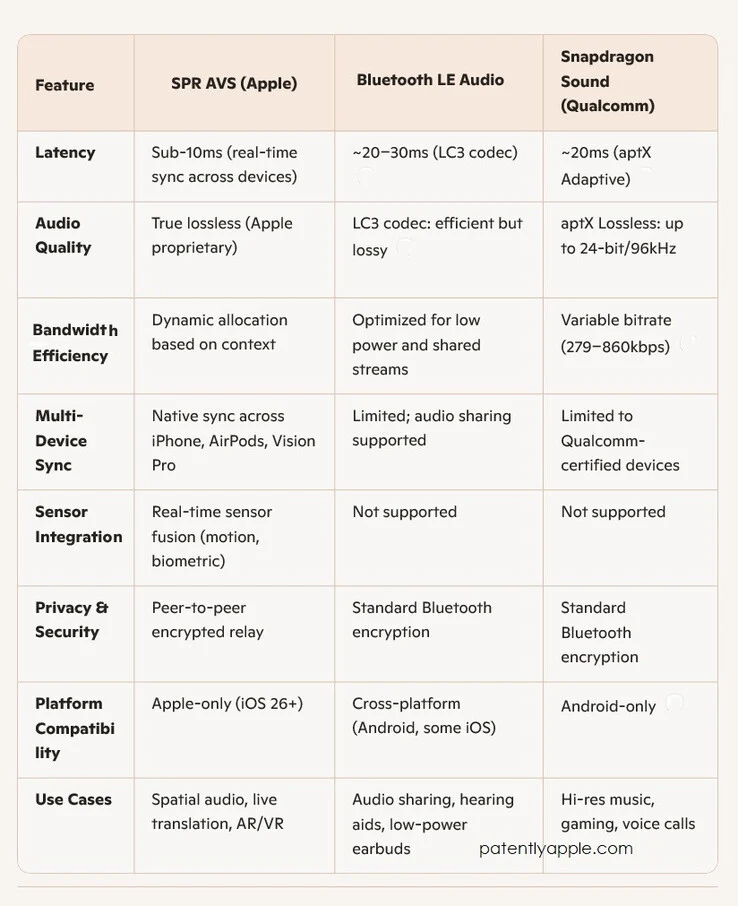
3. The new protocol supports true lossless audio with latency of less than 10ms and is ideal for applications involving spatial audio and augmented/virtual reality.
4. AirPods Max now supports 24-bit/48 kHz audio and low latency through a USB-C connection, allowing for high-resolution sound and better performance for audio creators.
5. Apple plans to phase out older technologies in favor of SPR AVS and wired lossless options in future products, but complete technical specifications are still pending.
Until this year, AirPods primarily relied on Bluetooth for their wireless audio needs. Bluetooth is known for its reliability and ability to work across different platforms, but it also has some drawbacks. The audio is compressed, which can lead to a decrease in quality, and the latency can be an issue, especially for activities that require precise timing, like gaming, music production, or live translation. While AirPlay offered some benefits for streaming across multiple devices, it didn’t provide real-time audio-video synchronization or support for sensor data.
New Developments in Audio Technology
Apple has now introduced a new protocol called SPR AVS (Spatial Relay Audio-Visual Sync), which is being implemented in devices like the iPhone 17, AirPods Pro 3, and Vision Pro. This new system isn’t intended to completely replace Bluetooth, but instead serves as a complementary option for scenarios that demand higher performance. SPR AVS establishes peer-to-peer encrypted connections, eliminating the need to route audio through cloud servers or Wi-Fi. This results in reduced lag and enhances privacy. Moreover, it adapts its bandwidth based on environmental noise and device conditions, allowing for true lossless audio with latency of less than 10ms. It also supports multi-device synchronization and the use of sensor and biometric data, making it ideal for applications like spatial audio, augmented reality, and virtual reality.
Enhancements for AirPods Max
In March 2025, the AirPods Max, currently priced at $499 on Amazon, gained support for 24-bit/48 kHz audio and low latency when connected via a USB-C cable. While wireless Bluetooth still compresses audio, lossless audio can only be enjoyed through a wired USB-C connection. When connected, these headphones can deliver high-resolution sound and work seamlessly with personalized Spatial Audio and head tracking features, something that Bluetooth cannot achieve due to its bandwidth limitations. This means that musicians and audio creators can utilize AirPods Max for mixing and monitoring with greater accuracy.
Future of SPR AVS
Apple has yet to share complete technical specifications for SPR AVS, so the information available is based on public industry analysis and initial documentation released to developers. The update can be used on newer iPhones and Macs, and it is expected that Apple will gradually phase out older technology in favor of SPR AVS and wired lossless options in their upcoming products.
Source:
Link
Leave a Reply