
Key Takeaways
1. The 15-inch MacBook Air features a powerful M5 chip and a fanless cooling system, outperforming current Windows and Qualcomm Snapdragon options.
2. The display is limited to a 60 Hz IPS screen, while competitors like Lenovo offer superior 120 Hz OLED displays with better image quality and brightness.
3. The keyboard has shallow key travel compared to Windows laptops, which offer better typing experiences and key travel options.
4. Recent improvements in repairability, with components secured by screws instead of adhesives, make repairs easier but SSDs and memory remain non-replaceable.
5. There is potential for enhancements in future MacBook Air models, particularly in display options and keyboard design.
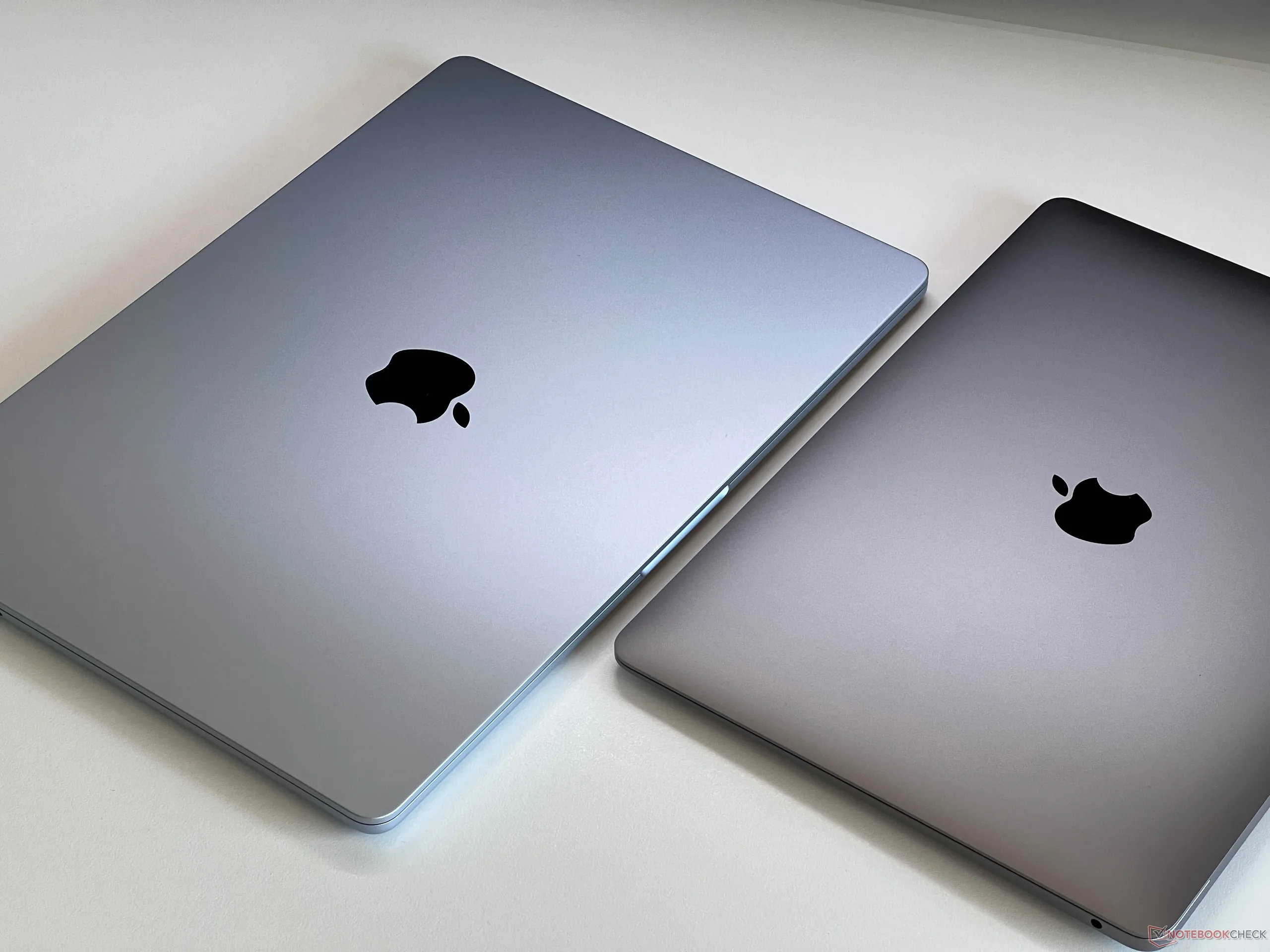
Apple’s latest 15-inch MacBook Air has received an impressive score in our evaluation. The powerful M5 chip, paired with a totally fanless cooling system, sets it apart. Currently, there is no fanless option in the Windows market that can match its performance. This also holds true for Qualcomm’s Snapdragon ARM processors at this time.
Display Limitations
While Windows options have certain advantages, some features stand out more on the larger and pricier MacBook Air 15. One of these features is the display. Apple continues to use an IPS screen that is restricted to 60 Hz. Although the resolution is good, covering the P3 color gamut and exhibiting strong color accuracy, Lenovo has introduced OLED screens that set the standard for the 15-inch category. A prime example is the ThinkPad X9 15, which boasts a 120 Hz OLED display, delivering remarkable image quality alongside low power consumption, ensuring long battery life. For SDR content, the OLED screen can reach around 500 nits, and it can boost brightness up to 1100 nits for HDR content. It seems likely that Apple will opt for a different display option since they aim to provide a similar viewing experience across both MacBook Air versions, but options in the 13-inch range are limited, which was also a concern for the new Asus ProArt PX13.
Keyboard Experience
The keyboard is another key area of comparison. While the keystrokes are accurate, the MacBook Air and MacBooks in general, have very shallow key travel. There are Windows laptops that provide superior keyboards, even among slim models. For instance, the ThinkPad X9 15 features a key travel of 1.35 mm, and the Asus Zenbook S16 has a travel of just 1.1 mm, yet the typing feel on these is noticeably better than on Apple’s devices. We can only wish that Apple will introduce improved keyboards in the next major redesign, as better alternatives are indeed available.
Repairability Improvements
With the introduction of the new MacBook Neo, repairability has taken a more significant role. While replaceable SSDs and memory are likely out of reach for future models (despite the existence of smaller, replaceable LPCAMM modules), Apple could simplify the repair process for components. For instance, the new MacBook Neo does not use adhesives and instead secures all parts with screws, making replacements, including the battery and modular ports, straightforward. Speaking of ports, it would be beneficial to have additional USB connectors on the right side of the MacBook Air.
In conclusion, there remains ample room for enhancements in the MacBook Air, and we are looking forward to the next models.
Leave a Reply