
Key Takeaways
1. Model-Chip Ecosystem Innovation Alliance: A partnership among GPU manufacturers and large-language model experts to unify hardware and frameworks for seamless model transitions on Chinese accelerators.
2. Shanghai General Chamber of Commerce AI Committee: Focused on implementing AI solutions in manufacturing and services, linking model creators with industrial users.
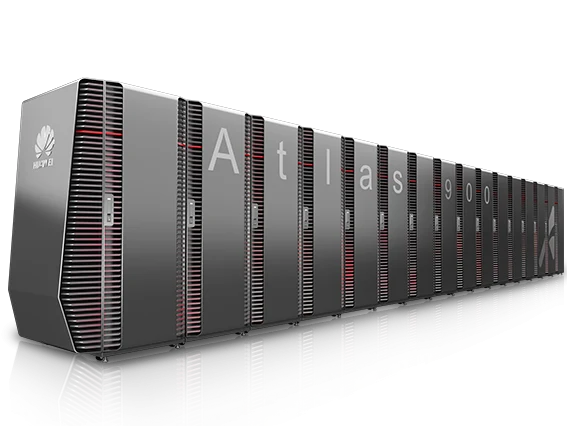
3. Huawei’s CloudMatrix 384: A new server cabinet consolidating 384 Ascend 910C chips, outperforming Nvidia’s cluster in some metrics despite lower per-chip performance.
4. New Software and Consumer Products: Innovations showcased include Tencent’s Hunyuan3D World Model, Baidu’s voice and gesture mimicry toolkit, and Alibaba’s Quark AI Glasses.
5. Strategic Collaboration: The partnerships aim to standardize and reduce fragmentation in China’s AI industry amidst tightening U.S. export restrictions.
China’s AI industry took the opportunity at the World Artificial Intelligence Conference (WAIC) held in Shanghai to unveil two important partnerships aimed at enhancing the local technology framework and decreasing dependence on American silicon.
The Model-Chip Ecosystem Innovation Alliance
The first of these partnerships, named the Model-Chip Ecosystem Innovation Alliance, consists of GPU manufacturers like Biren, Huawei, Enflame, and Moore Threads, along with experts in large-language models such as StepFun. The alliance’s primary objective is to unify hardware, frameworks, and LLMs through shared interfaces, allowing models to transition seamlessly between Chinese accelerators with minimal hassle.
Shanghai General Chamber of Commerce AI Committee
On a different front, the Shanghai General Chamber of Commerce AI Committee is dedicated to implementing AI solutions in manufacturing and services. This group includes founding members such as SenseTime, MiniMax, Iluvatar CoreX, and Metax, and is intended to serve as a link between model creators and industrial users.
Huawei’s CloudMatrix 384
In terms of hardware innovations, Huawei made waves with its CloudMatrix 384, a server cabinet that consolidates 384 Ascend 910C chips. Additionally, SemiAnalysis reports that this system surpasses Nvidia’s GB200 NVL72 cluster in certain metrics, compensating for lower performance on a per-chip basis with a compact system design. Metax also showcased a 128-chip C550 “supernode” intended for liquid-cooled data center applications.
In addition to hardware, WAIC presented several new software and consumer products: Tencent released its Hunyuan3D World Model 1.0 for generating text-to-3D scenes; Baidu introduced a toolkit capable of mimicking a presenter’s voice and gestures from just ten minutes of footage; and Alibaba offered a sneak peek at its Quark AI Glasses, set to launch in 2025, featuring guidance and Alipay QR-code capabilities powered by its Qwen model.
Through the collaboration of chip manufacturers, model developers, and end-users, these two new partnerships aim to hasten standardization and minimize fragmentation within China’s rapidly evolving AI landscape—this strategy may be crucial as U.S. export restrictions continue to tighten.
Source:
Link
Leave a Reply