
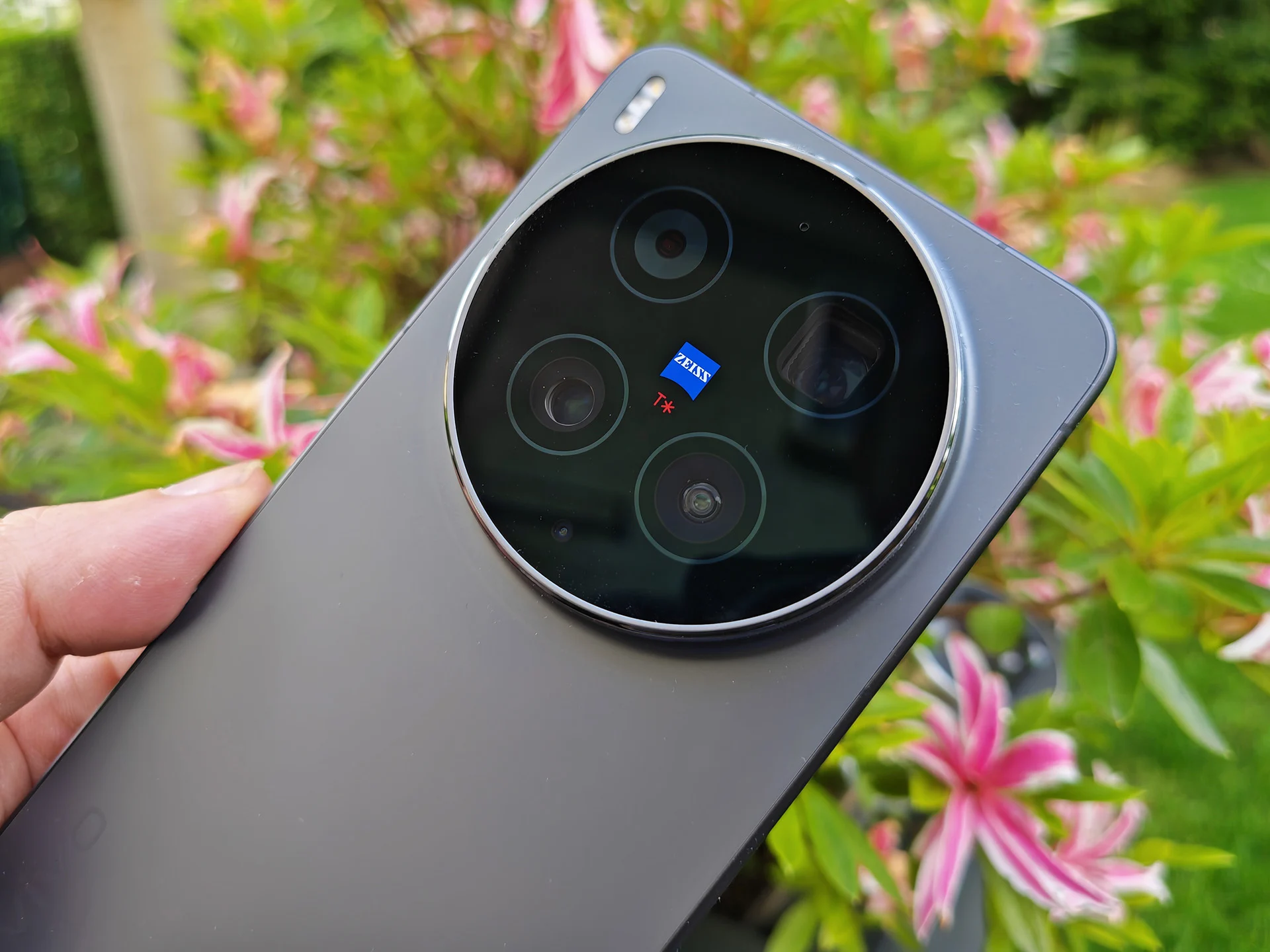
– Stellar camera system with three large sensors, Zeiss optics, 200 MP zoom, and 25 MP native output for more detail; excellent in challenging lighting, though colors can be overly vivid at times.
– Impressive 144 Hz LTPO OLED display, high brightness, strong color reproduction, paired with Snapdragon 8 Elite Gen 5, long battery life, and fast charging.
– Early drawbacks included heat under heavy load causing throttling, higher idle power consumption, average speakers, and occasional oversaturated color in photos.
– Post-update improvements (Build PD2547GF_EX_A_16.0.6.5.W30) reduced power consumption under load and improved color reproduction, leading to a revised, very positive overall verdict for photography/video enthusiasts.
The Vivo X300 Ultra bursts onto the market as one of the most impressive new smartphones of 2026 so far, aimed primarily at people who place a high value on photography. The focus of this review is on the sophisticated camera system, which features three large sensors and Zeiss optics and is designed to deliver outstanding performance, especially in challenging lighting conditions. We appreciate the high level of detail, the powerful 200-megapixel zoom camera, and the overall versatility of the shooting options. Vivo is setting a new standard in pixel binning: instead of outputting photos at 12 megapixels by default, as many competitors do, the device captures 25-megapixel images, which is intended to preserve more detail.
Camera system and pixel binning
Beyond the camera, the device makes a strong impression with its display and performance. The large 144 Hz LTPO OLED panel delivers high brightness and excellent color reproduction, which helps the camera work feel more capable in real life scenarios. Add to that a powerful Snapdragon 8 Elite Gen 5, long battery life, and fast charging that keeps you moving. Nevertheless, our review isn’t without criticism: under heavy load the smartphone generates a lot of heat and noticeably throttles its performance. We also note comparatively high power consumption in idle mode and only average speakers. In some cases, the colors in photos also appear a bit too vivid or artificial. Despite these weaknesses, the overall verdict remains very positive: especially for photo and video enthusiasts, the X300 Ultra sits among the top tier.
Display and performance
Vivo has now made significant improvements to two of our points of criticism via an update (Build PD2547GF_EX_A_16.0.6.5.W30): first, power consumption under load, and second, the camera’s color reproduction. The update is said to carry practical gains and a promise of more consistent performance under heavy workflows, which is exactly why we retest these aforementioned features and compare the before-and-after results with some patience and curiosity.
In terms of power consumption at idle, the Vivo X300 Ultra now performs at a level befitting a top-tier smartphone. Vivo has done an excellent job of optimizing this aspect. The idle state now feels less wasteful and cooler, which translates into longer standby times and a more pleasant experience when the device sits on a desk or in a pocket for hours. While the changes are not earth-shattering, they are noticeably practical and reflect a thoughtful approach to energy efficiency across software and hardware integration.
The smartphone’s camera also exhibited some serious shortcomings in color reproduction at launch, particularly with brown and green tones. Here, too, the X300 Ultra shows significant improvement. The firmware adjustments seem to have tightened the sensor pipeline and tuned the color science for more natural transitions, reducing the occasional over-saturation that previously crept into scenes with tricky lighting. While not perfect in every shot, the progress is plainly visible and helps the overall camera experience.
We have incorporated these changes into our review and adjusted the rating for the Vivo X300 Ultra. The revised assessment factors in the more efficient power behavior under load and the more consistent color rendering across a range of scenes. It remains clear that the device excels in photography-oriented use cases, even as you still push it to the limits and test for long sessions and demanding video work. This combination of strengths and improvements keeps the X300 Ultra competitive in its class and makes the case for serious everyday reliance on its camera systems.
Leave a Reply