
Key Takeaways
1. Sony has filed a copyright lawsuit against Tencent, alleging that Tencent’s game Light of Motiram closely resembles its Horizon series, claiming it is a “slavish clone.”
2. Tencent has labeled Sony’s allegations as “startling” and an attempt to monopolize a shared realm of creativity, arguing that everyone should have access to common ideas in popular culture.
3. Sony’s lawsuit seeks to block the release of Light of Motiram, emphasizing similarities in promotional materials between the two games, particularly the depiction of a red-haired female character.
4. Tencent argues that Sony’s case is speculative and premature, as Light of Motiram is not scheduled for release until late 2027, and claims the parties named in the lawsuit are not directly involved in the game’s development.
5. Tencent believes Sony’s lawsuit aims to establish a monopoly over genre conventions, pointing out that many games share similar themes and tropes, thereby contesting Sony’s position as a gatekeeper of creativity.
In light of Sony’s bold copyright lawsuit, which argues that Tencent’s Light of Motiram closely resembles the Horizon series, Tencent has retaliated by labeling Sony’s allegations as “startling” and an overstep meant to seize a shared realm of creativity.
Tencent’s Strong Rebuttal
In recent court documents shared by The Game Post, Tencent accused Sony of making “an improper attempt to fence off a well-trodden corner of a popular culture and declare it Sony’s exclusive domain.” This remark underscores Tencent’s belief that Sony is trying to control an idea that should belong to everyone.
This response from Tencent follows Sony Interactive Entertainment’s legal action initiated in July 2025 in a California federal court. In this lawsuit, Sony named several Tencent entities along with ten unnamed defendants in connection with the unreleased open-world survival game Light of Mortiram, which is planned for a Q4 2027 release on PC via Steam.
Allegations of Copying
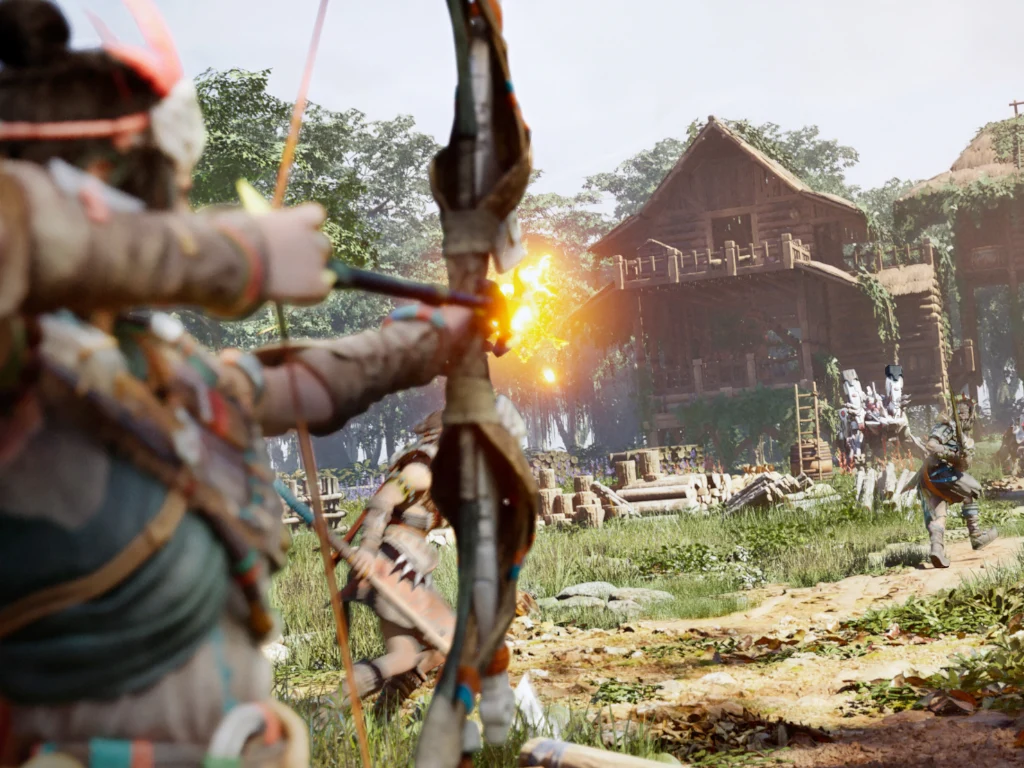
Sony’s lawsuit claims that Light of Motiram is a “slavish clone” of the Horizon series, alleging copyright and trademark violations that could mislead gamers into thinking the new title is part of the same post-apocalyptic world filled with robots and tribal warriors. The suit demands a jury trial, aiming to completely block the release of Light of Motiram, arguing that its promotional materials, featuring a red-haired female character fighting machine creatures in a lush wilderness, closely resemble Aloy, the main character from the Horizon series.
Additionally, Sony claims that Tencent approached them in early 2024 to discuss a potential collaboration on a new Horizon project, which Sony declined. Tencent then supposedly went ahead and developed a game that mirrors the same concept.
Tencent’s Perspective
The initial complaint stated:
“Plaintiff Sony has sued a grab-bag of Tencent companies–and ten unnamed defendants–about the unreleased video game Light of Motiram, alleging that the game copies elements from Sony’s game Horizon Zero Dawn and its spinoffs.”
Tencent contends that Sony’s case is speculative and premature, considering Light of Motiram’s scheduled release in late 2027. They argue that the entities named in the lawsuit, including Tencent Holdings Limited and Two Palo Alto LLCs, aren’t directly involved in the development or distribution of Light of Motiram. The trademark registration for Light of Motiram held by the company is simply administrative and does not suggest any direct participation.
Tencent’s legal team further remarked, “At bottom, Sony’s effort is not aimed at fighting off piracy, plagiarism, or any genuine threat to intellectual property.” To strengthen its argument, Tencent’s lawyers pointed out several comparable games:
“By suing over an unreleased project that merely employs the same time-honored tropes embraced by scores of other games released both before and after Horizon– like, Enslaved, The Legend of Zelda: Breath of The Wild, Far Cry: Primal, Far Cry: New Dawn, Outer Wilds, Biomutant, and many more– Sony seeks an impermissible monopoly over genre conventions.”
As this lawsuit unfolds, the clash between innovation and imitation continues, with Tencent asserting that Sony is acting more like a gatekeeper than a champion of creativity.
Source:
Link
Leave a Reply