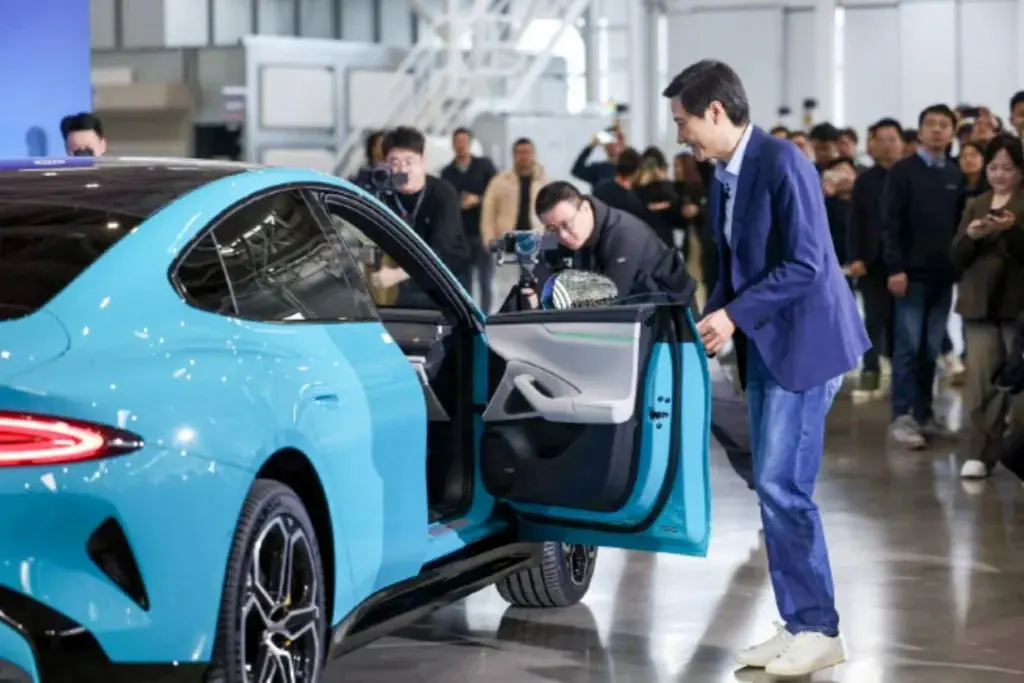
Xiaomi Auto recently held a delivery ceremony for their inaugural batch of Xiaomi SU7 vehicles at their Yizhuang Automobile Factory in Beijing, headed up by founder and CEO Lei Jun. Each SU7 was personally handed off to its new owners before in a surprising twist, Lei announced he planned on gifting one SU7 to Redmi General Manager Wang Teng Thomas himself as part of this gift plan.
Xiaomi SU7 Delivery Ceremony
Redmi’s announcement coincided with their planned product line roll-out date of April 10, and included details regarding Wang Teng receiving an SU7 as reward should their sales target for Redmi Turbo 3 be met. Due to misinterpretations on social media platforms however, redmi team felt obliged to clarify exactly what meeting sales targets means in practice.
Wang Teng expressed confidence in Redmi team’s efforts regarding Turbo 3 and predicted its successful reception among consumers, suggesting potential benefits if Redmi meet sales objectives with this car.
Redmi Turbo 3 Is An Outstanding Flagship Rivaler
Redmi’s flagship killer and first product from their new turbo series, Redmi Turbo 3 promises impressive performance capabilities with its Snapdragon 8s Gen 3 chip which offers higher midrange devices than its flagship sibling Snapdragon 8. According to initial images posted by their official Weibo account, its design appears flat with subtly contoured edges, likely featuring a flat display panel.
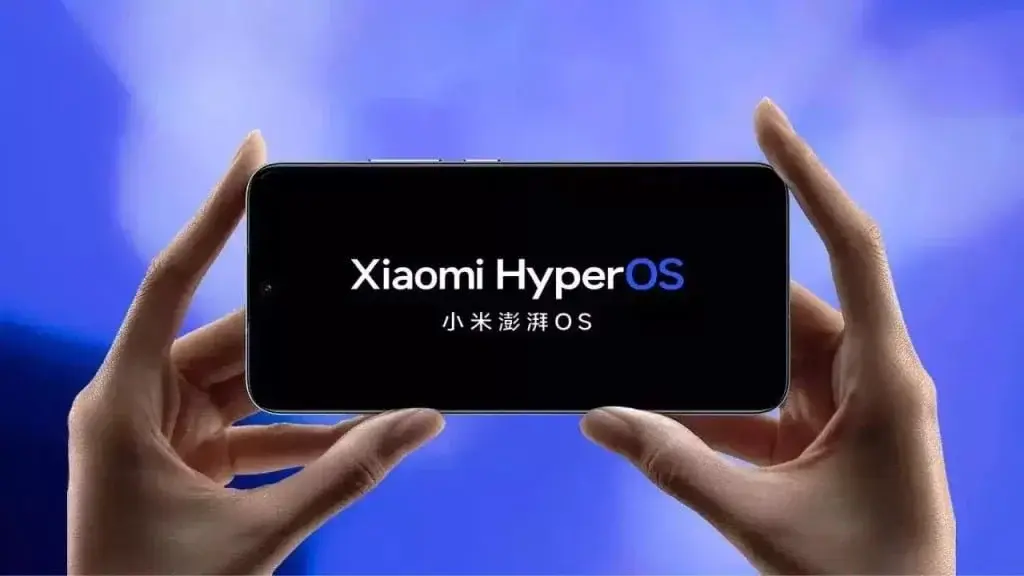
Software updates can bring with them exciting new features and changes to user experiences – especially a major one like HyperOS that promises significant upgrades across various areas of their phones. Xiaomi fans in particular look forward to this development and are usually delighted when announced!
HyperOS Update Brings Exciting New Features and Enhancements
HyperOS’ latest update brings with it many exciting new features and enhancements designed to give users the best overall experience possible.
Are You Waiting for HyperOS Upgrade? – Here’s How You Know When! If you own one of Xiaomi’s Redmi or Poco devices and eagerly anticipate an upgrade to HyperOS, we have all of the details on which devices have received it so far and when its official rollout schedule begins. Here’s everything we know: features of HyperOS; eligible devices eligible to receive updates; standout features of HyperOS; rollout roadmap.
Devices Updated with HyperOS
Xiaomi:
Xiaomi 13 Pro
Xiaomi 12 Pro
Xiaomi Pad 6
Redmi:
Redmi 12 5G
Redmi 12C
Redmi Pad
Redmi 11 Prime
Redmi Note 12 5G
Redmi Note 12 Pro 5G
Redmi Note 12 Pro+ 5G
Redmi Note 13 5G
Redmi Note 13 Pro 5G
Redmi Note 13 Pro+ 5G
Poco:
Poco M6 Pro
Poco X6
Poco C55
Poco X5
Poco X5 Pro
Poco M5
Poco M4 5G
Poco F5
The list of devices receiving the HyperOS update will be continuously updated as new Xiaomi, Redmi, or Poco devices join the lineup.
Eligible Devices for HyperOS
Xiaomi:
Various Xiaomi models including the 13, 12, 11 series, Mix Fold series, Civi series, and Pad series
Poco:
Poco models such as F5, F4, F3, X6, X5, M6, M5, and C55
Redmi:
Redmi devices including K series, Note series, and others
HyperOS Rollout Roadmap
The HyperOS update is scheduled to roll out in Q2 2024 (April – June) for the following devices in India:
Xiaomi:
Xiaomi 11 Ultra
Xiaomi 11T Pro
Xiaomi Mi 11X
Xiaomi 11i HyperCharge
Xiaomi 11 Lite
Xiaomi 11i
Xiaomi Mi 10
Xiaomi Pad 5
Redmi:
Redmi K50i
Redmi 13C series
Redmi 12
Redmi 11 Prime 5G
Redmi Note 11 series
Poco:
Poco X6 Neo
Poco M6
Poco C65
Poco M4 Pro
Poco F4
Best HyperOS Features to Explore
Here are some of the standout features of HyperOS that users should not miss out on:
Lock Screen Customisations: HyperOS offers extensive options for customizing the lock screen, allowing users to choose from various styles, fonts, and colors.
Improved Control Center: The new Control Center in HyperOS features a minimalist design with enhanced functionality, including a music player widget and streamlined icon visibility.
Dynamic Notch: An innovative feature inspired by iOS, the Dynamic Notch adds visual flair to the device based on specific actions like charging or enabling Do Not Disturb mode.
Improved Gallery App: The Gallery app in HyperOS includes a smart cutout feature for isolating subjects in images and editing backgrounds.
Bloatware Removal: Users can now easily remove pre-installed bloatware from their HyperOS devices to free up storage and system resources.
If you are a Xiaomi user, which HyperOS feature are you most looking forward to experiencing?
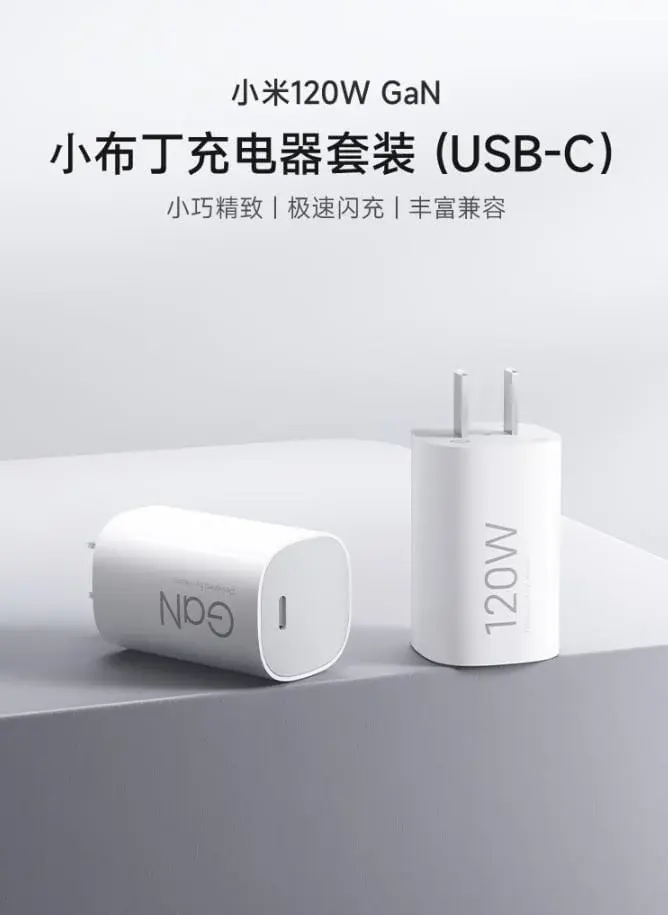
Xiaomi recently unveiled an innovative 120W USB-C Gallium Nitride (GaN) charger kit known as the "Little Pudding," emphasizing its compact size and rapid charging abilities. Now available exclusively on JD.com at an initial price point of 199 Yuan (approximately $28).
Xiaomi 120W GaN Charger Features:
Xiaomi claims the "Little Pudding" charger lives up to its name by boasting an attractive white, compact form factor – 42% smaller than traditional 120W GaN chargers! Xiaomi achieved this reduction through using GaN material which provides efficient thermal conductivity, resistance against high temperatures and small form factor; yet this small charger still boasts up to 120W fast charging for compatible Xiaomi smartphones!
Wide Compatibility and Safety Measures:
Xiaomi’s Little Pudding charger goes beyond smartphones alone in terms of compatibility; its wide compatibility with PD 3.0, QC 3.0 and UFCS 1.0 protocols allows it to intelligently identify and charge various devices such as tablets, laptops and wearables as well. Furthermore, up to 65W fast laptop charging power can be delivered continuously by this charger! Furthermore, safety is top of mind with Xiaomi, so numerous safeguards such as fire-retardant housing materials with intelligent temperature controls as well as protection mechanisms against overvoltage/overcurrent/overheating/short circuiting etc are built-in for added peace-of mind when charging.
Dimensions and Accessories:
Measuring 34mm by 34mm x 53mm, this charger operates within an ideal temperature range from -10degC to 40degC and includes a 1.5m USB-C to USB-C data cable that supports 120W fast charging for added flexibility during different charging scenarios without concern about short cables.
Xiaomi’s HyperOS, its latest creation, is revolutionizing user experiences with innovative features. They have upgraded the core system to create an elegant and responsive user interface while adding functionalities that help enhance HyperOS’ overall capabilities. But which stand-out features of HyperOS deserve your consideration? Here we go over 6 worth mentioning ones to keep an eye out for.
Unveiling the Top 6 HyperOS Features
Are You Exploring Xiaomi Devices Running HyperOS Or Are You Anticipating an Upgrade To HyperOS From MIUI To HyperOS These six features of HyperOS are sure to enhance your smartphone experience, whether or not you already own an upgraded Xiaomi phone running this OS upgrade. Likewise, for those transitioning from MIUI, an extensive guide comparing HyperOS to MIUI will aid a smooth transition.
1. Personalize Your Lock Screen
Say goodbye to mundane lock screens with HyperOS’ dramatic visual transformation in its new operating system that appeals positively to users. HyperOS allows extensive customizability of lock screens through designs, fonts and clock styles; users may modify font colors further while applying depth effects behind subjects on wallpaper to add their personal stamp.
Users have three distinct lock screen styles available to them: Classic, Rhombus and Magazine – each offering customization features to meet individual preferences and tailor the lock screen accordingly.
2. Improved Gallery Experience
While its design remains unchanged, HyperOS’ Gallery app now provides several useful features for users, including a smart photo cutout function allowing users to isolate subjects within images while editing backgrounds easily and a new “Recommended” tab with various functionalities for easy accessibility.
3. Dynamic Notch for Aesthetic Appeal
Xiaomi took inspiration from iPhone’s Dynamic Island feature to develop HyperOS’ version called Dynamic Notch, providing aesthetic appeal while at the same time increasing functionality and utility thereby enriching user experience. Although currently an aesthetic feature only, Xiaomi expects this new element to expand in functionality over time and enhance overall user experiences.
4. Simplified Control Center
HyperOS has made significant updates to its Control Center, featuring larger icons for greater visibility as well as an updated minimalist design by defaulting without icon labels; though this minimalist approach might present initial challenges for some users, restoring icon labels can easily be accomplished via one simple task. In addition, all icons now can now be seen at once on one scrollable screen for increased convenience.
5. Enhanced Multitasking Capabilities
HyperOS offers improved multitasking abilities compared to MIUI, providing seamless navigation between split screens and floating app windows with shortcuts designed for seamless use when note taking in meetings or managing multiple applications simultaneously. These shortcuts prove invaluable.
6. Simplified Bloatware Removal
HyperOS helps users by simplifying bloatware removal for long-standing issues on Xiaomi devices, known as bloatware. By uninstalling preloaded apps known as “bloatware”, HyperOS facilitates increased storage space liberation as well as potential performance boost.
Xiaomi is investing significant resources into HyperOS development as part of an attempt to create an ecosystem across their product offerings. While HyperOS draws inspiration from iOS features currently, future updates should include additional functionalities to further enrich user experiences and enrich their experiences.
Xiaomi recently unveiled their Redmi Turbo series of phones, starting off with Redmi Turbo 3 as their debut smartphone model. While official details about its processor remain scarce, some information about it has surfaced through Geekbench listings.
Design Details Revealed
Both concept images and authentic pictures have surfaced online that show off the Redmi Turbo 3’s distinctive rear layout compared to prior Redmi smartphones.
Camera Features and Setup
Notably, the smartphone’s camera array occupies much of its top section with its distinctive arrangement for camera sensors. Two vertically aligned lenses – including an OIS equipped 200MP primary camera – adorn its left side; in addition, a small cutout (possibly for macro sensing purposes) sits nearby next to an LED ring-shaped light and the iconic Redmi logo for easy identification of different lenses and sensors.
Specifications and Performance
According to Geekbench listings, Redmi Turbo 3 will feature a Snapdragon 8s Gen 3 processor paired with up to 16GB RAM, as per an earlier Geekbench listing. Furthermore, 3C certification sightings hint at potential 90W fast charging support; additionally this smartphone should house an ample 5500mAh battery along with additional features like its 6.67" 120Hz OLED display and HyperOS platform based off Android 14.
Xiaomi plans on unveiling the Redmi Turbo 3 later this month, likely unveiling teasers and providing details regarding an imminent release date soon after its official unveiling.
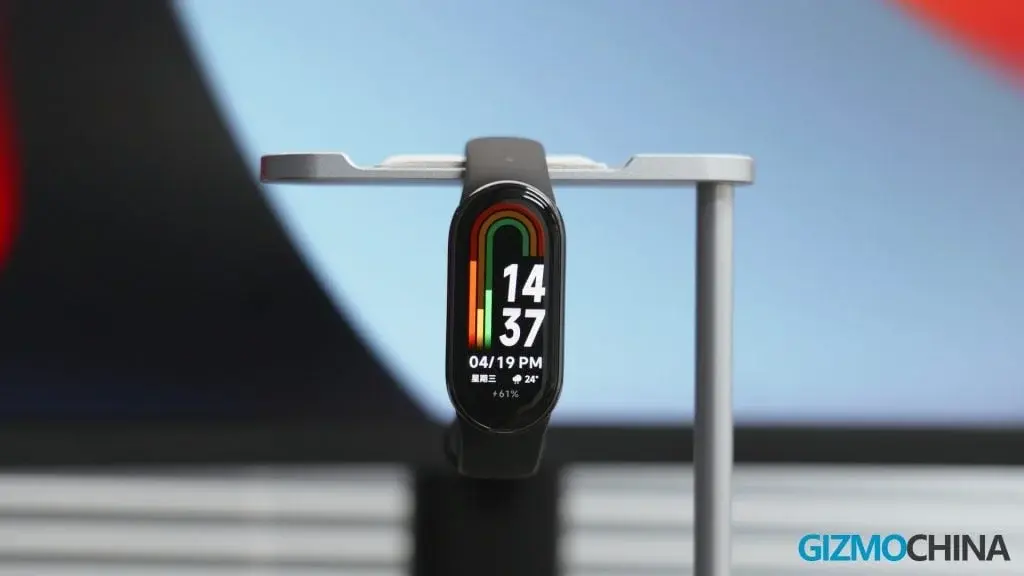
Xiaomi appears to be working on creating an updated iteration of their Smart Band 8 series, first introduced last year in China. All signs point towards developing what may become the Xiaomi Smart Band 9. Here is what is known so far.
Xiaomi Smart Band 9 to Receive Singaporean Certification
Chinese technology giant Huawei recently made an appearance in Singapore’s IMDA database as they prepared for launch of their Smart Band 9. This indicates its imminent entry to international markets; listed is M2345B1 model as standard version and M2346B1 NFC equipped version respectively – yet many details regarding specifications, features and design remain obscured by secrecy.
Certification And Launch Updates
Xiaomi recently earned radio certifications in China for both of their Smart Band 9 models: Smart Band 9 Pro and 9 NFC. According to previous releases in China and Europe (Smart Band 8 Pro was initially made available starting February 2024 while base Smart Band 8 first hit shelves April 2023), their release seems imminent – hence why we anticipate an imminent debut date of Smart Band 9.
Xiaomi’s Mijia sub-brand is expanding its range of smart home products by introducing the new Mijia Multifunctional Health Pot N1. This kitchen appliance offers a blend of affordability and intelligent features, catering to those who prioritize convenient brewing and health-conscious lifestyles.
Features and Specifications
The Mijia Health Pot N1 emphasizes convenience and quality in its design. Featuring a transparent glass pot body with a 304 stainless steel infuser cylinder, this appliance simplifies the process of making loose-leaf teas and herbal infusions without requiring additional filtering steps.
With a 1.5L capacity, the pot is suitable for both individual and shared use. It boasts a user-friendly LED digital screen and buttons on the base, allowing easy selection of desired functions. Safety is a priority, evident in the intelligent temperature control feature and dry-burn protection mechanism that ensure beverages and recipes are prepared at the ideal temperature.
Intelligent Functions and Reservation Feature
An intriguing aspect of the pot is its 12-hour long-term reservation function, enabling users to schedule brews according to their preferences and schedules.
Price and Availability
The Xiaomi Mijia Multifunctional Health Pot N1 will hit the market on April 6th, priced at just 99 yuan (around $14 USD). Interested buyers can find it on JD.com in China.
The Mijia Health Pot N1 stands out for its affordable price tag, making it an attractive choice for those seeking smart features and healthy cooking alternatives in their kitchen. Whether you’re a tea lover, interested in herbal remedies, or simply in need of precise water or broth heating, the N1 is up to the task.
Xiaomi has officially announced that the HyperOS update is set to arrive for the Mi 10 and Mi 11 series smartphones in mid-April. This confirmation was provided by Zhang Guoquan, Director of Xiaomi's Software Department, in response to queries from users on Weibo.
HyperOS Update Details
The forthcoming HyperOS update for the Mi 10 and Mi 11 lineup may not introduce Android 14, given that HyperOS for older devices is based on Android 13. Reports from various sources suggest that the Redmi K50 Gaming Edition is presently undergoing internal testing with HyperOS version 1.0.2.0.ULJCNXM.
Evolution of HyperOS
Introduced in December 2023, Xiaomi's HyperOS represents a significant evolution in the company's mobile operating system. By blending the Android Open Source Project (AOSP) with Xiaomi's proprietary VelaOS, HyperOS presents a completely revamped foundational structure. This strategic move underscores Xiaomi's drive to harmonize the software experience across its diverse product portfolio, integrating MIUI, Vela, Mina, and even their automotive operating system into a single platform.
HyperOS Rollout Strategy
The deployment of HyperOS has been phased out across various Xiaomi devices. The initial wave covered pre-installed phones such as the Xiaomi 14 series and Redmi K70 series, with subsequent updates extended to the Xiaomi 13 series, Redmi K60 series, and Xiaomi Pad lineup.
In the ongoing second phase, spanning from January to June 2024, a broad spectrum of Xiaomi and Redmi smartphones and tablets are included. This encompasses premium flagships like the Xiaomi 12S series and MIX Fold devices, alongside popular mid-range selections like the Redmi K50 and Redmi Note series. Users of the Mi 10 series, comprising models like the Mi 10S, Mi 10 Pro, and Mi 10 Supreme Memorial Edition, can anticipate joining the HyperOS ecosystem by mid-April, alongside the Mi 11 series.
Upcoming HyperOS Updates
As the update rollout continues until June, numerous Xiaomi devices are queued up for their HyperOS enhancements. This lineup includes the Redmi K60E, various Redmi Note 11 and 12 variants, and the Redmi Pad series. If you are a Xiaomi user, stay tuned for official notifications concerning the HyperOS update tailored to your specific device.
Xiaomi is incentivizing its employees by introducing a special discount program for their latest electric vehicle, the SU7. This offer, available from March 28th to June 30th, 2024, provides Xiaomi staff with reduced interest rates on car loans. Employees can benefit from an annualized interest rate as low as 1.6%, a significant drop from the standard 3.0% rate offered to external customers. Moreover, employees have the flexibility to make a down payment as low as 15% and extend their loan period up to 60 months. To take advantage of this offer, employees simply need to place an order for the SU7 through the Xiaomi Auto App and await contact from a delivery specialist to initiate the financing process. They can then opt for the exclusive "Employee 1.6%" plan and submit their financing application.
Employee Incentives at Xiaomi
Xiaomi employees are presented with the opportunity to purchase the SU7 with annual interest rates starting at 1.6%. This exclusive offer provides them with advantageous financing terms, enhancing their accessibility to the electric vehicle.
Standard financing options are also available to external customers looking to purchase any model of the SU7 before June 30th, 2024. These plans offer varying down payment options ranging from 15% to 50%, coupled with loan durations spanning from 12 to 60 months, all at a fixed annualized interest rate of 2.5%.
Customer Offers and Benefits
While Xiaomi employees enjoy preferential treatment, the company ensures that regular customers are not overlooked. Standard financing packages are made accessible to external customers, promoting wider adoption of the SU7 and its eco-friendly benefits.
The Xiaomi SU7 has seen remarkable interest, with an impressive tally of over 100,000 orders placed and more than 40,000 confirmed bookings. This early enthusiasm signifies a promising start for Xiaomi's venture into the electric vehicle market. The true test of the SU7's success, however, lies in its sustained performance over time, particularly within the competitive Chinese automotive market.
Market Reception and Future Prospects
Xiaomi's foray into electric vehicles with the SU7 has garnered significant attention, setting the stage for a potentially successful market entry. As the company continues to make strides in the automotive sector, the SU7's performance in the Chinese market will be closely monitored to gauge its long-term viability and competitive edge.
According to recent reports, Xiaomi is facing challenges with “capacity bottlenecks” and supply chain issues in the production of its debut electric vehicle, the Xiaomi SU7. Despite encountering these obstacles, the company is actively working on resolving these concerns while also focusing on enhancing production efficiency.
Xiaomi’s Efforts to Boost SU7 Production
On April 3, Xiaomi conducted the inaugural batch delivery event for the Xiaomi SU7 at one of its automobile manufacturing plants in Yizhuang, Beijing. The Chinese publication Securities Times highlighted that Xiaomi is intensifying efforts to enhance production capacity, engage supply chain partners effectively, and ensure timely delivery of current and future orders.
Production Targets and Strategies
Initial production projections suggest that monthly output is poised to exceed 3,000 vehicles in March, rise to around 4,000 to 5,000 units in April, and eventually stabilize at 6,000 vehicles by the end of the year. Xiaomi Motors has reportedly urged suppliers to enhance production capabilities to achieve a monthly total of 10,000 units.
Focus on High-End SU7 Models
Particular attention is being directed towards scaling up production for the high-end Max version of the SU7. Sales figures for the SU7 range have surpassed initial expectations. Xiaomi’s CEO, Lei Jun, expressed optimism about the car’s success in December, acknowledging the potential variance in user preferences. However, the product’s reception has been positive thus far.
During the recent delivery event in China, Lei Jun announced that over 100,000 individuals have already selected the Xiaomi EV. Xiaomi Motors has confirmed that they are currently facing a surge in demand, with orders exceeding their production capacity.