Tag: Xiaomi

  • Xiaomi Tops China’s Smartphone Market Again After 10 Years

    Xiaomi Tops China’s Smartphone Market Again After 10 Years

    Key Takeaways

    1. Xiaomi regained the leading position in the Chinese smartphone market with 13.3 million shipments and a 19% market share.
    2. The company’s success is linked to the synergy between its smartphone division and ecosystem products, along with a unified pricing strategy leveraging government subsidies.
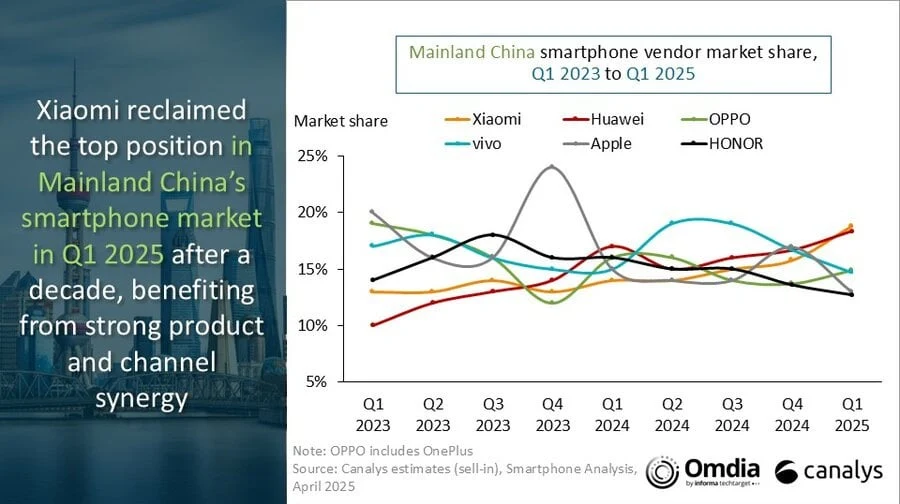
    3. Huawei closely follows Xiaomi with 13 million shipments and an 18% market share, supported by investments in foldable devices and its HarmonyOS Next.
    4. Oppo and Vivo shipped 10.6 million and 10.4 million units, respectively, while Apple dropped to fifth place with 9.2 million iPhones shipped.
    5. The total smartphone shipments in mainland China reached 70.9 million units, showing a 5% increase, influenced by national subsidies and a rebound in consumer sentiment.


    For the first time in a decade, Xiaomi has claimed the leading position in the Chinese smartphone market, based on Canalys’ Q1 2025 report. The company shipped 13.3 million smartphones, securing a 19% market share.

    Xiaomi’s Strategy

    According to Canalys, Xiaomi’s success can be attributed to the synergy between its smartphone division and its broader ecosystem, which includes wearables, personal computers, and even electric vehicles. The company’s unified pricing strategy across both online and offline sales channels has reportedly enabled it to better utilize government subsidies. This approach encourages bundled purchases and makes it easier for consumers to make decisions.

    Huawei’s Strong Performance

    Huawei was not far behind, managing to ship 13 million smartphones and holding an 18% market share, while also maintaining double-digit growth. The company’s success has been supported by continued investments in foldable devices like the Mate XT and the Pura X, as well as a stronger focus on its HarmonyOS Next. By the end of 2025, this in-house operating system is projected to make up 3% of China’s smartphone install base.

    Competitors in the Market

    Oppo and Vivo followed, shipping 10.6 million and 10.4 million units, respectively, each capturing a 15% market share. However, only Vivo experienced a slight year-on-year increase in shipments, while Oppo saw a 3% decline in sales. Interestingly, Apple has slipped to fifth place in this ranking, shipping 9.2 million iPhones, which marks an 8% drop compared to the previous year. This decline comes after a seasonal high in Q4 2024 and reveals ongoing difficulties for the brand as the market shifts towards domestic options and budget-friendly strategies.

    To sum up, the smartphone market in mainland China showed a modest recovery in Q1 2025, with total shipments reaching 70.9 million units, reflecting a 5% increase from the same time last year. Canalys attributes this growth to national subsidy initiatives and a rebound in consumer sentiment, although analysts believe that much of this increase was artificially accelerated rather than truly organic.

    Source:
    Link


  • Xiaomi Launches Redmi Note 14 Pro Plus 5G with Early Discounts

    Xiaomi Launches Redmi Note 14 Pro Plus 5G with Early Discounts

    Key Takeaways

    1. Apple frequently releases mid-cycle updates for its iPhone models, introducing new color options.
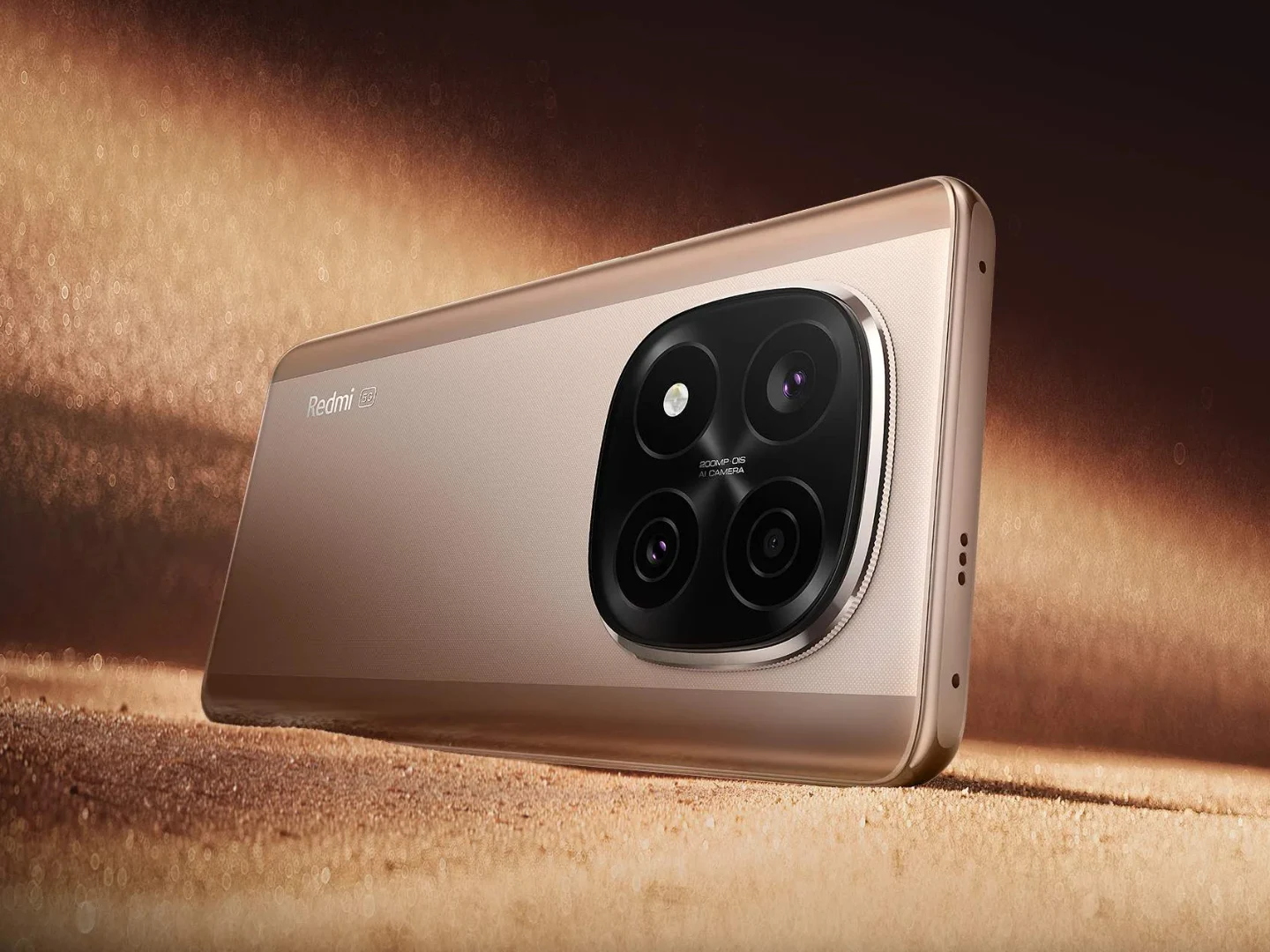
    2. Xiaomi has launched a ‘Sand Gold’ version of the Redmi Note 14 Pro Plus 5G for the UK and Europe, adding to its color choices.
    3. The Sand Gold model maintains the same hardware specifications as previous versions, including a Snapdragon 7s Gen 3 processor and a 200 MP camera.
    4. The pricing for the Sand Gold variant is set at £379 in the UK and €419.90 in Europe, with potential discounts available.
    5. The Sand Gold variant features 12 GB of RAM and 512 GB of storage, with prices reduced from original retail rates.


    In recent times, Apple has often released mid-cycle updates for its current iPhone models. For instance, in March 2022, they launched Alpine Green versions of the iPhone 13 Pro series, followed by a yellow color option for the iPhone 14 and iPhone 14 Plus (currently $499 – renewed on Amazon) in spring 2023. Similarly, Xiaomi has also refreshed one of its mid-range smartphones.

    New Color Variation

    To provide some background, Xiaomi presented an Ivy Green version of the Redmi Note 14 5G almost three months back in India. Now, they have introduced a ‘Sand Gold’ version of the Redmi Note 14 Pro Plus 5G for the UK and Europe, which increases the color choices for the device to four. However, it is still uncertain if Xiaomi will make this new variant available in other regions.

    Hardware Specifications

    The Sand Gold model keeps the same specifications as the previous Redmi Note 14 Pro Plus 5G versions. It comes equipped with a Qualcomm Snapdragon 7s Gen 3 processor, a 5,110 mAh battery that supports 120 W charging, and a remarkable 200 MP Light Hunter 800 main camera. Additionally, the Sand Gold variant sports a 6.67-inch AMOLED display, framed elegantly in a light gold border.

    Pricing Details

    The Sand Gold variant is priced at £379 in the UK and €419.90 (~$474) in the Eurozone, featuring 12 GB of RAM and 512 GB of storage, down from original retail prices of £449 and €529.90 (~$597) respectively. Moreover, customers can benefit from discounts of up to £80, bringing the price down to just £329. For more details, please visit Xiaomi’s official website.

    Source:
    Link


  • Xiaomi Smart Skipping Rope with Display and Weights for $13

    Xiaomi Smart Skipping Rope with Display and Weights for $13

    Key Takeaways

    1. Crowdfunding Launch: Xiaomi has introduced the Mijia Smart Skipping Rope 2 through crowdfunding, priced at 95 yuan ($13) with a retail price of 129 yuan ($18).

    2. Corded and Cordless Modes: The skipping rope features both corded and cordless modes for versatile use in various workout environments.

    3. Advanced Tracking Technology: It includes three high-precision Hall effect sensors and Xiaomi’s algorithm for accurate jump tracking, along with a dot-matrix display for workout stats.

    4. Bluetooth Connectivity: The device supports Bluetooth 5.1 for syncing with Mi Home and Xiaomi Sports Health apps, allowing offline storage of up to 100 training sessions.

    5. Long Battery Life: Powered by a 200mAh battery, it lasts up to 20 days on a single charge and includes features like multiple training modes and guided voice coaching.


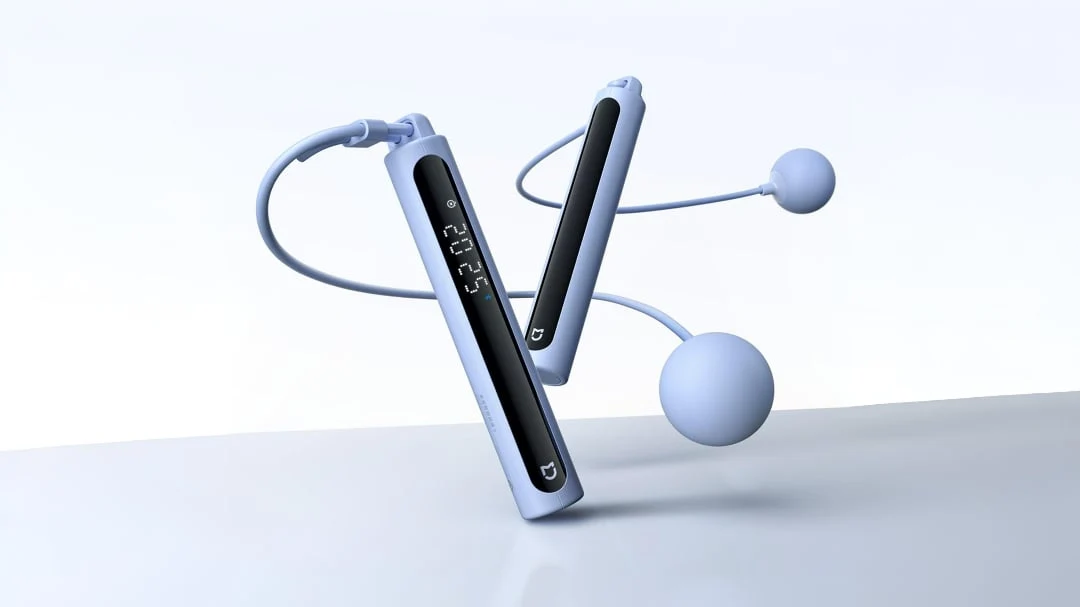
    Xiaomi has launched the Mijia Smart Skipping Rope 2 via crowdfunding on Xiaomi Mall and Youpin, with a price of 95 yuan (about $13), while the retail price is set at 129 yuan ($18). This second version offers both corded and cordless modes, making it perfect for both small indoor spaces and large outdoor areas for workouts.

    Specifications of the Mijia Smart Skipping Rope 2

    This new skipping rope includes a pair of newly designed weighted air balls that weigh around 108 grams, which increases resistance for a more genuine skipping experience. The length of the rope can be adjusted and trimmed to accommodate users of various heights, making it suitable for school fitness activities or cardio for adults. It features specially shaped handles wrapped in anti-slip silicone, providing a comfortable and secure grip for different hand sizes.

    Advanced Features

    Inside, the skipping rope is equipped with three high-precision Hall effect sensors along with Xiaomi’s unique algorithm, guaranteeing precise jump tracking without any missed or incorrect counts. There is a modern dot-matrix display integrated into an elliptical panel that shows crucial workout information like jump count, time duration, and calories burned. Users can easily switch between stats with the press of a button.

    Connectivity and Battery Life

    The Smart Skipping Rope 2 has Bluetooth 5.1 capability, enabling smooth syncing with the Mi Home and Xiaomi Sports Health apps. It allows for offline storage of up to 100 training sessions, helping users keep track of their performance history. The device offers multiple training modes, such as counting, timing, calories, intervals, and free training, plus it includes guided voice coaching and access to professional video courses through the app.

    Powered by a 200mAh battery, the device can last up to 20 days on a single charge via USB Type-C. It also has a ball-bearing rotation system that ensures smooth, tangle-free skipping and comes with a portable pouch for easy storage. The Mijia Smart Skipping Rope 2 is available in light blue and sand beige colors.


  • Xiaomi YU7 Long-Range Edition Leaks Featuring Panoramic HUD Tech

    Xiaomi YU7 Long-Range Edition Leaks Featuring Panoramic HUD Tech

    Key Takeaways

    1. Xiaomi plans to disrupt the e-SUV market with the YU7, set to launch by July 2025.
    2. The YU7 is expected to have a single-motor setup offering a driving range of up to 835 km (519 miles).
    3. Interior features will include a steering wheel with physical controls and a “Panoramic” heads-up display.
    4. The YU7 may utilize materials like carbon fiber and Alcantara, with a distinctive burgundy and beige color scheme.
    5. The YU7 may only be available in China, though similar features can be found in aftermarket products.


    Having made a strong entrance into the electric sedan market in its home country of China, Xiaomi is set to disrupt the e-SUV segment with the YU7, expected to launch by July 2025.

    Confirmation of Specifications

    To support this speculation, the company has apparently received certification for a version of the vehicle from the Ministry of Industry and Information Technology (MIIT), featuring a single-motor setup that can provide as much as 835 kilometers (km, or around 519 miles) of driving range.

    It’s unclear if this will be a premium version of the YU7, as other configurations are rumored to offer a range of 820 km (approximately 510 miles) on a single charge.

    Interior Features

    Reports suggest that the YU7 will come with an interior that includes a steering wheel equipped with physical controls, along with a central console that has more switches leaning toward the driver’s side.

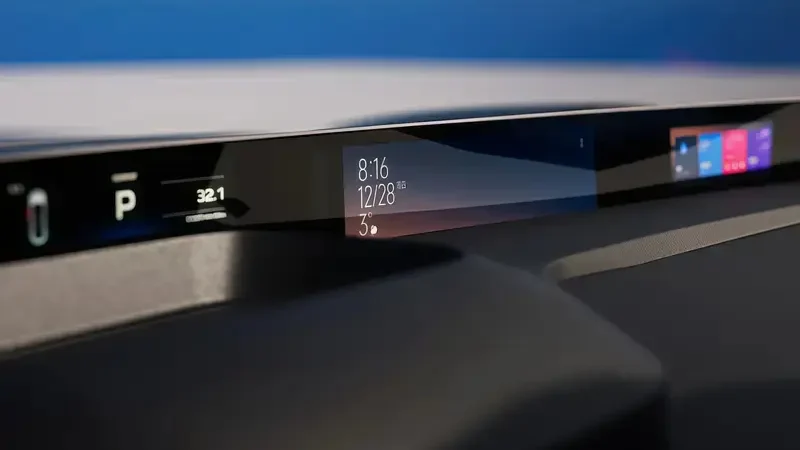
    Additionally, there seems to be a “Panoramic” heads-up display that may show the time, date, and the status of the car’s systems and infotainment features.

    Material Choices and Design

    There are discussions about using materials like carbon fiber and Alcantara for certain versions of the YU7. Photos of the interior have surfaced, showcasing a burgundy color scheme with beige highlights; it’s yet to be determined if this color will vary based on the car’s exterior design.

    The anticipated YU7, as described, might not be sold to buyers outside of China. Nevertheless, enthusiasts can find similar features, such as Alcantara steering wheel grips, available on Amazon.

    Source:
    Link

  • Google Pixel 10 Pro Display Upgrade to Reduce Eye Strain

    Google Pixel 10 Pro Display Upgrade to Reduce Eye Strain

    Key Takeaways

    1. Chinese smartphone brands like Xiaomi and OnePlus use high PWM frequencies over 2,000 Hz to eliminate visible flickering in AMOLED screens.
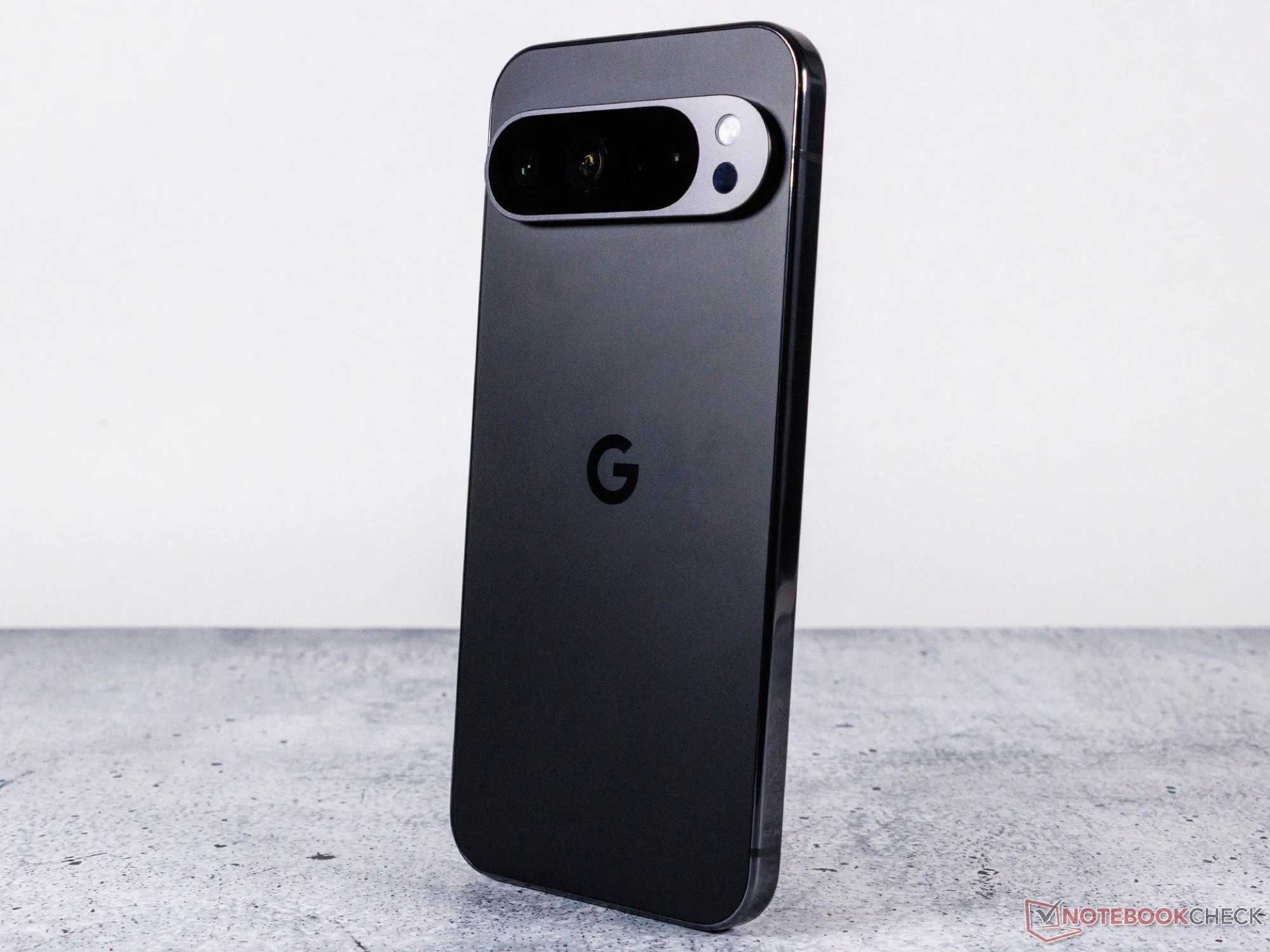
    2. The Google Pixel 9 has a noticeable PWM frequency of 120 Hz, causing discomfort for some users, while the Pixel 9 Pro’s display flickers at 240 Hz.
    3. The flicker amplitude on the Pixel 9 is 22.2%, which can lead to severe headaches for sensitive users.
    4. Google plans to address flickering issues in upcoming updates and potentially improve the PWM frequency in future models.
    5. The upcoming Pixel 10 series may feature displays with higher PWM frequencies or DC dimming to reduce flickering, though it could affect peak brightness.


    Chinese smartphone brands like Xiaomi and OnePlus are leaning towards very high PWM frequencies that go beyond 2,000 Hz. This helps to stop visible flickering in their AMOLED screens. On the other hand, users of the Google Pixel 9 (around $599 on Amazon) still have to deal with a more noticeable PWM frequency of 120 Hz. Our tests also showed that the Pixel 9 Pro’s display flickers at a slightly elevated 240 Hz.

    Flickering Issues

    This flickering can cause discomfort, particularly in the lower-priced Pixel 9 model, which has a flicker amplitude of 22.2%. Those who are sensitive to such issues may suffer from severe headaches after looking at screens with PWM flickers for long periods, while others might not even notice it. Google has recognized this problem and mentioned to AndroidCentral that users can look forward to updates later this year.

    Potential Solutions

    It remains uncertain if Google can enhance the PWM frequency on current Pixel phones via a software update. Nonetheless, the company’s announcement hints that the upcoming Pixel 10 series could come with displays that have less flickering. By using higher PWM frequencies or DC dimming, Google might be able to lessen or completely remove flickers. Another option could be a special display mode designed to minimize screen flickers, but this may result in lower peak brightness on some devices. All in all, these changes indicate that the Pixel 10 series may finally address the concerns of users who are sensitive to PWM flickering.

    Source:
    Link

  • Xiaomi Poco F7 Nears Global Release; Battery Capacity Rumors Rise

    Xiaomi Poco F7 Nears Global Release; Battery Capacity Rumors Rise

    Key Takeaways

    1. Xiaomi is developing the Poco F7 series, including the recently announced Poco F7 Ultra and Poco F7 Pro.
    2. The Poco F7 is expected to be launched internationally, in addition to its initial focus on India.
    3. The global variant of the Poco F7 has been confirmed by Singapore’s IMDA with model number 25053PC47G.
    4. The Poco F7 will feature a Snapdragon 8s Gen 4 chipset, a 6.83-inch AMOLED screen, and a 120 Hz refresh rate.
    5. The Poco F7 will have a reduced battery capacity of 6,500 mAh, support 90 W wired charging, and include a 50 MP main camera with OIS.


    It is clear that Xiaomi is still working on the Poco F7 series. Just a little over a month ago, they revealed the Poco F7 Ultra and the more affordable Poco F7 Pro (curr. $679 on Amazon). However, rumors quickly started to spread about an even less expensive Poco F7 being in the works.

    Release Speculation

    At first, it was thought that the Poco F7 would only be launched in India. Supporting this idea, the device was spotted getting approved by the Bureau of Indian Standards (BIS) earlier this month with the model number 25053PC47I. But more current gossip suggests that the Poco F7 will also be available internationally, although it might come with a 13.9% smaller battery compared to its Indian and Chinese versions.

    Confirmation of Global Variant

    Now, we have confirmation of the rumored global variant from Singapore’s Infocomm Media Development Authority (IMDA). The screenshot below indicates that Xiaomi has submitted model 25053PC47G to the regulatory board under the Poco brand. While the details in the listing are sparse, it is clear that 25053PC47G is the global version, corresponding to the Poco variant of model 25053RT47C, which is the Redmi Turbo 4 Pro.

    Availability and Specifications

    It remains uncertain in which countries the Poco F7 will be released. However, the phone is expected to feature a Snapdragon 8s Gen 4 chipset and a 6.83-inch AMOLED screen with a resolution of 2,772 x 1,280 pixels, a 120 Hz refresh rate, and a peak brightness of 3,200 nits. Although there will be a decrease in battery capacity from 7,550 mAh to 6,500 mAh, the Poco F7 is expected to support 90 W wired charging globally and come with a 50 MP main camera with OIS.

    Source:
    Link


  • Xiaomi Unveils Redmi TV X 2025: 4K 288Hz, HyperOS 2, Dolby Vision

    Xiaomi Unveils Redmi TV X 2025: 4K 288Hz, HyperOS 2, Dolby Vision

    Key Takeaways

    1. The Redmi TV X 2025 series offers energy-efficient 55-inch, 65-inch, 75-inch, and 85-inch models, starting at 2,199 yuan ($308).
    2. Each model features 4K Ultra HD resolution, 144Hz native panel, and a gaming mode supporting up to 288Hz for enhanced visuals.
    3. The TVs support advanced technologies like Dolby Vision, Dolby Atmos, and have dual HDMI 2.1 ports for optimal gaming performance.
    4. They include features like WiFi 6, Bluetooth 5.2, and a voice remote with NFC for easy connectivity and control.
    5. The series has a sleek design and operates at approximately 130W during use, with less than 0.5W in standby mode.


    Xiaomi has rolled out a fresh energy-efficient version of its Redmi TV X 2025 series in China. This series includes options of 55-inch, 65-inch, 75-inch, and 85-inch displays, with prices starting at 2,199 yuan ($308). The new models boast an impressive mix of ultra-high refresh rates, top-notch gaming capabilities, and better energy efficiency, all at a more affordable price.

    Specs of Redmi TV X 2025 Energy-Saving Edition

    The Redmi TV X 2025 series showcases 4K Ultra HD resolution (3840 × 2160) for each model, providing clear and detailed images perfect for everything from intense gaming to movie watching. It features a native 144Hz panel, along with a gaming mode that supports up to 288Hz, ensuring smooth visuals and reduced blur during rapid movements. The lineup covers 94% of the DCI-P3 color space and has a ΔE≈2 color accuracy rating, delivering vivid and precise colors right from the start.

    Each television is powered by Xiaomi’s HyperOS 2, which enhances system performance and allows for smooth connections between multiple devices. The lineup runs on a quad-core Cortex-A73 processor and a Mali-G52 MC1 GPU, coupled with 4GB of RAM and 64GB of storage, making it easy to launch apps, multitask, and enjoy gaming.

    Entertainment and Gaming Features

    These TVs support advanced technologies like Dolby Vision, Dolby Atmos, DTS:X, and FreeSync Premium, offering stunning visuals and immersive sound experiences. For gamers, dual HDMI 2.1 ports are available with VRR (Variable Refresh Rate) and ALLM (Auto Low Latency Mode) support, plus an extra HDMI 2.0 port for more device options. Other connectivity features include USB 3.0 and USB 2.0 ports, optical audio output, LAN, AV input, and antenna input.

    The Redmi TV X 2025 series also comes equipped with WiFi 6 and Bluetooth 5.2, providing faster and lower-lag wireless connections. It includes a voice remote control that supports NFC, simplifying mirroring smartphone screens or using Xiaomi’s Super XiaoAi AI assistant.

    Design and Energy Efficiency

    In terms of appearance, the series showcases ultra-slim bezels and a metal frame, contributing to a sleek, modern look. All models can be wall-mounted and are compatible with standard VESA mounting. When it comes to energy efficiency, these TVs operate at around 130W during regular use and less than 0.5W while in standby mode.

    Among the different models, the 85-inch version offers the most immersive viewing experience, while the 55-inch version remains compact without losing any major features. For example, the 55-inch model includes dual 12.5W speakers, while the 85-inch model upgrades to dual 15W speakers for superior sound.

    Pricing and Launch Details

    Pre-orders for the energy-saving Redmi TV X 2025 models are currently available on JD.com. The pricing is as follows: the 55-inch model is set at 2,199 yuan (around $308), the 65-inch at 2,799 yuan (around $392), the 75-inch at 3,599 yuan (around $504), and the flagship 85-inch model at 4,999 yuan (about $700).

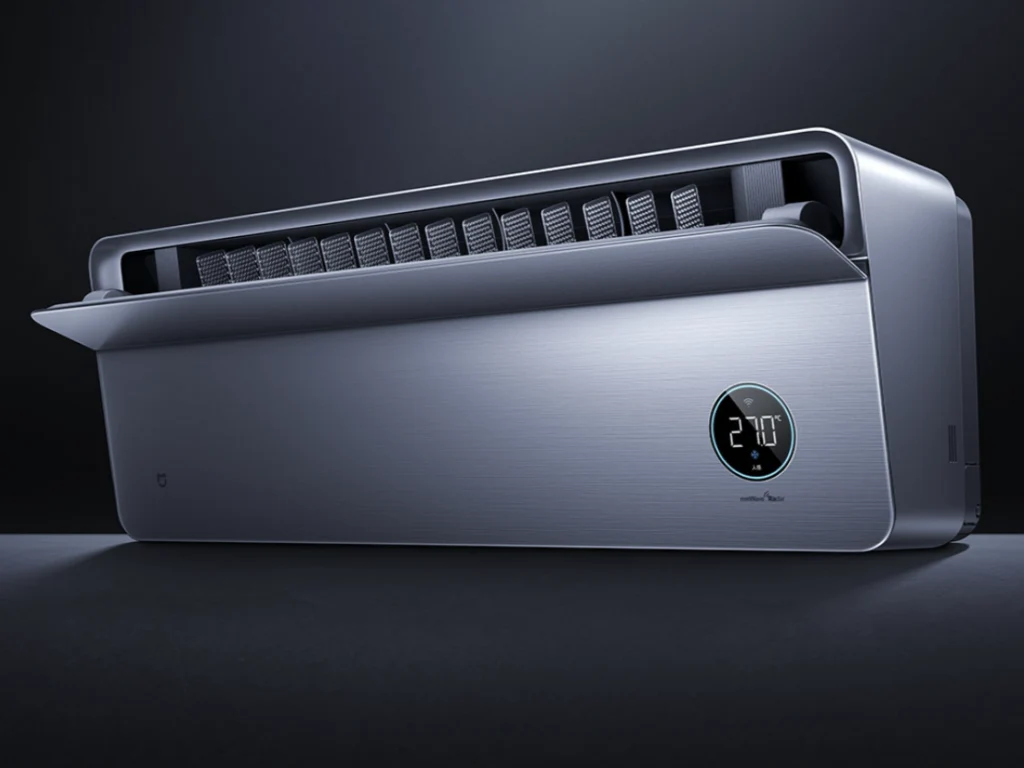
  • Xiaomi Mi Air Conditioner Pro: Dual Radar Sensing & Smart Controls

    Xiaomi Mi Air Conditioner Pro: Dual Radar Sensing & Smart Controls

    Key Takeaways

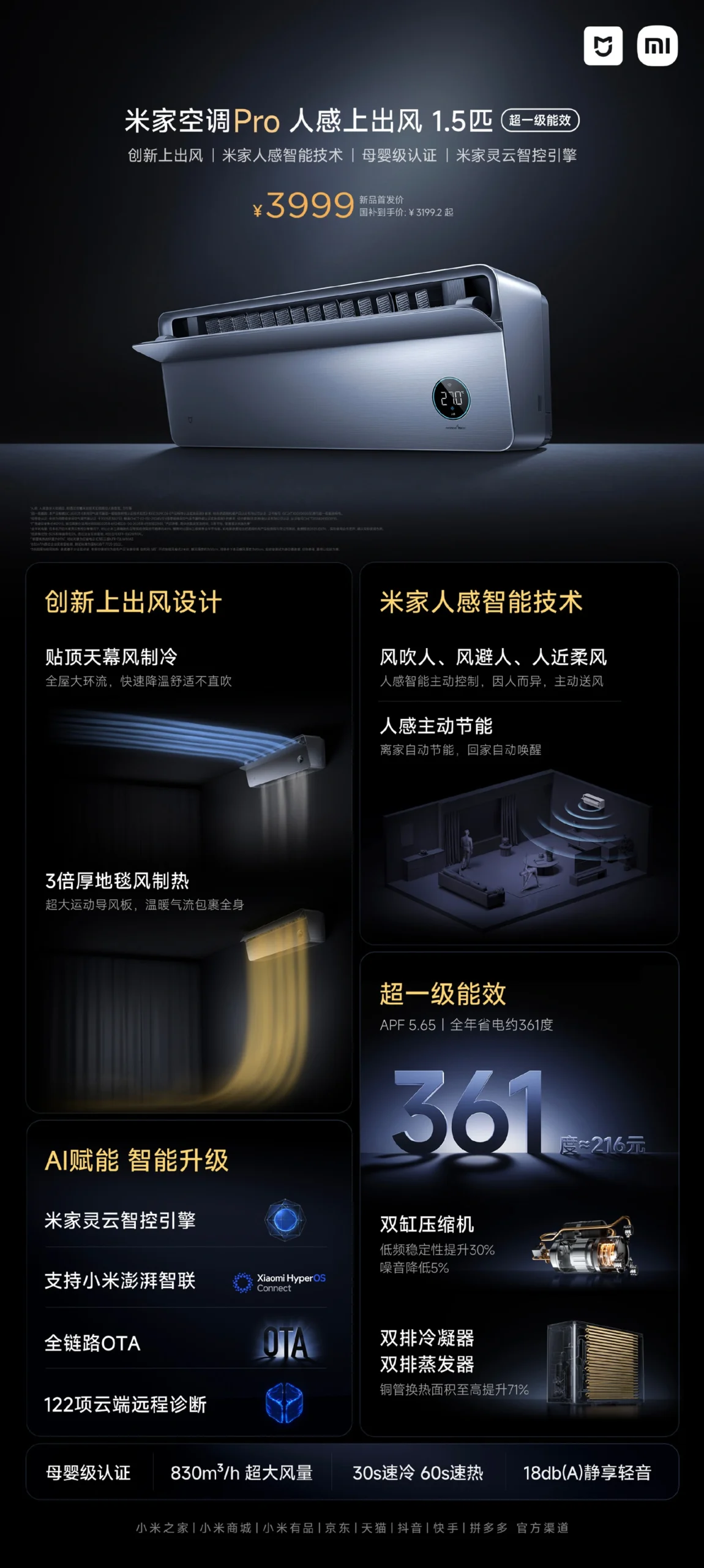
    1. Innovative Airflow Design: Features a bottom-inlet and top-outlet system that requires only a 2cm gap from the ceiling, enhancing room airflow and comfort.

    2. High Energy Efficiency: APF energy efficiency rating of 5.65, with rapid cooling (30 seconds) and heating (60 seconds) capabilities.

    3. Extreme Weather Durability: The outdoor unit can operate in temperatures as low as -35°C and as high as 65°C.

    4. Smart Technology Features: Compatible with Xiaomi’s HyperConnect platform, allowing control via the Mi Home app and voice commands with Xiao AI.

    5. Pricing and Availability: Launched at ¥3,999 (approximately $549) on JD.com and other websites, currently available only in China.


    Xiaomi has launched its latest Mijia Air Conditioner Pro, which is now for sale on JD.com and other websites, with sales kicking off at 8 PM today. The starting price is ¥3,999 (approximately $549).

    Innovative Airflow Design

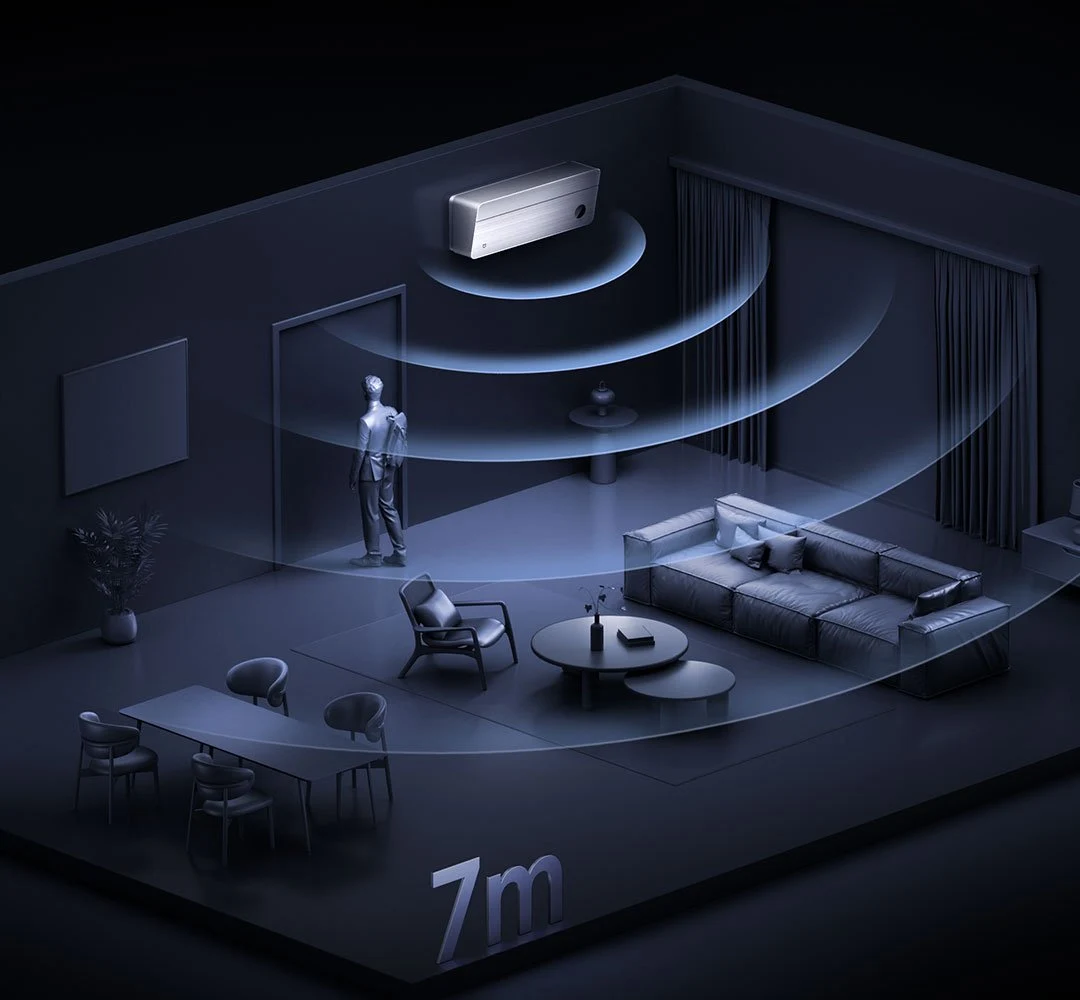
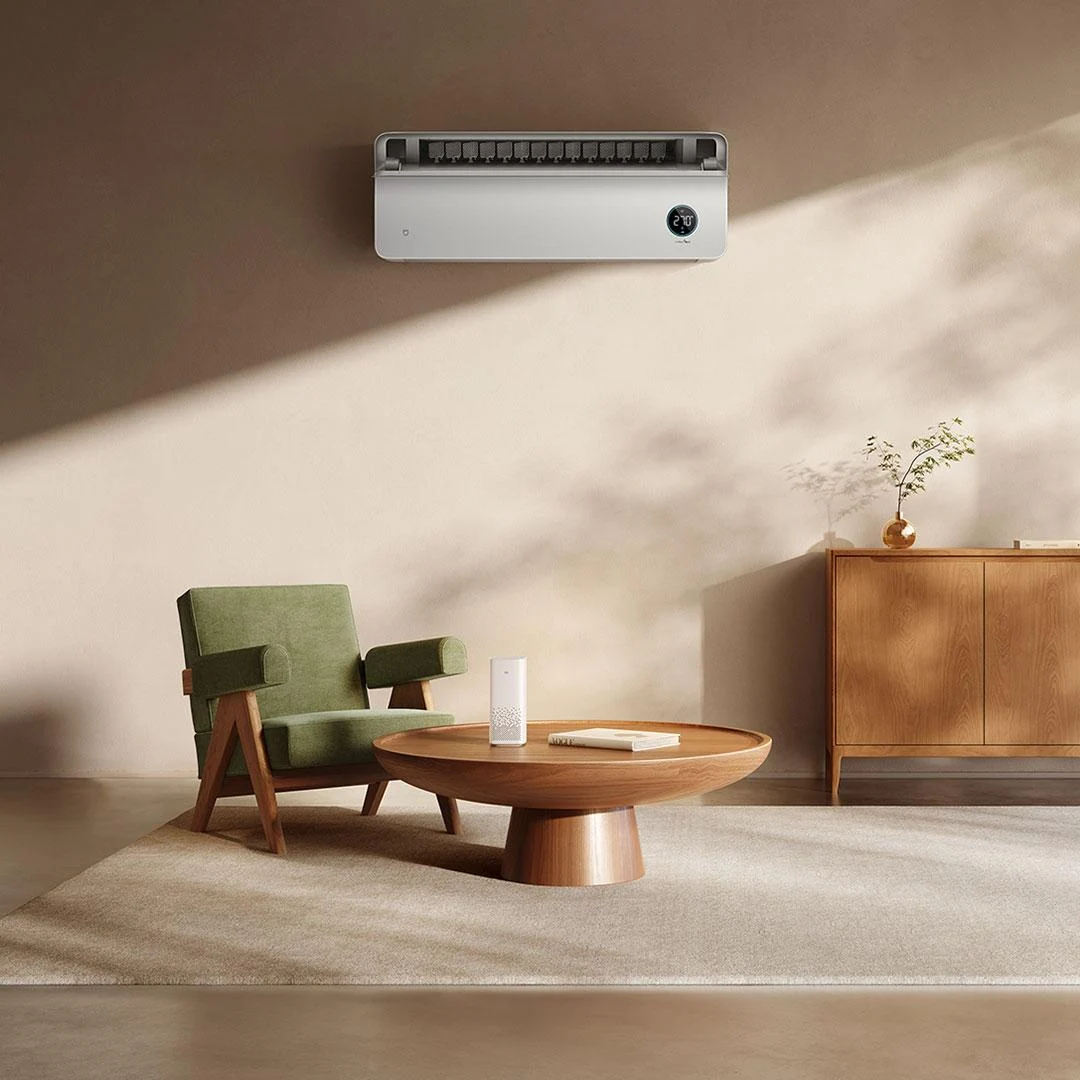
    This air conditioner features a unique bottom-inlet and top-outlet airflow system, which only needs a 2cm gap from the ceiling. It effectively creates a circulating breeze within rooms to improve airflow. A dual millimeter-wave radar system can sense human presence within a 7-meter range and a 180° angle, automatically modifying the airflow to prevent direct blowing on people or providing gentle cooling based on proximity to the unit.

    High Energy Efficiency

    The Mi Air Conditioner Pro boasts an APF energy efficiency rating of 5.65. It is equipped with dual-row condensers and evaporators that allow for rapid cooling in just 30 seconds and quick heating in 60 seconds. Its outdoor unit, nicknamed “Little King Kong,” is built to endure extreme weather conditions, capable of heating in temperatures as low as -35°C and cooling in conditions up to 65°C.

    Smart Technology Features

    Moreover, this air conditioner is compatible with smart features via Xiaomi’s HyperConnect platform. Users can control and personalize the air conditioner through the Mi Home app or by using voice commands with Xiao AI.

    In China, you can purchase the Xiaomi Mijia Air Conditioner Pro 1.5HP for CNY 3,999 (around $549). It’s important to note that Xiaomi has not officially released its smart air conditioners in markets outside of China.


  • Xiaomi Mijia Wireless Floor Washer 4 Pro: 21,000Pa Suction Power

    Xiaomi Mijia Wireless Floor Washer 4 Pro: 21,000Pa Suction Power

    Key Takeaways

    1. The Xiaomi Mijia Wireless Floor Washer 4 Pro features 21,000Pa suction power and an enhanced anti-tangle system, with a launch price of 1,999 yuan (approximately $275).

    2. It has a high-performance motor providing 134AW of suction and a five-level water control system for faster drying and reduced slip risk.

    3. The upgraded anti-hair-entanglement system can manage up to 3,000 strands of hair without clogging, making it suitable for pet owners or those with long hair.

    4. The comprehensive sterilization system, utilizing hot water and antibacterial materials, achieves a sterilization rate of up to 99.999% against common pathogens.

    5. With a 4000mAh battery, it offers up to 40 minutes of runtime, smart dirt detection, and user-friendly features like an LED display and voice prompts for maintenance.


    Xiaomi has introduced the Mijia Wireless Floor Washer 4 Pro, expanding its range of smart home products. This new device is now available for pre-order on Xiaomi Youpin in China. It offers impressive suction power of 21,000Pa, an enhanced anti-tangle system, and a launch price of 1,999 yuan (approximately $275). Official sales are set to begin on April 29.

    Specifications of the Mijia Floor Washer 4 Pro

    The Mijia Floor Washer 4 Pro is powered by a high-performance motor that provides 134AW of suction and 23N of ground pressure, making it suitable for cleaning hard floors effectively. It is equipped with a five-level water control system that helps speed up drying times and lessens the risk of slipping.

    This washer features a newly crafted high-density roller brush along with a floating metal scraper bar. This setup scrapes dirt and moisture evenly, enhancing water absorption by 23% and scraping efficiency by 255% compared to older models. Xiaomi claims that the drying time is improved by 39%, and water spots are reduced by 41%.

    Advanced Anti-Hair Entanglement System

    An upgraded anti-hair-entanglement system, certified by TÜV Rheinland, is part of the design. Utilizing a shark tooth comb structure and strong suction, the washer can manage up to 3,000 strands of hair without clogging, making it a dependable option for households with pets or individuals with long hair.

    Hygiene is prioritized with a comprehensive sterilization system. This combines cleaning with 100°C hot water, electrolyzed water sterilization, 90°C hot air drying, and antibacterial roller materials. Xiaomi asserts that the system can achieve a sterilization rate of up to 99.999% against common pathogens like E. coli and Candida albicans. Additionally, it features a 120°C heat press to keep the brush soft and improve cleanliness.

    Battery Life and Smart Features

    The Mijia Floor Washer 4 Pro is powered by a significant 4000mAh battery, offering up to 40 minutes of runtime on a single charge, which is adequate for cleaning approximately 336 square meters. It includes a 1000mL clean water tank and a 700mL dirty water tank, enabling extended cleaning without interruptions.

    Smart dirt detection is incorporated through a high-precision sensor, which automatically adjusts suction power according to the dirt level detected. An LED display and voice prompts keep users informed about cleaning modes and maintenance requirements in real time.

    The dirty water tank features a solid-liquid separation system for simplified maintenance, while the roller brush is made from an antibacterial high-density material with a 17% increase in density for improved durability.

    For added convenience, the washer has a reinforced scratch-resistant body with IML brushed metal-style panels and can lay flat at 180°, allowing it to reach under beds and sofas easily.

  • Xiaomi Pad 7 Pro Gets 3 Years of Software Updates, Less Than Pad 7

    Xiaomi Pad 7 Pro Gets 3 Years of Software Updates, Less Than Pad 7

    Key Takeaways

    1. Xiaomi introduced the Pad 7 and Pad 7 Pro tablets in March, with initial uncertainty about software update duration.
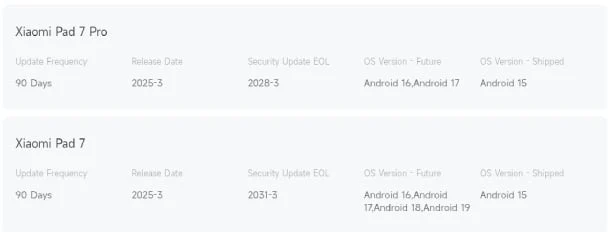
    2. The Pad 7 will receive four major Android updates and security patches until 2031, while the Pad 7 Pro will receive only two Android updates and patches until 2028.
    3. The Pad 7 Pro, despite being pricier and having a more powerful processor, has a shorter software support timeline than the standard Pad 7.
    4. Both tablets feature an 11.2-inch display with 3.2K resolution, but differ in camera specifications and charging capabilities.
    5. The reason for the difference in software support between the two models is currently unclear, pending further clarification from Xiaomi.


    Xiaomi recently introduced its Pad 7 and Pad 7 Pro tablets worldwide in March. However, they didn’t provide information on the duration of software updates for each device at that time.

    Clarification on Software Updates

    Now, the situation is clearer. Xiaomi has discreetly added both tablets to its Product Security Center, disclosing the number of years of platform updates and security patches for each model. Interestingly, there is a notable difference between the two.

    Pad 7 Pro’s Update Discrepancy

    As anticipated, the Pad 7 Pro is the pricier variant, equipped with a Qualcomm Snapdragon 8s Gen 3 processor. Unexpectedly, Xiaomi has confirmed that the Pad 7 Pro will receive three fewer Android updates than the Pad 7, which is set to receive two major Android updates (up to Android 17) and security patches until 2028.

    On the other hand, the more budget-friendly Pad 7 boasts a longer support timeline. It is slated to receive four Android updates up to Android 19, with security updates lasting until 2031.

    Comparing Software Support

    In simpler terms, the Pad 7 is promised four years of software updates and six years of security patches, while the more premium Pad 7 Pro is only assured two years of software updates and three years of security patches.

    The reason behind this stark contrast in support between the two models remains unclear. We will provide updates if Xiaomi makes an official statement regarding this matter.

    Key Specifications

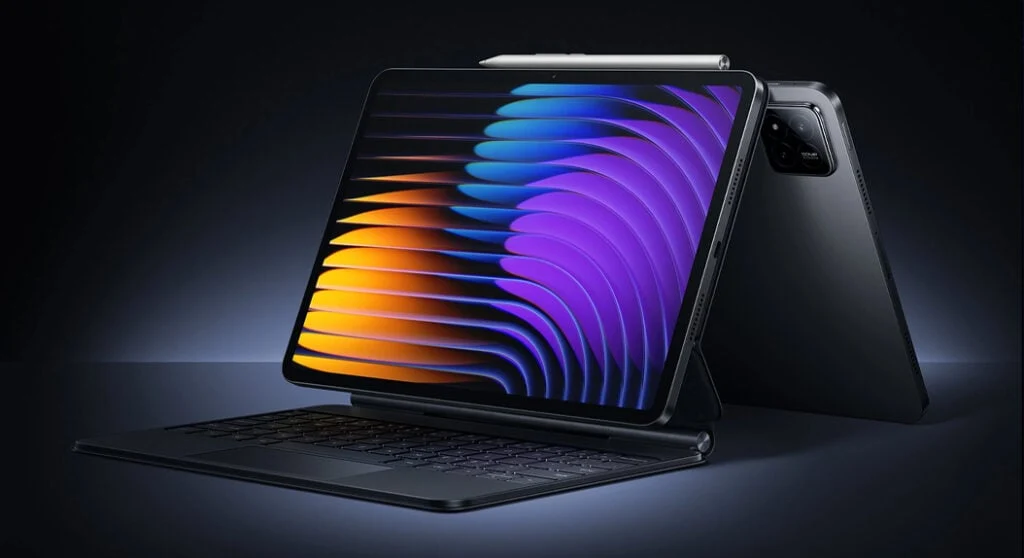
    Initially unveiled in October 2024 in China, both tablets come with an 11.2-inch display featuring a 3.2K resolution, a refresh rate of 144Hz, a 3:2 aspect ratio, and peak brightness of up to 800 nits.

    The standard Pad 7 runs on a Snapdragon 7+ Gen 3 processor, includes an 8MP front camera, a 13MP rear camera, Wi-Fi 6E support, and a large 8,850mAh battery with 45W fast charging capabilities.

    In contrast, the Pad 7 Pro elevates the specs with a Snapdragon 8s Gen 3 chip, a 32MP front camera, a 50MP main camera, Wi-Fi 7 connectivity, and quicker 67W charging. Nonetheless, it retains the same 8,850mAh battery capacity as the base model.

    Source:
    Link