Tag: Valve Deckard

  • VR Accessory Maker Hints at Early 2026 Valve Steam Frame Launch

    VR Accessory Maker Hints at Early 2026 Valve Steam Frame Launch

    Key Takeaways

    1. The Valve Deckard, or “Steam Frame,” is set to launch with a Qualcomm Snapdragon 8 Gen 3 SoC and dual 120 Hz, 2,160 × 2,160 LCDs, expected in 2026.
    2. ProTubeVR is offering a pre-order for the ProVolver Elite Haptic Pistol, compatible with the Steam Frame and featuring haptic feedback settings.
    3. ProTubeVR anticipates the ProVolver Elite will release in February 2026, coinciding with the Steam Frame’s potential launch.
    4. Valve’s trademark filing indicates an unnamed VR headset is in development, with a possible release timeline aligning with ProTubeVR’s plans.
    5. The Steam Frame will compete against high-end options like the Apple Vision Pro and budget-friendly headsets like the Meta Quest 3.


    The Valve Deckard, also known recently as the “Steam Frame,” is making waves in the VR world with leaks surfacing about its features even before its official launch. The headset is expected to be powered by a Qualcomm Snapdragon 8 Gen 3 SoC and will boast dual 120 Hz, 2,160 × 2,160 LCDs. A reliable VR accessory company has now backed these leaks, confirming that Valve is indeed set to release an update to the Steam Index, with a potential launch for the Steam Frame as early as 2026.

    ProTubeVR’s New Release

    ProTubeVR has kicked off a pre-order campaign for its ProVolver Elite Haptic Pistol, compatible with a range of VR headsets, including the “Steam Frame.” The controller appears to be quite intriguing, especially with a teaser video that showcases various haptic feedback settings tailored for different weapons. However, it seems that fans of Steam VR are more interested in the mention of the Steam Frame itself.

    Anticipated Launch Timeline

    ProTubeVR plans to release the ProVolver Elite in February 2026, hinting that they believe the Steam Frame will be ready by then. In response to inquiries about the Steam Frame’s mention on X, ProTubeVR indicated that their information came from trademark filings. Their community manager also noted that if the Steam VR headset is not launched by February, the ProVolver would be released one month after the Steam Frame’s debut.

    This information is based on Valve’s recent trademark filing for their upcoming VR headset, which remains unnamed for now. The mentioned release date marks the earliest possible time for fulfilling pre-orders, assuming Valve indeed launches their next headset by that date. If not, customers can expect a release one month after the headset hits the market.

    Competing in the Market

    Although ProTubeVR seems to be cautious in its statements, it’s not unusual for accessory makers to gain access to confidential materials or insider info to time their product launches with those of the main systems they support. The Steam Frame appears to be a strong contender in the standalone VR headset market, but it will face stiff competition from high-end options like the Apple Vision Pro and budget-friendly alternatives such as the Meta Quest 3, which currently retails for $499.99 on Amazon.

    Source:
    Link


  • Apple Vision 2 Pro VR Headset Leaked with Rumored M5 Upgrade

    Apple Vision 2 Pro VR Headset Leaked with Rumored M5 Upgrade

    Key Takeaways

    1. Valve is expected to reveal the Deckard VR headset soon, while Meta has not released a new headset since the Quest 3S last year.
    2. Apple’s new VR headset, model number A3416, may be launched globally, based on recent FCC documents.
    3. The FCC report focuses on connectivity, indicating that Apple’s headset will use Wi-Fi 6 instead of newer Wi-Fi 6E or Wi-Fi 7.
    4. A technical drawing suggests Apple’s upcoming headset will have a design similar to the existing Vision Pro, with potential upgrades including the new Apple M5 chipset.
    5. Rumors indicate a price tag of $3,499 for Apple’s VR headset, with a possible launch before the end of the year, but the branding remains uncertain.


    The virtual reality (VR) world is still on the lookout for the much-talked-about Valve Deckard headset, especially after whispers that Valve might reveal it in September. On the other hand, Meta has yet to bring out a new headset since last year when they introduced the Quest 3S, which is currently priced at $299 on Amazon. Furthermore, Vivo launched the Vivo Vision in China over a month ago, but they have not started selling their first VR headset in any way.

    Apple’s New Developments

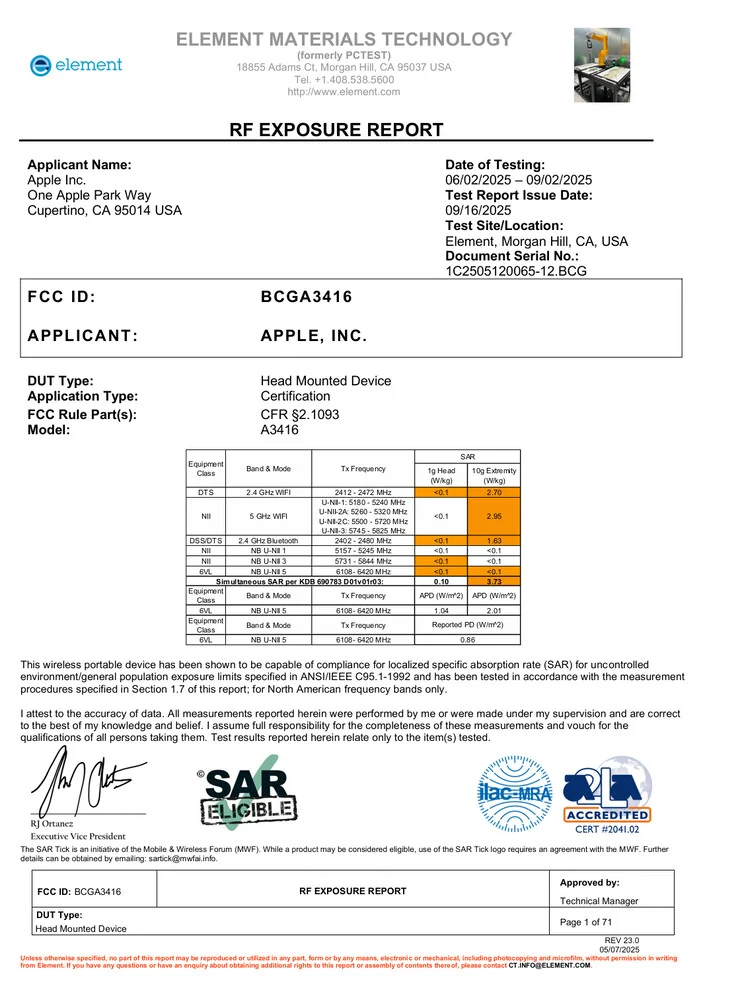
    Recent documents from the Federal Communications Commission (FCC) suggest that Apple could be the next to launch a new VR headset on a global scale. The FCC released some initial details regarding an unreleased Head Mounted Device, which Apple has labeled with the model number A3416.

    Connectivity and Specifications

    As is often the case, the FCC’s report mainly centers on connectivity features rather than other hardware specifications. The body indicates that Apple’s upcoming VR headset will keep Wi-Fi 6 connectivity instead of upgrading to Wi-Fi 6E or Wi-Fi 7. Interestingly, this situation seems to mirror what we see with the new MacBook Pro laptops.

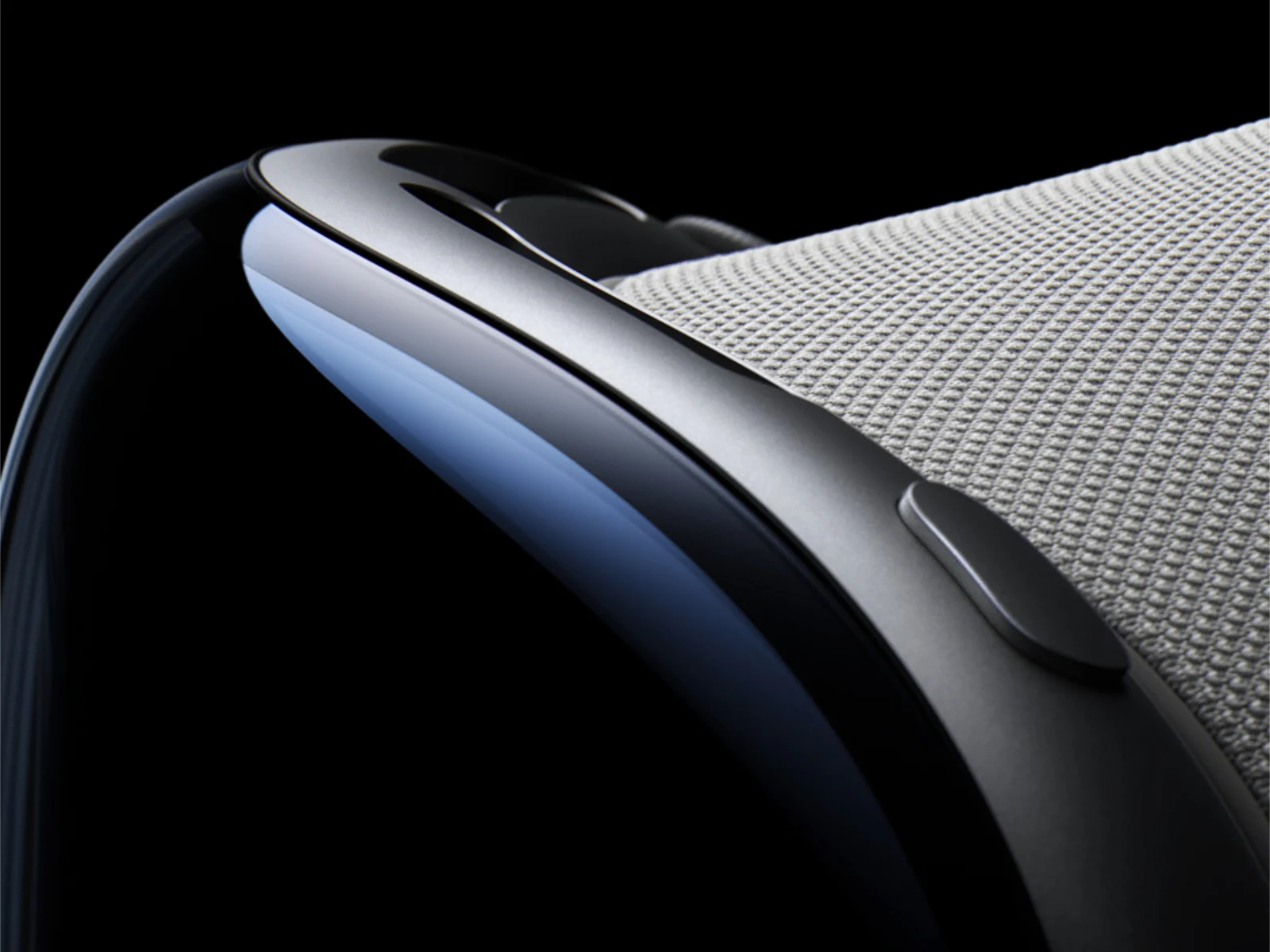
    The FCC also disclosed a technical drawing of the A3416. The image, shown below, depicts a headset that maintains a similar overall design and hardware to the current Vision Pro. This leads us to believe that the main upgrades to Apple’s Vision Pro will likely revolve around the new Apple M5 chipset, similar to what’s found in the iPad Pro and MacBook Pro series. While there are rumors of a $3,499 price tag and a potential launch before the year wraps up, it’s still unclear if Apple will brand its next VR headset as the Vision Pro or the Vision Pro 2.

    FCC via MacRumors

    Source:
    Link


  • Valve Adds Experimental Arm Support to SteamOS in Runtime Update

    Valve Adds Experimental Arm Support to SteamOS in Runtime Update

    Key Takeaways

    1. Valve is actively working on adding Arm support to SteamOS, confirmed by recent code in the SteamOS GitLab repository.
    2. An experimental version of the Steam Runtime for the 64-bit arm64 architecture is being developed, but it does not support 32-bit ARM binaries.
    3. Arm support in SteamOS may be aimed at the upcoming Valve Deckard VR headset and could also benefit devices like Snapdragon-based Windows on Arm gadgets.
    4. Valve is testing arm64 compatibility with various games, indicating a push to expand SteamOS compatibility beyond x86 devices.
    5. Valve may adopt strategies similar to Apple’s Game Porting Toolkit to enhance compatibility for Arm hardware.


    We have shared multiple times that Valve appears to be working on adding Arm support to its SteamOS, which is based on Linux. Recently, actual code has been discovered in the SteamOS GitLab repository that confirms this development.

    Latest Discoveries

    According to a post by SadleyItsBradley on X, the newest code commit for Steam Runtime discusses an experimental version designed for the 64-bit arm64 architecture. This shows that Valve is gradually allocating developer resources to enhance SteamOS with Arm support, even though the project is still in its early stages.

    Specifications and Limitations

    There is an experimental version of the runtime specifically for `arm64` (64-bit ARM, or `aarch64`). However, it’s important to note that this does not include support for a secondary architecture, meaning that 32-bit ARM binaries won’t be compatible.

    Future Possibilities

    Earlier predictions suggested that the introduction of Arm support in SteamOS was aimed at the upcoming Valve Deckard standalone VR headset. However, supporting Arm would also open the door for devices like the Snapdragon-based Windows on Arm gadgets, such as the Microsoft Surface Laptop 7, which is currently priced at $799.99 at Best Buy. Another theory in circulation is that Valve may be exploring Arm support for a future Nvidia-based Steam Deck 2.

    It’s well-known that Apple leveraged Wine, the open-source foundation for Steam’s Proton compatibility layer for Linux, to create its Game Porting Toolkit. This toolkit allows Windows games to run on macOS devices powered by Apple silicon. Therefore, it wouldn’t be surprising if Valve pursued a similar approach for Arm hardware as they continue to develop their experimental Arm64 support.

    Expanding Compatibility

    Valve has also been observed testing arm64 compatibility with various games, including several non-VR titles. When you combine all the evidence, it seems clear that Valve’s goal is to broaden the range of hardware that can run SteamOS, incorporating Arm devices along with the existing x86 options.

    Source:
    Link

  • Half-Life 3 Rumors Surge from New Dota 2 Update Data Mine

    Half-Life 3 Rumors Surge from New Dota 2 Update Data Mine

    Key Takeaways

    1. Valve’s new VR headset, nicknamed Deckard, has reignited interest in Half-Life 3.
    2. Tyler McVicker, a reliable source on Valve’s operations, found clues about Half-Life 3 in a DOTA 2 update.
    3. Half-Life 3 (or HLX) may include roguelike features, with varying gameplay elements each time.
    4. The game might focus more on vehicles compared to previous installments.
    5. A reveal or gameplay showcase for Half-Life 3 is expected in 2025, possibly exclusive to the Valve Deckard.


    With the recent news about Valve’s new VR headset (nicknamed Deckard), the buzz around Half-Life 3 has been reignited. This game has been a mystery to gamers for over two decades, leading many to joke that Valve struggles with the number three.

    Insights from Tyler McVicker

    The latest gossip comes from Tyler McVicker, a source who knows a lot about how Valve operates. He conducted a detailed data-mine of the recent DOTA 2 update, which has changed the gameplay dramatically. Within this update, there were clues hinting at new features that could be present in HLX, the rumored title for Half-Life 3.

    New Gameplay Elements

    Half-Life 3, or HLX, is said to include some roguelike features, meaning the items, obstacles, and enemies will vary each time you play. Moreover, the update suggests that there will be a greater focus on vehicles than in earlier games. However, it’s not clear which platform the game will be released on.

    Just like with Half-Life: Alyx, Valve might choose to make HLX or Half-Life 3 exclusive to the Valve Deckard, since both are expected to launch around late 2025. Tyler believes that a reveal, if not a gameplay showcase, will happen in 2025, as some code references FSR, which typically appears in the later stages of development.

    Conclusion

    Tyler McVicker has shared this information on YouTube, creating even more excitement about the future of this iconic franchise. As more details emerge, gamers are left eagerly anticipating what Valve has in store for them with Half-Life 3.

    Source:
    Link

  • Valve’s Steam Controller 2: Leaked Image Reveals Touchpads

    Valve’s Steam Controller 2: Leaked Image Reveals Touchpads

    Hardly any time has gone by since Hori launched the first new official Steam controller in several years. The Horipad, while marketed with ‘for Steam’ branding, doesn’t come with built-in touchpads like the original Steam Controller or the highly praised Steam Deck. This means it functions similarly to other budget-friendly products, like the 8BitDo’s Ultimate 2C, which is currently priced at $29.99 on Amazon.

    Rumors of a New Controller

    There is growing speculation that Valve is working on a second-generation Steam Controller. To summarize, Bradley Lynch revealed that Valve is creating what is referred to as the Steam Controller 2, codenamed ‘Ibex’. Recently, Lynch posted what he claims is a render model of the Ibex, which is included below.

    Recent Findings

    Lynch states that this render model was discovered in updates for the SteamVR driver. Interestingly, the same applies to the new Valve Deckard controllers, which we have discussed in a different article. Bradley suggests that the Deckard headset might also be compatible with the Ibex controller.

    Features and Design

    Focusing specifically on Ibex, it appears that this new controller enhances the Steam Deck’s layout by positioning a pair of joysticks between a d-pad and the ABXY buttons. Additionally, the render model reveals two touchpads that are slightly angled inward. From the image, it seems the Ibex is considerably larger than modern wireless controllers. Consequently, Lynch and some enthusiasts have started calling it the Steam Duke, a nod to the infamous Xbox Duke. Unfortunately, many details about Ibex are still not known at this point.

    Source: Link,Link


    Image 1