Tag: Toyota

  • TSMC and Toyota Prepare for $5.26 Billion Investment in New Semiconductor Plant in Japan

    TSMC and Toyota Prepare for $5.26 Billion Investment in New Semiconductor Plant in Japan

    TSMC Announces Construction of Second Semiconductor Plant in Japan

    Taiwan Semiconductor Manufacturing Co (TSMC) is set to make a significant advancement in Japan with the announcement of the construction of a second semiconductor plant. This move, backed by new investor Toyota Motor Corp, will bring about a major shift in the global chip manufacturing landscape.

    Expansion in Kumamoto Prefecture

    TSMC, globally recognized as the leading contract chip maker, is expanding its presence in Kumamoto Prefecture, Japan. This strategic initiative aligns with Prime Minister Fumio Kishida’s vision of enhancing Japan’s semiconductor production capabilities.

    Collaboration with Toyota

    The collaboration between TSMC and Toyota is a notable cross-industry effort to strengthen the semiconductor supply chain, a critical component for various technologies ranging from vehicles to smartphones. The investment for the new facility is capped at US$5.26 billion, with a focus on advancing semiconductor technology through the addition of 6- and 7-nanometre process technologies at the new site.

    Commitment to Innovation and Job Creation

    The construction of the new plant is scheduled to begin later this year and is expected to be operational by 2027. This project goes beyond manufacturing expansion; it represents a commitment to innovation and technological advancement. The new facility has the potential to produce over 100,000 12-inch wafers monthly and create more than 3,400 high-tech jobs.

    Addressing Semiconductor Supply Chain Challenges

    This development comes at a time when countries are increasingly aware of the need for a robust semiconductor supply chain. Recent global shortages have highlighted the impact on industries such as automotive and consumer electronics. The construction of the second semiconductor plant in Japan by TSMC, with the support of Toyota, aims to address these challenges and strengthen the global chip manufacturing ecosystem.

  • Toyota Remains World’s Leading Automaker in 2023, But Electric Vehicles Account for Just 1% of Sales

    Toyota Remains World’s Leading Automaker in 2023, But Electric Vehicles Account for Just 1% of Sales

    Toyota Remains the World’s Top-Selling Automaker in 2023

    Toyota has once again solidified its position as the world’s top-selling automaker for the fourth consecutive year. The Japanese automotive giant reported a remarkable 7.2% increase in sales compared to the previous year, selling a total of 11.23 million vehicles worldwide in 2023. This impressive achievement further demonstrates Toyota’s dominance in the global automotive market.

    Toyota’s Bestsellers: Corolla, RAV4, Camry, and Yaris

    The success of Toyota can be attributed to its lineup of popular models, including the Corolla, RAV4, Camry, and Yaris. These vehicles have consistently performed well in terms of sales and customer satisfaction. Toyota’s ability to deliver reliable and fuel-efficient cars has undoubtedly contributed to its ongoing success.

    A Traditional Approach: Hybrid Cars Take the Lead

    While many competitors are focusing on electric vehicle (EV) production and sales, Toyota has taken a different approach. Out of the 11.23 million cars sold by the company, only 3.42 million are hybrids, with the majority being traditional engine models. Surprisingly, EV sales make up just 1% of Toyota’s total sales, amounting to 104,000 units.

    Shifting Focus to Electric Vehicles

    Despite the current emphasis on traditional engine models, Toyota recognizes the growing importance of EVs in the automotive industry. The company has plans to increase its focus on electric vehicles in the coming years. With its vast resources and expertise, Toyota is well-positioned to succeed in the EV market.

    Toyota’s Tremendous Success in Perspective

    Looking at the broader picture, approximately 90 million cars were sold globally in 2023. Out of this staggering number, Toyota accounted for 11.23 million sales, meaning that 1 out of every 8 cars sold was a Toyota. This level of market dominance is a testament to the trust and loyalty that consumers have in the brand.

    Volkswagen Takes Second Place

    While Toyota remains at the top, German automotive powerhouse Volkswagen secured the second spot. The company reported a commendable 12% increase in sales, selling a total of 9.2 million cars in 2023. However, Volkswagen could have potentially claimed the first position if it hadn’t lost market share to BYD in China.

    In conclusion, Toyota’s continued success as the world’s top-selling automaker is a testament to its strong brand reputation and commitment to delivering high-quality vehicles. While the company currently lags behind in the electric vehicle market, it is poised to make significant strides in this area in the coming years. As the automotive industry continues to evolve, it will be interesting to see how Toyota adapts and maintains its position as a leader in the global market.

  • Toyota’s Chairman reveals brand’s advancement in ICE technology amidst the rise of EVs

    Toyota’s Chairman reveals brand’s advancement in ICE technology amidst the rise of EVs

    Toyota’s Chairman, Akio Toyoda, recently made a bold claim about the future of internal combustion engines (ICE) in the context of reducing carbon emissions. Speaking at a press conference at the Tokyo Auto Salon, Toyoda announced that Toyota is actively developing next-generation ICE models that will play a crucial role in achieving a carbon-neutral environment. This statement has gained attention from industry watchers and policymakers alike.

    Role of ICEs in Achieving Carbon Neutrality

    According to Toyoda, there is still a practical and necessary role for ICEs in the pursuit of carbon neutrality. Despite the rapid advancements and adoption of battery-electric technology in modern cars, the development of engine technology remains an important step towards the future. Toyota believes that refining engine technology is essential in achieving a carbon-neutral environment.

    Advanced Internal Combustion Engines

    Toyota plans to introduce its next-generation vehicles equipped with advanced internal combustion engines as early as this year. The company’s focus on cutting-edge engine technology aims to safeguard Japan’s automotive sector, which currently employs around 5.5 million people. The main challenge in ICE vehicles lies in significantly reducing carbon emissions, and Toyota aims to address this through various means. These include the implementation of higher compression and cleaner burning technologies, as well as the development of engines that run on cleaner hydrogen fuel.

    Impressive ICE Models Showcased

    At the Tokyo Auto Salon, Toyota showcased some impressive ICE models, such as the GR Yaris and the Lexus LBX RR Morizo Concept, which features a powerful 300hp engine. These models, along with others currently under development, hold great promise for the future of ICE vehicles with reduced emissions. However, Toyota recognizes the need to enhance its technology to compete with the growing popularity of battery-electric EVs, which have become the preferred choice among consumers.

    Conclusion

    Toyota’s Chairman, Akio Toyoda, firmly believes that internal combustion engines still have a future in the pursuit of reduced carbon emissions. The company’s commitment to developing next-generation ICE models with advanced engine technology showcases its dedication to achieving a carbon-neutral environment. While battery-electric EVs have gained significant popularity, Toyota aims to strike a balance by refining engine technology and exploring cleaner fuel options. This approach ensures that ICE vehicles continue to play a practical role in the automotive industry’s transition towards a sustainable future.

  • Toyota Breaks Conventions: All-Hybrid 2025 Camry Transforms No.1 US Sedan to Eco-Friendly

    Toyota Breaks Conventions: All-Hybrid 2025 Camry Transforms No.1 US Sedan to Eco-Friendly

    Toyota Announces All-Hybrid 2025 Camry

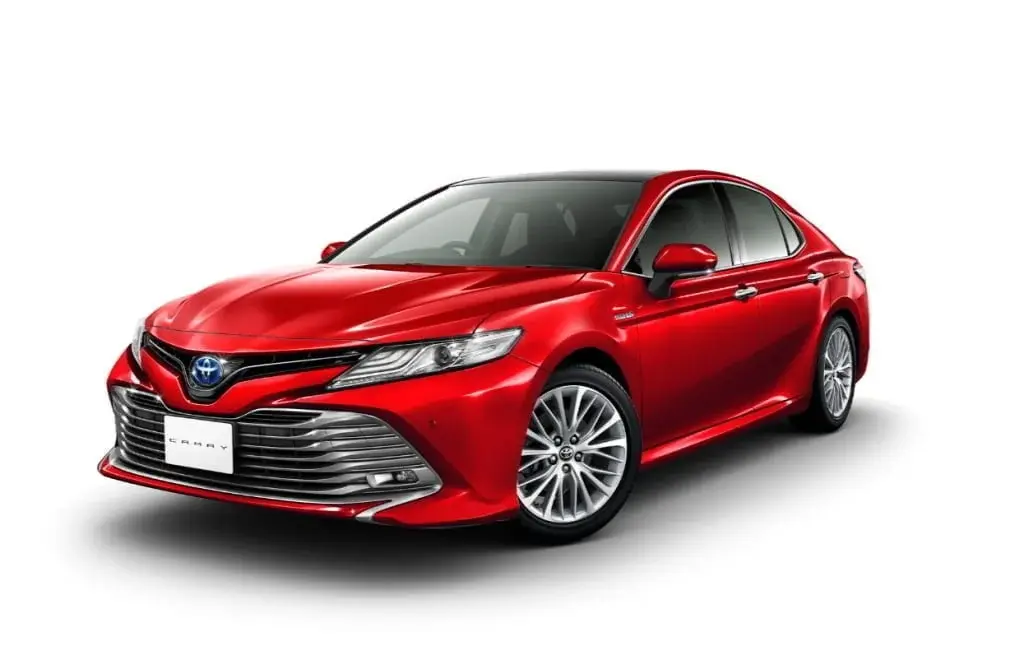
    Toyota has made a groundbreaking announcement regarding the next generation of its popular sedan in the US, the 2025 Toyota Camry. The company revealed that the new Camry will exclusively feature a hybrid electric powertrain, showcasing Toyota's commitment to reducing carbon emissions and complying with stricter fuel economy regulations in the United States.

    Powertrain and Performance

    Under the hood, the 2025 Camry will be equipped with a 2.5-liter, 4-cylinder engine coupled with the fifth-generation Toyota Hybrid System (THS 5). The front-wheel drive models will offer a standard 225 net combined horsepower, while the Electronic On-Demand All-Wheel Drive (AWD) models will impress with 232HP. The AWD system will integrate a dedicated rear electric drive motor, providing enhanced traction and reliable performance on various terrains.

    Sleek Redesign

    The exterior of the 2025 Camry has undergone a sleek redesign, thanks to CALTY's Newport Beach and Ann Arbor studios. The car features a hammerhead front fascia, giving it a distinct and athletic appearance. Slim LED headlights and taillights further enhance its modern look. Sport grades, including SE and XSE, will come with aerodynamic elements and unique styling options, including vibrant exterior colors like Ocean Gem and Supersonic Red.

    Refined Interior

    Inside, the 2025 Camry welcomes drivers with an open-concept cockpit and refined materials. Sport grades will stand out with unique interior elements, while the XLE grade will introduce leather and Dinamica® microfiber-trimmed seats. The car will offer enhanced seat comfort, available front heated and ventilated seats, and a power tilt and slide panoramic roof for XLE and XSE grades, providing an elevated driving experience.

    Cutting-Edge Technology

    The 2025 Camry will prioritize technology, with a standard 7-inch digital gauge cluster (12.3-inch on XLE and XSE models), an available 10-inch Head-Up Display, and the Toyota Audio Multimedia System featuring wireless Apple CarPlay® and Android Auto™ compatibility. Connectivity features will include dual Bluetooth® phone connectivity, Wi-Fi Connect, and an Intelligent Assistant through Drive Connect for voice-activated commands. Over-the-air updates will ensure that the technology remains cutting-edge.

    Safety First

    Safety remains a top priority for Toyota, and the 2025 Camry will come equipped with a Blind Spot Monitor, Rear Cross-Traffic Alert, and the Toyota Safety Sense 3.0 (TSS 3.0) suite of features. This suite includes the Pre-Collision System, Dynamic Radar Cruise Control, Lane Departure Alert, Lane Tracing Assist, Road Sign Assist, Automatic High Beams, and Proactive Driving Assist.

    Embracing Hybrid Technology

    Toyota's decision to make the 2025 Camry an all-hybrid vehicle marks a departure from traditional combustion models. The company is confident in the growing demand for hybrid and plug-in hybrid technology and believes that the Camry's transition will fill a void left by competitors in the sedan segment. This move follows the success of the Sienna minivan's all-hybrid powertrain.

    Pricing and Availability

    While specific pricing and fuel efficiency details have not been disclosed, Toyota asserts that the added value of the hybrid powertrain justifies any premium. The 2025 Toyota Camry is expected to hit showrooms in the spring, offering consumers a greener and more powerful driving experience.

    Source: global.toyota