Tag: thermal management

  • Samsung Exynos 2600 Runs 30% Cooler Than Exynos 2500

    Samsung Exynos 2600 Runs 30% Cooler Than Exynos 2500

    Key Takeaways

    1. Samsung confirmed the addition of a Heat Pass Block (HPB) on the Exynos 2600 SoC to reduce thermal output.
    2. The HPB has achieved a 30% reduction in heat generation compared to the Exynos 2500.
    3. Early benchmark results for the Exynos 2600 show strong performance, with scores over 3,400 in single-core and over 11,600 in multi-core tests.
    4. Rumors suggest the Galaxy S26 Ultra may feature the Exynos 2600, marking a potential return to using Exynos chips alongside Qualcomm.
    5. Caution is advised regarding the authenticity of Exynos 2600 benchmark scores and specifications until official announcements are made by Samsung.


    Back in July, we mentioned that Samsung might incorporate a Heat Pass Block (HPB) on top of the Exynos 2600 SoC to control the chip’s thermal output. This was confirmed by Samsung’s Kim Dae-woo, who holds the position of Senior Vice President and leads the Package Development Team.

    Heat Reduction Achieved

    During a presentation at the ISMP 2025 event, Kim Dae-woo stated that the addition of an HPB atop the SoC has successfully reduced the heat generated by the Exynos 2600 by around 30% compared to its predecessor, the Exynos 2500. If this claim holds, it is significant, as Samsung is likely to utilize this extra thermal capacity to increase the clock speeds of the Exynos 2600.

    Impressive Benchmark Results

    Numerous early benchmark tests of the Exynos 2600 have been conducted. Even in its pre-launch version, the SoC shows promising results. For example, one recent benchmark indicated that the Exynos 2600 achieved scores of over 3,400 in the Geekbench 6 single-core test and more than 11,600 in the multi-core assessment.

    Potential for Galaxy S26 Ultra

    With such impressive performance, there are rumors suggesting that Samsung may equip the Galaxy S26 Ultra with the Exynos 2600. Since the Galaxy S23 Ultra in 2023, Samsung has exclusively used a high-end Qualcomm chip in its Galaxy S Ultra line. Thus, if these rumors are accurate, Samsung could be returning to a mixed strategy, incorporating both Exynos and Qualcomm processors in all Galaxy S26 models.

    It’s important to note that many of the Exynos 2600 Geekbench scores circulating online may not be genuine. This also applies to other specifications, such as camera components. Therefore, approach any information regarding the Exynos 2600 and Galaxy S26 with caution. We will only have clarity on Samsung’s plans when they officially reveal the Galaxy S26 series during a Unpacked event.

    Source:
    Link
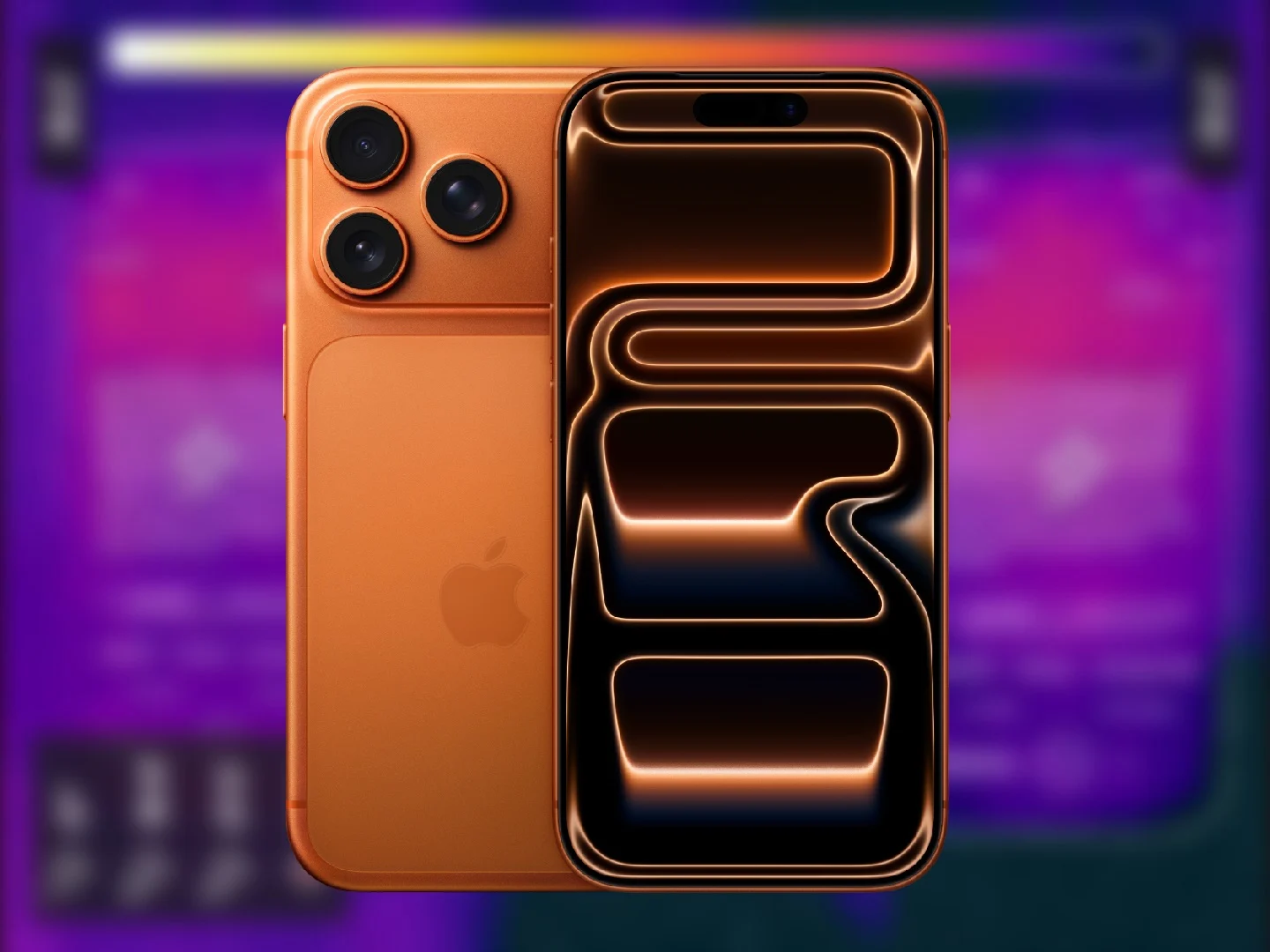


  • iPhone 17 Pro’s Vapor Chamber Keeps Phone Cool Under AI Stress

    iPhone 17 Pro’s Vapor Chamber Keeps Phone Cool Under AI Stress

    Key Takeaways

    1. The iPhone 17 Pro and 17 Pro Max feature the powerful A19 Pro SoC, enhancing CPU, GPU, and efficiency.
    2. Vapor chambers in these models effectively manage heat, allowing for comfortable use even during heavy tasks.
    3. Performance testing showed the iPhone 17 Pro maintained a cool temperature of 29°C during intense usage, outperforming the iPhone 16 Pro.
    4. The aluminum unibody design offers better thermal conductivity compared to titanium frames.
    5. Both models are suitable for extended use in activities like social media, 4K video recording, and gaming without overheating.


    The Apple iPhone 17 Pro and 17 Pro Max rank among the top smartphones available, powered by the impressive A19 Pro SoC. Alongside the enhancements in CPU, GPU, and overall efficiency provided by the A19 Pro, these models also incorporate vapor chambers to aid in cooling. With aluminum unibodies that excel in thermal conductivity compared to titanium frames, Apple asserts that the iPhone 17 Pro and 17 Pro Max offer “incredible performance while remaining comfortable to hold.”

    Performance Testing

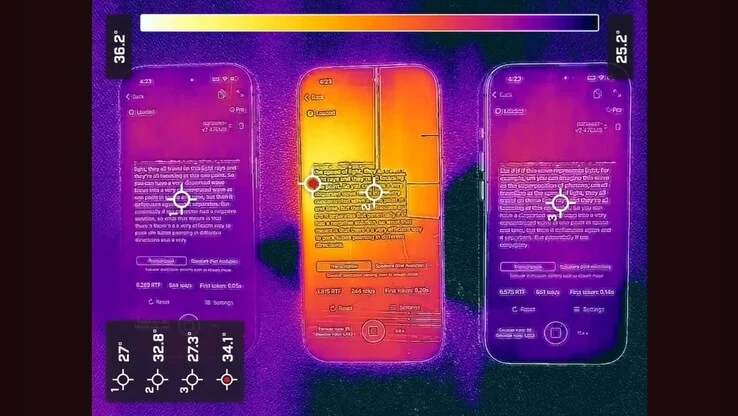
    This is exactly what Argmax discovered after conducting extensive AI evaluations on the iPhone 17 Pro. Argmax, which specializes in AI technologies, indicates that the vapor chamber within the iPhone 17 Pro effectively maintains cool temperatures even during heavy usage, in addition to significant improvements in AI performance.

    Cooling Efficiency

    To assess the cooling capabilities, Argmax tested the iPhone 17 Pro, iPhone 16 Pro, and iPhone 17 by transcribing a 30-minute YouTube video in “real-time with sub-second” latency. The challenge presented by this task is amplified since the test was executed on the GPU of both the iPhone 17 Pro and iPhone 16 Pro, unlike the iPhone 17, which relied on its Neural Engine—this component is notably more efficient and generates less heat.

    The findings were compelling: the vapor chamber and aluminum unibody of the iPhone 17 Pro work effectively to manage heat, as the device only reached a temperature of 29°C. In comparison, the iPhone 16 Pro, which does not have a vapor chamber and is constructed with a titanium frame, warmed up to 40 °C. The iPhone 17 also maintained a temperature below 30 °C.

    Conclusion

    In summary, both the iPhone 17 Pro and the iPhone 17 Pro Max excel at thermal management. Whether you are using your device for social media, capturing 4K videos, or gaming, the iPhone 17 Pro and 17 Pro Max should remain easy to hold for extended periods.

    Source:
    Link


  • Reasons Samsung Phones Struggle with Gaming Performance

    Reasons Samsung Phones Struggle with Gaming Performance

    Samsung’s Galaxy series of smartphones is often seen as one of the best options in the Android space. They boast stunning screens, impressive cameras, and a dependable software environment.

    Gaming Experience

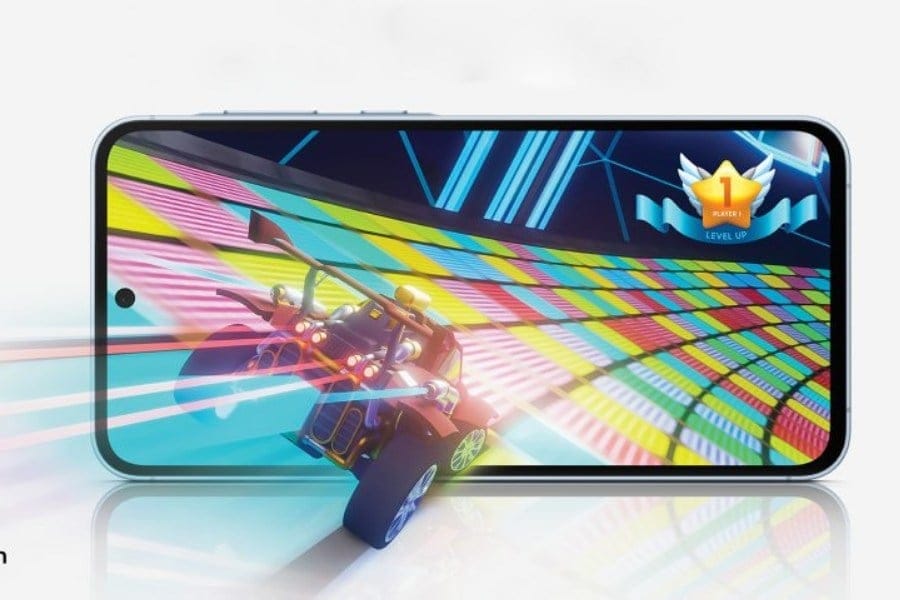
    Despite their strengths, the gaming performance on these devices isn’t always perfect. Although Samsung phones have noteworthy capabilities, there are elements to take into account that may affect your choice, especially when looked at alongside other brands.

    This piece looks into the reasons why gaming on Samsung smartphones might not be as satisfactory. It’s crucial to understand that these aren’t significant problems, but rather aspects where other brands may currently have an advantage.

    Thermal Management

    A major issue for mobile gamers is thermal throttling. When a smartphone works hard for long periods, such as during high-intensity gaming, it produces a lot of heat. Without proper heat control, this can cause performance to drop as the device reduces its processing speed to avert overheating.

    Some Chinese manufacturers have developed clever cooling systems to combat this problem. These solutions can include vapor chambers, multi-layer graphite sheets, and even special cooling fans found in certain gaming phones.

    While Samsung does implement thermal management methods, they may not be as effective as those in some rival devices. This might result in more frequent thermal throttling on Samsung phones during high-demand games, leading to frame rate reductions and a less enjoyable gaming experience.

  • Impressive Winter Performance of Electric Vehicles: Tesla, Audi, and Nissan

    Impressive Winter Performance of Electric Vehicles: Tesla, Audi, and Nissan

    Electric Vehicles Overcoming Reduced Range Amid Winter Conditions

    With the arrival of winter, electric vehicle (EV) owners typically brace themselves for decreased range caused by the cold climate. Nonetheless, recent studies have exhibited that specific EVs, including those manufactured by Tesla, Audi, and Nissan, are challenging this norm by encountering minimal range loss even in colder temperatures.

    Delving Deeper into the Winter Range Phenomenon

    An exhaustive analysis conducted by Recurrent, a startup specializing in battery health data, has brought to light this intriguing observation. By scrutinizing over 10,000 EVs throughout the winter period of 2022-2023, it was unveiled that these vehicles maintained an average winter range of around 70% of their usual capacity. This revelation carries weight, indicating that not all EVs are equally impacted by chilly weather conditions.

    Unpacking the Science Underlying Range Decrease in Winter

    The decrease in range experienced in winter is deeply intertwined with chemical processes. The cold temperatures impede the battery’s capacity to discharge energy effectively. Moreover, the process of heating the cabin demands additional power, thereby leading to a further decline in range. Nevertheless, breakthroughs in thermal regulation technology, like heat pumps, have emerged as a pivotal factor in alleviating this loss.

    Audi’s Noteworthy Winter Range Performance

    Within the array of EVs scrutinized, the performance of Audi’s E-Tron, specifically the Q8 E-Tron from MY2023 onwards, stood out prominently. This model encountered a mere 16% reduction in its winter range, underscoring the efficiency of its thermal management infrastructure. The E-Tron’s innovative heat pump mechanism can recover as much as 3 kilowatts of electricity from waste heat, underscoring the promise of this technology.

    Enhanced Winter Performance of the Nissan Leaf

    The 2019 Nissan Leaf serves as another exemplar of significant advancements in winter range performance over its predecessors. Despite enduring a 23% decrease in range at 32 degrees Fahrenheit, it exhibits lesser vulnerability to temperature fluctuations owing to its more advanced thermal management system.

    Tesla’s Remarkable Thermal Efficiency in Winter

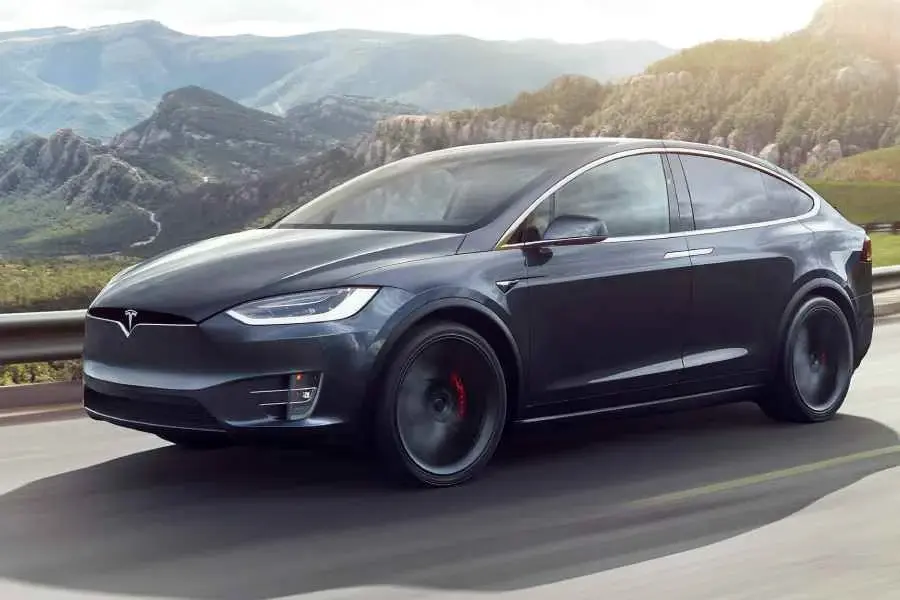
    Tesla’s line-up, notably the Model 3, Model Y, and Model X, also showcases outstanding thermal efficiency when faced with winter conditions. On average, they merely suffer a 24% decline in range. The introduction of Tesla’s pioneering heat pump in 2021 has been instrumental in achieving this feat. With enhancements such as a "super manifold" and an "octo valve," the heat pump bolsters efficiency and contributes to the vehicles’ resilience against diverse weather patterns.

    These noteworthay findings underscore not only the strides made in EV technology but also highlight the increasing durability of EVs when confronted with fluctuating weather conditions. As winter sets in, EV owners can draw solace from the fact that select models are defying the conventional range reduction traditionally associated with cold temperatures.

    Source: Gizmochina