Tag: Shawn Layden

  • Ex-PlayStation Boss Warns of Grim Future for Xbox Game Pass Despite Rumored Price Cuts

    Ex-PlayStation Boss Warns of Grim Future for Xbox Game Pass Despite Rumored Price Cuts

    Key Takeaway

    1. Shawn Layden criticizes Xbox Game Pass, calling it a “grim prognosis” for the industry and doubting its sustainability.
    2. He opposes the subscription model, viewing it as a “danger” to the gaming business and unfavorable for indie developers.
    3. Despite Microsoft’s efforts, Layden believes the service may be beyond saving, and recent price increases could further alienate consumers.

    Shawn Layden Criticizes Xbox Game Pass

    Shawn Layden, who was once the boss of Sony Interactive Entertainment, has always been open about his thoughts on the gaming world. Recently, he shared some blunt opinions about Xbox’s subscription service called Xbox Game Pass. He didn’t hold back in his views, especially after noticing some troubling signs in the industry that he believes aren’t good for gaming consumers.

    Concerns Over Subscription Pricing

    He reacted strongly to a report from The Verge about comments made by Asha Sharma, the CEO of Xbox, admitting that the higher tiers like Ultimate are “too expensive for players”. Fans saw the recent increase in the Xbox Game Pass prices in October 2025, which led many to cancel their subscriptions. Sharma mentioned that Microsoft needs to address the value they offer, but Layden isn’t convinced this can be fixed easily. He said on LinkedIn: “They are trying so hard to will this into health, despite unfavorable diagnostics and a grim prognosis. A clarifying post mortem would do the entire industry some good.”

    Industry Reactions and Future Strategies

    Interestingly, a few days later, Sharma responded to Layden saying, “I would love to chat sometime.” Rumors are floating around that Microsoft might start removing some of the day-one Game Pass games, including huge titles like Call of Duty, fearing that the popularity of these games could hurt sales elsewhere. Microsoft might also experiment with bundles, teaming up with Netflix for streaming and gaming. Still, these ideas don’t seem to solve the core issue Layden highlighted regarding the company’s strategy and the value proposition for consumers.

    Layden’s Views on Subscription Models

    Back in August 2025, Layden spoke to GamesIndustry.biz about his dislike for the whole idea of a “Netflix of gaming.” He sees this model as potentially harmful to the gaming business because it might flood the market with AAA titles from Xbox Game Pass right at launch, which can be risky. He pointed out that indie developers gain some exposure but often end up in a “wage slave” situation, whereas developers on Steam can make higher profits even after Valve’s cut. His concern is that the shift toward subscription services could hurt the traditional way of buying games.

    Market Challenges and Future Outlook

    Making Xbox’s prices more appealing may not be enough to sway critics, especially those who still prefer buying games outright. The Xbox CEO needs to act quickly because recent reports show that growth for the subscription service has slowed down significantly. Layden’s criticisms reflect a wider debate about how gaming is changing and whether the industry needs to find a more balanced approach between subscription and traditional sales.

    So, while Microsoft tries to adapt, the debate about the future of gaming sales and services continues, and experts like Layden remain skeptical about whether current strategies will succeed in the long run.



  • Universal Game Format Needed to Break 250 Million Console Limit

    Universal Game Format Needed to Break 250 Million Console Limit

    Key Takeaways

    1. Shawn Layden believes the gaming industry is stagnant in audience growth and needs a unifying format to progress.
    2. Console sales per generation have remained consistent, with casual gamers included in the large industry statistics.
    3. The gaming market is “stuck,” with previous peaks in audience numbers largely tied to non-traditional gaming consoles like the Wii.
    4. Layden emphasizes the importance of licensing formats for broader market reach, citing the Betamax vs. VHS scenario.
    5. He supports the value of exclusive games for consoles, acknowledging their role in enhancing brand identity while promoting a unified gaming experience.


    Former Sony executive Shawn Layden, who left his role as chairman of SIE Worldwide Studios in 2019 after a long career of thirty years with the company, recently expressed his views in an interview. He claims that the gaming industry is stagnant regarding audience growth. Layden suggests that a unifying gaming format, akin to how DVDs or VHS tapes used to be standard, is essential for making progress.

    Industry Trends

    Layden has always been vocal about his opinions on video game trends. In a recent chat with YouTubers Naomi Kyle and Pause for Thought, he noted that console sales per generation have remained relatively unchanged over time. He elaborated by saying:

    “We discuss gaming as a $250 billion industry, which it is, and it has hundreds of millions of players, which is true. But that count also includes casual players. If you’re playing Wordle, you’re included as a gamer. If you’re on Candy Crush, you’re counted too.”

    He pointed out examples from the past, mentioning the PlayStation 1, Sega Saturn, and Nintendo 64, which all aligned with his estimated figures. The Wii was a notable exception because it attracted many non-gamers interested in titles like Wii Fit.

    Market Limitations

    Layden believes that the market is “stuck” or somewhat restricted. He further clarified this by stating:

    “If you line up all the PS1s, Sega Saturns, and N64s by generation, they all hit around 250 million. The only time it peaked near 300 million was during the Wii era when people thought buying a Wii Fit would help them lose weight. That brought in a non-traditional gaming audience.”

    However, he insists that this was a one-time occurrence, and the market has since plateaued. He thinks it’s crucial to break through this barrier. “Some may think I’m crazy for saying this, but the reason Sony’s Betamax format lost to VHS was that VHS allowed other manufacturers to license its format.”

    Preserving Console Identity

    Despite his views on a unified format, Layden does not advocate for eliminating what makes each console special. In the same interview, he added:

    “I don’t believe every game needs to be exclusive to a console, but I recognize the importance of exclusives for platform holders like Sony and Nintendo. Strong exclusives add significant value to their brands.”

    Source:
    Link


  • Ex-PlayStation Chief Critiques Sony’s Live Service as Repetitive

    Ex-PlayStation Chief Critiques Sony’s Live Service as Repetitive

    Key Takeaways

    1. Shawn Layden criticizes Sony’s focus on live-service games, viewing them as mere devices for repetitive actions rather than true games.
    2. He defines genuine games as requiring a narrative, character, and universe, unlike live-service games that depend on repetitive actions and social interaction.
    3. Layden warns that Sony’s obsession with live-service titles is misleading and may lead to unsatisfactory results, similar to chasing a mirage.
    4. Sony aimed to release 12 new live-service games by 2026, but has scrapped eight projects, including major titles like The Last of Us Online and a live-service God of War game.
    5. While many live-service ventures have failed, Helldivers 2 is highlighted as a success, selling over 19 million copies and remaining popular on multiple platforms.


    Shawn Layden, who was once the Chairman and President of Sony Interactive Entertainment America, recently talked with The Ringer and shared some harsh opinions about Sony’s current focus on live-service games. He remarked, “To me, a live-service game isn’t truly a game. It’s more like a device for repetitive action engagement.”

    His Tenure and Success

    During the latter part of his time as the head of PlayStation Studios, Layden approved Helldivers 2 in 2019, which became a huge success on both PlayStation and PC. Nonetheless, he didn’t hold back when criticizing Sony’s move toward live-service games.

    In the interview, he mentioned that genuine games require “three things.” These essentials are a narrative, a character, and a universe. He contrasted this by stating that live-service games only need “a repetitive action that most people can understand, a means to interact within that world with others who think alike, and the eagerness to repeat it over and over.”

    Concerns About Live-Service Focus

    Layden elaborated that Sony’s obsession with live-service titles is akin to a “siren’s call” that has “captivated” executives for many years. He described it as “like a mirage atop a sand dune. You chase it. You can’t really reach it. Or when you do, what you brought is something no one wants to engage with.”

    These comments come as PlayStation is pushing further into the live-service arena, a strategy that was heavily promoted by former CEO Jim Ryan.

    In 2022, Jim Ryan declared that Sony aimed to release 12 new live-service games by 2026. However, Sony has scrapped eight of those projects. Among the canceled titles were some of Sony’s most ambitious live-service endeavors, including The Last of Us Online, a live-service God of War game, a Horizon MMO, Twisted Metal, and several unannounced projects from Bend Studio and Bluepoint Games.

    Notable Failures and Successes

    One significant live-service game that faced a lot of backlash was Concord from PlayStation and Firewalk Studios, which had a development cost of $400 million and only saw a peak of about 697 players online at the same time on Steam, ultimately leading to its shutdown just two weeks after launch.

    On the other hand, Helldivers 2 stands out as a success in PlayStation’s lineup, remaining one of the top-played games on PC and Xbox, with over 19 million copies sold across all platforms.

    Source:
    Link


  • Game Prices Should Rise with Each Console Generation, Says Ex-Exec

    Game Prices Should Rise with Each Console Generation, Says Ex-Exec

    Key Takeaways

    1. Video game prices should rise with new console generations to match increasing development costs and inflation.
    2. The fear of raising prices has led to low profit margins in the gaming industry.
    3. Development costs have significantly increased, making it challenging for companies to maintain profitability at the same retail price.
    4. The industry’s focus on growth while facing dwindling net profits has created a crisis, with high-budget games needing massive sales to break even.
    5. Some AAA titles have started to see base pricing shifts, with prices rising to $70 or $80 for certain games.


    Former PlayStation and Sony Interactive Entertainment America CEO Shawn Layden has expressed his view that video game prices should gradually rise with each new console generation. This change would help keep up with the increasing costs of development and inflation.

    Concerns Over Profit Margins

    Layden pointed out that the gaming industry’s fear of raising prices has led to dangerously low profit margins. In a recent chat with GamesIndustry.biz, he mentioned that the prices for premium games have stayed the same for over twenty years, even though development costs have steadily increased. He shared his thoughts, saying:

    “I think it’s because everyone’s scared. No one wants to be the first one to up the price, because you’re worried about losing sales. So, what happens is you just end up reducing your operating income, your profit margins.”

    The Impact of Fear on Pricing

    According to Layden, this fear of being the first to change the price is holding back profits as companies cling to the same retail price. He drew a comparison between the PS1 era and the PS4 generation, explaining:

    “There were more fancy cars in the parking lot back in the PS1 days than now during the PS4 times, because selling 20 million units at $60 for something that cost $10 million to create is very different from selling 20 million units at $60 for something that cost $160 million to make.”

    The Crisis in the Industry

    Layden also believes that the industry’s obsession with growth, even while net profits dwindle, has led to a crisis where game budgets exceeding $100 million need sales of 25 million or more to break even. He noted that this is something only a few companies like Rockstar Games or FromSoftware can achieve.

    Instead of increasing prices directly, Layden said that publishers have found ways to raise revenue through add-ons. He explained:

    “They said, ‘Alright, what if we keep the price the same and then we charge you little by little with DLC, microtransactions, battle passes, season passes, whatever term you prefer, to make up the difference?’”

    Shifts in Pricing Trends

    The current gaming generation has seen some movement in base pricing, with certain AAA titles starting at $70. Others, like Nintendo Switch 2’s Mario Kart World, are testing higher price points, with some going for $80.

    These pricing trends arise as U.S. consumer spending on video games is expected to hit $58.7 billion in 2024, a slight increase from last year, even while inflation remains a persistent issue for consumers. This comes amid an administration that is using tariffs in its ongoing trade conflict.

    Source:
    Link


  • Sony PlayStation 6 May Keep Optical Disk Drive, Says Ex-Executive

    Sony PlayStation 6 May Keep Optical Disk Drive, Says Ex-Executive

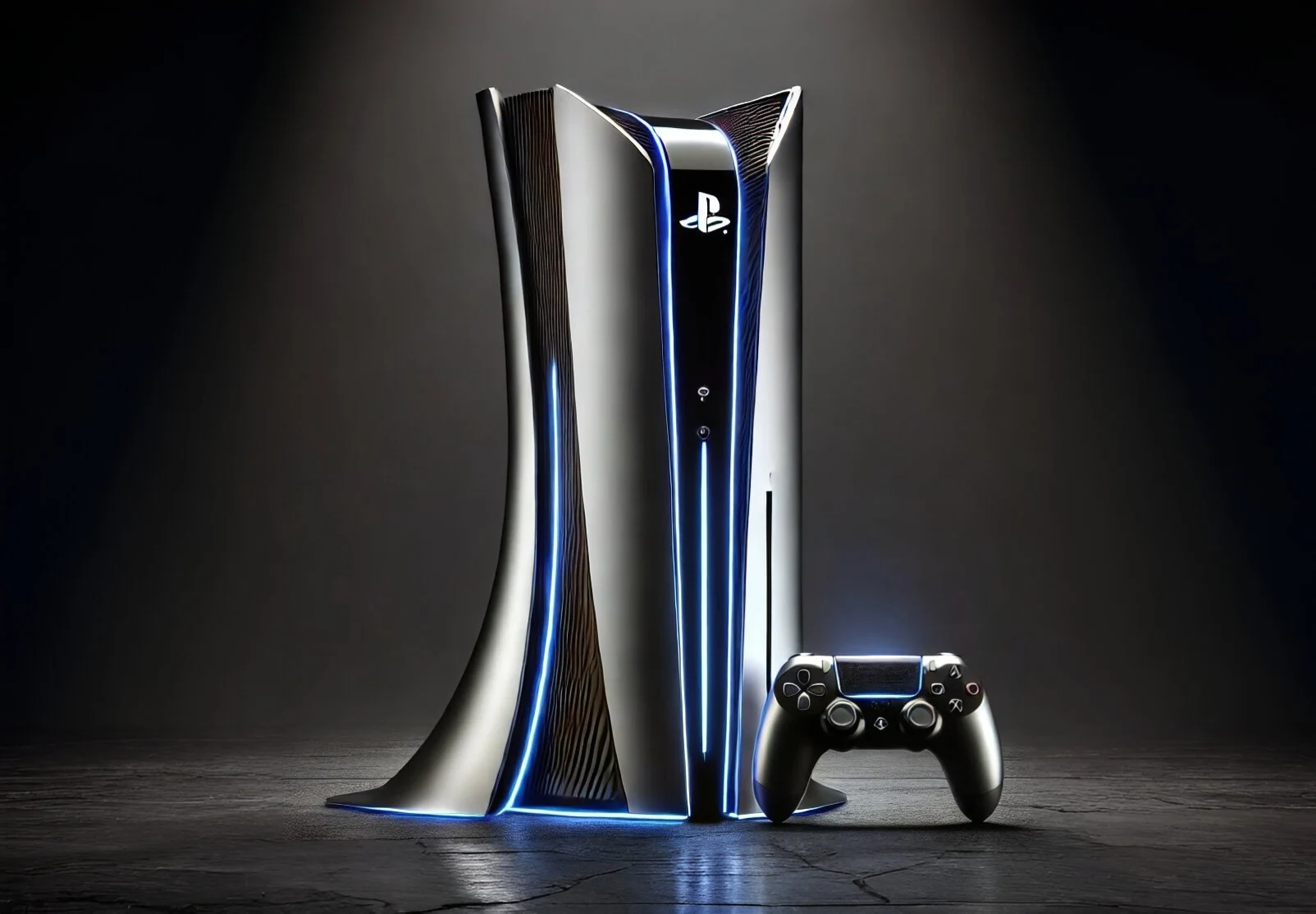
    The Sony PlayStation 5 comes in two versions: one with optical disk support and another without it. However, its next version, the PlayStation 5 Pro, does not offer an optical disk option. Microsoft has also launched its latest Xbox consoles as all-digital, leading many to believe that the upcoming PlayStation 6 might follow the same trend. Nonetheless, Shawn Layden, who once served as the chairman of Sony Interactive Entertainment (SIE), has shared his thoughts on this issue. He anticipates that the PlayStation 6 will still include support for optical disks.

    Concerns About Going Discless

    Layden notes that the PlayStation is popular across many different regions and markets. He argues that eliminating optical disks could negatively impact the console’s appeal in areas with unreliable internet connections. His perspective carries significant weight, especially when he mentions that his former colleagues are rightfully careful about making such impactful decisions. If Sony believes that removing the disk drive could lead to a drop in popularity, it is likely they will reconsider going fully digital.

    Limited Information on PlayStation 6

    Currently, not much information about the PlayStation 6 is available, which is to be expected. We do know that the AMD APU designed for this new home console is nearly finished. It will feature a CPU that includes AMD’s 3D V-Cache technology and a mid-range UDNA GPU, but further details remain unclear. The PlayStation 6 is anticipated to launch sometime in 2027, which seems reasonable since the PlayStation 5 (priced at $550 on Amazon) was released roughly seven years after the PlayStation 4. Consoles typically have a much longer lifespan compared to PCs, making the development phase extremely important.

    Source:
    Link