
Tag: Satellites

  • Starlink Mobile Faces Amazon’s Globalstar Purchase Before SpaceX IPO

    Starlink Mobile Faces Amazon’s Globalstar Purchase Before SpaceX IPO

    Key Takeaway

    1. Amazon acquired Globalstar, integrating its satellite constellation into Amazon Leo’s low-earth orbit network, with plans to support features like emergency texting and Find My on iPhone and wearables.
    2. The acquisition grants Amazon significant spectrum licenses and regulatory approvals, accelerating its satellite deployment plans with an $11.57 billion investment.
    3. Starting in 2028, Amazon Leo aims to deploy a next-generation direct-to-device satellite system capable of delivering voice, data, and messaging directly to standard cell phones without extra hardware.
    4. The complete Amazon Leo network will include thousands of satellites, supporting hundreds of millions of users globally, with a target launch in 2027, pending regulatory approval.
    5. Amazon’s efforts, leveraging Globalstar’s spectrum and Apple’s user base, set to challenge current satellite broadband providers like SpaceX’s Starlink.

    Amazon’s Big Move in Satellite Communications

    Amazon just announced that they bought the satellite service provider Globalstar, which is kinda a big deal. This company is the same one that Apple invested (yeah, a lot!) of 1.5 billion dollars to help power its Emergency SOS feature through satellite networks like the iPhone 14. So, this acquisition is a serious step for Amazon to expand it’s satellite capabilities and beef up their tech.

    Integration into Amazon Leo Network

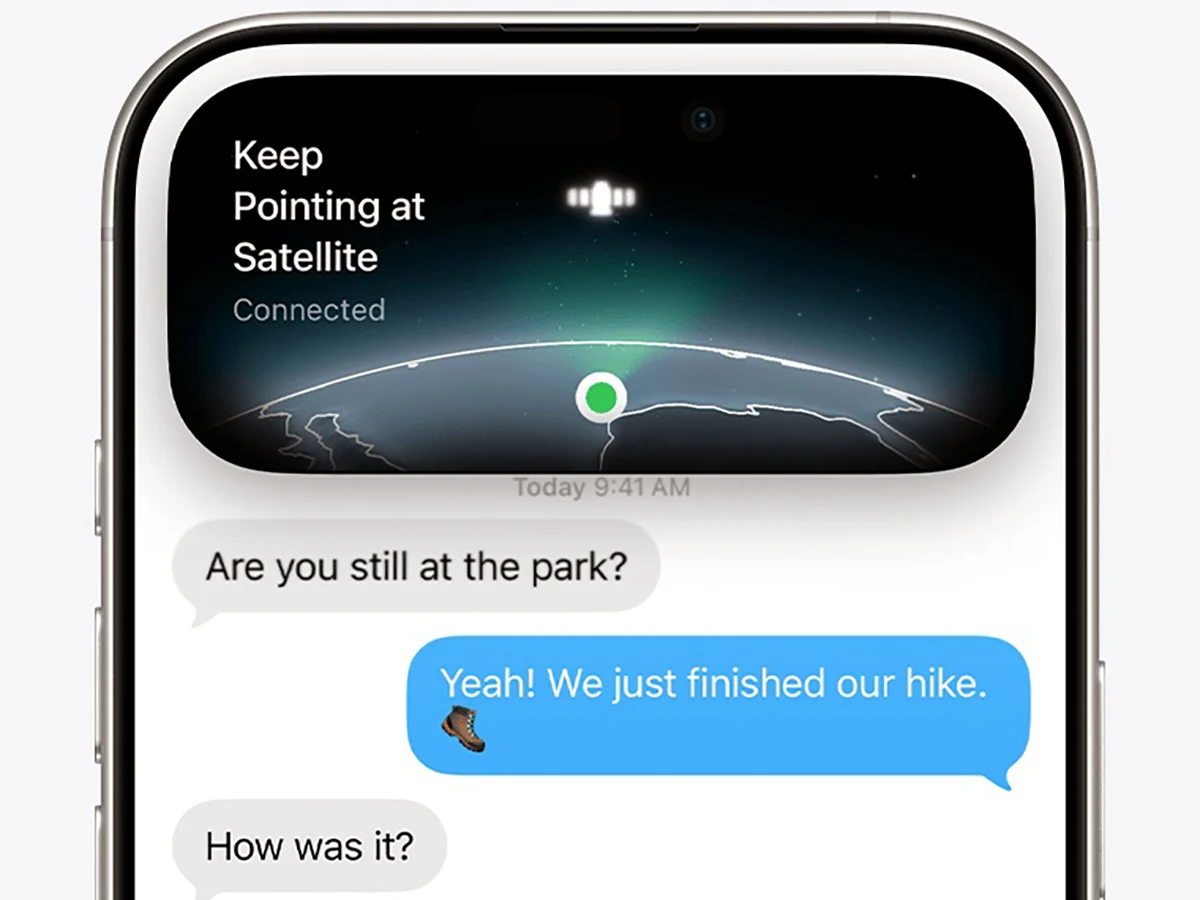
    With this acquisition, Globalstar’s constellation, which is basically a bunch of orbiting satellites, will be merged into Amazon’s Leo low-earth orbit network. And, the partnership that Apple already has will stay too. Amazon Leo is now going to keep providing satellite features for supported iPhones and wearables, like the Apple Watch Ultra 3, which is currently on sale with 100 dollars off, making it more accessible for a wider consumers. These features include emergency texting, messages, the Find My service, and roadside assistance, promising access to hundreds of millions of users around the world.

    The Financial and Regulatory Scoop

    • What Amazon gains from all this are Globalstar’s spectrum licenses, which are like special permissions to use certain radio frequencies worldwide. These licenses usually take a long time to get, so acquiring them gives Amazon a head start. The cost for this big package is $11.57 billion, which sounds like alot but is still less than what SpaceX paid for similar spectrum rights — $16 billion for Dish spectrum to launch Starlink Mobile 5G service to cell phones.

    In 2028, Amazon is planning to launch its own next-gen satellite system called D2D, which will be able to send voice, data, and messages directly to ordinary phones without needing any extra hardware, unlike Starlink Mobile. They say this new system will be much more efficient spectrum-wise than older systems, and it shows that Amazon has serious plans to challenge current big players like T-Satellite’s service through T-Mobile, powered by Starlink.

    Future plans for Satellite Connectivity

    The complete Amazon Leo network will include thousands of satellites, supporting hundreds of millions of customer devices all around the globe. The deal is expected to close in 2027 once it gets all the necessary government approvals, something that shareholders already approved. This move in satellite tech clearly indicates Amazon’s ambitions to rival SpaceX’s Starlink in satellite broadband and direct-to-cell services, potentially reshaping how connectivity works worldwide.

    Sources
  • Starlink Satellites at Risk from Solar Activity Cycles

    Starlink Satellites at Risk from Solar Activity Cycles

    Key Takeaways

    1. Starlink satellites may be affected by the Sun’s 11-year magnetic activity cycle, leading to potential communication disruptions.
    2. Increased solar activity, including sunspots and solar flares, releases particles that can disrupt satellite operations.
    3. Coronal mass ejections raise Earth’s upper atmosphere temperature, increasing air resistance and forcing satellites to adjust their orbits.
    4. The number of Starlink satellite re-entries has significantly increased, with 316 recorded in 2024 compared to only a couple in 2019.
    5. Research aims to improve satellite durability and reduce re-entries, as falling debris poses risks to people and property.


    When you look up at the night sky, you can notice many satellites moving in their own paths. Occasionally, you’ll spot a string of Starlink satellites, which looks like a long white line gliding through the darkness. A recent study suggests that these orbiting objects may be influenced by the Sun’s cycles, which could lead to serious issues.

    NASA’s Findings

    NASA researchers explained this occurrence in the journal Frontiers in Astronomy and Space Sciences. Over the last five years, the Sun has been slowly reaching its maximum magnetic activity. This coincides with the increasing number of Starlink satellites being launched into orbit.

    It’s crucial to recognize that the Sun goes through cycles that typically last around 11 years. During these cycles, its magnetic poles flip. When the Sun becomes more active, many sunspots and solar flares can be seen on its surface. These events release significant amounts of particles and energy that have the potential to disrupt communication with satellites.

    Impact on Earth’s Atmosphere

    Moreover, there’s another aspect to think about, which relates to the upper atmosphere of the Earth. Coronal mass ejections raise the temperature in this region, leading to increased air resistance for satellites. This forces them to constantly adjust their paths to prevent falling out of orbit. A study analyzing 583 Starlink satellites during their re-entries from 2020 to 2024 highlights that this heightened activity speeds up the descent of these satellites.

    Starlink started launching its fleet of satellites in 2019. In the first year, there were only a couple of re-entries, with just two in 2020. However, the numbers grew significantly, reaching 78 re-entries in 2021, 99 in 2022, and 88 in 2023. By 2024, there were 316 recorded re-entries, marking the entire solar cycle 24.

    Future Implications

    This research aims to enhance the durability of these satellites and reduce their re-entries into the atmosphere. This is especially vital since they can pose risks to people; for instance, in 2024, a piece of debris from a Starlink satellite landed on a farm in Canada.

    Source:
    Link

  • Geely Sends Satellites into Orbit to Enhance Global Autonomous Cars and Connectivity

    Geely Sends Satellites into Orbit to Enhance Global Autonomous Cars and Connectivity

    Automotive innovation takes a giant leap as China‘s Geely Holding Group makes headlines with its latest venture into space technology. This past Saturday, the company, known for its bold strides in the auto industry, announced the successful launch of 11 low-earth orbit satellites. This marks Geely‘s second significant foray into the cosmos, aiming to revolutionize how we navigate and connect, not just on the road but in various sectors of our digital lives.

    Geely plans to launch 72 satellites by 2025

    From the Xichang Satellite Launch Center in Sichuan, these satellites soared into the sky, signaling Geely’s ambition to stitch a high-tech canopy overhead. By 2025, the company envisions a constellation of 72 satellites, with long-term goals stretching to 240. These aren’t just any satellites; they’re equipped with AI and capable of delivering crisp remote sensing images from space, promising to redefine precision in autonomous driving and beyond.

    China’s private space sector takes a significant stride

    The move is not just a leap for Geely but a significant stride for China’s burgeoning private space sector. Since opening its doors to private investment in 2014, China has seen a surge in commercial space ventures. Geely’s satellite network, although ambitious, is part of a larger narrative of innovation and competition in the heavens above.

    Satellites offer more than just advanced navigation

    As these satellites orbit overhead, they offer more than just advanced navigation for self-driving cars. They promise enhanced connectivity for consumer electronics, painting a picture of a future where our cars, phones, and devices are more interconnected than ever.