Tag: Qualcomm

  • Snapdragon 8 Elite Gen 5 Price Hints at Higher Flagship Costs

    Snapdragon 8 Elite Gen 5 Price Hints at Higher Flagship Costs

    Key Takeaways

    1. Qualcomm has a history of increasing prices for its new products, with the Snapdragon 8 Elite Gen 5 potentially reaching $280.
    2. Pricing can vary among OEMs based on agreements and order sizes, with larger orders likely reducing costs.
    3. The price rise for the Snapdragon 8 Elite Gen 5 is partly due to a 24% increase in costs for the N3P node from TSMC.
    4. Future Snapdragon chips, like the 8 Elite Gen 6, are expected to exceed $300, impacting flagship smartphone pricing.
    5. Samsung is producing 2 nm SoCs for Qualcomm, which could provide a cost-effective alternative to TSMC’s wafers if prices rise further.


    Qualcomm has a history of raising the prices for its newest products. The previous Snapdragon 8 Elite, for instance, was at least 10% higher in cost compared to the 8 Gen 3 for manufacturers. The newly launched Snapdragon 8 Elite Gen 5 is said to potentially reach up to $280.

    Pricing Variations

    This unit price comes from industry predictions, and it’s important to understand that the costs can differ among OEMs based on their agreements with Qualcomm. Additionally, the order sizes can impact the price per unit, with larger orders likely reducing costs. However, this estimate does not take into account the royalty fees that may apply.

    Trends in Pricing

    What’s more significant is the increasing trend in prices for Qualcomm’s flagship SoCs. The price increase for the Snapdragon 8 Elite Gen 5 can’t be solely blamed on Qualcomm, as the chip manufacturer has allegedly paid 24% more for the N3P node from TSMC. Reports indicated that wafer prices rose well before any official announcements were made.

    Future Expectations

    Given this upward trend, it’s reasonable to expect that the upcoming Snapdragon 8 Elite Gen 6 will exceed $300 in price. Such a steep price would inevitably cause flagship smartphones to become even more expensive, making it challenging for manufacturers to offer budget-friendly flagship options (like the OnePlus 13T priced at $509.38 on TradingShenzhen).

    On a positive note, Samsung is said to have started producing 2 nm SoCs for Qualcomm, with early samples reported as sent for testing. If all goes well, this could provide Qualcomm with a viable alternative if TSMC’s 2 nm wafers become unreasonably expensive.

    @yabhishekhd on X

    Source:
    Link



  • Snapdragon 8 Elite Gen 5 Die Shot: GPU Upgrades and More

    Snapdragon 8 Elite Gen 5 Die Shot: GPU Upgrades and More

    Key Takeaways

    1. Snapdragon 8 Elite Gen 5 shows strong performance, rivaling Apple’s A19 Pro in tests.
    2. The SoC features slight design changes, with performance improvements stemming from architectural enhancements.
    3. The new Adreno 840 GPU has six Compute Units and 6 MiB of on-chip memory, enhancing power efficiency.
    4. The Snapdragon 8 Elite Gen 5 includes dedicated areas for Scalable Matrix Extension (SME) near the P-cores.
    5. The die size remains similar to the previous generation at approximately 126.20 mm², with a 64-bit memory bus.


    Qualcomm’s Snapdragon 8 Elite Gen 5 has shown really great results in both first-party and independent tests, even going head-to-head with Apple’s A19 Pro. A user named KurnalSalts has shared a clear die shot of the SoC, revealing that there are only slight changes compared to the Snapdragon 8 Elite. This mainly indicates that the improvements in performance are due to architectural enhancements.

    New GPU Details

    The die image also highlights the specifications of the new Adreno 840 GPU. It maintains six Compute Units (CUs) just like the earlier version. However, there are notable changes inside, including 6 MiB (Mebibytes) of on-chip memory (not VRAM) split into 96 blocks. This is a step up from the Adreno 830, which had 64 MiB of on-chip memory with 64 blocks. This enhancement will help the SoC use power more efficiently, as the GPU will rely on DRAM less frequently.

    Additional Features

    Moreover, we can spot dedicated areas for SME (Scalable Matrix Extension) positioned next to the P-cores. Other than that, the Snapdragon 8 Elite Gen 5 is quite similar to its predecessor, the Snapdragon 8 Elite. It still has a 64-bit memory bus, which is typical for smartphone SoCs. The chip’s die area measures approximately ~126.20 mm², which is nearly the same as the previous generation’s size.

    KurnalSalts shared this on X.

    Source:
    Link


  • Qualcomm Unveils Snapdragon X2 Elite Laptop Chips Series

    Qualcomm Unveils Snapdragon X2 Elite Laptop Chips Series

    Key Takeaways

    1. Qualcomm launched new Snapdragon chips for Windows laptops, including the Snapdragon 8 Elite Gen 5 for smartphones, featuring third-generation Nuvia CPU cores and enhanced AI performance.
    2. The flagship Snapdragon X2 Elite Extreme has an 18-core CPU, boosts up to 5.0 GHz, and supports 192-bit LPDDR5X RAM with 228 GB/s memory bandwidth.
    3. The Snapdragon X2 Elite X2E-88-100 has similar cores as the Extreme variant but lower clock speeds, with a maximum support of 128 GB of RAM and 152 GB/s bandwidth.
    4. The Snapdragon X2 Elite X2E-80-100 features a 12-core CPU, lower cache, and supports 128 GB of RAM, with an Adreno X2-85 GPU.
    5. Devices with these chips are expected to be available in early 2026, likely from major brands like Lenovo, Dell, and HP.


    Qualcomm has announced its latest series of Snapdragon chips designed for Windows laptops, along with the Snapdragon 8 Elite Gen 5 for smartphones. The newly introduced Snapdragon X2 Elite is complemented by a higher performance variant called the Snapdragon X2 Elite Extreme. All three models utilize Qualcomm’s third-generation Nuvia CPU cores and feature an enhanced dual-Hexagon NPU that delivers 80 TOPS in AI performance. These chips are manufactured using TSMC’s 3 nm N3P process, which is also the same technology used by Apple for its M4 chip lineup.

    The Flagship Snapdragon X2 Elite Extreme

    Leading the pack, the Snapdragon X2 Elite Extreme X2E-96-100 is the flagship offering of this generation. It boasts an 18-core CPU configuration with 12 performance cores and 6 efficiency cores, achieving a single-core boost of up to 5.0 GHz and a multi-core boost clock reaching 4.4 GHz. The chip has a total cache of 53 MB (specifics on L1/L2/L3 distribution are not provided). On the graphics side, it features a next-gen Adreno X2-90 GPU with a maximum boost clock of 1.85 GHz. Devices equipped with the Snapdragon X2 Elite Extreme will include 192-bit LPDDR5X-9523 RAM, providing a memory bandwidth of 228 GB/s. While Qualcomm mentions support for “128+” GB of RAM, they have not disclosed the maximum supported amount. Additionally, this SoC includes 12 PCIe Gen 5 lanes and four PCIe Gen 4 lanes.

    The Snapdragon X2 Elite X2E-88-100

    Next, we have the Snapdragon X2 Elite X2E-88-100, which shares the same core configuration as the Extreme variant but operates at a slightly lower clock rate, with a 4.7 GHz single and dual-core boost and a 4.0 GHz multi-core boost clock. It also features the same 53 MB cache and reuses the Adreno X2-90 GPU, albeit with a lower boost clock of 1.7 GHz. This model has other minor reductions, such as a maximum of 128 GB of RAM on a 128-bit memory bus, maintaining the same LPDDR5X specifications for a bandwidth of 152 GB/s.

    The Snapdragon X2 Elite X2E-80-100

    Lastly, we have the Snapdragon X2 Elite X2E-80-100, which is equipped with a 12-core CPU (6P + 6E) and offers a 4.7/4.4 GHz single/dual-core boost clock, along with a total cache of 34 MB. This model supports eight PCIe Gen 5 lanes and four PCIe Gen 4 lanes, with memory support up to 128 GB using the same specifications as the X2 Elite X2E-88-100. Changes also include the Adreno X2-85 GPU with a peak boost clock of 1.7 GHz. Unfortunately, Qualcomm has not clarified how the X2-85 differs from the X2-90 in terms of compute unit count and other specifications.

    The Snapdragon X2 Elite Extreme X2E-96-100, Snapdragon X2 Elite X2E-88-100, and Snapdragon X2 Elite X2E-80-100 all incorporate Qualcomm’s Spectra ISP, which supports camera sensors up to 36 MP and 4K video capture at 30 FPS. OEMs have the option to integrate a Snapdragon X85 5G modem for enhanced cellular connectivity, along with support for Wi-Fi 7 and Bluetooth 5.4. The chipsets can accommodate up to three USB 4.0 ports, and video output capabilities peak at 3X 4K 144 Hz or 1X 5K 60 Hz through the eDP 1.4 interface.

    Devices such as laptops and mini-PCs powered by the Snapdragon X2 Elite Extreme and Snapdragon X2 Elite are expected to be available in the first half of 2026, meaning it may be some time before consumers can purchase them. While Qualcomm hasn’t specified which OEMs will be involved, it’s likely that well-known brands like Lenovo, Dell, and HP will be among the partners.


  • Qualcomm Announces Snapdragon 8 Elite Gen 5 for Upcoming Flagship SoC

    Qualcomm Announces Snapdragon 8 Elite Gen 5 for Upcoming Flagship SoC

    Key Takeaways

    1. Qualcomm will unveil the Snapdragon 8 Elite Gen 5 at the Snapdragon Summit this month.
    2. The Snapdragon 8 Elite Gen 5 will replace the Snapdragon 8 Elite as Qualcomm’s top-tier chipset.
    3. The naming change may be due to the number “4” being considered unlucky in China.
    4. The Snapdragon 8 Elite Gen 5 will power many upcoming Android flagship devices, including the Samsung Galaxy S26 and OnePlus 15.
    5. A less powerful chipset, possibly named Snapdragon 8 Gen 5, is expected to accompany the Elite version.


    Qualcomm has been planning its Snapdragon Summit for this month for quite a while. The company has now officially announced that it will unveil its next-generation flagship chipset during the event, along with the specific branding for the SoC.

    Snapdragon 8 Elite Gen 5 Release

    As stated in an official announcement, Qualcomm will introduce the Snapdragon 8 Elite Gen 5 at the Snapdragon Summit, which is set to take place at the end of the month. This new chipset will replace the Snapdragon 8 Elite as Qualcomm’s top-tier SoC for the year and will compete with Apple’s recently announced A19 Pro and MediaTek’s forthcoming Dimensity 9500.

    Naming Changes Explained

    It’s not entirely clear why Qualcomm has altered its naming convention, although many believe it relates to the number “4” being deemed unlucky in China. This theory might help clarify the transition from the Snapdragon 8 Gen 3 to the Snapdragon 8 Elite, and then to the Snapdragon 8 Elite Gen 5—with “Elite” representing the company’s Oryon cores.

    Future Android Flagships

    The Snapdragon 8 Elite Gen 5 will be the driving force behind many Android flagship devices over the next year, such as the Samsung Galaxy S26 series and the OnePlus 15. Internally, this chipset will be referred to as “SM8850,” and it is expected to be accompanied by the somewhat less potent “SM8845,” which might be marketed under the name “Snapdragon 8 Gen 5.”

    Source:
    Link


  • Qualcomm Quick Charge 5+: Fast Charging Up to 140W with Cool Tech

    Qualcomm Quick Charge 5+: Fast Charging Up to 140W with Cool Tech

    Key Takeaways

    1. Qualcomm has launched Quick Charge 5+, an improved version of its fast charging technology that offers cooler and more efficient charging.
    2. The new protocol uses lower voltage and higher currents, allowing devices to maintain high charging speeds for longer periods while reducing heat.
    3. Quick Charge 5+ can deliver up to 140W of power, making it more efficient than previous solutions that relied on higher voltage.
    4. The new standard maintains backward compatibility with earlier Quick Charge versions and supports a variety of devices through USB PD-PPS.
    5. Initial devices with Quick Charge 5+ support will be unveiled at the Snapdragon Summit in September 2025, with certified accessories available later this year.


    It’s been quite some time since we last talked about Qualcomm’s rapid charging technology. The previous major standard, Quick Charge 5, was revealed back in 2020. Today, the company has launched an improved version called Qualcomm Quick Charge 5+, which aims to provide a cooler and more power-efficient charging experience while still offering superfast charging speeds.

    Innovations in Charging

    Heat is the primary foe of battery health and life, but it’s also a necessary part of fast charging technologies. Qualcomm claims that its new Quick Charge 5 Plus protocol sidesteps the common issues faced by other fast charging options. It does this by using lower voltage along with higher currents, which allows devices to sustain their top charging speeds for extended times. Additionally, it smartly adjusts both voltage and current based on the needs of the connected device, capable of delivering up to 140W of power at 20V / 7A. “Compared to solutions that are limited to 5A, which often depend on higher voltage for increased wattage, this results in more heat, less efficiency, and higher costs. Quick Charge 5+ takes a more intelligent and efficient approach,” stated Qualcomm in a press release.

    Performance Expectations

    Qualcomm hasn’t shared exact figures on efficiency or speed improvements over Quick Charge 5, but it’s fair to assume that the new standard will provide slightly quicker and more efficient charging in general. To give you an idea, the QC5 offered charging speeds of over 100W, enabling a 4,500mAh battery to charge from 0 to 50% in just 5 minutes.

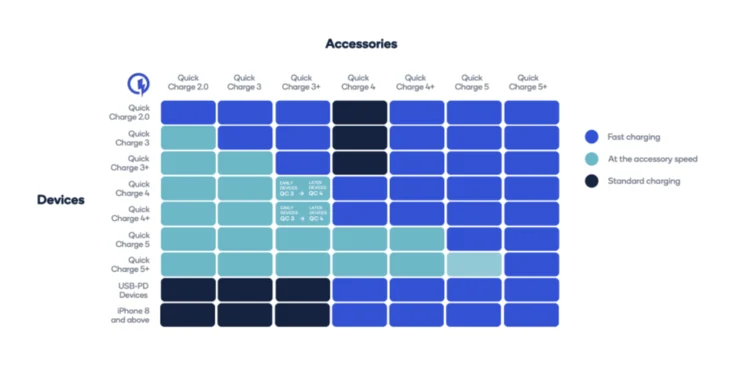
    Quick Charge 5 Plus maintains backward compatibility with earlier Quick Charge versions, and since it uses USB PD-PPS as its main protocol, you should be able to utilize a Quick Charge 5+ certified charger to power a variety of devices, including iPhones and laptops.

    Upcoming Devices

    The initial devices featuring Quick Charge 5+ support are expected to be revealed at the Snapdragon Summit 2025, scheduled for September 23 to 25. Meanwhile, QC5+ certified accessories and chargers are projected to become available later this year.


  • Qualcomm Chooses TSMC and Samsung, Passes on Intel Foundry

    Qualcomm Chooses TSMC and Samsung, Passes on Intel Foundry

    Key Takeaways

    1. Qualcomm’s CEO, Cristiano Amon, stated that they are not considering Intel’s manufacturing capabilities until improvements are made, opting to continue with TSMC and Samsung.
    2. Qualcomm’s Snapdragon X laptop chips, produced by TSMC, currently outperform similar Intel systems, reducing the incentive to switch to Intel.
    3. Intel is focusing on new manufacturing nodes like 18A and 14A, but there are concerns about yield and demand, leading to skepticism about their viability.
    4. Intel’s upcoming Nova Lake chips will also utilize TSMC’s N2 node, indicating a lack of confidence in its own manufacturing capabilities.
    5. Qualcomm introduced the Snapdragon Ride Pilot for self-driving technology, aiming for $22 billion in automotive and IoT revenue by 2029, showcasing their focus on innovation and efficiency.


    Qualcomm’s CEO, Cristiano Amon, stated that Intel’s manufacturing capabilities “aren’t a choice at this time,” mentioning that they would only think about Intel if it enhances its production. For the moment, Qualcomm will likely stick with TSMC and Samsung for their chip manufacturing needs. This situation is concerning for Intel Foundry as they depend on external customers to stay profitable.

    Current Chip Technology

    The existing Snapdragon X laptop chips are produced using TSMC’s N4 process. These Arm-based laptops have shown remarkable efficiency and performance, frequently outperforming similar Intel systems. That allows Qualcomm to have no reason to switch to Intel’s technology until its performance reaches a competitive level.

    Future Prospects for Intel

    Intel’s future plans focus on new nodes like 18A (and the tentative 14A), but there are uncertainties about their yields. There’s also skepticism regarding whether 14A will even move forward due to insufficient demand for 18A. Reports indicate that even Intel’s upcoming Nova Lake chips will utilize TSMC’s N2 node, with some production mixed with 18A. This suggests that Intel may not fully trust its own manufacturing capabilities.

    New Developments from Qualcomm

    Recently, Qualcomm unveiled a self-driving solution for BMW’s new IX3 called the Snapdragon Ride Pilot. Amon claimed it offers “data-center-class” computing with minimal power consumption, as the chip is designed to prioritize battery efficiency. The system ranges from driver assistance to managing most driving functions. Qualcomm is aiming for approximately $22 billion in automotive and IoT revenue by 2029.

    It’s still undetermined if Intel can boost the performance of the 18A node and attract enough external demand to advance with 14A. Amon left the possibility open for Intel to show improvements in the future.

    Source:
    Link


  • Snapdragon 8 Elite Tops AnTuTu Flagship Phone Rankings Again

    Snapdragon 8 Elite Tops AnTuTu Flagship Phone Rankings Again

    Key Takeaways

    1. Qualcomm will unveil its next-generation flagship SoC in late September 2025.
    2. The current Snapdragon 8 Elite chipset leads AnTuTu’s rankings for flagship phones.
    3. Eight out of the top ten devices in the AnTuTu list use the Snapdragon 8 Elite.
    4. The latest rankings show changes in device positions but not in the list of featured smartphones.
    5. AnTuTu’s monthly flagship phone rankings are based on specific criteria and can vary each month.


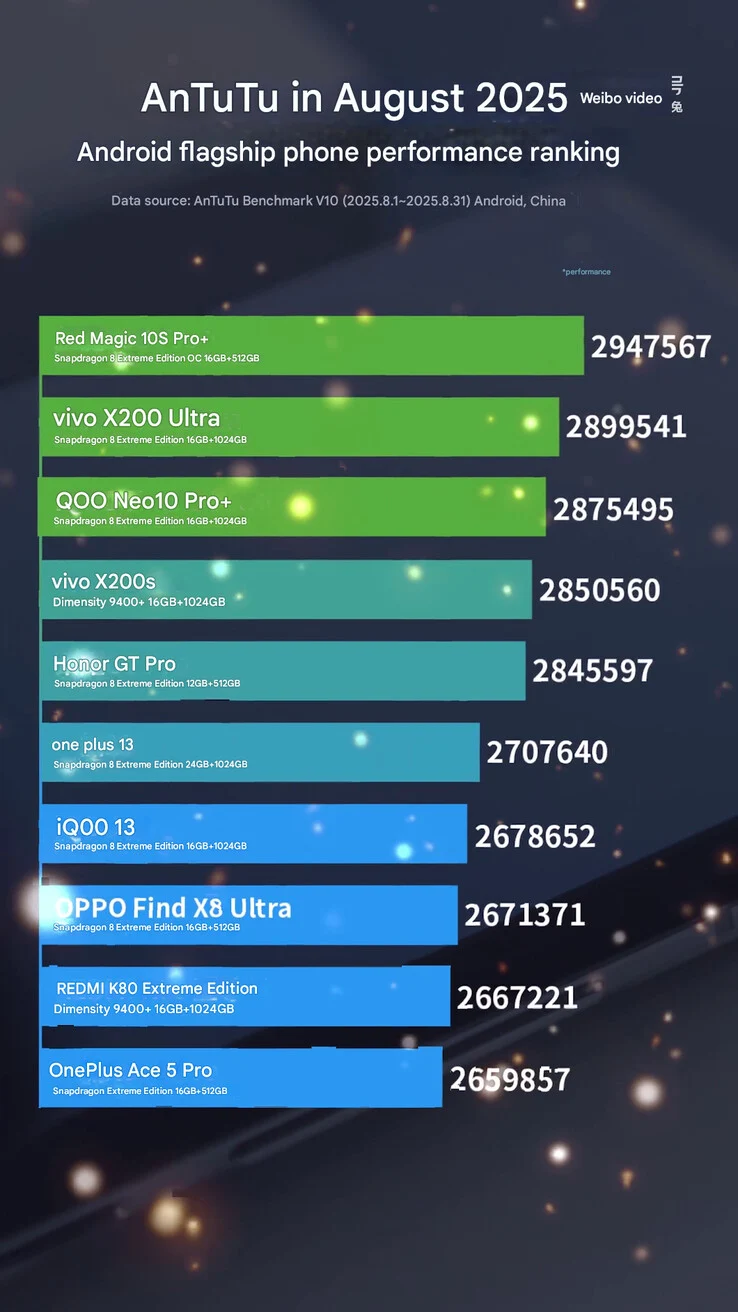
    Qualcomm is set to reveal its next-generation flagship SoC in late September 2025. In the meantime, the current leading Snapdragon chipset has once again taken the top spots in AnTuTu’s rankings for flagship phones. Specifically, eight out of the ten devices on the list are powered by the Snapdragon 8 Elite. Below are additional details about the smartphones featured in the recent chart:

    Rankings Overview

    This updated chart closely resembles the previous one, as all the flagship devices that were listed before have made a return. The only changes are in their positions. It’s important to note that AnTuTu’s monthly list of flagship phones doesn’t typically remain the same every month, since the company uses a certain set of criterias to determine the rankings. You can see the chart below for more insights about the latest standings.

    Source:
    Link


  • Snapdragon 8 Elite Gen 2 Chip to Exceed 4M AnTuTu Score

    Snapdragon 8 Elite Gen 2 Chip to Exceed 4M AnTuTu Score

    Key Takeaways

    1. Qualcomm is preparing to launch its next high-end smartphone chip, potentially named Snapdragon 8 Gen 5.
    2. The chip is expected to achieve benchmark scores exceeding 4 million on AnTuTu, outperforming current leading chips.
    3. Key specifications include two “Prime” cores at 4.61GHz and six high-performance cores at 3.63GHz, with no dedicated low power cores.
    4. An exclusive version for the Galaxy S26 series will feature faster Prime cores at 4.74GHz, giving Samsung a competitive advantage.
    5. The official launch of the Snapdragon 8 Gen 5 is anticipated on September 23 during the Snapdragon Summit 2025.


    Qualcomm is getting ready to launch its next high-end smartphone chip, and new details are coming to light. A recent leak hinted that the chip might have a surprising new name: Snapdragon 8 Gen 5. A fresh report has now highlighted the impressive performance of the chip, which was previously known as Snapdragon 8 Elite Gen 2, setting a remarkable standard for mobile processors.

    Jaw-Dropping Benchmark Scores

    According to the latest insights from the tipster Digital Chat Station, the Snapdragon 8 Elite 2, or Snapdragon 8 Gen 5 (whichever name it ends up with), could score over 4 million on the AnTuTu benchmark. To give you an idea, this score is way above the current leading chips in the market, which typically range from 2.5 to 3 million.

    Specifications to Watch For

    The leak also provided details about the core specifications responsible for that outstanding score. The standard version of the chip is expected to have a setup featuring two “Prime” cores running at 4.61GHz, along with six high-performance cores at 3.63GHz. Once again, Qualcomm seems to be skipping dedicated “low power” cores. For graphics, a robust Adreno 840 GPU potentially clocked at 1.2GHz could enhance gaming experiences.

    Exclusive Features for Samsung

    As seen in the past few years, a more powerful version of this chip is expected to be developed specifically for the upcoming Galaxy S26 series. This special “for Galaxy” model would provide Samsung’s next flagship with a temporary advantage, boasting even quicker Prime cores clocked at 4.74GHz. This collaboration between Qualcomm and Samsung continues, ensuring that one of the leading names in smartphones gets an exclusive edge. Additionally, this variant of the chip is set to be available for other Android brands in the future.

    The official launch of this new chip is anticipated on September 23 during the Snapdragon Summit 2025.

    Source:
    Link


  • Snapdragon 8 Elite 2: Upcoming Flagship Might Get New Name

    Snapdragon 8 Elite 2: Upcoming Flagship Might Get New Name

    Key Takeaways

    1. Snapdragon 8 Elite 2 may be introduced as Snapdragon 8 Elite Gen 5, but this information is not finalized.
    2. Qualcomm might create an intermediate chip (SM8845) called Snapdragon 8 Elite Gen 4, positioned between existing models.
    3. Qualcomm’s naming conventions for smartphone SoCs have become inconsistent over the years.
    4. The next version of the Snapdragon series is likely to be named Snapdragon 8 Elite 2.
    5. The Snapdragon Summit is scheduled for September 23-25, where the Snapdragon 8 Elite 2 is expected to be highlighted, with devices debuting in October 2025.


    Digital Chat Station, a source on Weibo, has mentioned that the Snapdragon 8 Elite 2 (model number SM8850) might be introduced as the Snapdragon 8 Elite Gen 5. The post, translated from Weibo, uses the word “tentative,” suggesting that this information is not finalized yet. Given Qualcomm’s history, this seems quite likely, and it does make a bit of sense this time around.

    Rumors of an Intermediate Chip

    Previously, there were whispers that Qualcomm could be working on a middle chip (SM8845) that would fit between the Snapdragon 8 Elite (SM8750) and the Snapdragon 8 Elite Gen 5 (SM8850). This chip may possibly be referred to as the Snapdragon 8 Elite Gen 4, enhancing the series’ overall coherence.

    Confusing Naming Conventions

    Describing Qualcomm’s naming choices for smartphone SoCs as inconsistent would be an understatement. Not long ago, the naming was pretty straightforward until the Snapdragon 865 came along, followed by the Snapdragon 888, and then the Snapdragon 8 Gen 1 a year later. After three generations, the Snapdragon 8 Gen name faded away, leading to the emergence of the Snapdragon 8 Elite.

    It’s only logical to expect that the next version would be labeled the Snapdragon 8 Elite 2. The wait isn’t too long, as the upcoming Snapdragon Summit is set for September 23-25. The highlight of the event is expected to be the Snapdragon 8 Elite 2, with devices using this SoC likely making their debut in October 2025.

    Source:
    Link


  • Qualcomm Snapdragon 7s Gen 4 Unveiled: Minor Boost for Redmi Note 15 Pro Plus

    Qualcomm Snapdragon 7s Gen 4 Unveiled: Minor Boost for Redmi Note 15 Pro Plus

    Key Takeaways

    1. Qualcomm plans to launch a second-generation Snapdragon 8 Elite by the end of summer.
    2. Snapdragon 7 Gen 4 shows significant performance improvements: 27% CPU, 30% GPU, and 65% NPU compared to Gen 3.
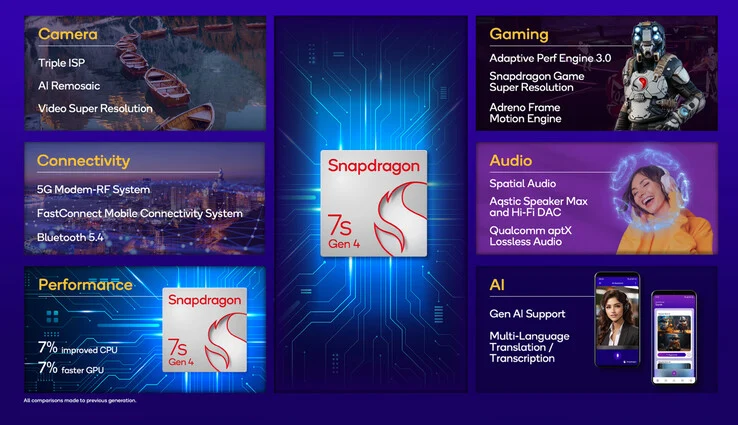
    3. Snapdragon 7s Gen 4 has only a 7% performance increase over Snapdragon 7s Gen 3, mainly due to a 200 MHz clock speed boost.
    4. Snapdragon 7s Gen 4 supports displays up to 2,900 x 1,300 pixels with a peak refresh rate of 144 Hz.
    5. The Snapdragon 7s Gen 4 is expected to debut in the Redmi Note 15 Pro Plus.


    Qualcomm is likely to launch a second-generation version of the Snapdragon 8 Elite by the end of summer. In the meantime, the company has made updates to its Snapdragon 7 series after unveiling the Snapdragon 7 Gen 4 in May.

    Performance Enhancements

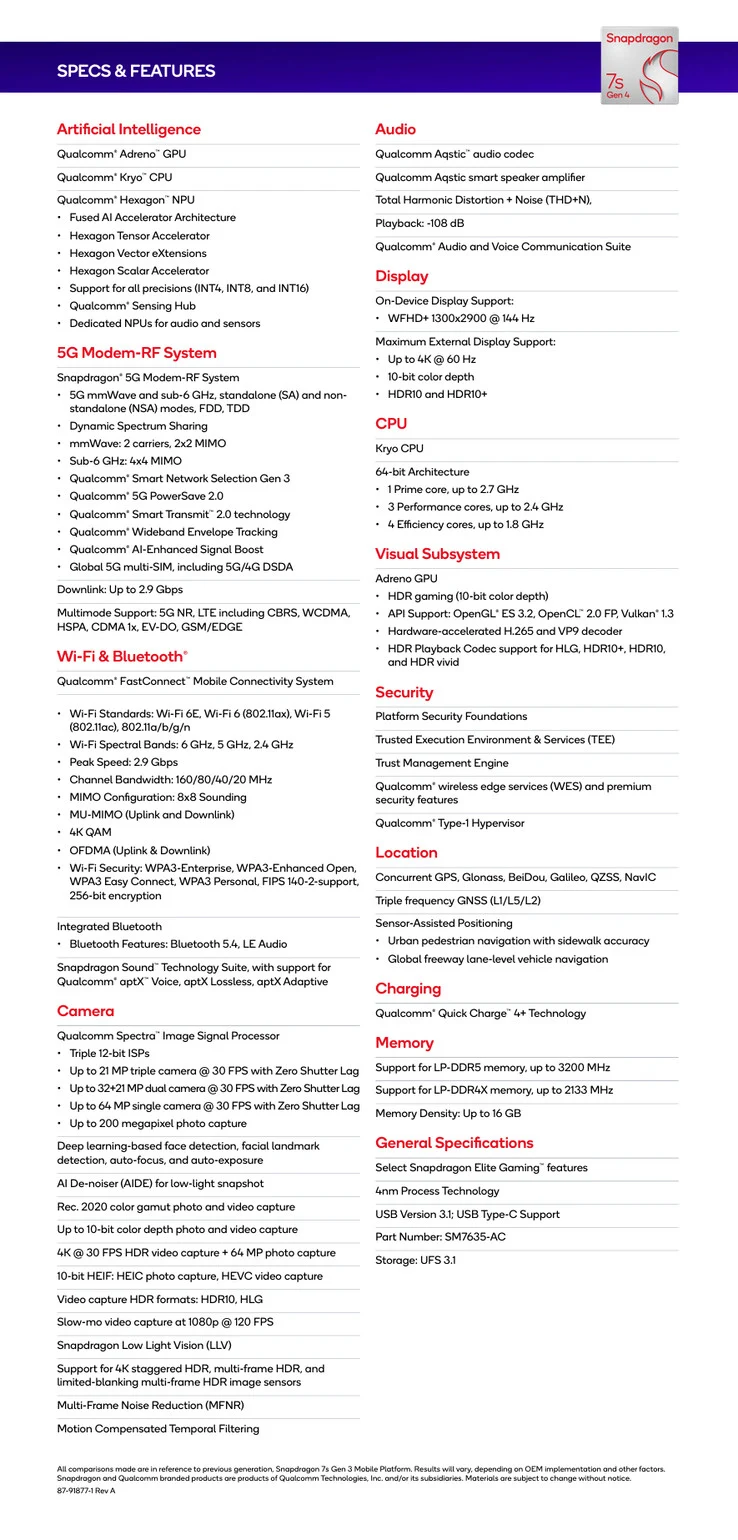
    Qualcomm has stated that the Snapdragon 7 Gen 4 delivers improvements of 27% in CPU performance, 30% in GPU performance, and a significant 65% boost in NPU performance compared to the Snapdragon 7 Gen 3. However, the newly released Snapdragon 7s Gen 4 shows minimal advancement over the Snapdragon 7s Gen 3 in terms of performance, which isn’t surprising given that they share the same SM7635 part numbers.

    Specifications and Features

    The Snapdragon 7s Gen 4 is officially only 7% faster than the previous version. Most of this performance gain can be linked to a 200 MHz increase in the prime core clock speed, now reaching 2.7 GHz. However, the other Cortex-A720 cores remain at 2.4 GHz, and Qualcomm has retained the four Cortex-A520 cores from Snapdragon 7s Gen 3 at 1.8 GHz as well.

    Display and Availability

    Despite these minor changes, the Snapdragon 7s Gen 4 now supports displays with resolutions up to 2,900 x 1,300 pixels while keeping a peak refresh rate of 144 Hz. Other than that, we couldn’t identify any significant technical differences from the earlier Snapdragon 7s Gen 3. Presently, the Snapdragon 7s Gen 4 is anticipated to make its debut in the Redmi Note 15 Pro Plus, replacing its predecessor that featured the Snapdragon 7s Gen 3 (currently priced at $374 on Amazon). For more information, please visit Qualcomm’s official website.

    Source:
    Link