
Tag: OSIRIS-REx

  • Scientists Discover RNA Component on Asteroid for First Time

    Scientists Discover RNA Component on Asteroid for First Time

    Key Takeaways

    1. Asteroids may have brought essential ingredients for life to Earth during ancient collisions.
    2. NASA’s OSIRIS-REx mission returned with samples from the asteroid Bennu, revealing important findings.
    3. The detection of ribose and glucose in the Bennu samples supports the idea that asteroids contributed to the building blocks of life.
    4. A gum-like substance found in the samples indicates conditions from the early solar system and is rich in nitrogen and oxygen.
    5. The presence of presolar grains in the samples suggests Bennu was formed from materials from ancient, exploded stars.


    Scientists think asteroids are crucial for life, as they might have brought essential ingredients to Earth during collisions billions of years ago. NASA’s OSIRIS-REx (Origins, Spectral Interpretation, Resource Identification, and Security-Regolith Explorer) was sent out to gather more proof supporting these ideas. The spacecraft came back to Earth in September 2023, carrying samples from the asteroid Bennu. Since then, researchers have been examining the samples to uncover their mysteries.

    Exciting Discoveries from Bennu

    Recent studies have uncovered three fascinating findings from the Bennu samples. One team identified sugar — specifically ribose and glucose. This marks the first instance of glucose being detected in a sample from beyond Earth.

    Deoxyribose and ribose are essential parts of DNA and RNA, respectively, which are fundamental to life. Thus, the presence of sugar strengthens the idea that asteroids might have held the chemical building blocks for life. Interestingly, the Bennu samples did not contain deoxyribose sugar, which supports the “RNA world” hypothesis. This theory suggests that life originated with RNA molecules before the emergence of DNA.

    The Gum-Like Substance

    Another team of scientists found an enigmatic ancient material that resembles gum. This substance is incredibly rich in nitrogen and oxygen. Analyses led the researchers to propose that this gum-like material likely formed during the solar system’s early days, a period referred to by astrophysicist Scott Sandford as the “Beginning of the beginning.”

    A different group of researchers discovered a significant amount of dust in the Bennu samples. This dust originates from stars that perished before our solar system existed (known as presolar grains). The presence of such a large quantity of dust indicates that Bennu’s parent asteroid was formed in an area abundant with materials from exploding stars. It also implies that some elements from Bennu escaped changes caused by water or heat, remaining unchanged from billions of years ago.

    Publication of Findings

    The research on sugar was published in Nature Geoscience, while the other two studies appeared in Nature Astronomy.

    Nature via NASA

    Source:
    Link


  • 2 Billion People to Witness Rare Sky Phenomenon in 4 Years

    2 Billion People to Witness Rare Sky Phenomenon in 4 Years

    Key Takeaways

    1. Apophis is a 340-meter-wide asteroid set to pass within 30,000 kilometers of Earth on April 13, 2029, providing a rare spectacle for about two billion people.
    2. Initial concerns about Apophis included a 2.7% chance of impacting Earth, but further observations have eliminated any threat for at least the next 100 years.
    3. The close approach of Apophis offers a unique opportunity for scientists to study its trajectory and the gravitational effects of Earth on it.
    4. NASA and the Ramses project are collaborating to monitor Apophis with the OSIRIS-REx probe and a small satellite to gather data during its close encounter.
    5. Apophis will create a bright sight in the night sky, particularly visible in Africa and Western Europe, with updated trajectory information available for viewers in the coming years.


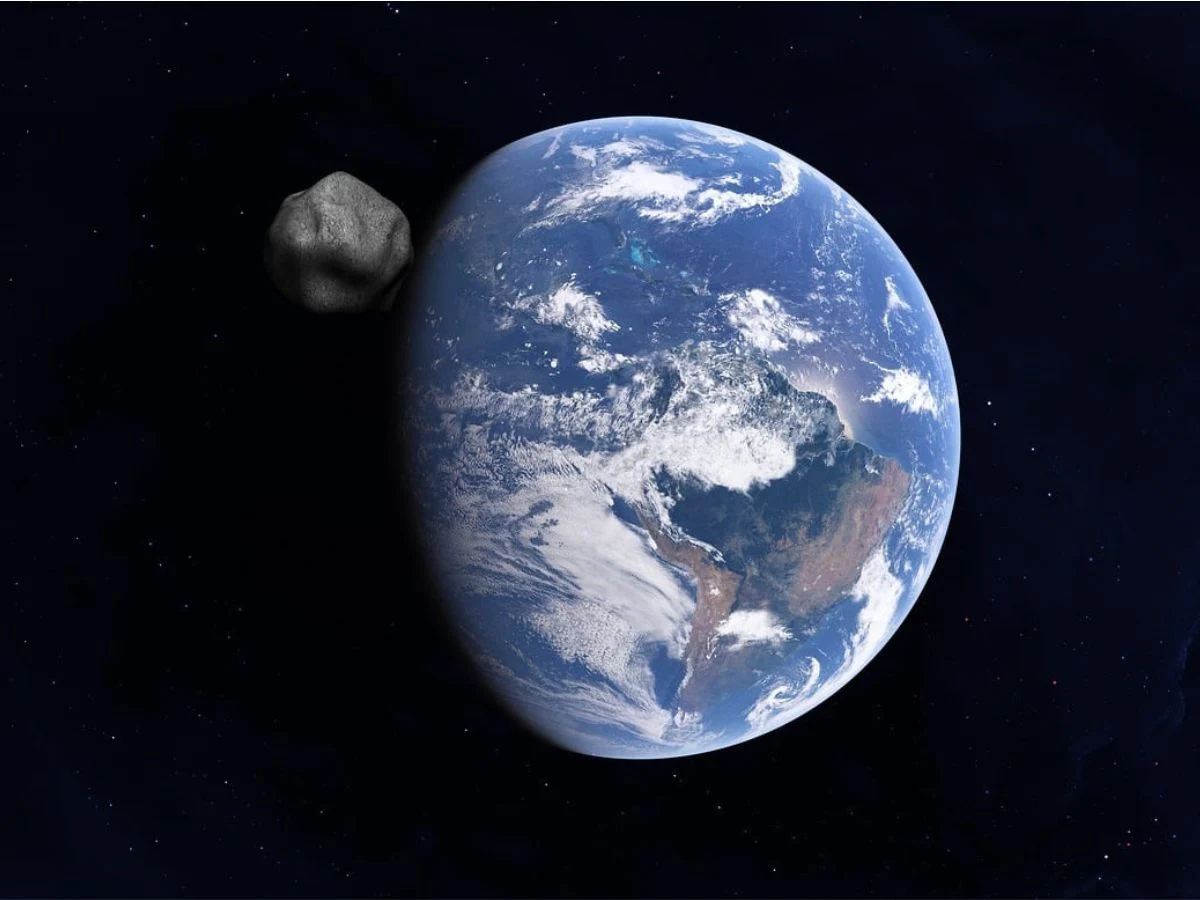
    Space is a thrilling and enigmatic realm, and it’s crucial to recognize that numerous celestial bodies are zipping through it at incredible speeds. A prime example is the asteroid Apophis, which measures 340 meters across and is set to provide a once-in-a-7,500-year spectacle for around two billion people in 2029.

    Discovery and Initial Concerns

    When Apophis was first identified in 2004, it sent ripples of concern throughout the scientific world. At that time, it had a 2.7% probability of striking Earth, which placed it at level 4 on the Torino Scale. Thankfully, as time passed, observations helped clarify its path, and by 2021, any potential threat was conclusively eliminated for at least a hundred years.

    A Close Encounter

    On April 13, 2029, Apophis will pass within 30,000 kilometers of Earth, and its trajectory may be influenced by our planet’s gravity. This event presents a rare chance for scientists to study the effects of such gravitational forces on a celestial body while it happens.

    In addition, NASA has decided to redirect the OSIRIS-REx space probe, which was originally intended to study Bennu, so it can also observe Apophis during its close approach. Europe is also on board with this initiative through the Ramses project, which aims to monitor the asteroid using a small satellite designed to detect seismic waves.

    A Night Sky Spectacle

    While Apophis doesn’t pose a danger, it may create a stunning sight in the night sky. Much like the two comets visible in October, individuals in Africa and Western Europe will have the chance to see this asteroid as it travels across the sky, shining brightly like a new star.

    Its trajectory will be updated within four years, ensuring that everyone knows where to gaze in the night sky. However, it’s essential to have clear weather conditions, and skywatchers should keep an eye on the forecast, as other astronomical phenomena could occur in the meantime.

    In conclusion, Apophis’s passage may also act as a test for identifying future threats from space. The goal is to enhance our ability to detect asteroids and explore various methods to redirect them if necessary.

    Source:
    Link


  • NASA Discovers Stardust Older Than Solar System in Asteroid Bennu

    NASA Discovers Stardust Older Than Solar System in Asteroid Bennu

    Key Takeaways

    1. OSIRIS-REx, launched in 2016, aimed to collect samples from the asteroid Bennu to understand Earth’s origins.
    2. Researchers discovered materials from Bennu that are older than the solar system, including stardust and organic matter from interstellar space.
    3. Bennu’s materials changed over time due to interactions with water, indicating its ancestors gathered ice and dust.
    4. The presence of impact melts on Bennu’s surface shows it has experienced multiple strikes from micrometeorites, with rapid weathering occurring.
    5. OSIRIS-REx is now heading to asteroid Apophis as OSIRIS-APEX, continuing to study asteroids as time capsules of the solar system’s formation.


    OSIRIS-REx, or the Origins, Spectral Interpretation, Resource Identification, and Security-Regolith Explorer, is a mission from NASA that was launched in 2016. This mission was aimed at gathering samples from the asteroid called Bennu.

    Asteroids and Earth’s Origins

    Researchers think that asteroids frequently crashed into young planets during their early stages. This means that these asteroids might have brought water and other essential elements for life to Earth when they struck it. The goal of OSIRIS-REx was to collect samples from the surface of Bennu on October 20, 2020. Now, three distinct research teams have uncovered some fascinating information regarding those samples.

    Uncovering Ancient Origins

    Since Bennu originated from a larger asteroid, one research team concentrated on finding out more about Bennu’s ancestor. They unearthed materials that are older than the solar system itself. Ann Nguyen, a co-leader of the research, stated, “We discovered stardust grains with compositions that are even older than the solar system, organic matter likely formed in interstellar space, and high-temperature minerals that were created closer to the Sun.”

    Changes Over Time

    Another team found that the materials of Bennu changed over time due to their interaction with water. Their findings indicate that Bennu’s ancestors gathered ice and dust. The ice melted, and this liquid mixed with the dust to create the components of Bennu that we see today.

    Evidence of Impacts

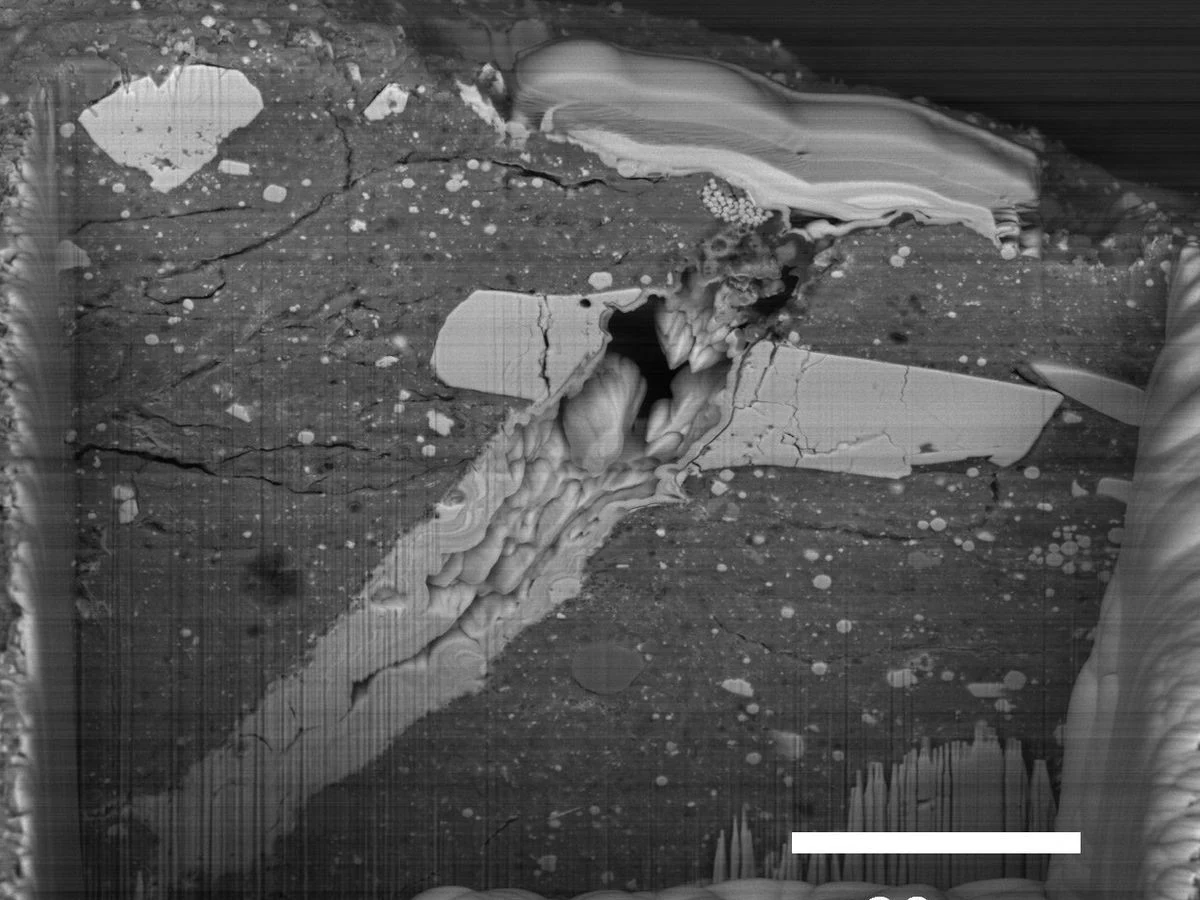
    The third group identified impact melts on the Bennu samples’ surface. This indicates that the asteroid experienced multiple strikes from micrometeorites. Because asteroids don’t have an atmosphere, the surface weathering caused by micrometeorites and intense solar wind is anticipated. However, on Bennu, this process is occurring at an extraordinarily rapid pace.

    OSIRIS-REx is now heading toward asteroid Apophis, under a new title—OSIRIS-APEX. It is expected to study Apophis along with the Ramses mission. Asteroids serve as time capsules, allowing scientists to gain a clearer understanding of how the solar system came into existence around 4.5 billion years ago.

    Source:
    Link