
Key Takeaways
1. Asteroids may have brought essential ingredients for life to Earth during ancient collisions.
2. NASA’s OSIRIS-REx mission returned with samples from the asteroid Bennu, revealing important findings.
3. The detection of ribose and glucose in the Bennu samples supports the idea that asteroids contributed to the building blocks of life.
4. A gum-like substance found in the samples indicates conditions from the early solar system and is rich in nitrogen and oxygen.
5. The presence of presolar grains in the samples suggests Bennu was formed from materials from ancient, exploded stars.
Scientists think asteroids are crucial for life, as they might have brought essential ingredients to Earth during collisions billions of years ago. NASA’s OSIRIS-REx (Origins, Spectral Interpretation, Resource Identification, and Security-Regolith Explorer) was sent out to gather more proof supporting these ideas. The spacecraft came back to Earth in September 2023, carrying samples from the asteroid Bennu. Since then, researchers have been examining the samples to uncover their mysteries.
Exciting Discoveries from Bennu
Recent studies have uncovered three fascinating findings from the Bennu samples. One team identified sugar — specifically ribose and glucose. This marks the first instance of glucose being detected in a sample from beyond Earth.
Deoxyribose and ribose are essential parts of DNA and RNA, respectively, which are fundamental to life. Thus, the presence of sugar strengthens the idea that asteroids might have held the chemical building blocks for life. Interestingly, the Bennu samples did not contain deoxyribose sugar, which supports the “RNA world” hypothesis. This theory suggests that life originated with RNA molecules before the emergence of DNA.
The Gum-Like Substance
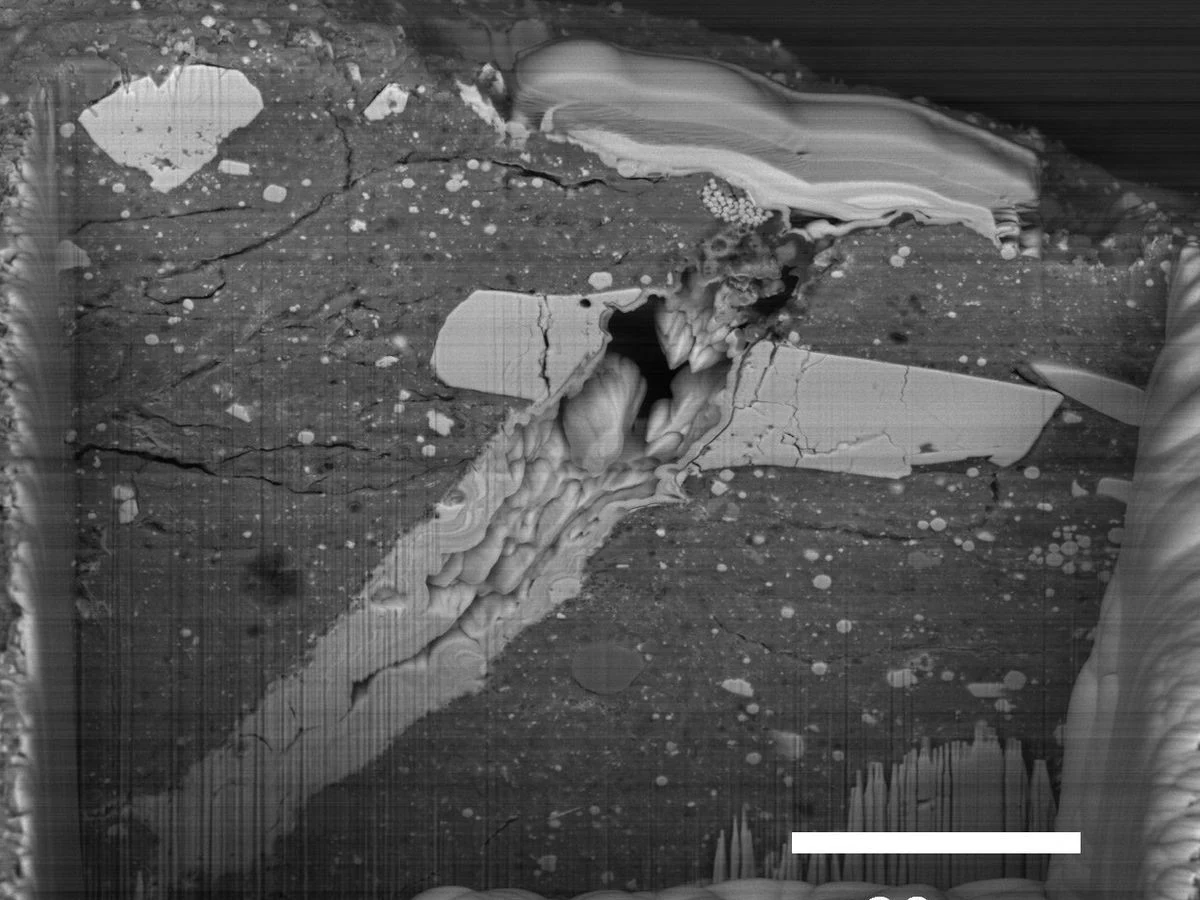
Another team of scientists found an enigmatic ancient material that resembles gum. This substance is incredibly rich in nitrogen and oxygen. Analyses led the researchers to propose that this gum-like material likely formed during the solar system’s early days, a period referred to by astrophysicist Scott Sandford as the “Beginning of the beginning.”
A different group of researchers discovered a significant amount of dust in the Bennu samples. This dust originates from stars that perished before our solar system existed (known as presolar grains). The presence of such a large quantity of dust indicates that Bennu’s parent asteroid was formed in an area abundant with materials from exploding stars. It also implies that some elements from Bennu escaped changes caused by water or heat, remaining unchanged from billions of years ago.
Publication of Findings
The research on sugar was published in Nature Geoscience, while the other two studies appeared in Nature Astronomy.
Nature via NASA
Source:
Link