
Key Takeaways
1. OSIRIS-REx, launched in 2016, aimed to collect samples from the asteroid Bennu to understand Earth’s origins.
2. Researchers discovered materials from Bennu that are older than the solar system, including stardust and organic matter from interstellar space.
3. Bennu’s materials changed over time due to interactions with water, indicating its ancestors gathered ice and dust.
4. The presence of impact melts on Bennu’s surface shows it has experienced multiple strikes from micrometeorites, with rapid weathering occurring.
5. OSIRIS-REx is now heading to asteroid Apophis as OSIRIS-APEX, continuing to study asteroids as time capsules of the solar system’s formation.
OSIRIS-REx, or the Origins, Spectral Interpretation, Resource Identification, and Security-Regolith Explorer, is a mission from NASA that was launched in 2016. This mission was aimed at gathering samples from the asteroid called Bennu.
Asteroids and Earth’s Origins
Researchers think that asteroids frequently crashed into young planets during their early stages. This means that these asteroids might have brought water and other essential elements for life to Earth when they struck it. The goal of OSIRIS-REx was to collect samples from the surface of Bennu on October 20, 2020. Now, three distinct research teams have uncovered some fascinating information regarding those samples.
Uncovering Ancient Origins
Since Bennu originated from a larger asteroid, one research team concentrated on finding out more about Bennu’s ancestor. They unearthed materials that are older than the solar system itself. Ann Nguyen, a co-leader of the research, stated, “We discovered stardust grains with compositions that are even older than the solar system, organic matter likely formed in interstellar space, and high-temperature minerals that were created closer to the Sun.”
Changes Over Time
Another team found that the materials of Bennu changed over time due to their interaction with water. Their findings indicate that Bennu’s ancestors gathered ice and dust. The ice melted, and this liquid mixed with the dust to create the components of Bennu that we see today.
Evidence of Impacts
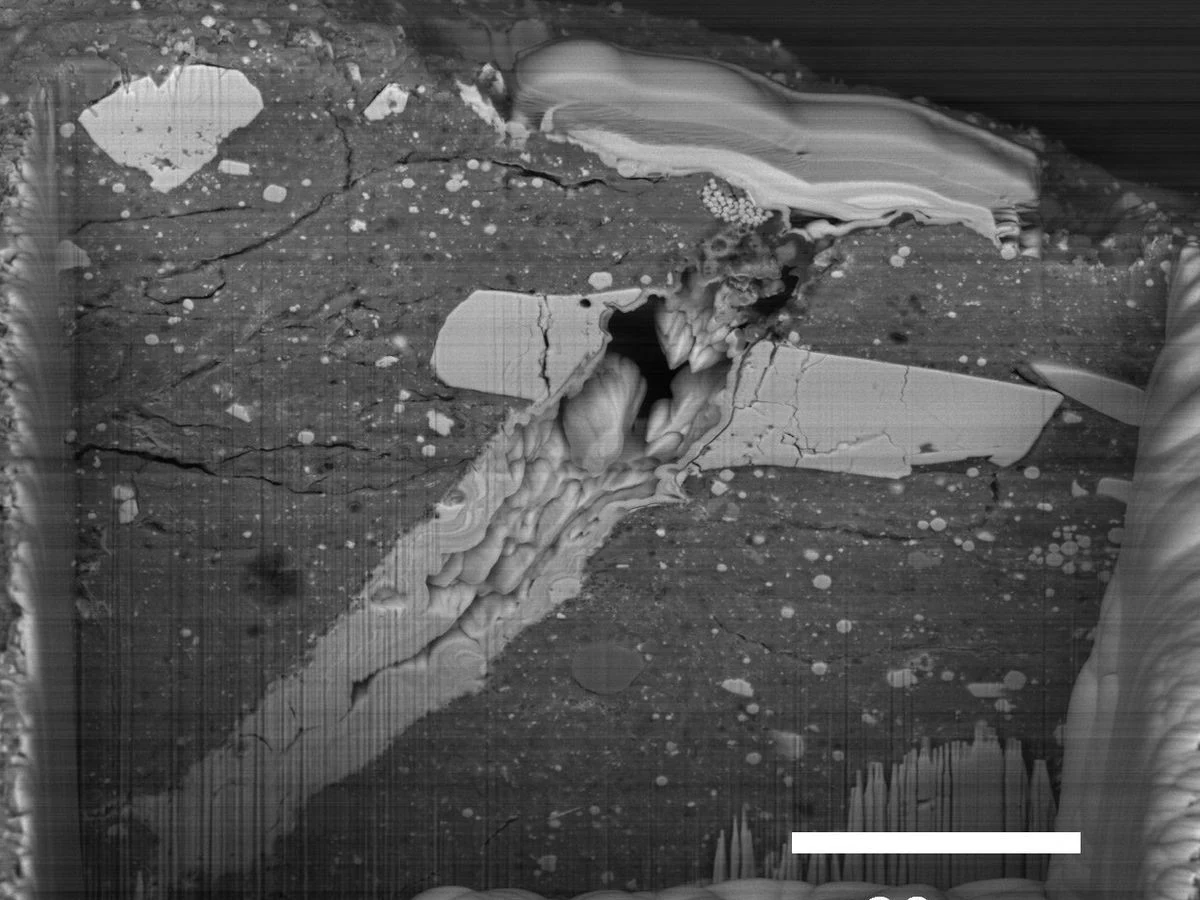
The third group identified impact melts on the Bennu samples’ surface. This indicates that the asteroid experienced multiple strikes from micrometeorites. Because asteroids don’t have an atmosphere, the surface weathering caused by micrometeorites and intense solar wind is anticipated. However, on Bennu, this process is occurring at an extraordinarily rapid pace.
OSIRIS-REx is now heading toward asteroid Apophis, under a new title—OSIRIS-APEX. It is expected to study Apophis along with the Ramses mission. Asteroids serve as time capsules, allowing scientists to gain a clearer understanding of how the solar system came into existence around 4.5 billion years ago.
Source:
Link
Leave a Reply