Tag: NVIDIA

  • AMD Radeon RX 9070 XT and RX 9070 Launching Late February

    AMD Radeon RX 9070 XT and RX 9070 Launching Late February

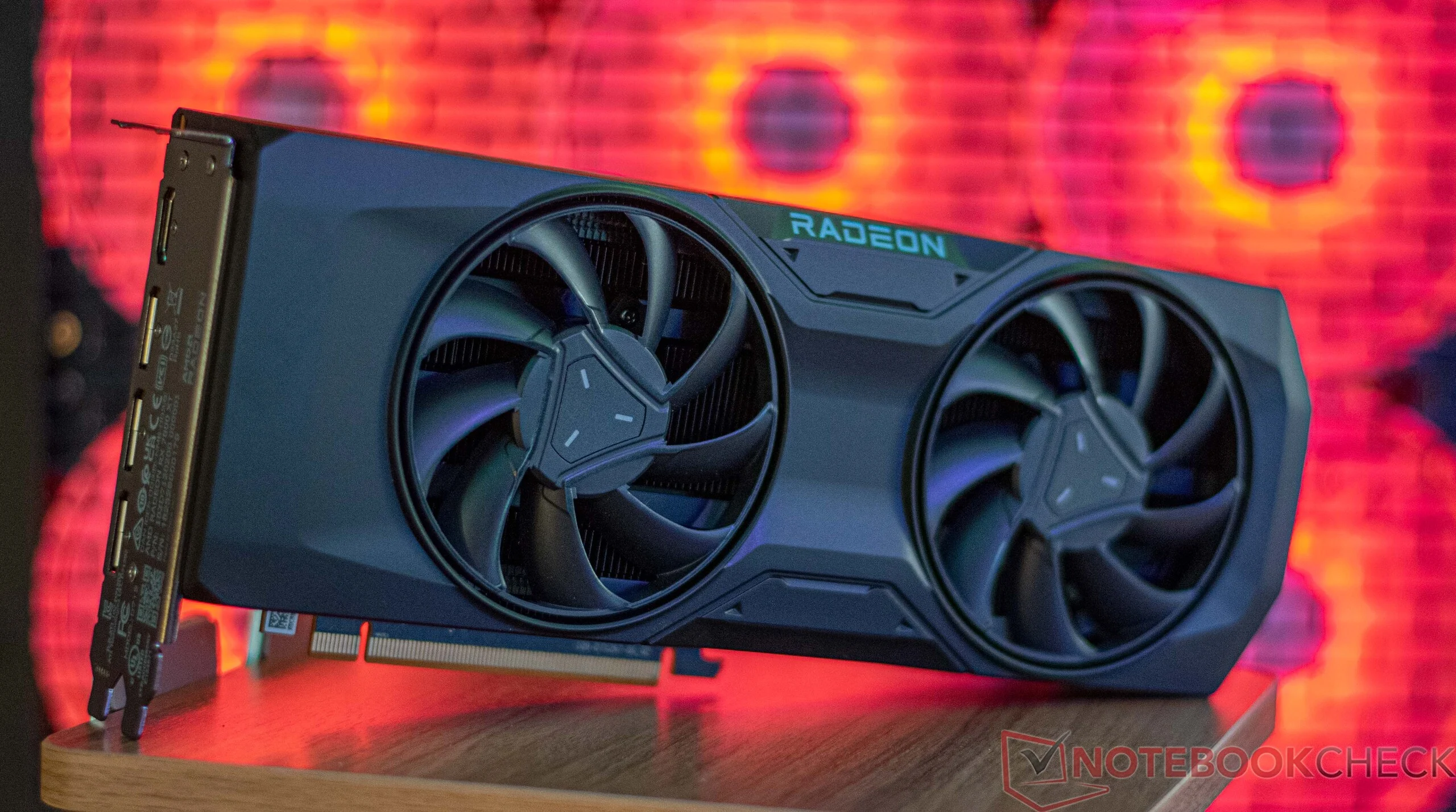
    A recent leak suggests that Nvidia might introduce the GeForce RTX 5060 and RTX 5060 Ti around March. Prior to this, the RTX 5070 Ti and RTX 5070 are expected to be released on February 20. If you’re looking to buy one of these, it might be a good idea to hold off for a week or so, as AMD is set to present the Radeon RX 9070 XT and RX 9070 soon.

    Upcoming AMD Presentation

    The details come from Benchlife, which indicates that AMD has a special RDNA 4 presentation planned for late February. This is necessary because the architecture only received a brief mention during AMD’s otherwise remarkable CES 2025 showcase. In this upcoming event, we can anticipate insights on how the Radeon RX 9070 XT and RX 9070 will compete with other graphics cards.

    Expected Performance

    According to what we know right now, the RX 9070 XT is expected to be a more affordable alternative to the RTX 4080 (or maybe even the RTX 5080). The standard version, RX 9070, might go head-to-head with the RTX 5070 Ti. Regarding the rest of AMD’s lineup, they could possibly have a separate launch, as they weren’t discussed in the CES 2025 presentation. A reveal in late February sets the stage for a more comprehensive launch in March, aligning with earlier predictions.

    Source:
    Link

  • Nvidia Criticized as Snowden Reveals RTX 5080 and 5090 VRAM

    Nvidia Criticized as Snowden Reveals RTX 5080 and 5090 VRAM

    It was always likely that the long-anticipated GeForce 50 series from Nvidia would face a lot of criticism, especially with rumors about high AIB pricing and the usual stock shortages. However, even Jensen Huang might be taken aback by Edward Snowden’s comments on the company and the main specifications of the GeForce RTX 5070, RTX 5080, and RTX 5090.

    Snowden’s Take on Nvidia

    In a post on X, it’s evident that Snowden has a personal stake in the gaming and PC building world and has not been too happy with Team Green’s strategies. The computer security expert expressed disappointment over the VRAM provided for each model, noting that the RTX 5070 has 12 GB, the RTX 5080 features 16 GB, and the RTX 5090 boasts 32 GB of RAM. Snowden seems especially frustrated with the RTX 5080, arguing that the combo of its price ($999) and VRAM is “a monopolistic crime against the consumer.”

    Criticism of Nvidia’s Pricing Strategy

    Ending his strong statement, Snowden accused Nvidia of being overly focused on quarterly earnings, which has led the brand to offer “F-tier value for S-tier prices.” He proposed that the RTX 5080 should have been available in 24 GB and 32 GB versions, while the RTX 5090 ought to have launched with 32 GB and even 48 GB options, or possibly more. Nevertheless, it appears Nvidia will continue to dominate the desktop GPU market until a formidable competitor steps in and promotes a more fair and consumer-friendly environment.

    Source:
    Link

  • Nvidia RTX 5080 and 5090 Prices Surge Due to Shortages

    Nvidia RTX 5080 and 5090 Prices Surge Due to Shortages

    Many gamers had braced themselves for a letdown on the day Nvidia launched the RTX 50 series. Just a few days earlier, Nvidia had dampened expectations, cautioning consumers about potential shortages in GPU stock. Unfortunately, these worries have come true, as inventory at stores has either vanished quickly or is completely absent. Unsurprisingly, scalpers are exploiting the situation, reselling the scarce RTX 5080 and RTX 5090 GPUs for several hundreds or even thousands of dollars more than their original prices.

    Retail Availability

    Retailers like Best Buy and Newegg released Nvidia’s newest GPUs this morning around 9 AM EST. However, only a handful of buyers tracking stock on platforms like Reddit and Discord reported any success. While locating a product page with a card available wasn’t particularly hard, hopes faded fast once consumers reached the checkout stage. Other frustrated gamers directed their anger towards Nvidia’s official store, which still hadn’t listed the RTX 5080 or RTX 5090 Founders Edition for purchase.

    Scalper Success

    At first, scalpers took a gamble by investing in the RTX 50 series when the market was still uncertain. But soon, eBay’s closing prices clearly showed that they could earn significant profits, even after accounting for steep selling fees. Many dubious listings that violate eBay rules are swiftly taken down. Meanwhile, sellers who post images holding an RTX 5090 are reaping the highest sale prices. One seller with a good reputation on eBay showcased a Zotac Gaming GeForce RTX 5090 Solid outside a Micro Center, and it closed at just over $6000—far above the expected price of $1999.

    RTX 5080 Pricing

    The Nvidia RTX 5080 is not fetching as high a price above retail as the RTX 5090. Most sales hover around $2000-2200, with a few Zotac Gaming GeForce RTX 5080 GPUs sold for about $1800. While this price is still inflated, it’s not nearly as extreme as the triple MSRP for many RTX 5090 units.

    The outlook for any meaningful restocks of the RTX 50 series isn’t bright. Many experts attribute this to a design flaw in the Blackwell GPU chips, which caused delays in production. Companies like MSI received only a small fraction of the units they anticipated, significantly lowering the availability of custom cards.

    Future Supply Challenges

    If history serves as a guide, the supply of certain graphics cards may never fully satisfy demand. Nonetheless, after another frustrating launch, buyers are hopeful that Nvidia will find a way to accelerate the production timeline.

  • Nvidia GeForce RTX 5070 and 5070 Ti Specs Leaked Before Release

    Nvidia GeForce RTX 5070 and 5070 Ti Specs Leaked Before Release

    Nvidia has recently unveiled the GeForce RTX 5070 and GeForce RTX 5070 Ti at CES 2025, which took place nearly a month ago. These new models are designed to replace the older GeForce RTX 4070 and GeForce RTX 4070 Ti (current price: $749.99 – renewed on Amazon). Even though these graphics cards are now featured on Nvidia’s website, the company has chosen not to disclose a lot of important technical details to the public.

    Technical Insights from Nvidia

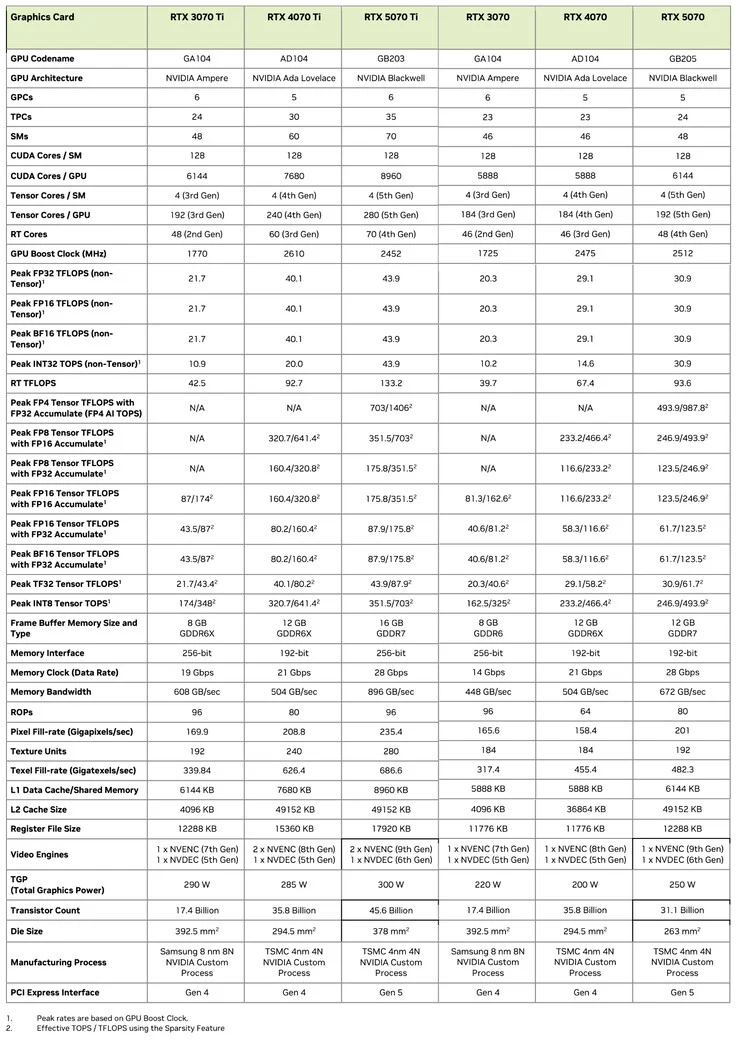
    Fortunately, Nvidia has provided some information, but it’s currently only available in a white paper concerning the Blackwell architecture. In this document, we have compiled an extensive table that Nvidia has formatted across five pages, starting from page 51.

    Specifications of the New GPUs

    The white paper reveals that the GeForce RTX 5070 and GeForce RTX 5070 Ti are powered by the GB205 and GB203 GPUs, respectively. There are also differences in their RT and Tensor core volumes. However, both models come equipped with GDDR7 VRAM operating at a speed of 28 Gbps, while the older models had speeds of 28 Gbps and 30 Gbps. According to the latest rumors, Nvidia is anticipated to launch the GeForce RTX 5070 Ti on February 20, and early reviews are expected to be under embargo until just before the release. There has been no update on when the GeForce RTX 5070 will be available, though. For more detailed specifications, refer to the table provided below.

    Source:
    Link


  • Graphene Semiconductors: Closer to Reality | CheckMag

    Graphene Semiconductors: Closer to Reality | CheckMag

    For many years, silicon has ruled the semiconductor world, supporting everything from computers to cellphones. But now, silicon is reaching its limits in both performance and scalability. This is where graphene comes in, a material that’s been dubbed a miracle of material science. With its unmatched conductivity and electron mobility, graphene could enable processors to work at terahertz speeds, which is much faster than the gigahertz limits of today’s silicon chips.

    What is Graphene?

    Graphene consists of a single layer of carbon atoms that are arranged in a hexagonal pattern, giving it amazing strength and electrical characteristics. In contrast to silicon, graphene allows electrons to move with much less resistance, leading to quicker and more efficient processing. However, there is a problem: graphene does not have a band gap. This band gap is essential for semiconductors to switch between on and off states. Without it, graphene cannot act like a traditional transistor—but this has changed now.

    Breakthrough in Research

    Scientists have finally figured it out. By attaching graphene to silicon carbide and “doping” it with atoms that donate electrons, they have successfully developed a working graphene-based semiconductor. This method, called epitaxial graphene fabrication, creates a band gap while still preserving the unique qualities of graphene.

    The outcome? Transistors that are not just ten times faster than silicon ones, but also mostly compatible with current manufacturing methods. This compatibility allows for a seamless shift from silicon to graphene chips, which is a crucial element for making this technology commercially viable.

    Industry Perspectives

    Graphene’s capabilities go beyond just high-speed electron flow. Even those at the top of the industry recognize that silicon’s dominance is fading. Nvidia’s CEO Jensen Huang famously said, “Moore’s Law is dead.” For those who may not know, Moore’s Law suggested that the number of transistors on a chip would double every two years, leading to massive increases in computing power. However, as transistors become smaller, problems like heat production and switching speeds have notably slowed advancements.

    Thanks to its excellent performance and potential for scalability, graphene could be a solution to these challenges. It may even continue or replace the path that Moore’s Law once paved.

    Challenges Ahead

    As with any emerging technology, some issues need to be resolved before graphene can take the lead. Expanding production and incorporating graphene semiconductors into consumer electronics will call for a substantial investment and a dedication to further innovation. Additionally, there’s the question of whether graphene can surpass other upcoming superconducting technologies in the competitive field of quantum computing.

    Nevertheless, the outlook is bright. With its compatibility with current manufacturing processes and ongoing research into quantum applications, graphene semiconductors are more than just a distant possibility—they represent a glimpse into the future of technology.

    While graphene-based semiconductors might not immediately resolve all of silicon’s challenges, they signify an important advance. Whether it’s enhancing the performance of your next laptop or realizing the full potential of quantum computing, this breakthrough could change the landscape of technology.

    The future is rapidly approaching, and it might just be driven by graphene.

    Source:
    Link

  • Nvidia GeForce RTX 5070 Ti Release Date Leaked Information

    Nvidia GeForce RTX 5070 Ti Release Date Leaked Information

    VideoCardz has released new information about the launch of the GeForce RTX 5070 Ti. Just under a month ago, Nvidia unveiled this graphics card, which is priced at $749, along with the GeForce RTX 5080, GeForce RTX 5090, and the more basic GeForce RTX 5070.

    Performance Insights

    The GeForce RTX 5070 Ti is reported to provide performance that is nearly double that of the previous GeForce RTX 4070 Ti, which is currently priced at $879.99 on Amazon. However, it comes with a slight increase in total graphics power (TGP), rated at 300 W. To boost performance, Nvidia has utilized the GB203 GPU manufactured using TSMC’s 4 nm technology, packing in 8,970 CUDA cores and achieving a maximum boost clock of 2.45 GHz. Moreover, the GeForce RTX 5070 Ti is equipped with 16 GB of GDDR7 VRAM, which enables a memory bandwidth of 896 GB/s through a 256-bit bus.

    Launch Schedule

    According to previous leaks, VideoCardz claims that the GeForce RTX 5070 Ti will be available for purchase starting on February 20. Additionally, they mention that this date will also mark the release of reviews for non-MSRP models. In contrast, reviews for cards that stick to Nvidia’s suggested retail price of $749 will be published a day earlier, on February 19.

    Future Releases

    As per VideoCardz, Nvidia has yet to confirm the launch dates for the GeForce RTX 5070 to its board partners. For context, the GeForce RTX 5070 is currently the weakest option in Nvidia’s Blackwell lineup. The company is anticipated to launch the GeForce RTX 5060 and GeForce RTX 5060 Ti later this year, which will feature variations of the GB206 GPU.

    Source:
    Link

  • Nvidia GeForce RTX 5060 Ti Launching in Two Versions

    Nvidia GeForce RTX 5060 Ti Launching in Two Versions

    Even though Nvidia didn’t fully reveal the GeForce RTX 50 series at CES 2025, a previous leak provided a general view of what the lower tier might be like. However, X leaker @Olrak29_ has found some surprising news regarding one of Nvidia’s entry-level models: the GeForce RTX 5060 Ti.

    Specifications Unveiled

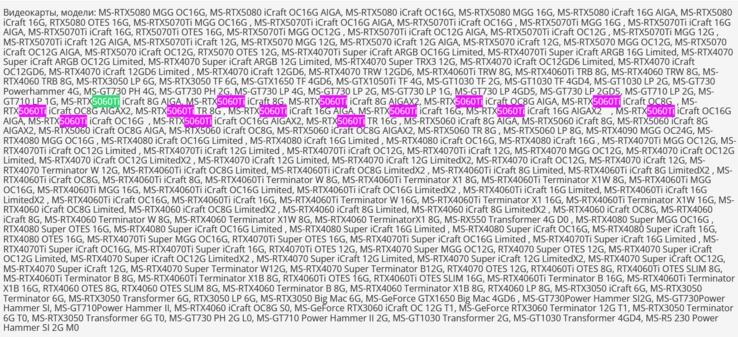
    On the EEC (Eurasian Economic Commission) website, there seem to be two versions of the graphics card – one featuring 8 GB of VRAM and the other boasting 16 GB. In contrast, the standard GeForce RTX 5060 will only come in a single model with 8 GB of video memory. Essentially, Nvidia aims to provide a more affordable RTX 5060 Ti option for those who don’t require the additional VRAM.

    Anticipated Launch Details

    At this point, not much is known about the GeForce RTX 5060 Ti. It’s rumored to be equipped with a GB206 GPU on a PG152 board. Nvidia is likely to announce it in March, coinciding with the launch of its non-Ti version, presumably around the time AMD reveals the Radeon RX 9070 XT and RX 9070. However, the RTX 5060 and RTX 5060 Ti won’t be direct rivals, as they are expected to compete against AMD’s Navi 44-based Radeon RX 9060 XT (tentative) and others.

    Performance Insights

    Recently, we had a look at how the GeForce RTX 5080 compares to its previous-gen model. There isn’t much to be excited about in terms of raw performance, and this trend will probably extend to the RTX 5060 Ti and RTX 5060. Gamers will once again need to depend on AI-driven enhancements to achieve any substantial performance improvement over Ada Lovelace.

    Source:
    Link


  • Nvidia Ends Driver Support for GTX 1080 Ti and Older GPUs

    Nvidia Ends Driver Support for GTX 1080 Ti and Older GPUs

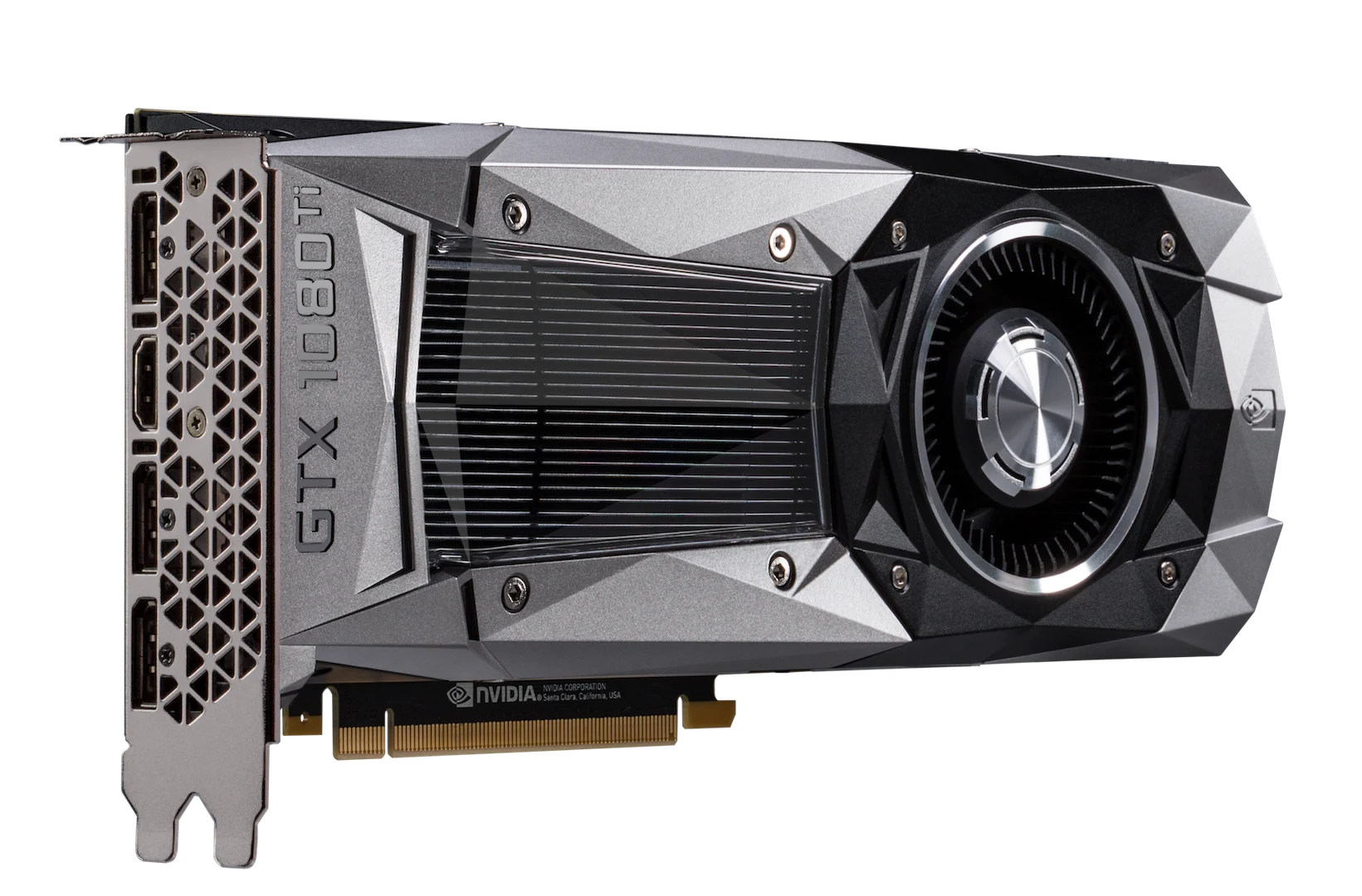
    With the launch of CUDA 12.8, Nvidia is stopping any further development on driver features for the widely used GTX 1080 Ti and other GeForce GTX 1000 series cards. Although Nvidia’s latest CUDA drivers still provide official support for the Pascal architecture, which underpins the entire GTX 1000 series, there will be no additional enhancements or new features introduced moving forward.

    Legacy Status for Older Architectures

    The Maxwell and Volta architectures, which are the direct predecessors to the RTX 2000 series, have also been marked as “legacy.” Nvidia has categorized these architectures as “deprecated” in the release notes for CUDA 12.8. While the GTX 1000 series remains compatible with CUDA 12.8, this move clearly shows that Nvidia is shifting its attention to more recent generations of graphics cards.

    CUDA’s Importance in Computing

    CUDA serves as Nvidia’s platform and programming model for parallel computing. It empowers developers to harness the capabilities of graphics cards for general computing tasks, including machine learning, scientific calculations, and video editing. Since no new features will come for these older architectures, users of these GeForce GPUs might miss out on future enhancements or optimizations when using CUDA-based applications.

    Continued Popularity Among Gamers

    Even though they are quite old, graphics cards based on the Pascal architecture are still very much in demand among gamers, as highlighted by Steam’s hardware and software statistics. Several models from the GTX 1000 series are among the top 20, and collectively, these cards represent over 7% of the market. Unfortunately, this leaves owners of these GPUs facing an uncertain future regarding official driver support.

    Source:
    Link

  • RTX 5080 Time Spy Score: Beats RX 7900 XTX, Up 15% vs RTX 4080

    RTX 5080 Time Spy Score: Beats RX 7900 XTX, Up 15% vs RTX 4080

    After recent reviews of the RTX 5090 surfaced, attention has now shifted to the next GPU in the RTX 50 series, the RTX 5080. Set to launch on January 30, it comes with a starting price of $999. Early leaks regarding the RTX 5080’s performance indicate a modest improvement over the RTX 4080, but not a groundbreaking one.

    Performance Insights

    For example, previous reports indicated that the RTX 5080 was merely 10% and 3% faster than the RTX 4080 in Blender and OpenCL benchmarks, respectively.

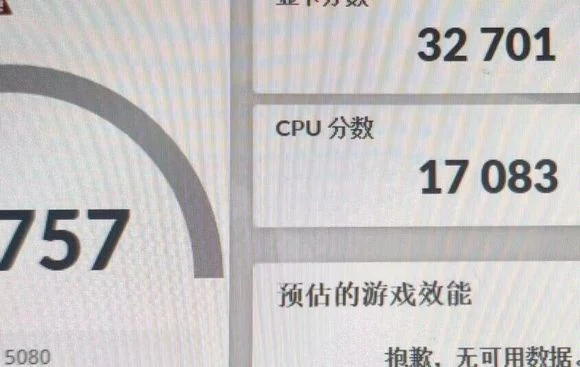
    Recently, a new result from the 3DMark Time Spy test for the RTX 5080 has been shared online, revealing a more favorable performance compared to earlier leaks involving OpenCL and Blender.

    Leaked Benchmarks

    According to findings posted on Baidu (via Olrak29 on X), the RTX 5080 scored 32,701 in the Time Spy Graphics test. Our records show that the RTX 4080 and RTX 4080 Super average around 27,605 and 28,344 points in the same test. This means the leaked RTX 5080 is ahead by 18.5% and 15%, respectively, compared to the RTX 4080 and RTX 4080 Super.

    However, gamers hoping the RTX 5080 would surpass or equal the RTX 4090 might feel let down, as the RTX 5080’s score is still 10% lower than that of the RTX 4090 based on our evaluations.

    AMD’s Position

    Currently, AMD doesn’t have a direct rival for the RTX 5080 in its RDNA 4 series, but it may not need one if the 3DMark scores are any clue. The RX 7900 XTX, for instance, averages around 31,540 points in the Time Spy Graphics test—just 4% behind the anticipated RTX 5080 score.

    With the RX 7900 XTX available for under $950 on platforms like Amazon and Newegg, many gamers might find it hard to justify the RTX 5080’s price. This situation is further complicated by reports of limited initial supply for the RTX 5080, which could drive prices even higher than the $999 MSRP.

    Final Thoughts

    Nevertheless, the landscape could shift in favor of the RTX 5080 when considering features like DLSS 4 and Multi Frame Generation, which some may view as essential.

    Ultimately, only time will reveal the true performance of the RTX 5080 and its availability at launch. Until then, it’s wise to approach all leaks and speculations with caution.

    Source:
    Link


  • Nvidia Reveals Unique Features of Founders Edition RTX 5090

    Nvidia Reveals Unique Features of Founders Edition RTX 5090

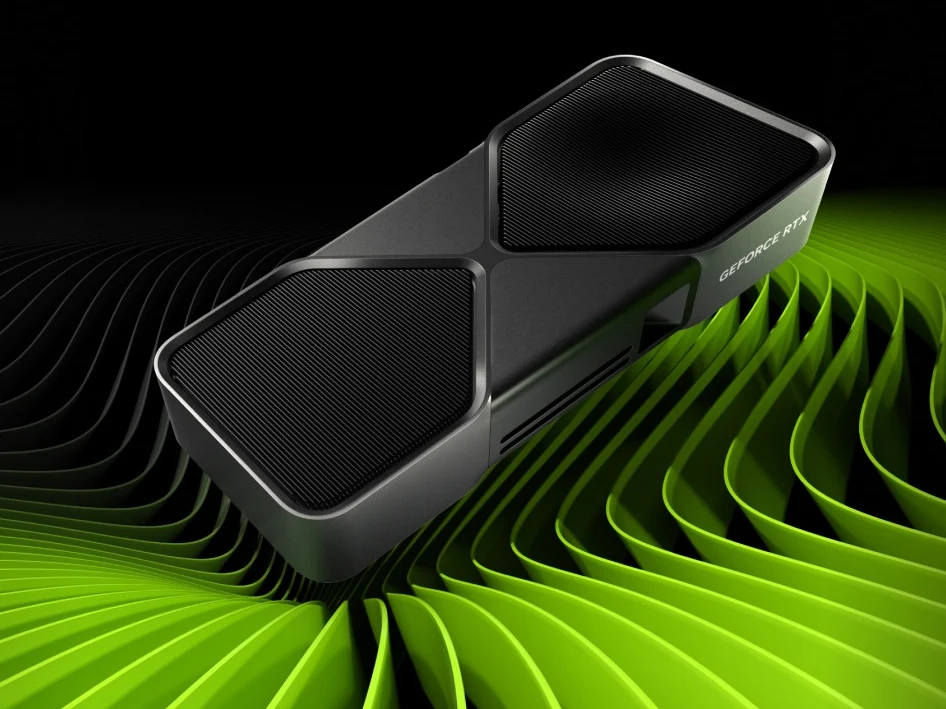
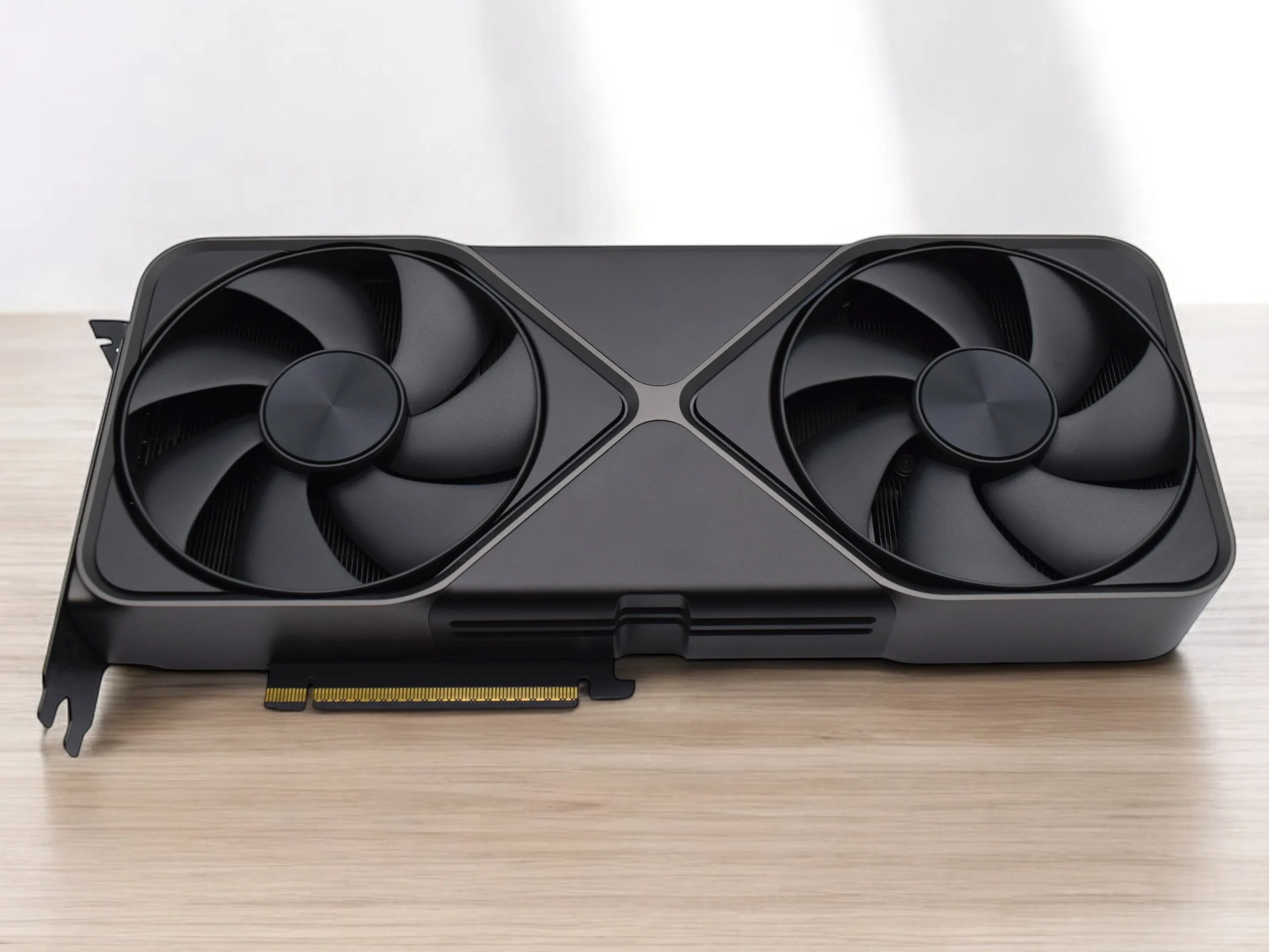
    The Nvidia RTX 5090 FE stands out as a top-tier graphic card crafted to meet high power demands and manage significant heat output. Its surprisingly slim two-slot design breaks the mold for GPUs within this power range. As a premier offering, it showcases cutting-edge engineering and innovation, marking the 5090 FE as a significant advancement in Nvidia’s continuous evolution of graphics processing unit technology.

    Prototype Insights

    A recent video presented a prototype of this GPU, which featured an ambitious quad-slot design with a fully flow-through cooling solution and a vertical PCB. While this initial concept displayed the impressive capabilities of the hardware, the final version of the RTX 5090 FE was streamlined into a more compact design. This adjustment avoids the impracticality of the bulky 4-slot configuration, which wouldn’t fit well in numerous modern cases, opting instead for a design that better aligns with contemporary system builds and user needs.

    Thermal Innovations

    The RTX 5090 FE brings forth new ideas in thermal management. It employs liquid metal on the GPU die, held in place by a specially designed rubber gasket to prevent leaks that might harm the PCB. The GPU features a semi-pass-through setup that integrates a modular PCB with a two-thirds blow-through cooling system, ensuring temperatures remain optimal. Additionally, a 3D vapor chamber equipped with artery wicks significantly boosts heat dissipation efficiency.

    Usability Features

    This design also includes user-friendly elements like repositioned power connector ports for better accessibility and an anti-fingerprint coating, although its effectiveness has yet to be fully evaluated. These enhancements aim to improve maintenance and ease of use, but measuring their actual impact in real-world scenarios might be challenging.

    The RTX 5090 FE is a formidable graphics card that challenges the limits of technology and hardware design. With an impressive power consumption of 575W, it offers top-notch performance in a sleek two-slot layout, as verified through our testing. Such extreme power needs raise concerns regarding its practicality for everyday use and the heat it generates in smaller builds.

    Future of GPU Design

    The compact design of the 5090 FE reflects the trend toward minimalist PC cases, prompting the industry to reconsider the increasing size of GPUs. Where could this lead us? Ideally, towards a future with slimmer, more efficient GPU designs, steering us closer to a standard that is less than 3 slots.