Key Takeaways
1. Thomas Edison improved the light bulb’s practicality by using cotton or bamboo filaments, making it suitable for widespread use.
2. Recent research shows Edison’s light bulbs created conditions for forming graphene, a significant material discovered long after his time.
3. Graphene, a single layer of carbon atoms, is known for its strength and conductivity, and can be produced through methods similar to Edison’s heating process.
4. Edison’s carbonized filaments can transform into turbostratic graphene, enhancing its electronic properties compared to ordered graphite.
5. Historical research in natural sciences can lead to new discoveries by reevaluating past experiments with modern knowledge and techniques.
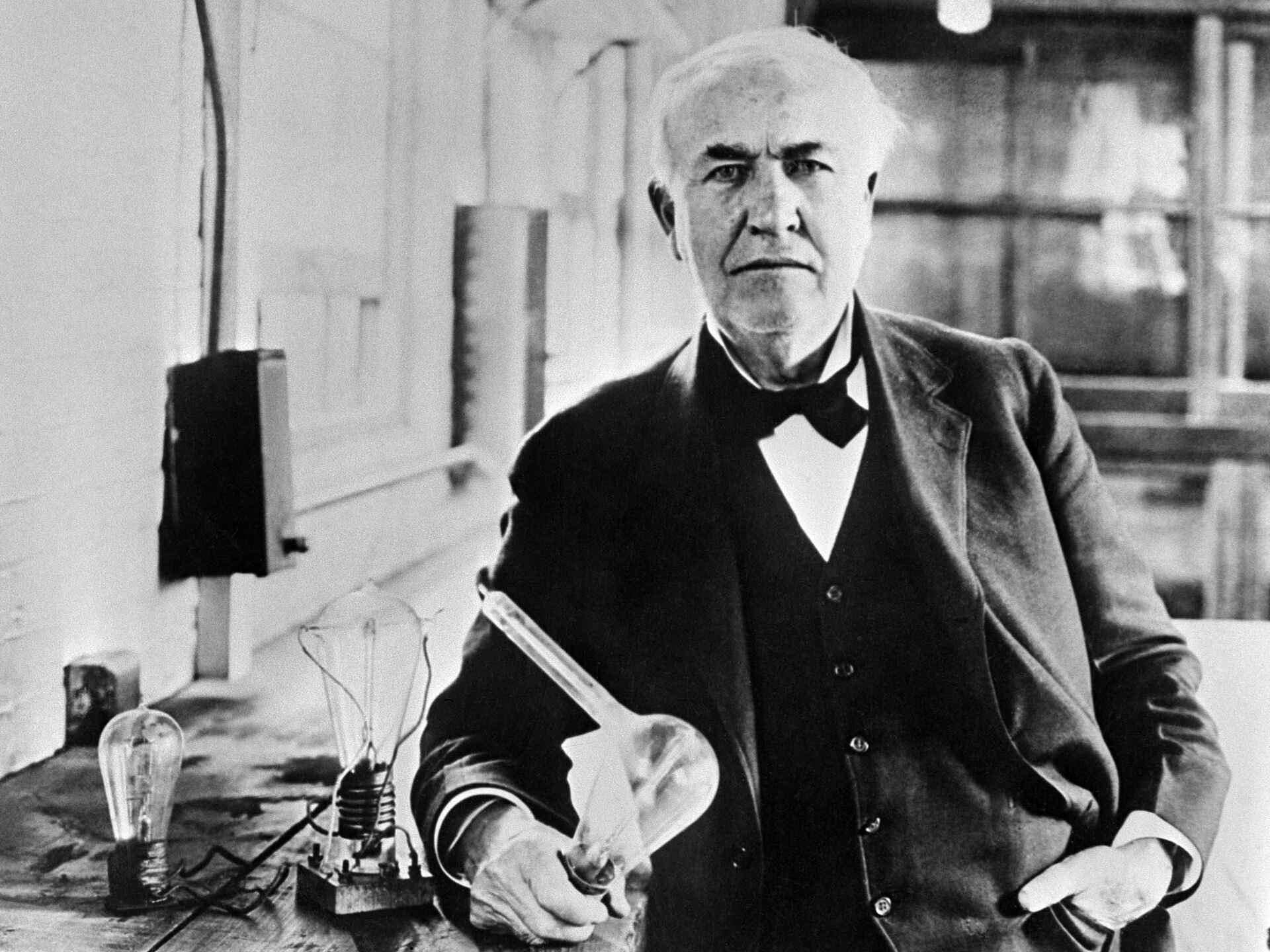
Thomas Edison is widely recognized for his role in the invention of the light bulb. While the light bulb existed prior to Edison’s work, he made it more practical for widespread use by utilizing a filament crafted from cotton or bamboo fibers. Recent research indicates that, unbeknownst to him, he actually created a material that would become significant more than a century later. A team from Rice University, led by Lucas Eddy and James Tour, conducted studies showing that the conditions present in Edison’s light bulbs from 1879 were perfect for forming graphene. Although they couldn’t analyze original bulbs without damaging them, tests on similar replicas produced clear evidence that these bulbs generate graphene.
Understanding Graphene
Graphene is made up of a single layer of carbon atoms arranged in a hexagonal pattern. It is known to be one of the strongest and most conductive substances in existence. Nowadays, graphene is typically made through complicated methods, such as chemical vapor deposition or a technique called “flash Joule heating.” This latter technique, which involves rapidly heating carbon-based materials with a surge of electricity, closely resembles how Edison’s light bulb functions.
Edison’s Innovative Filament
Edison’s bulbs utilized carbonized bamboo or cotton as the filament. As electrical current moves through this resistor, it heats up to a glowing state. The current research indicates that this heating process, under appropriate conditions, can transform the amorphous carbon in the filament into turbostratic graphene. In this configuration, the graphene layers twist against one another, which can actually enhance the electronic characteristics of the material, since the interactions between the layers are weaker compared to those in ordered graphite.
The researchers carried out their analysis using advanced spectroscopic techniques, including Raman spectroscopy and transmission electron microscopy, on the replicas. The characteristics of the samples they measured matched those of graphene and were distinctly different from pure graphite. At the time, Edison lacked the technology to identify or isolate this material, even though he did notice the darkening of the glass bulb as an annoying side effect.
The Importance of Historical Research
This finding emphasizes the significance of studying history in the field of natural sciences. Past experiments and documentation can lead to new discoveries when viewed through the lens of contemporary knowledge and measurement techniques. Although Edison’s main goal was to create light, the physical processes occurring in his lamps foreshadowed modern nanotechnology, which the scientific community of the 19th century could not have anticipated.
Source:
Link