Tag: microtransactions

  • New AAA Xbox Game Pass Release Not an April Fools’ Joke

    New AAA Xbox Game Pass Release Not an April Fools’ Joke

    Key Takeaway

    1. NBA 2K26 was unexpectedly added to Xbox Game Pass on April 3rd, surprising fans with no prior announcement.
    2. The game features realistic graphics and new gameplay elements like ProPlay, but also continues to rely heavily on microtransactions.
    3. NBA 2K26 is available on Game Pass Ultimate, Premium, and PC, with an official release date of September 5th, 2025.

    New NBA 2K26 Joins Xbox Game Pass Unexpectedly

    Once in a while, Microsoft surprises Xbox gamers with a sudden addition to the Game Pass lineup. Recently, basketball enthusiasts got a shocker when NBA 2K26 was announced out of nowhere. On April 3rd, this popular AAA sports game was made available on Xbox Game Pass Ultimate, Premium, and PC’s subscription services, surprising many fans.

    Social Media Announcement Sparks Confusion

    Fans were left in disbelief as the game appeared on Xbox’s social media, without prior disclosure. Normally, major game releases are teased beforehand on the official Xbox Wire blog, but this time, there was no warning. Some gamers thought it was a prank, perhaps an April Fools’ joke from Microsoft, but no official statement or confirmation was given hours later.

    History and Features of NBA 2K Series

    The last time a 2K Sports basketball game hit the Xbox Game Pass was in 2024 with NBA 2K24. Since then, the developers aimed to improve realism in gameplay and visuals. With NBA 2K26, they introduced ProPlay, which uses animations captured during real games to make movements more authentic. Updates were also applied to modes like MyPlayer and MyCareer, providing a broader range of single-player and multiplayer gameplay options.

    Reviews and Technical Aspects

    • Review scores for NBA 2K26 on Xbox average around 82 on Metacritic.
    • While the PC version shares many features, some users report crashing issues and bugs.
    • Players praise the game for its realistic graphics and numerous gameplay options, despite technical obstacles.

    Microtransactions and Gameplay Concerns

    One notable issue among fans is the heavy dependence on microtransactions. Even though NBA 2K26 is free on Game Pass, players who lack extra cash could be at an unfair disadvantage. In the popular MyTeam mode, many players find it difficult to create a competitive squad without buying Virtual Currency, and some even spend thousands on packs to chase rare cards.

    Release Date and Content Timing

    NBA 2K26 is scheduled to officially launch on September 5th, 2025, which means most league schedules are already set. However, with Season 6 currently underway, publishers tend to release new content throughout the playoffs and after the season ends, keeping fans engaged with fresh updates.

    Other Noteworthy New Titles on Xbox Game Pass

    Recently, Resident Evil 7: Biohazard has been among the new arrivals enriching the Game Pass collection. Additionally, the game Like a Dragon: Infinite Wealth, released on March 24th, offers another exciting RPG for players to explore, especially those into crime-themed stories.

  • Free Mixed-Rate Card-Idler RPG Launches on Steam with New Guilds

    Free Mixed-Rate Card-Idler RPG Launches on Steam with New Guilds

    Key Takeaways

    1. Launch and Development: DPS Idle 2 has been released after its early access phase, but it has received a mixed response primarily due to ongoing issues with damage calculations at higher levels.

    2. Gameplay Mechanics: The game introduces a card-collection system and distinct elemental categories (Ice, Sun, Earth) to enhance character builds, but players face challenges with the prestige system that leads to significant “grind walls.”

    3. Player Concerns: Many players feel that the balancing decisions favor microtransactions, making late-game achievements seem statistically unattainable and detracting from the overall experience.

    4. Initial Enjoyment: The early gameplay experience is enjoyable and engaging for the first 50-100 hours, appealing to casual players as a low-commitment option.

    5. Caution Advised: Players should be aware of potential grind walls, especially on later levels, as progress may stall without game patches or significant time investment.


    The sequel that many have been eagerly waiting for, DPS Idle 2, finally launched this week after completing its early access phase. The developer YDKR, who is also known for creating the original DPS Idle, aimed to offer players a more intricate and technical gameplay experience with this updated version that includes new “World” tabs. However, the full release has received a “mixed” response from gamers. While YDKR has actively worked on fixing bugs during the beta phase, the transition to a full release has revealed persistent issues, particularly in how DPS Idle 2 calculates damage at the higher levels.

    Game Mechanics and Features

    DPS Idle 2 follows the “line goes up” principle. It implements a card-collection mechanism to enhance your damage against various monsters. This sequel introduces distinct elemental categories such as Ice, Sun, and Earth, which are meant to add diversity to character builds. However, the main point of contention arises from the “prestige” system. Players have observed that later stages of the game tend to present a “wall” that can only be surpassed by either waiting for months in real-time or spending money on premium crystals.

    Player Reactions and Concerns

    The “Mixed” rating appears to stem from the balancing decisions made by the developers, as mentioned earlier. Unlike the first installment, which felt more like a project made by hobbyists, DPS Idle 2 resembles a product aimed at commercial success, heavily centered around its microtransactions. Although the card mechanics are genuinely engaging for the initial 50-100 hours, many players express differing opinions on whether the “insane” late-game demands—where certain achievements seem statistically unattainable—are worth it for a free game.

    Conclusion and Warnings

    In any case, this game serves as a low-commitment option for casual players, with the first several hours of DPS Idle 2 being quite enjoyable and essentially free. Nevertheless, be cautious of encountering the “grind wall” commonly seen in this series; if you find yourself stuck for weeks on the third island, it’s unlikely that just idling will help without a patch from YDKR.

    Steam, SteamDB

    Source:
    Link


  • Ubisoft’s Focus on Microtransactions in Live-Service Assassin’s Creed

    Ubisoft’s Focus on Microtransactions in Live-Service Assassin’s Creed

    Key Takeaways

    1. Ubisoft is seeking a Game Designer to enhance profitability within live-service setups for titles like Assassin’s Creed Shadows.
    2. The focus will be on improving progression systems and monetization strategies, including the use of the Animus Hub launcher.
    3. Production costs for recent Assassin’s Creed games are high, prompting the company to explore more microtransactions to improve financial stability.
    4. There is criticism from gamers regarding the fit of single-player games within a live-service model, with a growing trend towards always-online multiplayer experiences.
    5. Upcoming titles, including Invictus, are expected to incorporate more games-as-a-service elements, reflecting a shift in Ubisoft’s strategy.


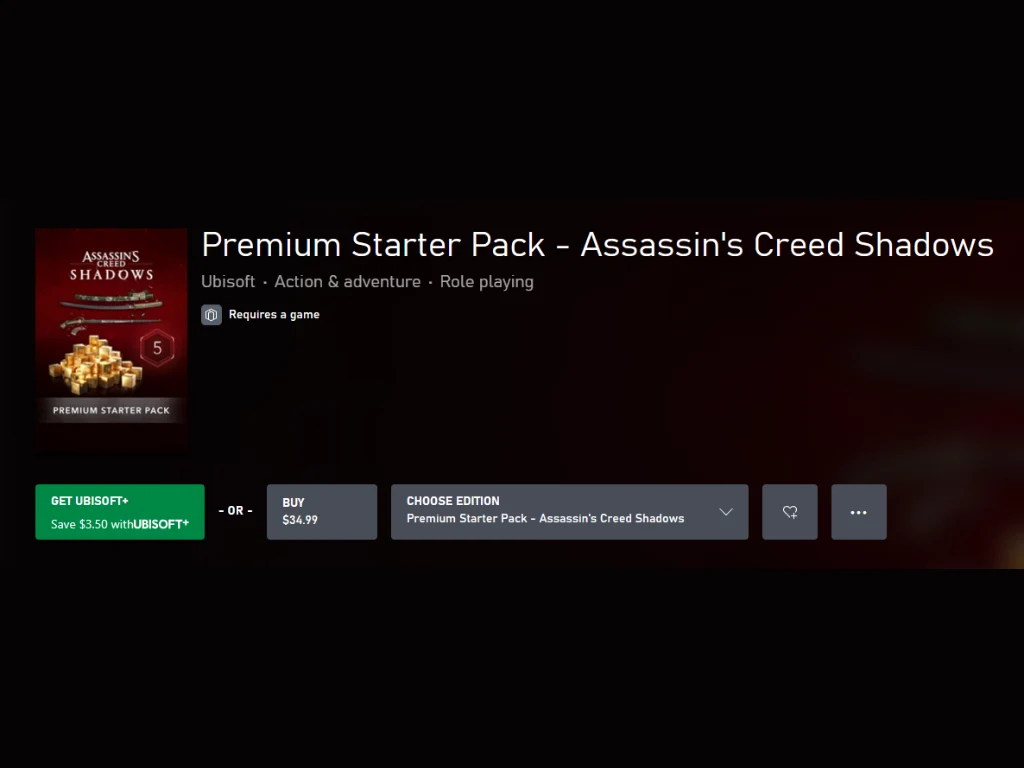
    Ubisoft is known for its games like Assassin’s Creed Shadows, which already includes microtransactions for cosmetic items and experience enhancements. Nevertheless, the company, which is going through tough times, seems keen on finding new ways to make money. A job listing found by Clawsomegamer indicates a search for a Game Designer whose role would focus on boosting profits in a live-service setup.

    Job Role Details

    Located in Quebec City, this developer will aim to enhance Progression and Systems within Assassin’s Creed titles. The job ad mentions the Animus Hub launcher, which links various games together, and calls for “ongoing improvements to HUB systems in an active environment.” The word “monetization” is also highlighted to attract players back. Additionally, the qualifications section seeks candidates with experience in “live or online environments.”

    Production Costs and Company Strategy

    Reports indicate that the production costs for Assassin’s Creed Shadows and Valhalla are between $75-100 million. With recent cancellations and job cuts, the company is eager to change its financial situation. A possible strategy could involve introducing more microtransactions and focusing on live-service games.

    This method isn’t exclusive to Ubisoft, but the company is openly discussing its plans. According to an investor report from July 2025, microtransactions “enhance the player experience.” Even though they insisted these purchases are optional, they still received backlash.

    Criticisms and Industry Trends

    Gamers have pointed out that single-player games usually don’t fit into the live-service model. The Animus Hub emphasizes the importance of staying connected and ensuring continuity across various AC games. However, players still have the option to explore their expansive worlds offline. The job listing suggests that upcoming titles like Hexe may rely more on games-as-a-service elements.

    Sadly for fans of traditional gaming, this trend seems likely to persist. Other firms, including Sony PlayStation, have made significant investments in always-online multiplayer experiences. The latest game, Horizon Hunters Gathering, might have even postponed the single-player focused Horizon 3.

    Future Games and Expectations

    For Ubisoft, the anticipated Invictus could align well with the Game Designer role. This game, featuring PvP gameplay reminiscent of Fall Guys, is expected to be released in 2026.

    Source:
    Link


  • Sonic Rumble Faces Criticism for Aggressive Monetization Issues

    Sonic Rumble Faces Criticism for Aggressive Monetization Issues

    Key Takeaways

    1. Sonic Rumble launched on November 5, 2025, for iOS, Android, and PC, featuring cross-play capabilities.
    2. The game supports up to 32 players in a toy-like environment, similar to Fall Guys, with iconic characters from the Sonic franchise.
    3. Over 10 million players registered before launch, and the game generally runs well on Linux and Steam Deck with stable FPS.
    4. Player reception is mixed, with low ratings on Steam due to complaints about aggressive monetization tactics, including expensive skins and emotes.
    5. Multiple paid battle passes are available, leading to criticism from gamers who feel the game prioritizes microtransactions over player experience.


    Sega’s much-anticipated Sonic Rumble finally made its global debut on November 5, 2025, for iOS, Android, and PC via Steam, after facing several delays. This game offers cross-play capabilities between mobile devices and PC. Players on Linux and Steam Deck can join in as well, since Sonic Rumble is verified for Steam Deck. However, the launch on Steam has been less than smooth, with users voicing concerns about “predatory” monetization tactics.

    Gameplay Overview

    In Sonic Rumble, 32 players compete in a toy-like environment, controlling mini versions of iconic characters such as Sonic, Tails, Shadow, Amy, and Dr. Eggman. The gameplay is reminiscent of Fall Guys, where participants race through an obstacle-filled course to gather the most rings.

    Pre-launch Buzz and Technical Performance

    Sega revealed that over 10 million players registered for Sonic Rumble before its launch. Additionally, the game runs on Linux and the Steam Deck, generally maintaining a solid 90 FPS and a stable 60 FPS, with battery life lasting between 3 to 4 hours.

    User Reception and Monetization Issues

    Sadly, Sonic Rumble’s release has not gone as planned. On Steam, it holds a Mixed User Rating, with only a 44% user score from 1,418 reviews. The game has a 3.9-star rating on the Google Play Store from 13,900 reviews and a 4.4-star rating on iOS from 709 reviews.

    Gamers are expressing dissatisfaction with Sega’s “aggressive” monetization methods. Across various platforms, players have reported numerous pop-ups encouraging them to buy skins. These skins are quite pricey, with prices ranging from $40 to $60. For instance, the Neon Suit Sonic is available for 999 Red Star Rings, costing over $50. Individual emotes in Sonic Rumble are priced at 99 Red Star Rings, translating to more than $10.

    Continuing Monetization Practices

    Unfortunately, Sonic Rumble’s monetization strategies don’t stop there, as multiple paid battle passes are available at the same time. The Season Pass is priced at $9.99, the Halloween Pass is $8.99, and the Premium Pass+ costs $20.

    PC gamers have heavily criticized Sonic Rumble, with some labeling it a “microtransaction-slop-filled nightmare,” a harsh critique for a game that was supposed to be a key part of Sega’s mobile strategy. As of now, Sega has not responded to the uproar regarding the game’s microtransaction policies.

    Source:
    Link


  • In-App Purchases: Why Free Games Can Cost You More

    In-App Purchases: Why Free Games Can Cost You More

    Key Takeaways

    1. Concerns about in-app purchases in free games targeting kids and teens, leading to high bills.
    2. Legal guidelines in Germany state that kids under seven cannot legally make purchases, and those aged 7-18 need parental permission.
    3. The EU’s Consumer Protection Cooperation Network requires clear price indications for in-game purchases to protect consumers, especially children.
    4. Recommended preventive measures for parents include disabling in-app purchases, avoiding carrier billing, and using prepaid credits.
    5. Awareness and education about in-app purchases are crucial, especially during major gaming events, rather than solely relying on legal actions against developers.


    On the subject of in-app purchases, the European Consumer Centre Germany (EVZ) has raised concerns that many free games lure kids and teenagers into spending money via microtransactions and time-waiting mechanics. The centre has recorded instances where bills range from several hundred euros to even more than €1,200.

    Expert Insight

    Alexander Wahl from the EVZ legal team remarked on how these games persuade individuals to part with their money.

    In Germany, kids younger than seven are deemed not legally capable, and those aged 7–18 need parental permission. The “pocket money clause” (§ 110 BGB) does not apply here. This clause states that a contract made by a minor can be valid if they use money given by their parents for personal use, but it doesn’t hold if the amount is excessively high or if a subscription is involved. The EVZ recommends that parents quickly object if unauthorized charges occur.

    Regulatory Measures

    At the regulatory side, the EU’s Consumer Protection Cooperation Network (CPC) has already put out guidelines requiring, among other things, that prices are clearly and transparently shown in real currency amounts: “Price indication should be clear and transparent.” These suggestions are designed to highlight the economic impacts of in-game currencies and to better safeguard vulnerable groups like children.

    The practical steps mentioned by the EVZ involve technical and administrative actions, such as turning on password protection or entirely disabling in-app purchases, avoiding carrier billing (billing through mobile phone bills), and setting up a third-party block with the mobile provider. Additionally, using prepaid credits from app stores can help to manage spending. Another straightforward tip is to not save payment information on children’s devices.

    Awareness and Education

    The EVZ notes that this issue becomes particularly important during major gaming events like Gamescom, where free games with new monetization strategies are heavily advertised, leading to a spike in young subscribers. Nevertheless, the EVZ emphasizes that raising awareness and educating is more effective than engaging in legal battles with game developers.

    Source:
    Link


  • Call of Duty: Then and Now – Fans Roast Franchise on Reddit

    Call of Duty: Then and Now – Fans Roast Franchise on Reddit

    Key Takeaways

    1. Shift in Focus: Fans are currently paying attention to Battlefield 6, but interest is shifting towards Call of Duty: Black Ops 7 as its release approaches.

    2. Viral Reddit Discussion: A trending Reddit thread highlights nostalgia for earlier Call of Duty games, showing over 60,000 interactions and sparking significant conversation about the franchise’s evolution.

    3. Contrasting Imagery: The trending post compares serious scenes from the original Call of Duty with flashy, exaggerated content from Black Ops 6, symbolizing a shift in tone and style.

    4. Nostalgia and Criticism: Longtime fans express nostalgia for past titles like CoD2, feeling disconnected due to monetization practices and pop culture influences that resemble Fortnite.

    5. Changing Perceptions: While Call of Duty campaigns still retain a serious tone, many fans believe the franchise has moved away from its roots as a serious war shooter, leading to ongoing debates about its future direction.


    Right now, many fans of shooter games are likely focused on Battlefield 6. However, with Call of Duty: Black Ops 7 set to release soon, that focus may change. Signs of this shift are already visible on Reddit, and Activision appears to be confident that the franchise will prevail.

    Viral Reddit Thread

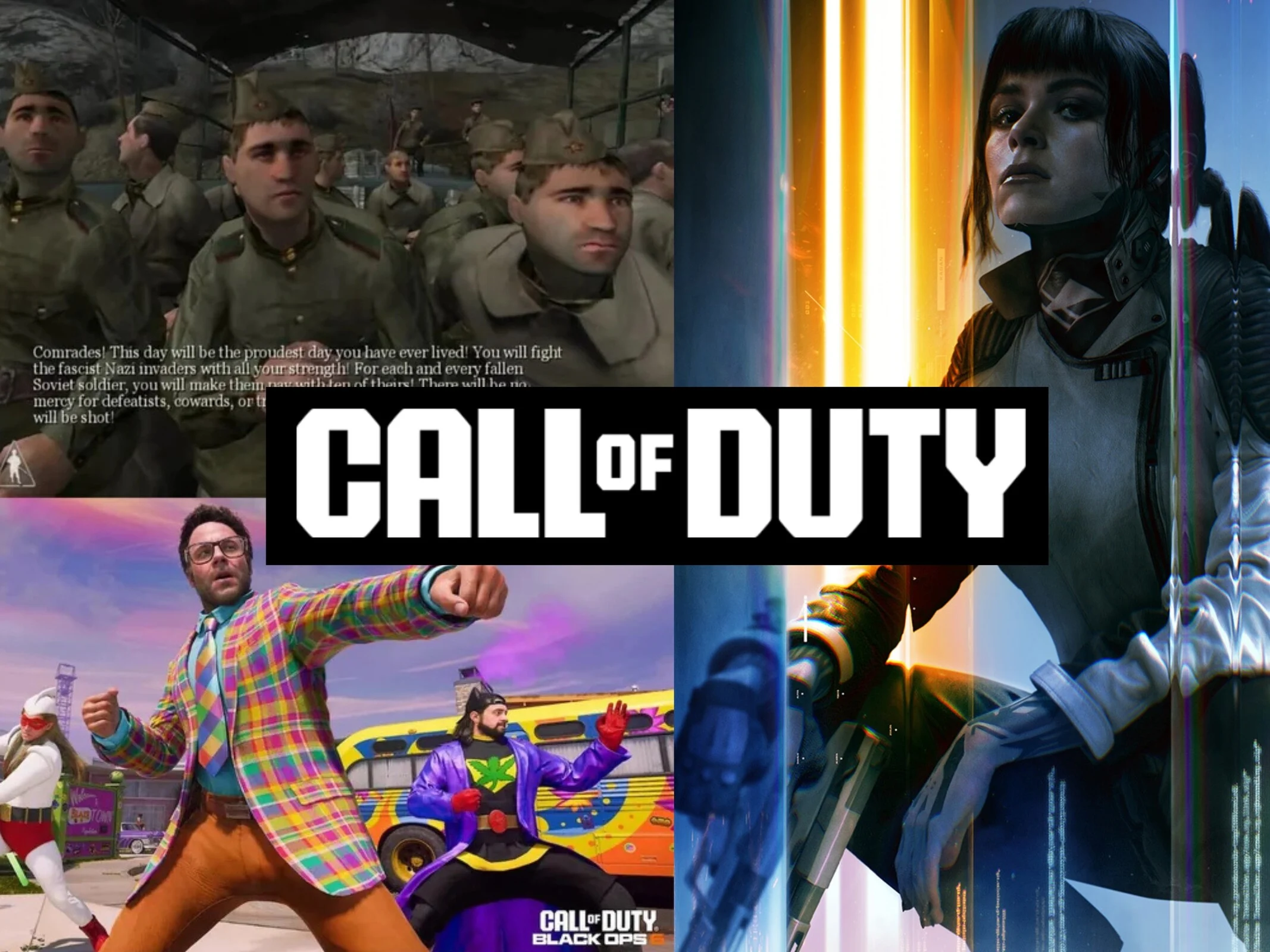
    A thread named “How Call of Duty started vs. how it’s going” is currently trending. As of now, over 60,000 Reddit users have interacted with the post in just eleven hours, leading to more than 2,500 comments. The original poster, u/Holiday-Proof9819, summarized the situation in one succinct sentence: “I think it’s fair to say that something has been lost.” Along with this statement, they shared an image that many believe conveys more than words could express.

    Contrasting Images

    At the top of the image, there is a serious scene from the original Call of Duty, depicting young soldiers crossing the Volga during the Battle of Stalingrad—dark, realistic, and filled with emotion. Below that is a screenshot from Black Ops 6 (currently priced at around $65 on Amazon), featuring Seth Rogen alongside Jay & Silent Bob on the well-known Nuketown map—dressed in flashy, exaggerated skins and striking comic-style poses. One of the most popular comments, made by u/braumbles, wittily remarked: “Chasing that Fortnite money.”

    Nostalgia for the Past

    Many gamers look back at earlier titles with nostalgia, often seeing CoD2 and United Offensive as peaks of the series. There’s a strong desire for a genuine remaster instead of more eye-catching spin-offs. Monetization has also sparked significant criticism—microtransactions, pop culture skins, and events reminiscent of Fortnite have left many longtime fans feeling disconnected.

    Changing Perceptions

    It’s important to mention that Call of Duty campaigns still maintain a serious tone. However, the overall view of this legendary shooter is clearly evolving. “I’m telling you after MW3, Call of Duty COMPLETELY lost it,” expressed u/Adventurous_Tax_9999. For many long-term fans, the franchise seems to have strayed from its origins as a serious war shooter, morphing into a more glitzy entertainment product. Others believe this change is a natural—perhaps irreversible—reflection of larger trends in the gaming world. Regardless, the topic remains contentious, and discussions persist in the comments.

    Source:
    Link


  • Techland Denies Dying Light: The Beast Currency Microtransaction Rumors

    Techland Denies Dying Light: The Beast Currency Microtransaction Rumors

    Key Takeaways

    1. Dying Light: The Beast will not include microtransactions or virtual currencies (DL points).
    2. Techland aims to rebuild trust with the community after backlash from Dying Light 2’s monetization strategy.
    3. The franchise director acknowledged criticism regarding gameplay focus in Dying Light 2, emphasizing a return to hardcore survival horror elements.
    4. The release date for Dying Light: The Beast is now set for September 19, 2025, after a one-month delay.
    5. A hands-on demo will be available at Gamescom 2025, allowing players to preview the game.


    In a recent announcement that has pleased a notably outspoken segment of the Dying Light community, Techland’s franchise director, Tymon Smektala, has assured fans that Dying Light: The Beast will not feature microtransactions or virtual currencies, which were previously referred to as DL points.

    No Microtransactions

    In response to a question from a fan about the potential return of DL points in Dying Light: The Beast, Smektala quickly stated, “Not planned.” This news brings significant relief to numerous fans of the series, as Techland seeks to rebuild trust with its audience by moving away from monetization tactics after the game’s launch.

    Backlash from Dying Light 2

    Techland had introduced a new virtual currency in Dying Light 2: Stay Human about 18 months after its 2022 launch, leading to a strong backlash from players. DL Points restricted some cosmetic items behind extra in-game purchases, causing irritation among players who found they often had to purchase more DL points than they needed because of fixed bundle pricing.

    Many fans labeled Techland as “greedy.” While Dying Light 2 achieved commercial success, selling five million copies within its first month, trust within the community began to erode. It seems that Techland and Smektala are now putting player feedback first, aiming to establish a more player-friendly approach with Dying Light: The Beast.

    Focus on Gameplay

    Dying Light 2 faced criticism for emphasizing scale over gameplay and atmosphere. Smektala acknowledged that the game had missed the mark on the “hardcore survival horror” essence that made the original 2015 release so beloved.

    Although Smektala has stated that there are no plans for monetization, Tencent’s investment of $1.6 billion in July 2023, increasing its share in Techland to 67%, could potentially affect future monetization strategies.

    Release Date and Demo

    Currently, Techland is focused on refining Dying Light: The Beast, which has experienced a one-month delay, pushing its release date to September 19, 2025. Nonetheless, players will still have the opportunity to experience a hands-on demo at Gamescom 2025 in Hall 6, allowing them a sneak peek at Castor Woods.

    Source:
    Link

  • Ubisoft Says Microtransactions Enhance Player Experience in Report

    Ubisoft Says Microtransactions Enhance Player Experience in Report

    Key Takeaways

    1. Ubisoft claims that microtransactions in premium games improve player experience by allowing customization and faster progression, but this has sparked skepticism among gamers.
    2. The gaming community criticizes Ubisoft’s assertion as “tone-deaf,” equating it to authoritarian statements and expressing frustration over perceived profit prioritization.
    3. Social media backlash highlights concerns about microtransactions in $70 to $80 premium games, with many users calling it “borderline daylight robbery.”
    4. Gamers argue that tedious gameplay mechanics, such as those in Assassin’s Creed: Shadows, should be improved through better design instead of relying on microtransactions for progression boosts.
    5. Ubisoft’s heavy reliance on digital microtransactions, generating 58% of its PC revenue in fiscal year 2024, has led to calls for a shift back to player-focused game development.


    Ubisoft has stirred up discussions with its latest announcement in the 2024-2025 yearly financial report. Released on May 14, 2025, the company asserts that microtransactions in premium games “enhance the player experience,” enabling gamers to “customize their avatars or advance faster.”

    Contentious Claims

    This statement appears on page 10 of Ubisoft’s report, where they emphasize that microtransactions are “always optional.” However, this assertion has not eased the concerns of a gaming community that is skeptical of the publisher’s methods, accusing Ubisoft of being “tone-deaf” and prioritizing profits over player satisfaction.

    Social Media Reactions

    The backlash has ignited discussions across social media sites like X, with users likening Ubisoft’s viewpoint to authoritarian statements, remarking: “Microtransactions making players have more fun is right up there with ‘You’ll own nothing and be happy.’” Similar sentiments are echoed in the r/pcgaming and r/PS5 subreddits, where posts have gained hundreds of upvotes, expressing that microtransactions in the context of $70 to $80 premium games come off as “borderline daylight robbery.”

    Design vs. Monetization

    Furthermore, gamers are pointing out that grind-heavy gameplay, as exemplified in Assassin’s Creed: Shadows, necessitates progression boosts that could easily be substituted with better game design rather than microtransactions. A user on r/gaming remarked, “They made it tedious in the first place; otherwise, people wouldn’t buy it and enjoy it more.”

    Ubisoft has reported that 58% of its PC revenue for the fiscal year 2024 was generated from digital microtransactions. This reliance on digital extras isn’t a new trend. Ubisoft first introduced microtransactions in 2017 with Assassin’s Creed Origins, featuring the option to buy XP boosters and cosmetic items like armor and unique mounts.

    Ongoing Monetization Strategy

    Since then, every major Assassin’s Creed installment, including Odyssey, Valhalla, and the latest Assassin’s Creed: Shadows, have brought in some form of digital monetization and optional cosmetic features. Ubisoft’s proposal of a “working group dedicated to monetization and the associated risks” is not well-received by the gaming community, widening the gap between gamers and the publisher. Many players are advocating for a return to smaller, player-focused studios.

    Source:
    Link

  • EA Faces Criticism: Microtransactions Found in Closed Alpha

    EA Faces Criticism: Microtransactions Found in Closed Alpha

    Key Takeaways

    1. EA is known for strong monetization techniques, leading to player annoyance, especially with pay-to-win loot boxes and microtransactions.
    2. Star Wars Battlefront II faced significant backlash over its monetization, resulting in a complete revamp of its system.
    3. EA’s upcoming Skate game has introduced a currency system called “San Van Bucks” during its closed alpha for acquiring cosmetic items.
    4. Community reactions on Reddit are mixed, with some confused about monetization in early testing, while others support it due to the game being free-to-play.
    5. Players can keep any purchased San Van Bucks when the game transitions to Early Access, but all other progress will reset.


    EA has been known for its strong monetization techniques, which often leads to player annoyance. Examples include the pay-to-win loot boxes found in FIFA (now known as EA Sports FC) and the heavy reliance on microtransactions in Star Wars Battlefront II. This particular game faced such a massive backlash that its system was completely revamped. Despite this, EA persists in making in-game purchases a key part of its overall strategy.

    Criticism Over New Game

    Now, EA is under fire again for its monetization approach, this time concerning a game that hasn’t even been released yet. As reported by Insider Gaming, the upcoming Skate installment is currently in closed alpha, where a currency system called “San Van Bucks” has been introduced. This allows players to acquire cosmetic items from the Skate Store. Full Circle, the developer, states that this early test is aimed at refining the system before the game’s Early Access debut in 2025, ensuring a “positive gaming experience.” Notably, while all progress will reset before Early Access starts, any San Van Bucks purchased will remain, as long as players use the same EA account.

    Community Reaction

    The introduction of microtransactions during a closed alpha has led to intense discussions on Reddit. Many users are confused about why a payment system is operational when essential gameplay features are still being finalized. Conversely, some supporters argue that since Skate will be a free-to-play game, having a monetization method is necessary anyway, making early testing a sensible decision. Provided that purchases are just for cosmetic items, some gamers don’t see a problem with it.

    Source:
    Link