Tag: Microsoft

  • Microsoft Embraces Cloud Gaming and Cross-Platform for Xbox

    Microsoft Embraces Cloud Gaming and Cross-Platform for Xbox

    Key Takeaways

    1. Microsoft denied allegations of a fixed 30% profit margin for Xbox, stating that it sets ambitious goals without specifying a margin.
    2. The average profit margins in the gaming sector are between 17% and 22%, while Xbox’s profit margins were only 12% in 2022.
    3. Significant layoffs and project cancellations have affected Xbox, including the cancellation of major titles like Perfect Dark and Everwild.
    4. Xbox sales dropped by 70% in November, falling behind competitors like Sony’s PlayStation 5 and Nintendo’s Switch 2.
    5. Microsoft is shifting focus to cloud gaming, cross-platform gaming, and the Xbox Game Pass subscription amidst financial challenges.


    Microsoft has refuted recent allegations that it established a rigid 30% profit margin for its Xbox gaming sector. The corporation stated that it sets ambitious goals, however, it did not disclose a specific profit margin number.

    Microsoft Responds to Allegations

    In a recent CNBC interview, Microsoft addressed the rumors and challenges that have emerged over the last year, including significant layoffs and project cancellations. The company’s response came after a Bloomberg report from October mentioned that CFO Amy Hood had outlined a 30% profit target under “accountability margins,” particularly affecting Xbox. Many insiders in the industry shared similar concerns, which seemed to be the main reason behind Microsoft’s cost-reduction efforts, including cutting various projects and reducing staff.

    Profit Margin Comparisons

    The mention of a 30% profit margin was notable, as it exceeds the average profit margins in the gaming sector, which typically range between 17% and 22%. Xbox’s own profit margins were recorded at 12% in 2022, according to previous documents.

    During the CNBC conversation, Microsoft clarified, “Although the company does set high objectives, the 30% profit margin target mentioned was inaccurate.” Xbox has been facing numerous challenges, with more than 9,000 employees impacted by several rounds of layoffs.

    Project Cancellations and Sales Decline

    In the aftermath of these layoffs, several major projects were canceled, such as The Initiative’s Perfect Dark reboot, Rare’s long-awaited Everwild, and ZeniMax Online’s sci-fi MMO Project Blackbird. Additionally, Xbox sales plummeted by 70% in November, placing the company significantly behind Sony’s PlayStation 5 and Nintendo’s Switch 2 in hardware sales.

    Last week, Xbox also revealed that it will not be offering the Xbox Wrapped feature this year due to budget limitations. Reports suggest that funds are being redirected towards the 25th anniversary celebration in 2026. This indicates that the company is indeed facing financial strains.

    Future Directions

    Despite these hurdles, Microsoft continues to focus on cloud gaming, cross-platform gaming, and the Xbox Game Pass subscription. The company is opting for a more inclusive approach by allowing access across various devices, including PCs, handhelds like the Rog Ally and Ally X, mobile devices, and even cars.

    As for Bloomberg, it remains uncertain whether the outlet will retract its story, revise its report, or provide additional insights on the issue.

    Source:
    Link



  • John Romero’s $50M FPS Revived as Innovative Indie Shooter

    John Romero’s $50M FPS Revived as Innovative Indie Shooter

    Key Takeaways

    1. Microsoft canceled several major projects, impacting Romero Games and their unnamed first-person shooter.
    2. Despite the cancellation, John Romero’s team is seeking new funding and has found a way to continue the project.
    3. The original FPS has been reimagined as a smaller indie game, moving away from AAA aspirations.
    4. The new game will be a single-player FPS, focusing on innovative mechanics and repurposing assets from the canceled project.
    5. Romero believes the gameplay will offer a unique experience, similar to the adventure of playing Elden Ring.


    Earlier this year, Microsoft made the decision to cancel several major projects and close down various studios. One of the affected was Romero Games, which was working on an unnamed first-person shooter. Thankfully, John Romero, co-creator of Doom and founder of the studio, shared that his project has evolved into something akin to Elden Ring.

    Development Journey

    Romero Games’ first-person shooter, backed by Microsoft, had been in the works for several years. The team, consisting of 110 dedicated members, invested their time into what Romero described as a “huge game,” with around $50 million put into its development. However, Microsoft decided to halt support due to restructuring plans earlier this year.

    A New Direction

    Despite the challenges, Romero’s FPS project is still alive. Speaking at the Salon del Videojuego de Madrid recently, he revealed that the studio is actively seeking new funding, even in the face of workforce reductions.

    Romero confirmed that they have found a way to move forward, but he has kept details about the funding and publisher under wraps. A representative from the studio commented, “We decline to reveal any details about funding or publishing at the time.”

    Innovative Changes

    Romero explained that the original shooter has been reimagined as a smaller indie project, stepping away from its AAA aspirations for something fresh and innovative.

    He noted during the panel:

    “We survived the cancellation of a huge game. A dedicated team of 110 has been working on this daily for years. The game has been completely redesigned. The new project is different from the previous version but includes several elements from it.”

    So, we’re not starting from scratch. With $50 million worth of assets, we can repurpose pieces into a new indie game.

    Currently, the game is confirmed to be a single-player FPS, without any co-op or multiplayer options. The main focus will be on introducing new mechanics that Romero believes will be a refreshing change.

    Romero also mentioned, “I’ve never experienced a game like it before, apart from it being a shooter. The gameplay will likely feel new to people, similar to how playing Elden Ring was a unique adventure.”

    Source:
    Link


  • Nadella: AI’s New Limit is the Power Grid, GPU War Concludes

    Nadella: AI’s New Limit is the Power Grid, GPU War Concludes

    Key Takeaways

    1. Microsoft faces challenges in AI not related to chip supply, but to the availability of fully developed data centers.
    2. Current obstacles include limitations of local grids, planning delays, and power delivery bottlenecks.
    3. Power shortages are impacting AI data centers, which consume electricity similar to small cities.
    4. Major cloud companies are seeking long-term energy agreements and exploring on-site generation options.
    5. The future of AI competition will depend on securing reliable and scalable power sources, not just GPUs.


    Microsoft’s CEO, Satya Nadella, mentioned that the surge in AI has encountered a new challenge, and it isn’t related to GPUs.

    In a recent episode of the BG2 podcast, where he spoke with OpenAI’s CEO, Sam Altman, Nadella pointed out that Microsoft is no longer facing constraints regarding chip supply. Instead, the key issue is the availability of adequately powered and fully developed data centers—these “warm shells” that are near grid capacity—needed to activate all those accelerators.

    As he put it, one might have numerous chips stored in inventory that just can’t be connected.

    A Shift in Industry Challenges

    This marks a significant change from recent years when the focus was primarily on the shortages of Nvidia GPUs and various supply chain issues. According to Nadella, the main obstacles now are limitations of local grids, delays in planning and permitting, and bottlenecks in power delivery that can hinder or even completely stop AI projects long after the necessary hardware has been procured.

    Power Supply Issues

    These power shortages have further consequences. Data centers dedicated to AI are consuming electricity on par with small cities, leading major cloud companies to secure long-term energy agreements, consider on-site energy generation, and even investigate the use of small modular nuclear reactors to ensure future projects can operate smoothly.

    The takeaway for both investors and regulators is clear: the upcoming stage of the AI competition will not solely depend on who can acquire the most GPUs, but also on who can obtain the most dependable and scalable power sources to sustain them.

    Source:
    Link


  • Windows 11 Bug Hides Password Icon on Lock Screen But Works

    Windows 11 Bug Hides Password Icon on Lock Screen But Works

    Key Takeaways

    1. Microsoft has identified a bug in Windows 11 that causes the password sign-in icon to disappear from the lock screen after recent updates, confusing users about login options.

    2. The issue affects Windows 11 versions 24H2 and 25H2 following the August 2025 KB5064081 preview update, especially for users with multiple sign-in methods enabled.

    3. Although the password icon is missing, the password login function remains accessible; users can click on the blank space to reveal the password field.

    4. Microsoft has not provided a permanent fix for the issue yet, but they are working on it, with no timeline for resolution currently available.

    5. This missing icon is part of a series of problems related to the KB5064081 update, including issues with DRM video playback and app installation failures for non-admin accounts.


    Microsoft has acknowledged a peculiar bug in Windows 11 that can cause the password sign-in icon to disappear from the lock screen following recent updates, leaving some users confused about how to log in—even though the actual button remains functional.

    Sign-In Options Confusion

    Typically, Windows 11 displays the password icon only when multiple sign-in methods are set up—like a mix of PINs, passwords, security keys, or fingerprints. If someone uses just a password, the system defaults to showing only the password field, which means everything seems normal. The bug, however, impacts those who have various authentication methods enabled.

    Update Impact Details

    The issue is present in Windows 11 versions 24H2 and 25H2 after the installation of the August 2025 KB5064081 preview update or any subsequent updates. In these situations, the password icon is completely absent from the Sign-in options list, leading users to believe that password login is no longer an option.

    Workaround and Future Fixes

    In truth, the function is still there; it’s just not displayed correctly, appearing as an empty space instead. According to Microsoft’s updated support documentation, hovering the mouse over this blank area reveals a clickable zone. Clicking on it opens the password field as usual, allowing users to input their credentials and log in without issues.

    Currently, Microsoft hasn’t provided a permanent solution apart from using this hidden control, stating that a proper fix is under development, but a timeline for its release has not been shared.

    The missing icon is just the latest problem associated with the KB5064081 update. In late September, Microsoft resolved a bug that caused freezing, playback issues, or black screens when playing DRM-protected videos in Blu-ray, DVD, and Digital TV apps. They also had to fix failed app installations for non-admin accounts due to unexpected User Account Control prompts, as well as significant lag and stuttering issues in NDI-based streaming software on both Windows 10 and Windows 11.

    Source:
    Link


  • Microsoft Enhances Xbox Publishing Guide and Revenue Model for Indies

    Microsoft Enhances Xbox Publishing Guide and Revenue Model for Indies

    Key Takeaways

    1. Microsoft has made the Xbox Game Publishing Guide publicly available, removing NDAs and simplifying the publishing process for developers.

    2. The guide provides comprehensive information on signing up with ID @ Xbox, using the Microsoft Partner Center, and features like wish lists and pre-orders.

    3. Developers can join the Xbox Insider Program to test their games and utilize the Xbox Game Preview system for soft-launches.

    4. Microsoft will continuously update the guide to keep developers informed about new tools and practices.

    5. Developers publishing on the Xbox PC store will retain 88% of the revenue, which is higher than Steam’s 70%.


    Microsoft has made its Xbox Game Publishing Guide publicly available after removing NDAs. This change enables independent creators and game developers to more easily bring their projects to Xbox consoles without facing the usual obstacles.

    Simplifying the Process

    For many years, Microsoft’s publishing process was kept secret, forcing game developers to sign NDAs and jump through hoops just to access basic information. Now that the Xbox Game Publishing guide is freely accessible, anyone can consult it as a roadmap for preparing their games for launch.

    Comprehensive Information

    The guide includes all the necessary information for joining Xbox, featuring a thorough step-by-step process for signing up with ID @ Xbox, establishing the Microsoft Partner Center, and utilizing features such as wish lists, pre-orders, and release timelines.

    It also explains how developers can join the Xbox Insider Program to test their games with players beforehand and utilize the Xbox Game Preview system to do soft-launches of their titles.

    Ongoing Updates

    In an official blog post, Microsoft committed to continually updating the Xbox Game Publishing Guide to keep developers informed about the latest tools, features, and recommended practices. This decision may have been influenced by Valve recently unveiling its updated Steam Machine, which has made it easier to access Steam games from the couch.

    Steam has long offered straightforward access and open tools for solo developers and indie studios to publish on its platform, leading to numerous indie successes like Megabonk, Escape from Duckov, and Peak being showcased on the Steam Store.

    A Message from Microsoft

    In the blog post, Senior Program Manager Ed Steward remarked:

    “By making our Game Publishing Documentation open, we’re eliminating barriers to understanding and simplifying the process for teams of any size to grasp what’s needed to launch a game on Xbox.

    Whether you’re a first-time indie developer or a veteran publisher, you can now freely browse the guide, share it with your team, and refer to it throughout your development journey.”

    This initiative from Microsoft aims to foster a more welcoming atmosphere for smaller developer teams who have been publishing their games on Steam. As a result of this update, developers who release their games on the Xbox PC store will retain 88% of the revenue, which is notably higher than Steam’s 70% initial gross revenue.


    Source:
    Link


  • MSI Claw A8 and 7-inch Handhelds Get New Windows Game Mode

    MSI Claw A8 and 7-inch Handhelds Get New Windows Game Mode

    Key Takeaways

    1. Microsoft has expanded Full Screen Experience (FSE) support on Windows 11 to additional devices beyond the ROG Xbox Ally series.
    2. The recent Windows 11 Insider Preview Build 26220.7051 allows FSE mode on the MSI Claw series, including the Claw 8 AI+ and possibly other models.
    3. Specific details on which MSI Claw models support FSE mode are unclear, but reports suggest compatibility with several models, including Claw 7 A1M and Claw A8.
    4. Other handheld devices like Legion Go S and ROG Ally X are expected to receive FSE mode support in the near future.
    5. The rollout reflects Microsoft’s effort to enhance the gaming experience on Windows 11, with potential impacts on performance and usability for users.


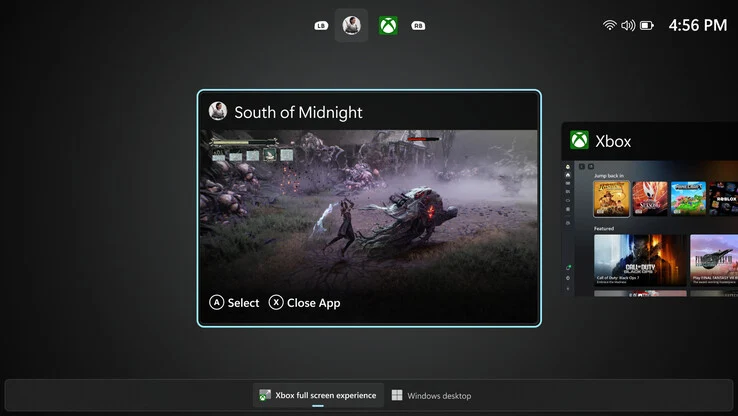
    Yesterday, Microsoft began to broaden the reach of its Full Screen Experience (FSE) on Windows 11 to a wider range of devices. This feature was first announced alongside the Asus ROG Xbox Ally X and its less expensive version (curr. $599 on Amazon). The FSE is included in the 25H2 update. However, since the launch of the 25H2 last month, only the ROG Xbox Ally series could officially use FSE.

    Support for Additional Models

    Now, with the Windows 11 Insider Preview Build 26220.7051, FSE support has been extended to the MSI Claw series. As mentioned yesterday, ETA Prime has already shown FSE Mode on the Claw 8 AI+. In summary, this new mode provides some enhancements in performance but doesn’t quite have the refinement that SteamOS offers.

    More Models Eligible

    Interestingly, FSE mode is not limited to just the Claw 8 AI+. Unfortunately, Microsoft was a bit unclear in its Insider Blog, simply stating that FSE mode was “rolling out to MSI Claw models” without detailing which specific models are supported.

    Reports have surfaced indicating that FSE mode can be activated on Insider Preview Build 26220.7051 on the original Claw 7 A1M or the AMD-based Claw A8. It seems the Claw 7 AI+ has also gotten this new feature, but it remains overshadowed by the Claw 8 AI+ due to its smaller screen, lesser battery life, and more restricted availability. Other handheld devices, like the Legion Go S and ROG Ally X, are expected to start seeing FSE mode support in the upcoming months.

    Final Thoughts

    This rollout shows Microsoft’s commitment to enhancing user experience on Windows 11, especially for gamers and tech enthusiasts. As more devices gain access to FSE, it will be interesting to see how this impacts performance and usability in real-world scenarios. Keep an eye out for updates on your devices!

    Source:
    Link


  • Microsoft Restores Xbox Services After Azure Crash

    Microsoft Restores Xbox Services After Azure Crash

    Key Takeaways

    1. Xbox players faced login issues, multiplayer game access problems, and difficulties with the Microsoft Store due to a cloud system outage linked to a broader Azure incident.

    2. The outage affected different regions inconsistently, with North America and parts of Europe reporting the most issues, while some players remained connected.

    3. Players should review their payment records for any transactions made during the outage, as unsuccessful purchases may show as temporary holds.

    4. For updates, players can check the official Xbox Status page, while Downdetector shows real-time issue reports, and Xbox Support on X provides progress updates.

    5. Some users were able to log in successfully via xbox.com, suggesting that trying different devices might help in troubleshooting account issues during the outage.


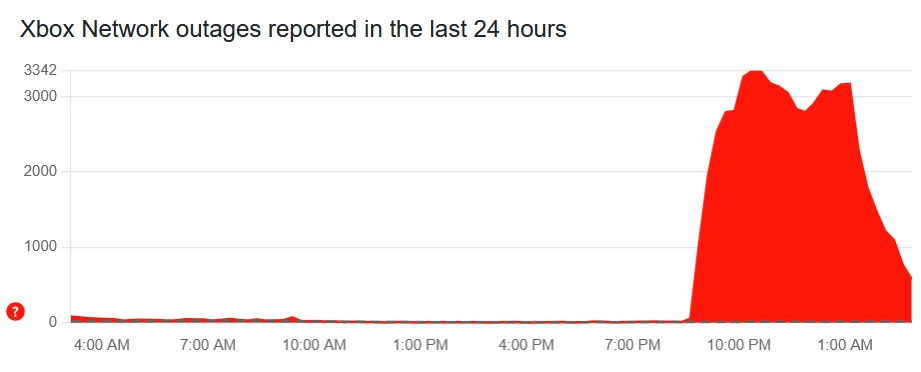
    Xbox players experienced issues with their service after a cloud system outage from Microsoft disrupted several online functions earlier this week. Users reported difficulties logging in, starting multiplayer games, accessing the Microsoft Store, and making in-game purchases, as shown by reports on Downdetector and various social media platforms. Microsoft provided updates on the service status, stating that engineers were actively working to restore full functionality, and they had implemented mitigation measures within a few hours.

    Connection to Azure Incident

    The outage seems to be linked to a broader Azure incident that impacted multiple Microsoft services earlier that day, based on user reports and monitoring websites. These platform problems then affected Xbox-specific services, leading to errors during sign-ins, matchmaking, and game validation. Console users encountered issues downloading or verifying their purchases, and cloud saves were momentarily inaccessible for those affected.

    Regional Variability

    The disruptions were not consistent across different regions; some players managed to stay connected while others faced ongoing failures. According to Downdetector’s live map, the most significant reports came from North America and parts of Europe, though isolated ISP issues could complicate the situation. Players who made purchases during the outage should review their payment records, as unsuccessful transactions may show up as temporary holds, and they should reach out to Microsoft support if the charges do not go through.

    Helpful Tips

    For those still experiencing problems, it could be beneficial to check the official Xbox Status page for the latest updates, as it claims to have resolved the issues by the 30th of October. Downdetector offers a valuable view of where reports are most frequent, and Microsoft’s Xbox Support account on X shares progress updates as engineers implement fixes.

    Interestingly, some users were able to sign in via xbox.com successfully, even when logging in through their consoles failed. Therefore, trying different devices before concluding that there’s an account issue might help clarify whether you’re still dealing with the lingering effects of the outage.

    This isn’t the first major service disruption this month for a tech giant; Amazon is still recovering from a much larger AWS-related problem that caused significant parts of the internet to be inaccessible for hours until it was fixed last week.

    Source:
    Link


  • Windows 11 Bug Causes Task Manager to Replicate on Close

    Windows 11 Bug Causes Task Manager to Replicate on Close

    Key Takeaways

    1. The KB5067036 update for Windows 11 causes Task Manager to clone itself instead of closing when the “X” button is clicked, leading to multiple instances running in the background.

    2. Each additional Task Manager instance consumes memory, which can slow down system performance.

    3. Users can check if they’re affected by opening Task Manager and closing it with the “X” button to see if another instance appears.

    4. The temporary workaround is to avoid the “X” button and instead use “End Task” or the command “taskkill /im taskmgr.exe /f” in the command prompt to close Task Manager.

    5. Microsoft has not yet acknowledged this bug, despite it being verified by users.


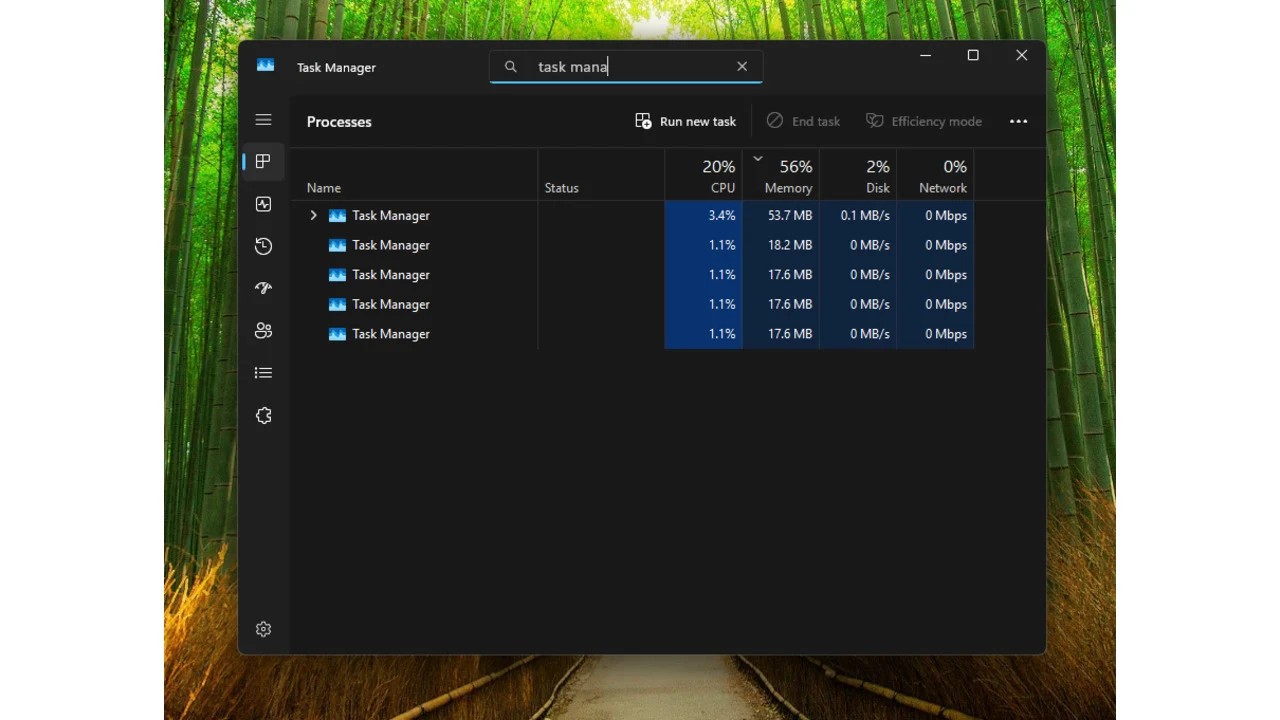
    Microsoft’s Preview KB5067036 update for Windows 11 appears to have created a strange glitch that leads to multiple Task Manager instances running behind the scenes when you close it with the “X” button.

    Bug Replication

    According to Windows Latest, each time you click the “X” button to exit Task Manager, it merely clones itself. This creates an additional background process that eats up memory and could cause performance slowdowns.

    We verified this on a test machine and confirmed that the bug is still present. Microsoft has not yet recognized this problem.

    How to Check

    To find out if you’re impacted by this glitch, you can open Task Manager by right-clicking on the taskbar and choosing Task Manager, or by using the Ctrl+Shift+Esc combo on the keyboard, or the Ctrl+Alt+Del shortcut and selecting Task Manager from the list.

    Once you’re in, close the application using the “X” button and see if another instance appears in the running processes. If you frequently open Task Manager to monitor processes, this could lead to performance drawbacks since each instance consumes a bit of RAM, and that can accumulate quickly.

    Workaround Solutions

    Currently, the only temporary fix seems to be avoiding the “X” button and instead manually right-clicking on each Task Manager process to choose “End Task” for closing it. You can also execute the taskkill command by typing taskkill /im taskmgr.exe /f into the command prompt.

    Recently, Microsoft rolled out an emergency update this month that resolved issues with USB devices not being recognized in the Windows Recovery Environment.

    Source:
    Link


  • Doom Creator Discusses Reviving Unannounced FPS After Funding Cut

    Doom Creator Discusses Reviving Unannounced FPS After Funding Cut

    Key Takeaways

    1. Microsoft withdrew support for an unannounced AAA first-person shooter project, risking over 100 jobs at Romero Games.
    2. The game was about halfway through development when funding was halted, but Romero Games is exploring partnerships with other publishers to revive it.
    3. John Romero emphasizes that the studio owns all aspects of the game, including the IP and code, allowing flexibility in future collaborations.
    4. Despite the setback, there is interest from multiple companies to continue the project, highlighting the potential value of the developed assets.
    5. John Romero sees a positive side, stating that even if the project doesn’t continue, the studio has significant assets worth $50 million to create new games.


    After Microsoft withdrew support for an unannounced AAA first-person shooter project, John Romero, co-creator of Doom and Quake, has shared that Romero Games is currently engaging with several publishers to bring the project back to life.

    Job Security Concerns

    In July 2025, Romero Games disclosed that Microsoft had halted funding for the unnamed game, jeopardizing over 100 jobs at the studio. Previous employees were taken aback, describing the situation as a “big shock,” especially since the studio had met with the publisher just the day prior without any hint of cancellation.

    There were rumors that the studio might close down, but Romero Games refuted these claims. Recently, the team had a conversation with Game Reactor during the San Diego Comic Con in Malaga.

    Project Status Update

    Romero acknowledged that the FPS project was “about midway” in its development when the funding was pulled. After reaching out to various publishers, it seems there is hope for the project to continue its development journey.

    In the interview, John Romero mentioned, “Well, we’re still figuring out what we’re gonna do with our big game. We own the IP, we own the code, we own everything about the game, right?”

    He emphasized that numerous companies remain keen on their project, even though Microsoft has shifted its focus towards broader infrastructure goals. Romero elaborated further:

    The Bright Side

    “We have many companies that are still interested and are working with us on it because when you develop a game for years and invest, let’s say, $50 million into it, if you switch and start collaborating with someone else, they essentially gain $50 million for free.”

    Despite the disappointment, John Romero sees a silver lining in Microsoft’s withdrawal of funding. The studio possesses a wealth of assets, mechanics, storylines, and artwork that another publisher may evaluate and potentially use to revive the Romero Games project.

    He added:

    “There are plenty of people eager to continue working on something, you know, and even if that doesn’t pan out, you have $50 million worth of assets you can use to create something new. So regardless of the outcome, you’re expediting the completion of your game, right? You already have a lot ready to go.”

    Initially teased in 2022, the project was described as “a new dawn,” indicating the studio’s move into FPS development following their work on Empires of Sin.

    Source:
    Link


  • Xbox Game Pass Subscriptions Drop Before Price Hike, Report Says

    Xbox Game Pass Subscriptions Drop Before Price Hike, Report Says

    Key Takeaways

    1. Declining Sign-Ups: Xbox Game Pass subscription numbers in the U.S. have been decreasing since August 2024, raising concerns about slowing growth.

    2. Increased User Activity: Despite fewer new subscriptions, user activity has risen due to popular game releases like Call of Duty: Black Ops 6 and Oblivion Remastered.

    3. Subscriber Goals and Retention: Microsoft aims for 100 million subscribers by 2030, but retention rates may be impacted by recent price hikes and cancellations.

    4. Price Changes Impacting Cancellations: The increase in Xbox Game Pass Ultimate to $29.99 led to significant subscription cancellations, causing Microsoft’s website to crash.

    5. Long-Term Outlook: An analyst suggests that while price increases may seem negative, they could reflect the true value of the service, particularly for hardcore gamers willing to pay more.


    Some players are thinking that Microsoft has stopped sharing updates on Xbox Game Pass subscription numbers because growth is slowing down. These critics may find support in fresh statistics from Antenna. According to an article by investment adviser SuperJoost, sign-ups in the U.S. have been steadily decreasing since August 2024. This one-year timeframe does not take into account the recent price hikes for the service.

    Activity Levels

    Even though the number of new Game Pass subscriptions has dropped, Microsoft has experienced increases in user activity. SuperJoost highlights that Call of Duty: Black Ops 6 generated significant excitement in October 2024. Other popular titles on Xbox Game Pass, such as Oblivion Remastered and Clair Obscur: Expedition 33, also saw brief surges in interest. However, this performance might still fall short of what Microsoft had hoped for.

    Future Subscriber Goals

    Documents leaked from Microsoft’s FTC trial showed that the company aimed for 100 million subscribers by 2030. The Antenna data does not include worldwide membership totals. Gamers also lack knowledge about how many subscribers have canceled their recurring payments in the last year. For Xbox to keep a positive outlook, it would require a solid retention rate among its loyal customers.

    That retention rate may have taken a hit after changes were revealed in September. For gamers in the U.S., Xbox Game Pass Ultimate now costs $29.99, which offers access to day-one game releases. This change led to a surge of cancellations, which caused Microsoft’s website to crash.

    Long-term Outlook

    A former Microsoft employee mentioned to SuperJoost that the ongoing price increases for Xbox were “bad optics.” However, the analyst maintains a more optimistic long-term perspective. He points out that the old pricing model didn’t accurately reflect the different habits of gamers.

    Hardcore players were willing to pay $19.99 per month, but the costs to keep the service running were higher than that income. These dedicated users are less likely to complain about higher prices. In contrast, more casual gamers still have the choice of lower-cost options. This division of benefits among different tiers could ultimately enhance the future of Game Pass.

    Naturally, many gamers now feel that Game Pass does not offer enough value. Without a thriving first-party hardware lineup, Microsoft also has to find ways to draw in users on various devices.

    Source:
    Link