Tag: M1 Max

  • Cyberpunk 2077 Performance on M1, M1 Max, M3, and M4 MacBook Pro

    Cyberpunk 2077 Performance on M1, M1 Max, M3, and M4 MacBook Pro

    Key Takeaways

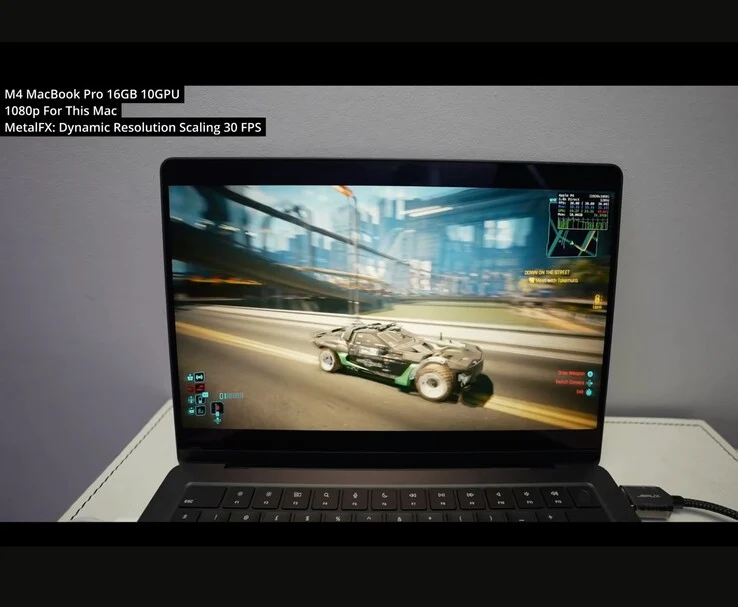
    1. Performance on M4 MacBook Pro: Cyberpunk 2077 runs at around 30 FPS with dynamic resolution scaling on the M4 chip, but stability helps prevent thermal throttling. Ray tracing significantly drops performance.

    2. Best Experience on M3 Max: The M3 Max MacBook Pro offers the best gameplay experience, running the game at 4K with MetalFX Quality upscaling, though path tracing may not justify the performance drop.

    3. M1 MacBook Air Limitations: The M1 MacBook Air can run the game at 720p and 30 FPS, but suffers from constant stutters due to insufficient memory.

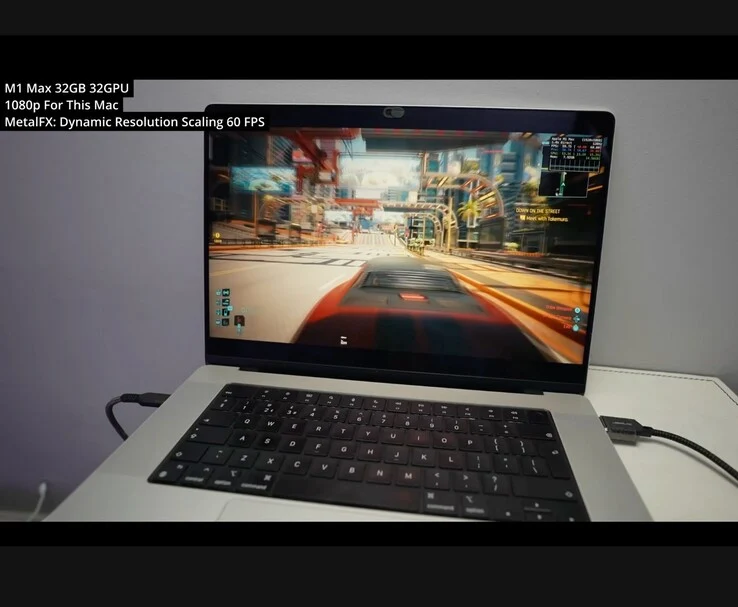
    4. M1 Max Performance: The M1 Max performs well at 1080p high settings with MetalFX, maintaining 60-90 FPS indoors and over 40 FPS in open-world battles without significant thermal issues.

    5. Mac App Store Size Discrepancy: The Mac App Store version of the game is 159GB, much larger than the 92GB Steam version, due to additional voiceover languages. It’s recommended to purchase from Steam, GOG, or Epic for a better deal.


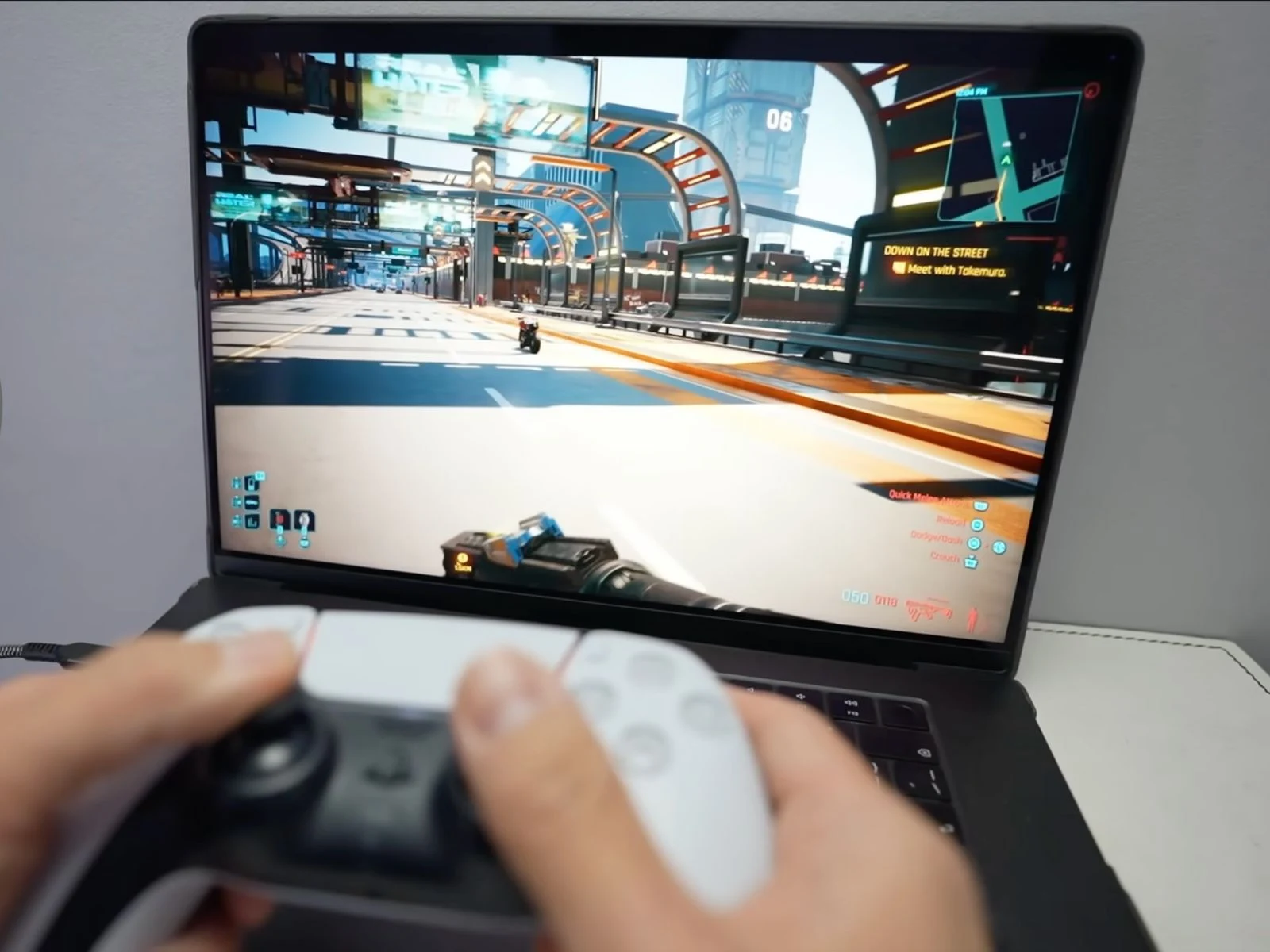
    Cyberpunk 2077 has now officially launched for macOS, and well-known Mac gaming YouTuber Andrew Tsai has put it to the test on four different generations of Apple Silicon. In his latest video, he benchmarks the game on the M1 Air, M1 Max, M3 Max, and the newest M4 MacBook Pro, examining frame rates, thermal issues, HDR compatibility, and Apple’s MetalFX upscaling technology.

    Performance on the M4 MacBook Pro

    On the M4 chip in the Apple MacBook Pro, the game starts at 30 FPS with dynamic resolution scaling. Although Cyberpunk 2077 doesn’t run ultra-smoothly, it maintains stability. Andrew mentions this stability helps prevent thermal throttling. Increasing the FPS cap to 120 while disabling VSync pushes performance towards 50-55 FPS, but enabling ray tracing causes the M4 MacBook Pro’s performance to drop significantly.

    “The ultra settings just kills the M4,” Andrew commented. “Hardware ray tracing is technically possible, but the GPU power here isn’t enough to make it playable,” he added.

    Best Experience on the M3 Max

    According to the video, the M3 Max MacBook Pro, which has 40 GPU cores, provides the best gameplay experience. This laptop can run Cyberpunk at 4K with MetalFX Quality upscaling. It handles some path tracing too, although Andrew was not convinced it was worth it. “I don’t believe the visual upgrade justifies the performance drop,” he stated.

    He also pointed out that frame generation with FSR 3.1 feels a bit shaky and out of sync, making it advisable to keep it turned off for the time being. The upcoming Metal 4 frame interpolation could enhance this later this year, but it will need macOS Tahoe.

    The M1 MacBook Air’s Limitations

    Even though it’s technically not supported, the 8GB RAM version of the M1 MacBook Air can run the game at 720p with a cap of 30FPS. However, Andrew reports constant stutters and frame drops, arguing that the M1 MacBook Air lacks the memory capacity to maintain smooth gameplay.

    With 32 GPU cores and ample RAM, the M1 Max performs well at 1080p high settings with MetalFX activated, maintaining between 60-90 FPS in indoor scenes and over 40 FPS during open-world battles. Andrew noted that no significant thermal problems arose, thanks to the active cooling system.

    Mac App Store vs. Other Platforms

    One unexpected and somewhat frustrating detail is that the Mac App Store version of the game takes up a massive 159GB, while the Steam version is only 92GB. This difference is due to the inclusion of all voiceover languages by default. Andrew suggests opting for Steam, GOG, or Epic instead, especially since purchasing the Windows version grants access to the Mac port for free.

    Source:
    Link

  • Black Myth: Wukong, Hogwarts Legacy, Witcher 3 – 60 FPS on macOS

    Black Myth: Wukong, Hogwarts Legacy, Witcher 3 – 60 FPS on macOS

    Key Takeaways

    1. High FPS Performance: Apple Silicon Macs, particularly the M1 Max, can achieve or exceed 60 FPS in games like Black Myth: Wukong, Hogwarts Legacy, and The Witcher 3 with suitable settings.

    2. DLSS vs. AMD FSR: DLSS offers better performance compared to AMD FSR, with significant frame rate improvements in games when using DLSS for upscaling.

    3. Challenges with Spider-Man Remastered: The game faced configuration issues; using DLSS alone provided the most stable performance, while mixing DLSS with AMD FSR resulted in frame drops.

    4. Encouraging Future for Mac Gaming: The combination of Game Porting Toolkit 3.0, Metal 4, and Crossover shows promise for gaming on Macs, allowing for smoother gameplay in more titles.

    5. Performance Variations: Different games have varying performances based on settings and technologies used, highlighting the importance of optimizing configurations for the best results.


    A recent video from the YouTube channel Blendlogic Tech highlights the advancements of Apple Silicon Macs in gaming. The creator tested various games using Crossover on an M1 Max MacBook Pro, running macOS 26 “Tahoe”, Metal 4, and the latest Game Porting Toolkit 3.0 (auto beta 1). Among the games, Black Myth: Wukong, Hogwarts Legacy, and The Witcher 3 managed to achieve or surpass 60 FPS under suitable settings.

    Understanding Features

    For those who may not know how technologies like DLSS, Metal FX, and frame generation work on macOS, these concepts have been detailed in a different article linked here.

    Game Performance Insights

    In the tests conducted by Blendlogic Tech, Black Myth: Wukong showed impressive performance, with DLSS providing frame rates around 70 FPS. The creator noted that the game ran well with Nvidia’s upscaling, but AMD FSR didn’t perform as well. Although there were issues such as untranslated menus and frame generation inconsistencies, pinpointing the exact cause was challenging, they mentioned. The YouTuber also speculated that newer Apple chips, like the M2, might yield even better outcomes.

    Hogwarts Legacy Results

    Hogwarts Legacy performed admirably during testing. With DLSS activated, the game reportedly started at roughly 45 FPS. Enabling frame generation almost doubled the performance to 90 FPS indoors and brought it close to 70–80 FPS in outdoor settings. However, switching to AMD FSR caused a performance drop, averaging about 40 FPS indoors and around 30 FPS outdoors, despite frame generation being on. The creator concluded that DLSS provides a more dependable upscaling experience on Apple silicon based on the results.

    The Witcher 3 Performance

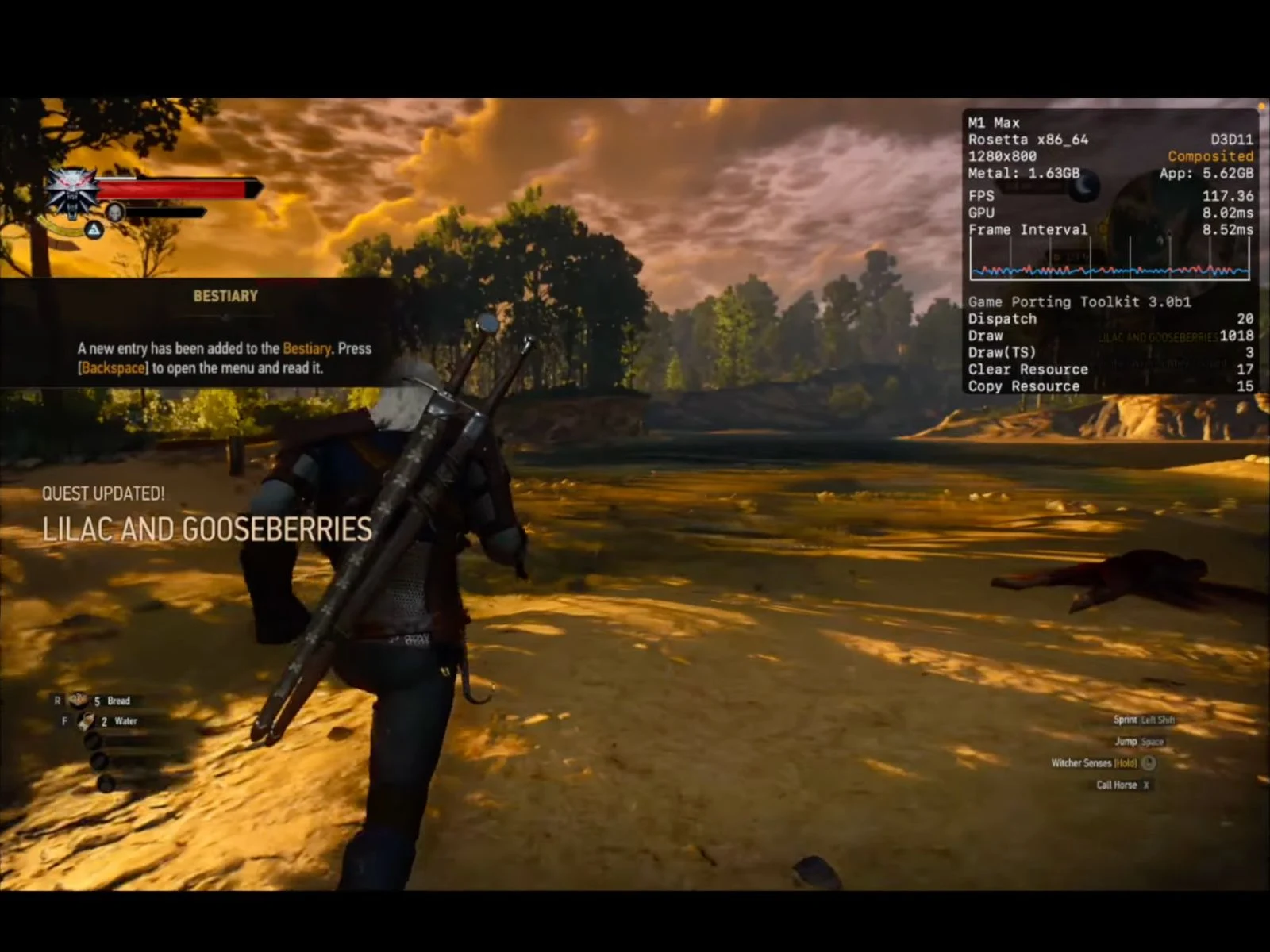
    According to the YouTuber, The Witcher 3 operates under DX11, which currently limits access to frame generation. Nonetheless, the performance remained strong during testing. On low settings, the game exceeded 120 FPS, fully utilizing the MacBook Pro’s 120 Hz ProMotion display. Even on ultra settings, with HairWorks turned off, it still maintained a steady 60 to 70 FPS.

    Spider-Man Remastered Challenges

    Spider-Man Remastered posed more challenges in terms of configuration, as shown in the YouTuber’s video. DLSS combined with Metal FX achieved around 50 FPS, but enabling AMD’s frame generation dropped performance to the low 40s. The possibility of mixing DLSS with AMD FSR’s frame generation was also tested, but this setup resulted in more frame drops, likely due to the conflicting upscaling pipelines. The video ultimately suggests that the most reliable performance came from using DLSS alone with frame generation disabled.

    Promising Future for Mac Gaming

    With GPTK 3.0, Metal 4, and Crossover working together, Blendlogic Tech’s video presents an encouraging outlook for gaming on Macs. For Apple Silicon users ready to tweak settings, achieving 60 FPS gaming is now possible with an increasing number of titles, even those that are not officially supported on Macs.

    Additional Titles Explored

    The YouTuber also tested several other games, including Spider-Man 2, Armored Core 6, and Marvel Rivals. For a detailed performance breakdown and to see how these games performed, be sure to check out the complete video linked below.

    Source:
    Link