
Tag: FSD

  • Elon Musk’s Government Role Could Speed Up Unsupervised FSD Rollout

    Elon Musk’s Government Role Could Speed Up Unsupervised FSD Rollout

    Elon Musk is gearing up to advocate for national regulations on autonomous vehicles if he secures the position he has been promised within a newly established government efficiency commission.

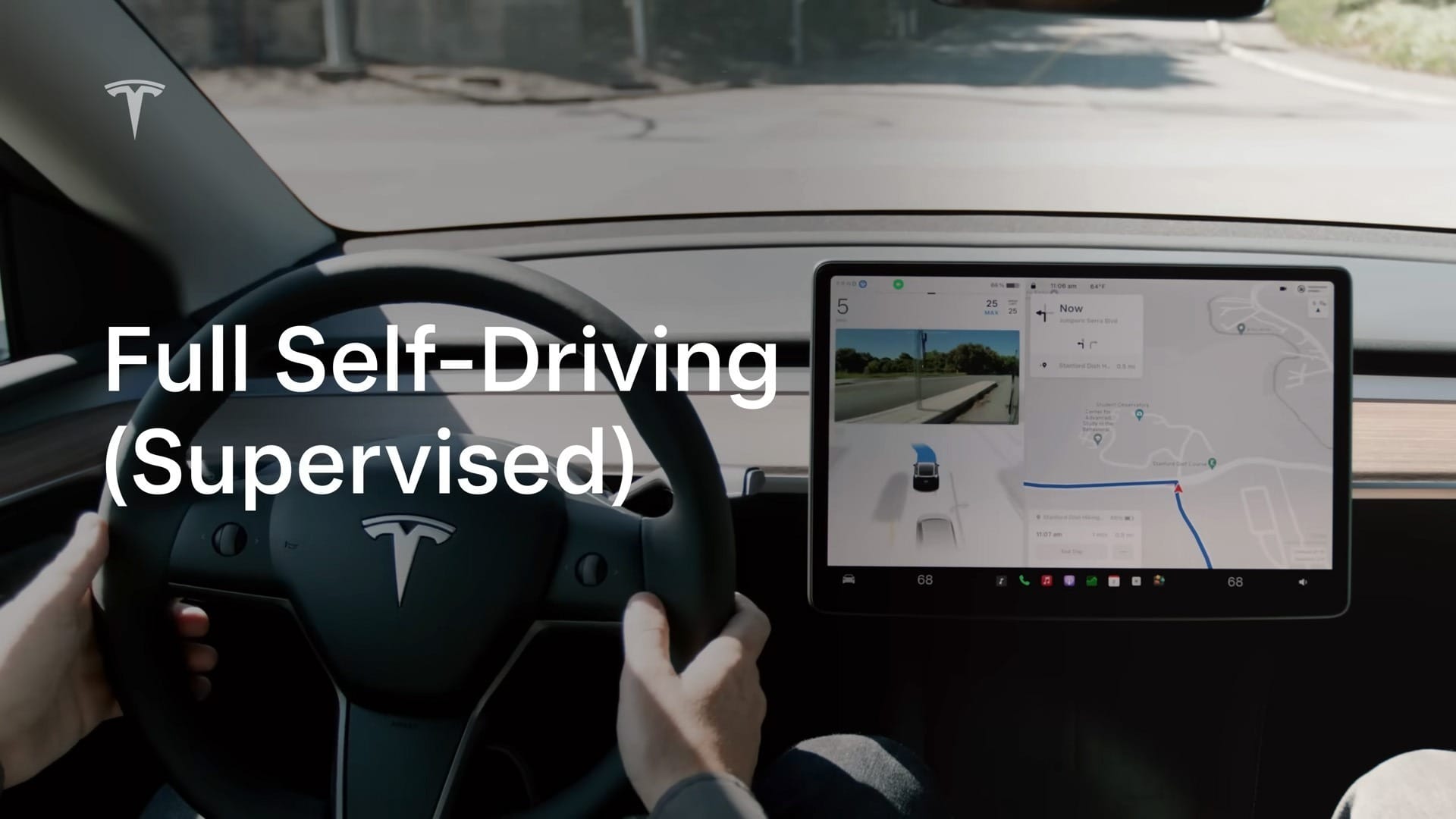
    During a recent earnings call, the Tesla CEO addressed inquiries regarding his assertion that the company plans to launch unsupervised Full Self-Driving (FSD) technology next year, although only in two states. Elon hinted at this upcoming FSD rollout when he introduced the driverless Robotaxi, which he stated would be priced below $30,000 by 2026.

    Upcoming FSD Developments

    Before that rollout, however, owners of the Model 3 and Model Y—especially those with HW4—might have the chance to experience real unsupervised self-driving in Texas and California. Tesla’s reasoning for targeting these two states for an unsupervised FSD launch in 2025 is quite distinct.

    Texas was chosen by Tesla due to its more flexible regulatory stance, while California, despite its complex regulations, already has a framework for autonomous vehicle permits through companies like Waymo. As Tesla’s Lars Moravy points out:

    "All of our vehicles currently produced and capable of autonomy comply with all regulations; even the Cybertruck conforms to these rules. Our challenge is not the vehicle itself but the state-level regulations controlling autonomous vehicle deployment. Some states, like Texas, are relatively straightforward. Others, such as California, might require more time. Some haven’t established any regulations yet, so we will navigate this on a state-by-state basis."

    Plans for Expansion

    After launching unsupervised FSD in these initial states, Tesla intends to seek approval in additional states by the close of 2025. According to Tesla, states began exploring these regulations back in 2017, but progress has since "stalled." This means Tesla will have to engage with each individual state to promote the adoption of autonomous vehicles.

    Musk believes that the introduction of unsupervised FSD could happen much quicker if regulations are enacted at the federal level. This is what he plans to focus on if he is appointed to lead the government efficiency role after the elections.

    "There ought to be a national approval system for autonomous vehicles. That’s how the FMVSS operates. The Federal Motor Vehicle Safety Standards (FMVSS) is federal. It’s crucial to have a national approval. The government efficiency department should help facilitate this. And this is for everyone, not just Tesla. In the U.S., some matters, like insurance, are regulated state by state, which is incredibly cumbersome across 50 states. I believe we need a natural approval process for autonomous technologies."

    What Musk means by the department of government efficiency is the federal commission that a new presidential administration might establish.

    Elon has already shown interest in advising this efficiency commission, even if in an unofficial capacity. Transitioning regulations for autonomous vehicles to the federal level could be a key initiative he aims to promote there.
  • Tesla Rideshare Drivers Use Self-Driving Mode for Safety

    Tesla Rideshare Drivers Use Self-Driving Mode for Safety

    Tesla is set to reveal a fully autonomous Robotaxi and potentially a ride-sharing platform, likely named the Cybercab service, on October 10.

    Current Use of Tesla Vehicles

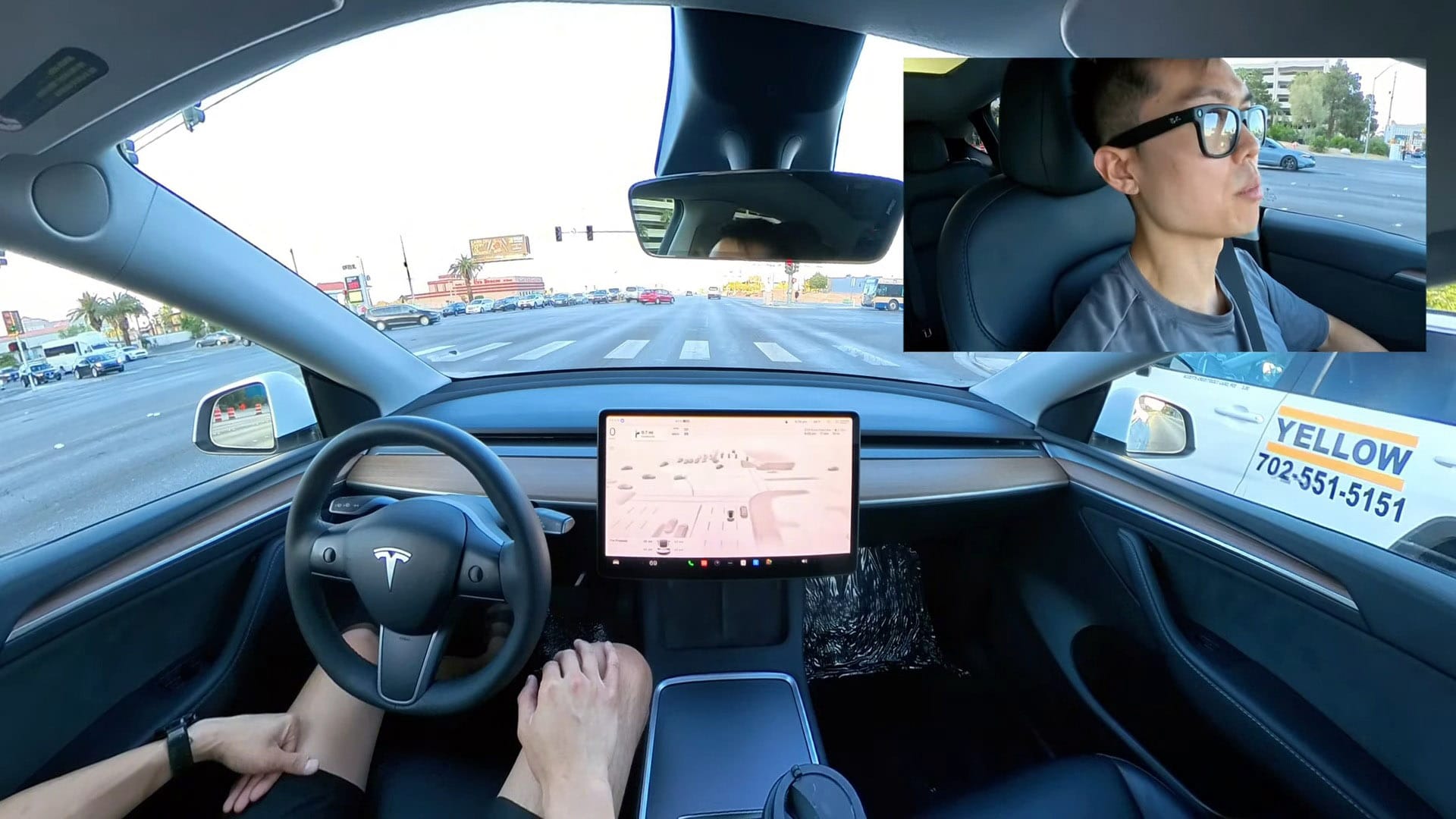
    Meanwhile, Uber and Lyft drivers have been taking advantage of their Tesla vehicles as makeshift Robotaxis. They enter their destinations and let the cars navigate themselves.

    One unfortunate incident involved a serious crash where the Tesla failed to detect an SUV cutting into its path. The driver intervened only to lessen the impact, resulting in the SUV driver being sent to the hospital.

    Driver Experiences and Concerns

    Reports from ride-share drivers interviewed by Reuters indicate that around 40% are using Tesla’s Full Self-Driving (FSD) feature regularly. While some express dissatisfaction with the $99/month service’s inconsistencies, they acknowledge that it significantly reduces the stress of driving in congested urban areas, allowing them to extend their working hours.

    In contrast, some drivers choose not to use FSD when carrying passengers, especially in situations they believe the software struggles with, such as in construction zones or busy airport areas.

    Responsibility and Safety

    When questioned about these practices, Uber and Lyft distanced themselves, stating that the responsibility for passenger safety falls solely on the driver. They referenced the Tesla FSD manual, which highlights the necessity for constant supervision of the feature.

    "Drivers must maintain a safe environment for riders, even if their driving methods don’t break any laws," Uber stated, while Lyft added that "drivers agree to avoid reckless behavior." Despite this, both platforms continue to enhance the experience for drivers using FSD.

    Uber has introduced a software update that sends passenger pickup and destination information directly to the Tesla navigation system, simplifying the process for drivers using FSD.

    Regulatory Landscape and Future Expectations

    Tesla’s self-driving feature is not subjected to the same limitations as fully autonomous services like Waymo or Cruise, as it is classified as a Level 2 driver-assist system. This classification allows Uber and Lyft drivers to use it nearly anywhere, provided they supervise it.

    However, some regulation or even a ban on this practice may be on the horizon, as the NHTSA is currently looking into accidents involving FSD.

    For the time being, many Uber and Lyft drivers are looking forward to Tesla’s announcements during the Robotaxi event on October 10, eagerly anticipating that FSD 13 will further simplify their work.

    You can find the Tesla Universal Wall Connector EV Charger with Dual Plug on Amazon.

    Source: Reuters, Project Robotaxi (YT)