Tag: Falcon 9

  • NASA’s New Satellite Aims to Solve Long-Standing Issues

    NASA’s New Satellite Aims to Solve Long-Standing Issues

    Key Takeaways

    1. Pandora aims to determine whether detected atmospheric molecules on exoplanets originated from the planets or their host stars.
    2. The mission utilizes a 17-inch all-aluminum telescope to observe each exoplanet and its star ten times, with 24-hour observation windows.
    3. Pandora’s goal is to conduct the first thorough examination of starlight passing through exoplanet atmospheres.
    4. The mission plans to study at least 20 exoplanets and their stars in its first year, enhancing knowledge from previous missions like Kepler and James Webb.
    5. Pandora was launched on a SpaceX Falcon 9 rocket alongside two other missions, BlackCAT and SPARCS, with different scientific focuses.


    Missions like NASA’s TESS (Transiting Exoplanet Survey Satellite) have found over 6,000 exoplanets. Researchers have identified molecules that are thought to be in the atmosphere of some of these planets. However, it remains unclear whether those molecules actually originated from the planet or if they are signals from the host star. This is the question that Pandora aims to resolve.

    Telescope Specifications

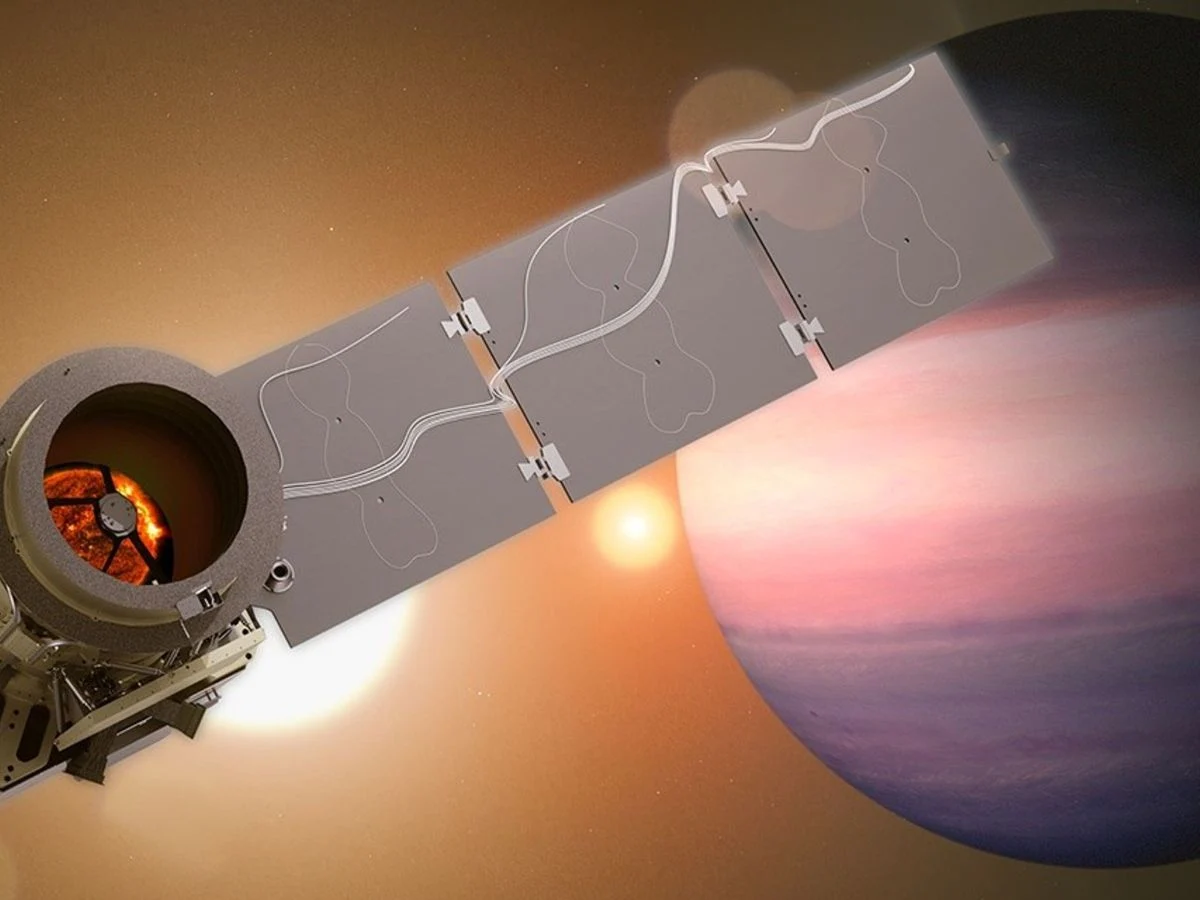
    Pandora is equipped with a 17-inch all-aluminum telescope that gathers visible and near-infrared light. The mission plans to observe each planet and its star ten times, with each observation lasting a total of 24 hours. During these extended observations, the telescope will capture light from the star both before and during a transit, which occurs when an exoplanet moves in front of its host star. By implementing this strategy, Pandora hopes to distinguish between signals from the planet itself and those that have been affected by the star.

    Mission Goals

    This mission marks the first time a spacecraft will conduct a thorough examination of starlight that has passed through exoplanet atmospheres. Over its first year, Pandora is set to investigate at least 20 exoplanets and their corresponding host stars. The information gathered will assist scientists in understanding data from previous and ongoing missions, such as NASA’s Kepler and James Webb.

    Launch Details

    Pandora was launched aboard a SpaceX Falcon 9 rocket, alongside two other missions: BlackCAT (Black Hole Coded Aperture Telescope) and SPARCS (Star-Planet Activity Research CubeSat). While BlackCAT will explore the transient, high-energy universe, SPARCS will focus on examining the activity of low-mass stars.

    Source:
    Link


  • SpaceX Launches New Starlink Satellites with Paid Pause Feature

    SpaceX Launches New Starlink Satellites with Paid Pause Feature

    Key Takeaways

    1. SpaceX launched 24 Starlink V2 Mini satellites, expanding its satellite internet service to over 7,760 functioning satellites.
    2. A new paid “Standby Mode” was introduced, costing US $5 or €5 per month for unlimited low-speed data.
    3. Users can no longer pause their service for free; cancellation may prevent reactivation if service capacity is reached.
    4. The US $10 Roam plan has been discontinued, leaving users to choose between more expensive plans or Standby Mode.
    5. Unused data blocks will not roll over when an account is set to Standby, limiting user flexibility.


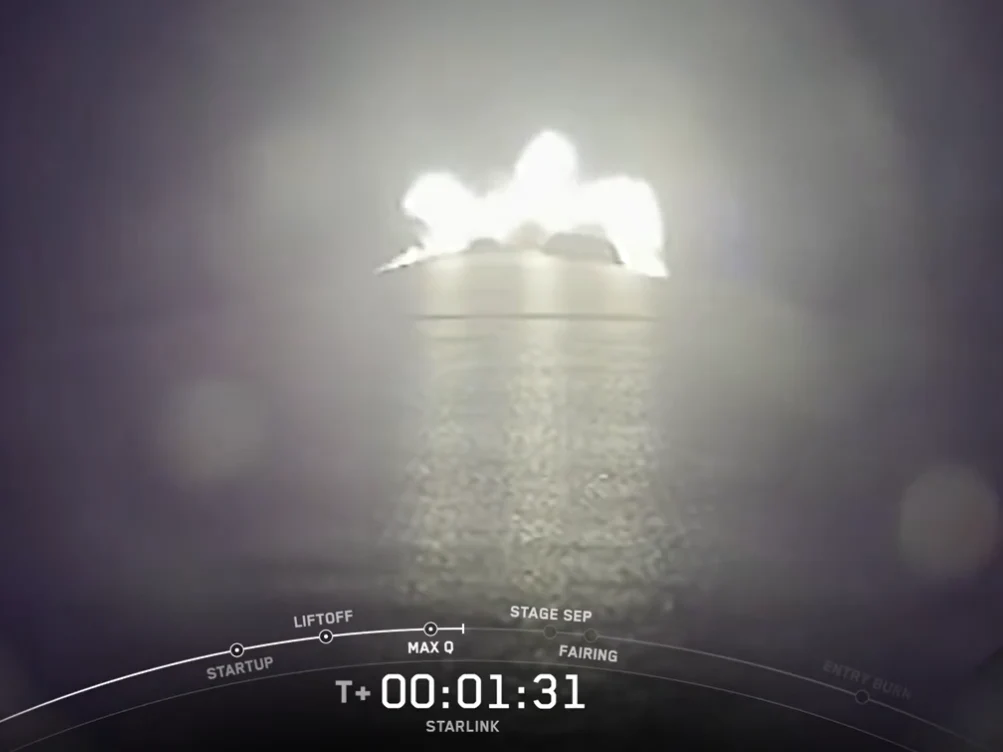
    SpaceX has broadened its satellite internet service by launching 24 Starlink V2 Mini satellites from the Vandenberg Space Force Base in California on August 14, 2025. The Falcon 9 rocket took off at 1:05 a.m. EDT (0505 GMT), putting the satellites into a polar low Earth orbit. This mission was the 144th successful landing of a Falcon 9 first stage on the droneship named “Of Course I Still Love You” and is part of the fast expansion of the Starlink network, which now boasts over 7,760 functioning satellites. This launch follows SpaceX’s recent service expansion to Somalia and Israel, with more markets in the Middle East awaiting regulatory approval.

    New Pricing Model Introduced

    In conjunction with the launch, Starlink has swapped its free pause option for a paid “Standby Mode” costing US $5 or €5 per month. This new feature allows for unlimited low-speed data at approximately 0.5 Mbps, which is good enough for messaging and light email but not suitable for streaming or video calls. This update affects Roam, Residential, and Priority customers in the United States, much of Europe, and Canada, while Enterprise and certain promotional accounts remain unaffected.

    Changes in Subscription Policies

    Before this, users were able to pause their service without any charges and could quickly resume full speeds. Now, if users decide to cancel their service rather than use Standby Mode, they might not be able to reactivate their accounts if their area has reached its service capacity. This has caused notable dissatisfaction among owners of the portable Starlink Mini dish, who often bought it for occasional or seasonal use. Many feel that paying US $60 a year for limited connectivity diminishes the product’s original pay-as-you-go charm.

    Removal of Low-Cost Plans

    Additionally, this change coincides with the discontinuation of the US $10 Roam plan, which allowed lighter users to keep their service at a lower price. After the current billing cycles finish, subscribers will need to decide between the pricier plans, the new Standby Mode, or total cancellation. Any unused data blocks will not roll over if the account is set to Standby, which further restricts user flexibility.

    Source:
    Link


  • Crew-11 Reaches International Space Station After Launch Delay

    Crew-11 Reaches International Space Station After Launch Delay

    Key Takeaways

    1. NASA’s SpaceX Crew-11 launched on August 1, 2023, after a weather delay, using the Dragon spacecraft and Falcon 9 rocket.
    2. The Dragon spacecraft docked with the ISS about 15 hours post-launch, with hatches opening shortly thereafter.
    3. Crew-11 members include NASA’s Zena Cardman and Mike Fincke, JAXA’s Kimiya Yui, and Roscosmos’ Oleg Platonov, who will conduct various scientific experiments in microgravity.
    4. Key experiments involve simulating lunar landings, studying astronaut vision protection, and researching plant cell division and bacteria-fighting viruses.
    5. The mission supports NASA’s goal of establishing a permanent human presence on the Moon, as part of the Commercial Crew Program in partnership with private companies.


    NASA’s SpaceX Crew-11 took off at 3:43 PM UTC on Friday using the Dragon spacecraft, launched by a SpaceX Falcon 9 rocket. The initial launch was planned for Thursday, July 31, but was delayed because of bad weather.

    Arrival at the ISS

    Approximately 15 hours post-launch, Dragon successfully docked with the space-facing port of the ISS’s Harmony module. It docked at 6:27 AM UTC on Saturday, and the hatches were opened at 7:46 AM UTC.

    Crew Members and Their Tasks

    Onboard Crew-11 are NASA’s Zena Cardman and Mike Fincke, JAXA’s Kimiya Yui, and Roscosmos’ Oleg Platonov. While aboard the ISS, Crew-11 will conduct experiments that aim to benefit both deep space missions and everyday life.

    Their assignments include simulating lunar landings, investigating protect methods for astronauts’ vision, and contributing to research within NASA’s Human Research Program. They will also study how microgravity impacts plant cell division and the effectiveness of bacteria-fighting viruses. Additionally, the crew plans to conduct experiments to create more human stem cells and produce nutrients on demand.

    Future of Space Exploration

    NASA’s SpaceX Crew-11 mission represents a crucial step towards establishing a permanent human presence on the Moon. In partnership with leading American companies, NASA aims to continue this mission with Artemis in 2026. — Sean Duffy, Acting NASA Administrator

    This mission is part of NASA’s Commercial Crew Program, which collaborates with private enterprises to ferry astronauts to the ISS. This partnership enables increased research opportunities and lays the groundwork for future missions that will go beyond low Earth orbit.

    Source:
    Link


  • NASA Launches 5 High-Tech Satellites on SpaceX Falcon 9 Rocket

    NASA Launches 5 High-Tech Satellites on SpaceX Falcon 9 Rocket

    Key Takeaways

    1. A SpaceX Falcon 9 rocket successfully launched NASA’s TRACERS mission from Vandenberg Space Force Base in California after a 24-hour delay due to FAA concerns.
    2. The TRACERS satellites aim to enhance our understanding of magnetic reconnection and its impact on Earth and its atmosphere.
    3. The mission included three additional NASA-related satellites alongside the TRACERS satellites.
    4. The satellites will undergo preparations and calibrations before starting their operations approximately 12 hours after deployment.
    5. The Falcon 9 rocket has achieved over 500 successful launches since its first flight in 2010, with more than 60 launches occurring in 2023 alone.


    A SpaceX Falcon 9 rocket managed to launch NASA’s TRACERS mission on Wednesday from Vandenberg Space Force Base in California. This launch came after a delay of 24 hours; the previous attempt was called off due to concerns from the Federal Aviation Administration regarding airspace.

    Understanding Magnetic Reconnection

    The TRACERS satellites are designed to improve our understanding of magnetic reconnection and how it affects Earth and its atmosphere. Magnetic reconnection involves sudden space weather events that happen when solar activity interacts with the magnetic field of Earth.

    Additional Satellites on Board

    The TRACERS satellites weren’t the only NASA-related satellites on this mission—three others were also included.

    About 12 hours after SpaceX confirmed the deployment of the satellites on X, they will undergo necessary preparations and calibrations before commencing operations at the appropriate time.

    Falcon 9’s Impressive History

    Here’s an interesting tidbit: since it first flew in 2010, the Falcon 9 has accomplished over 500 successful launches, with more than 60 of those occurring just this year.

    Source:
    Link

  • Space Funeral Mishap: Human Ashes Return to Earth After Launch

    Space Funeral Mishap: Human Ashes Return to Earth After Launch

    Key Takeaways

    1. SpaceX launched a Falcon 9 rocket on June 23, carrying 70 payloads for various clients in the Transporter-14 mission.
    2. The Exploration Company’s reentry capsule contained over 150 capsules with cremated remains and DNA samples from clients worldwide.
    3. The reentry phase of the mission faced challenges, including high temperatures and potential communication loss.
    4. Communication was lost shortly after reestablishment during reentry, and the Nyx parachute failed to deploy, leading to a rapid descent into the ocean.
    5. The Exploration Company expressed regret over the incident and emphasized the historic nature of the journey for the families involved.


    SpaceX is actively involved in multiple initiatives, especially in the realm of science. On June 23, a Falcon 9 rocket launched from Vandenberg Space Force Base in California, carrying 70 payloads for various clients as part of the Transporter-14 mission.

    Details of the Mission

    This particular flight included The Exploration Company’s reentry capsule, which held over 150 capsules filled with cremated remains and DNA samples from clients across the globe.

    The launch itself went off without a hitch, and the rocket successfully entered orbit around the Earth multiple times.

    Challenges During Re-Entry

    However, a challenge emerged during its return to Earth. This phase is known to be one of the riskiest in any space mission. When the capsule reenters the atmosphere, it does so at extremely high velocities, creating severe friction upon hitting the air.

    This friction generates such high temperatures that it can lead to catastrophic failures, such as losing communication with the spacecraft. Fortunately, these capsules are designed with heat shields that absorb the intense heat and gradually wear away, which helps maintain a safer temperature inside the capsule.

    Communication Issues and Consequences

    Despite these precautions, The Exploration Company reported that the capsule experienced difficulties during this mission’s atmospheric reentry. Communication was lost shortly after it was reestablished. Additionally, Celestis informed that the Nyx parachute did not deploy as expected, leading to a rapid descent into the ocean. “Nyx encountered an issue shortly after, based on what we know now, and we lost contact a few minutes prior to splashdown. We are currently looking into the root causes and will share more details soon,” they stated.

    In light of this incident, the company remarked: “While we currently believe that recovery of the flight capsules is unlikely, we hope families find some comfort knowing that their loved ones took part in a historic journey, were sent into space, orbited the Earth, and now rest in the Pacific Ocean, akin to a traditional and respected sea scattering. We sincerely apologize to all our clients who placed their trust in us with their payloads.”

    Source:
    Link