
Key Takeaways
1. Pandora aims to determine whether detected atmospheric molecules on exoplanets originated from the planets or their host stars.
2. The mission utilizes a 17-inch all-aluminum telescope to observe each exoplanet and its star ten times, with 24-hour observation windows.
3. Pandora’s goal is to conduct the first thorough examination of starlight passing through exoplanet atmospheres.
4. The mission plans to study at least 20 exoplanets and their stars in its first year, enhancing knowledge from previous missions like Kepler and James Webb.
5. Pandora was launched on a SpaceX Falcon 9 rocket alongside two other missions, BlackCAT and SPARCS, with different scientific focuses.
Missions like NASA’s TESS (Transiting Exoplanet Survey Satellite) have found over 6,000 exoplanets. Researchers have identified molecules that are thought to be in the atmosphere of some of these planets. However, it remains unclear whether those molecules actually originated from the planet or if they are signals from the host star. This is the question that Pandora aims to resolve.
Telescope Specifications
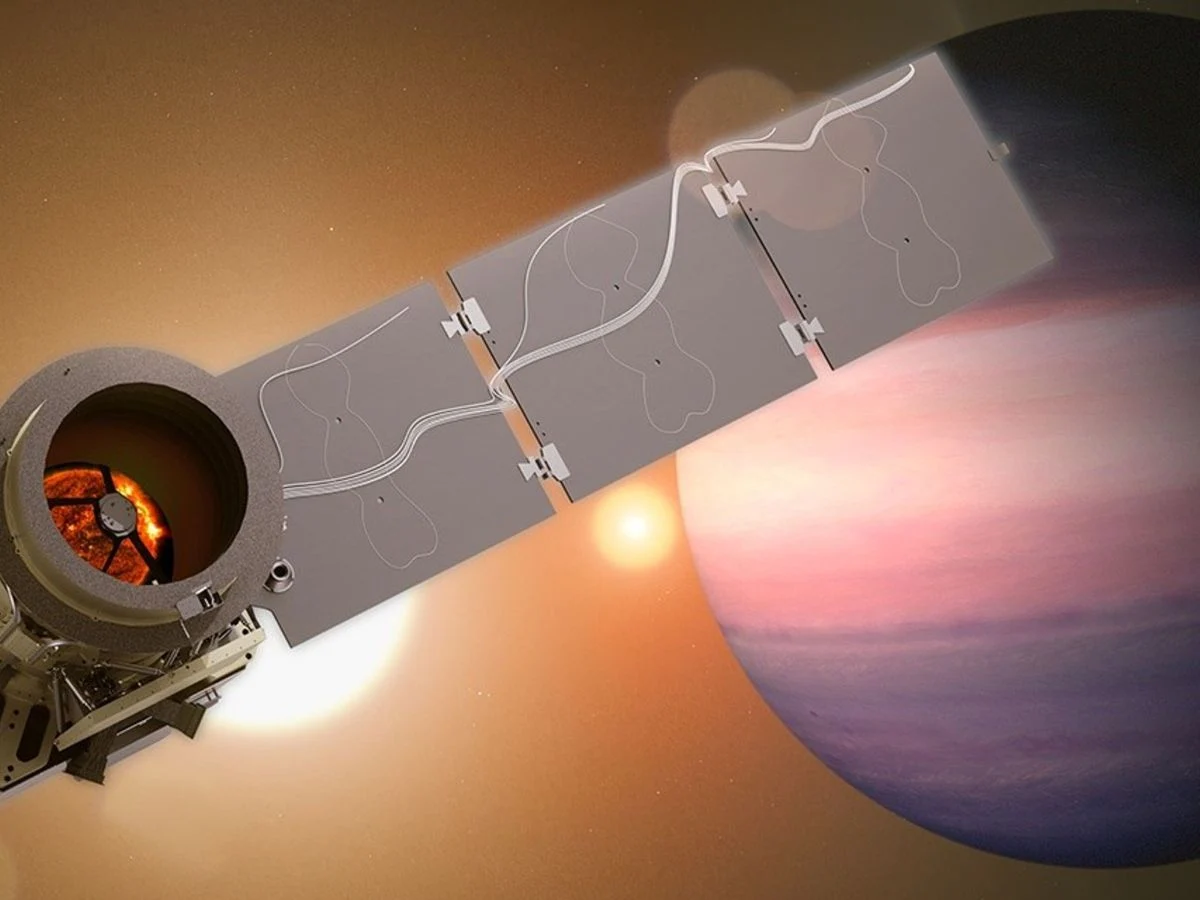
Pandora is equipped with a 17-inch all-aluminum telescope that gathers visible and near-infrared light. The mission plans to observe each planet and its star ten times, with each observation lasting a total of 24 hours. During these extended observations, the telescope will capture light from the star both before and during a transit, which occurs when an exoplanet moves in front of its host star. By implementing this strategy, Pandora hopes to distinguish between signals from the planet itself and those that have been affected by the star.
Mission Goals
This mission marks the first time a spacecraft will conduct a thorough examination of starlight that has passed through exoplanet atmospheres. Over its first year, Pandora is set to investigate at least 20 exoplanets and their corresponding host stars. The information gathered will assist scientists in understanding data from previous and ongoing missions, such as NASA’s Kepler and James Webb.
Launch Details
Pandora was launched aboard a SpaceX Falcon 9 rocket, alongside two other missions: BlackCAT (Black Hole Coded Aperture Telescope) and SPARCS (Star-Planet Activity Research CubeSat). While BlackCAT will explore the transient, high-energy universe, SPARCS will focus on examining the activity of low-mass stars.
Source:
Link