
Tag: Exynos 2500

  • Samsung Affordable Flagship Leak: New Design vs Galaxy S26

    Samsung Affordable Flagship Leak: New Design vs Galaxy S26

    Key Takeaway

    – Samsung Galaxy S26 FE leaked via WPC listing, confirming development
    – Design shifts to a raised camera island, similar to Galaxy Z Fold series
    – Powered by Exynos 2500 chipset with 8GB RAM
    – Expected to ship with Android 17 out of the box
    – Potential launch around August or September 2026, possibly alongside Galaxy Z Fold 8 series


    Samsung Galaxy S26 FE Makes First Design Appearance

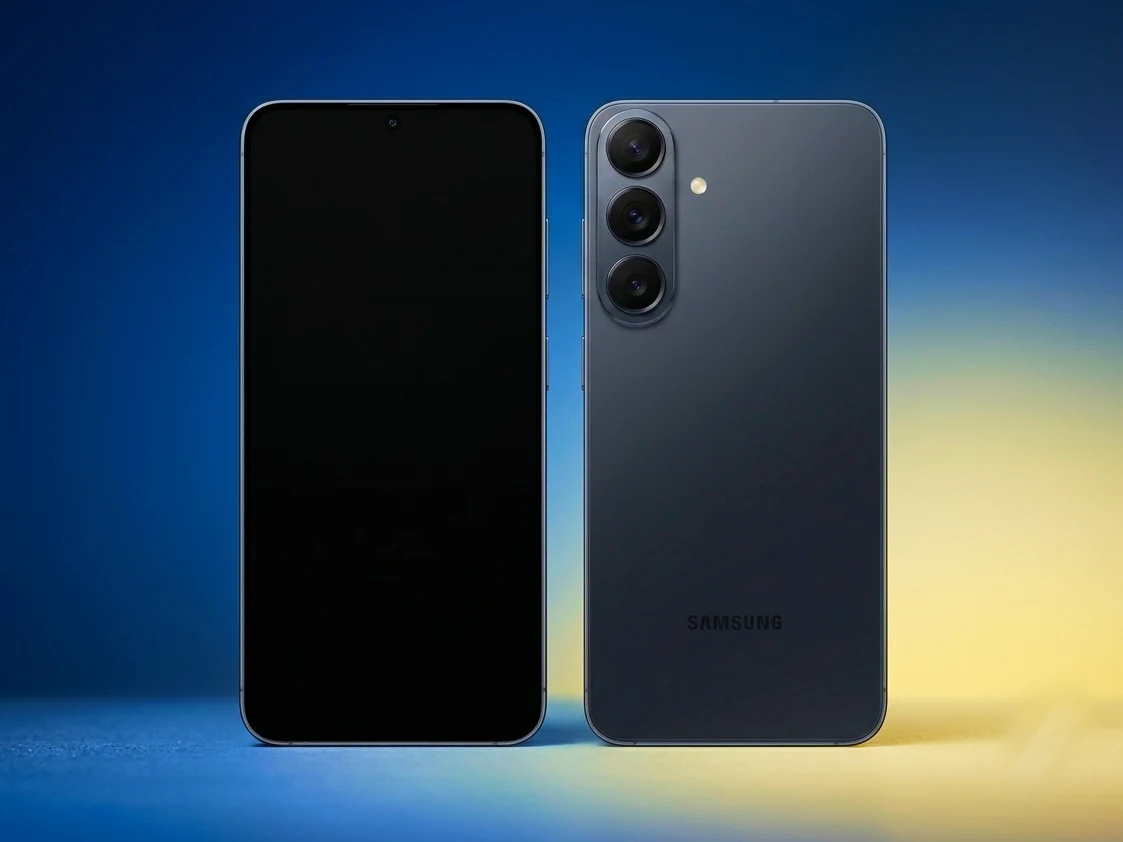
    The Samsung Galaxy S26 FE has made an early appearance online, offering our first look at what to expect from the design of the company’s most affordable new flagship phone. A real-world image has surfaced via a WPC listing, confirming the phone is in development with model number SM-S741. The expected launch window is around August or September 2026, so theres still some time to wait.

    Design Changes and Camera Housing Details

    While the overall aesthetic seems to remain consistant with Samsung’s current design language, we can see that the S26 FE is going to introduce a departure in its rear camera housing. Much like the flagship series, the S26 FE appears to adopt a raised camera island similar to the one found on the Galaxy Z Fold series and the latest mid-range Galaxy phones. Interestingly the new camera strip is pushed farther towards the edges of the rear panel compared to the Galaxy A57, giveing it a more distinctive look.

    Specifications and Software Updates for the FE Model

    Beyond the design change, early leaks have pointed toward a familar spec bump compared to the Galaxy S25 FE. The device is expected to be powered by Samsung’s Exynos 2500 chipset, this will be paired with 8GB of RAM. Perhaps most notably the phone is tipped to ship with Android 17 straight out of the box, positioning it as one of the first devices to launch with the updated OS.

    Potential Launch Timeline and Rivalry

    The S26 FE might be revealed alongside the new Galaxy Z Fold 8, the Fold 8 Ultra, and the Galaxy Z Flip 8 on July 22. Unless Samsung is planing a later launch to compete with the iPhone 18 Pro wich is expected in September of the same year, so competition should be fierce in this segment.

    Sources

  • Samsung Galaxy S26 FE listed on Geekbench with lower performance than S26 siblings

    Key Takeaway

    1. The Galaxy S26 FE is expected to succeed the Galaxy S25 FE and has appeared on Geekbench.
    2. It features 8 GB RAM and runs on Android 17.
    3. The device scored lower on Geekbench compared to other Galaxy S26 models, indicating different chipset performance, likely due to the Exynos 2500 processor.
    4. The phone’s specifications include a deca-core CPU with a GPU named Xclipse 950.
    5. Despite having a last-gen chipset, the S26 FE is expected to offer improved performance over the previous Fan Edition model.

    Samsung Galaxy S26 FE Leaks & Details

    After launching the main Galaxy S26 lineup earlier this year, samsung now gearing up for a new addition to the series. The Galaxy S26 FE, believed to be a successor to Galaxy S25 FE, makes its appearance in the Geekbench benchmark, suggesting that the device is pretty close to the official reveal. The listing reveals some interesting insights about its specifications and performance prospects, even before the device comes out officially.

    Performance & Hardware Insights

    This phone carries the model number “SM-S741U” and comes with 8 GB of RAM, running Android 17. The benchmark scores point to a slightly lower performance than other Galaxy S26 models, with a single-core score of 2,426 and a multi-core score of 8,004. This suggests the Galaxy S26 FE might be targeted towards consumers looking for a balanced device, possibly with cost savings in mind. The processor here seems to be the Exynos 2500, not the more recent Exynos 2600 found in other models, explaining the performance difference.

    Processor and GPU Specifications

    The Geekbench results reveal the device uses a deca-core chipset featuring a primary core clocked at 3.30 GHz, two cores at 2.75 GHz, five cores at 2.36 GHz, and two efficiency cores at 1.80 GHz. The graphics is handled by the Xclipse 950 GPU. Considering that last year’s Galaxy S25 FE was powered by the Exynos 2400, the S26 FE, despite being a last-gen silicon, should still offer decent performance and improvements for users.


    Sources

  • Samsung Exynos 2500 vs Snapdragon 8 Elite: Speed Comparison Test

    Samsung Exynos 2500 vs Snapdragon 8 Elite: Speed Comparison Test

    Key Takeaways

    1. The Galaxy Z Flip 7 uses Samsung’s Exynos 2500 chipset, differing from the Qualcomm chipset in the Galaxy Fold 7, particularly in the European market.
    2. The Exynos 2500 features a deca-core design with a mix of high-performance and efficiency cores, built on a 3nm GAA manufacturing process.
    3. Graphics performance is powered by the Xclipse 950, which supports AMD’s RDNA 3.5 technology and ray tracing capabilities.
    4. The Exynos 2500’s CPU performance lags behind Qualcomm’s leading chipsets, scoring 2478 points in single-core and 8098 points in multi-core benchmarks.
    5. The Neural Processing Unit (NPU) performance shows a significant gap, with the Galaxy Z Flip 7 underperforming by up to 32% compared to competitors like the Xiaomi model with Snapdragon 8 Elite.


    In comparison to the larger Samsung Galaxy Fold 7, the compact Galaxy Z Flip 7 (which you can find on Amazon) runs on Samsung’s Exynos 2500. This is different from the latest high-end Qualcomm chipset, at least for the European market.

    Specifications of Exynos 2500

    The Samsung Exynos 2500 marks the debut of Samsung’s innovative 3nm GAA manufacturing process. This system-on-chip (SoC) includes a total of 10 cores. It features a deca-core configuration with a 3.3 GHz Cortex-X925 prime core, two Cortex-A725 cores at 2.75 GHz each, five power-efficient Cortex-A725 cores running at 2.36 GHz, and two efficiency cores based on Cortex-A520, clocked at 1.8 GHz.

    Graphics Performance

    For graphics, the Exynos 2500 is equipped with the Xclipse 950, operating at 1.3 GHz and utilizing AMD’s RDNA 3.5 technology, which supports ray tracing.

    The CPU capabilities of the Exynos 2500 in the Galaxy Z Flip 7 fall short when compared to Qualcomm’s top-tier chipset. The Samsung processor records 2478 points for single core performance and 8098 points for multi-core performance in Geekbench 6. This indicates that the Samsung SoC is approximately 8 to 20 percent behind the performance of the Galaxy Fold 7 and Xiaomi Mix Flip 2.

    NPU and AI Performance

    As the performance of Neural Processing Units (NPU) is increasingly crucial for smartphones, it’s worth examining the AI results from Geekbench. When comparing the Galaxy Flip 7 to the Xiaomi model powered by the Snapdragon 8 Elite, the performance disparity is even more pronounced, reaching up to 32 percent.

    Further benchmark evaluations will be available soon in our in-depth review of the Galaxy Z Flip 7.


  • Samsung Galaxy Z Flip7: DeX Desktop Mode Support Confirmed

    Samsung Galaxy Z Flip7: DeX Desktop Mode Support Confirmed

    Key Takeaways

    1. Samsung’s Galaxy Z Flip7 targets Motorola’s Razr 60 Ultra, featuring a lighter, thinner, and shorter design.
    2. The Galaxy Z Flip7 is the first in its series to use the Exynos 2500 processor, replacing Qualcomm Snapdragon chips.
    3. The Galaxy Z Flip7 offers DeX support for both wired and wireless use, while the Razr 60 Ultra’s DeX feature is limited to wireless.
    4. Reports suggest that wired DeX mode works when the Galaxy Z Flip7 is open, adding versatility to its functionality.
    5. The Galaxy Z Flip7 is priced at $1,299 on Amazon.


    Samsung has aimed straight at Motorola, particularly the Razr 60 Ultra, with its new Galaxy Z Flip7, also known as the Razr Ultra 2025 in certain regions (currently priced at $1,299 on Amazon). As mentioned in our launch article, the Galaxy Z Flip7 closely resembles the display size of Motorola’s top clamshell smartphone but offers a lighter, thinner, and shorter design.

    Performance Comparison

    The Razr 60 Ultra is likely to maintain a performance edge over its competitor, the Galaxy Z Flip7. It’s worth noting that the Galaxy Z Flip7 is the first model in this series to feature an Exynos processor, specifically the Exynos 2500, replacing the Qualcomm Snapdragon chips across all regions. This change to the Exynos 2500 also comes with the introduction of a feature that has been missing in all previous Galaxy Z Flip models.

    New Features

    Samsung has officially announced that the Galaxy Z Flip7 comes with DeX support. In comparison, the Razr 60 Ultra offers a similar feature, but it is limited to wireless use only. On the other hand, the Galaxy Z Flip7 appears to allow DeX functionality both wired and wirelessly, giving it an edge in versatility.

    At this point, Samsung has not confirmed if wired DeX connectivity is an option. Nevertheless, both 9to5Google and Android Authority have reported that wired mode is indeed supported. Unfortunately, there’s a limitation: the Galaxy Z Flip7 needs to be open for DeX mode to function properly. For more information on one of the two new Galaxy Z Flip foldables announced by Samsung this week, check out our launch article.

    Source:
    Link


  • Exynos 2500 Benchmarks Show Disappointing Performance for Galaxy Z Flip7

    Exynos 2500 Benchmarks Show Disappointing Performance for Galaxy Z Flip7

    Key Takeaways

    1. Samsung launched the Galaxy Z Flip7 alongside the Galaxy Z Fold7 and Galaxy Z Flip7 FE.
    2. The Galaxy Z Flip7 uses the Exynos 2500 chipset, which underperforms compared to newer flagship chipsets.
    3. Geekbench 6 scores show the Exynos 2500 has a single-core score of 2,093 and a multi-core score of 7,498.
    4. Performance of the Exynos 2500 is comparable to older chipsets, falling behind MediaTek and Qualcomm competitors.
    5. The Exynos 2500’s GPU, Xclipse 950, is expected to compete better against Snapdragon 8 Elite’s Adreno 830.


    Samsung introduced the Galaxy Z Flip just a week ago, along with the Galaxy Z Fold7 and Galaxy Z Flip7 FE. In contrast to its larger counterpart, the Galaxy Z Flip7 is equipped with Samsung’s own Exynos 2500, which seems to hinder its performance.

    Performance Insights

    According to Fenibook on X, the Exynos 2500 falls behind when stacked against the latest flagship chipsets in terms of CPU capabilities. The chipset in the Galaxy Z Flip7 records a single-core score of 2,093 and a multi-core score of 7,498 on Geekbench 6.

    These scores match those listed before the phone’s launch, indicating that the performance is aligned with older chipsets. For instance, the MediaTek Dimensity 9300 achieved scores of 2,207 and 7,408 during our tests on the Vivo X100 Pro. Similarly, the Asus ROG Phone 9 Pro, which features the Snapdragon 8 Gen 3, delivered a single-core score of 2,318 and a multi-core score of 7,357.

    Competitive Comparison

    It’s clear that the Exynos 2500 does not provide performance that can compete with rivals like Apple, Qualcomm, and MediaTek, at least in terms of CPU. However, the chipset’s Xclipse 950 GPU is anticipated to be more competitive with the Snapdragon 8 Elite’s Adreno 830.

    Source:
    Link


  • Samsung Galaxy Z Flip 7 Unveiled: Larger Display & Exynos SoC

    Samsung Galaxy Z Flip 7 Unveiled: Larger Display & Exynos SoC

    Key Takeaways

    1. New Processor: The Galaxy Z Flip 7 is the first to feature the Exynos 2500 SoC, with no 8 GB RAM options available, only 12 GB models.

    2. Display Improvements: It has a larger 6.9-inch main display and a 4.1-inch cover display, both with Super AMOLED technology and a 120 Hz refresh rate.

    3. Camera Features: The smartphone includes a 50 MP main camera, a 12 MP ultra-wide camera, and a 10 MP front camera, with no major changes to the camera system.

    4. Battery and Charging: The device has a 4,300 mAh battery but still only supports 25 Watts charging, which may impact performance due to the new processor.

    5. Pricing and Availability: Pre-orders start at €1,199 for the 256 GB model, with general availability beginning on July 24, and various pre-order bonuses may be offered.


    Samsung has just released its latest flip-style foldable smartphone, and it comes with some exciting changes that might spark debate among users. The Galaxy Z Flip 7 is the first device of its kind to feature an Exynos 2500 SoC, unless you count the Galaxy Z Flip 7 FE. It offers models equipped with 12 GB of LPDDR5X RAM and storage choices of either 256 GB or 512 GB. Thankfully, there are no 8 GB options this time around.

    Display Enhancements

    On the other hand, the device now boasts a slightly larger 6.9-inch main display with a resolution of 2,520 x 1,080 pixels, along with a 4.1-inch cover display that has a resolution of 1,048 x 948. Both screens utilize Super AMOLED technology and support a refresh rate of up to 120 Hz, along with a peak brightness of 2,800 nits. Additionally, the cover display has been designed to blend smoothly with the two rear camera modules, a style we’ve seen previously in Motorola’s foldable devices. This design will make the Galaxy Z Flip 7 stand out from its predecessors.

    Camera Setup

    Focusing on the cameras, the Galaxy Z Flip 7 features a 50 MP main sensor with optical image stabilization (OIS) and a 12 MP ultra-wide camera. For selfies and video calls, it uses a 10 MP front-facing sensor. There haven’t been significant changes to the camera system, meaning users will need to rely on software to enhance their photos. The foldable is powered by a 4,300 mAh battery, but it still only supports charging at 25 Watts. The increase in battery capacity over the Flip 6 could be negated by the Exynos SoC’s less efficient power management.

    Additional Specifications

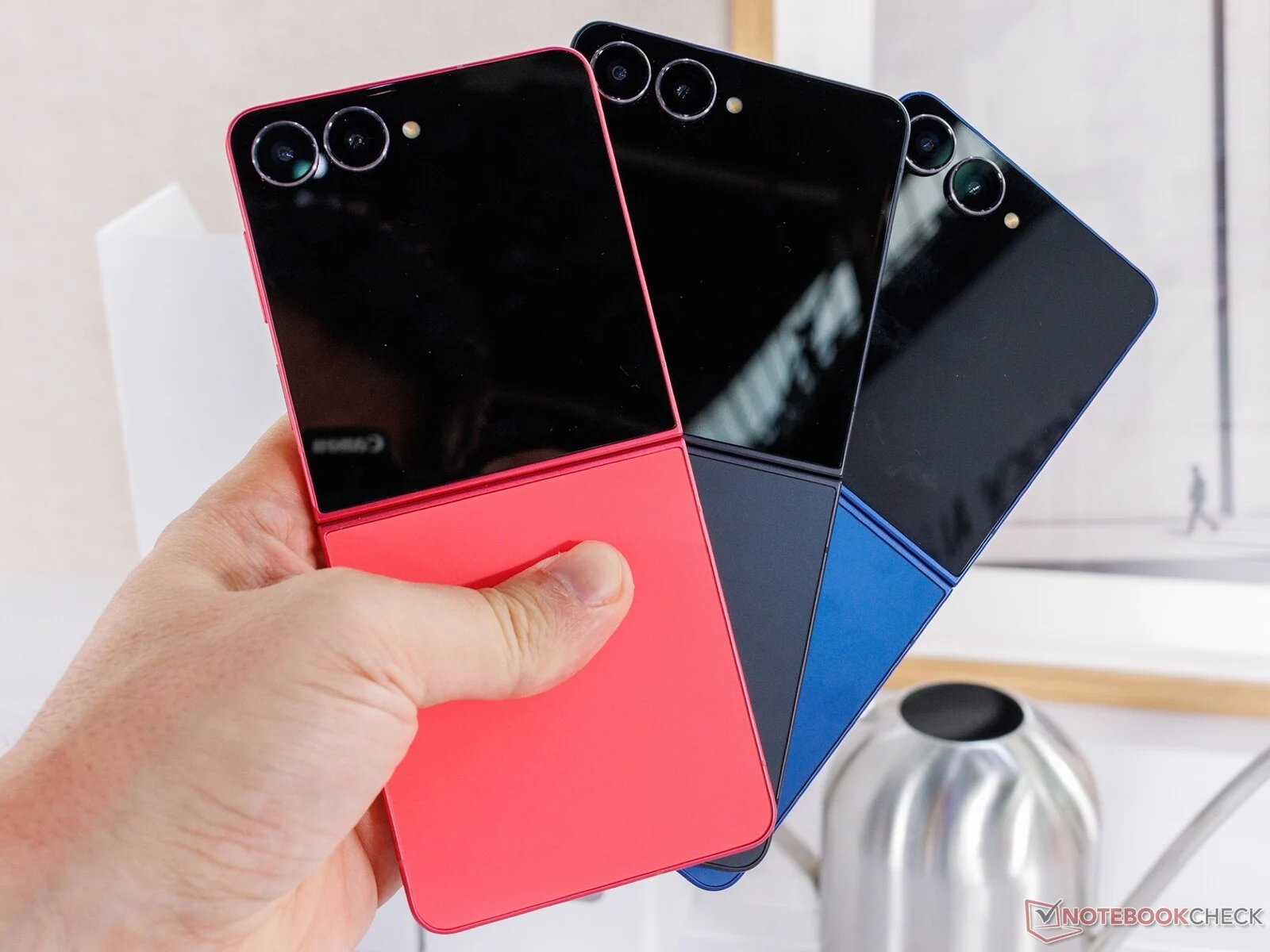
    In terms of specifications, the Galaxy Z Flip 7 includes Wi-Fi 7, Bluetooth 5.4, 5G connectivity, a side-mounted fingerprint scanner, and dual-SIM support (nano SIM plus e-SIM). It also features a Corning Gorilla Glass Victus 2 layer, IP48 water and dust resistance, and an aluminum frame. Customers can choose from three color options: Blue Shadow, Jet Black, and Coral Red, with a fourth Mint version available exclusively through Samsung’s store. The dimensions are 166.7 mm x 75.02 mm x 6.5 mm, and it weighs 188 grams.

    You can now pre-order the Galaxy Z Flip 7, with prices starting at €1,199 for the 256 GB model and €1,399 for the 512 GB variant. Pre-orders are open, and general availability is set to begin on July 24. Samsung offers different pre-order bonuses depending on the market, so it’s a good idea to check your local website for specific details. One of the bonuses includes a free storage upgrade (pay for 256 GB and receive 512 GB), but this may not be offered everywhere.


  • Galaxy Z Flip 7 FE Leak Reveals Key Under-the-Hood Upgrade

    Galaxy Z Flip 7 FE Leak Reveals Key Under-the-Hood Upgrade

    Key Takeaways

    1. The Galaxy Z Flip 7 FE is confirmed to have an older Exynos 2400 SoC, while the standard Galaxy Z Flip 7 may feature the newer Exynos 2500.
    2. Both the Galaxy Z Flip 7 and Flip 7 FE share similar specs, including a 6.9-inch FHD+ main display and a dual camera setup.
    3. The key differences between the Flip 7 and Flip 7 FE may be limited to the cover screen and storage options, with the Flip 7 offering more RAM and storage.
    4. The Galaxy Z Fold 7 will upgrade its camera system, featuring a 200 MP main camera along with two additional sensors (12 MP and 10 MP).
    5. The Galaxy Z Fold 7 will maintain the same 4,400 mAh battery as its predecessor, raising concerns about durability due to a slimmer body design.


    With Galaxy Unpacked just around the corner, leaks keep coming in. Earlier today, crucial details about the Galaxy Z Fold 7, Galaxy Z Flip 7, Galaxy Z Flip 7 FE, and Galaxy Watch 8 appeared online. Now, yet another leak provides more information on Samsung’s new foldable phones.

    Geekbench Listings Reveal Specs

    Several Geekbench entries, including one from earlier today, have verified that the Galaxy Z Flip 7 FE will feature an older Exynos 2400 SoC. However, a document that looks official suggests that both the standard Galaxy Z Flip 7 and Galaxy Z Flip 7 FE are equipped with an Exynos 2500. It could be a mistake, but it isn’t impossible.

    Similarities Between Models

    If both devices share the same SoC, the Galaxy Z Flip 7 FE might end up being too alike to the standard model. Both phones come with a 6.9-inch FHD+ main display, a dual camera setup (50 MP + 12 MP), a 10 MP front camera, and a 4,300 mAh battery. The differences could be limited to the cover screen and storage options; the Flip 7 includes 12 GB of RAM and 256 GB of storage, whereas the Galaxy Z Flip 7 FE caps at 8 GB and 128 GB.

    Camera Features and Battery Life

    Shifting focus to the Galaxy Z Fold 7, it will enhance its 200 MP main camera with two additional sensors: a 12 MP and a 10 MP. It also shows that there won’t be a battery upgrade, as this foldable will use the same 4,400 mAh battery as the previous model. Concerns about durability may arise since its body is considerably slimmer this time around.

    Source:
    Link


  • Exynos 2500 vs Snapdragon 8 Elite: GPU Benchmarks Compared

    Exynos 2500 vs Snapdragon 8 Elite: GPU Benchmarks Compared

    Key Takeaways

    1. Samsung introduced its flagship chipset, the Exynos 2500, for the Galaxy Z Flip7.
    2. The Exynos 2500 achieved an impressive GPU score of 18,601 on the OpenCL benchmark.
    3. Its GPU, based on RDNA 3 with Xclipse 950, shows potential for strong performance.
    4. The chipset’s CPU performance is weaker, scoring 2,313 (single-core) and 7,965 (multi-core) on Geekbench.
    5. CPU scores indicate performance similar to last year’s Snapdragon 8 Gen 3.


    A few weeks back, Samsung quietly introduced its flagship chipset for the year, the Exynos 2500. While it’s not really expected to match its competitors in terms of CPU performance, it looks like the GPU capabilities might tell a different story.

    Impressive GPU Scores

    Abhishek Yadav has revealed that the Exynos 2500, found in the upcoming Galaxy Z Flip7, achieved a score of 18,601 on the OpenCL benchmark from Geekbench. This score is quite impressive, especially since the Snapdragon 8 Elite for the Galaxy S25 Ultra scored 18,365 on the same test, according to Geekbench’s official rankings.

    GPU Performance Expectations

    Though this is just a single benchmark and shouldn’t be taken as final proof of the chipset’s abilities, it suggests that the Exynos 2500’s RDNA 3-based Xclipse 950 GPU might perform quite well. This isn’t too surprising, considering the Exynos 2400 has already outperformed the A17 Pro and Snapdragon 8 Gen 3 in several GPU tests.

    CPU Performance Lags Behind

    On the downside, the CPU performance isn’t as strong. The Galaxy Z Flip7, model “SM-F766B”, has shown up on Geekbench several times, but the results have generally been disappointing. In its latest test, the foldable device managed scores of 2,313 and 7,965 in single-core and multi-core tests, respectively, indicating that its CPU performance is pretty much on par with last year’s Snapdragon 8 Gen 3.

    Source:
    Link


  • Galaxy Foldables Heading to US: Two Models with Exynos Chip

    Galaxy Foldables Heading to US: Two Models with Exynos Chip

    Key Takeaways

    1. Samsung will use Exynos chips in the Galaxy Z Flip7 and Flip7 FE, even for US versions, marking a shift in their chip strategy.
    2. The Galaxy Z Flip7 is expected to feature the new 3nm Exynos 2500 chip, while the Flip7 FE may use the Exynos 2400.
    3. The Galaxy Z Fold7 will continue to use the Snapdragon 8 Elite chipset, ensuring its high-end performance remains intact.
    4. Benchmark tests suggest the Exynos 2500 offers significant performance improvements, though real-world thermal performance is still uncertain.
    5. Samsung has started pre-reservations for the devices, offering trade-in savings and early sign-up credits, indicating confidence in the Exynos chips for the US market.


    Samsung is set to host its highly anticipated Galaxy Unpacked event on July 9, 2025, and one aspect has caught the attention of fans — the chipset. The company is opting for Exynos chips in two of the three upcoming foldable devices, including those intended for the US market.

    Galaxy Z Flip7 and Flip7 FE Details

    A recent leak (from Sammobile) indicates that both the Galaxy Z Flip7 and its more affordable counterpart, the Z Flip7 FE, will use Samsung’s own Exynos processors, even for the US versions. This represents a significant change in Samsung’s chip approach — these foldables will be the first to utilize Exynos and are among the rare Galaxy flagship devices in the US to feature Samsung’s proprietary chips.

    The premium Flip7 is anticipated to be powered by the new 3nm Exynos 2500 chip, while the FE version may come equipped with the Exynos 2400, the same processor rumored for the Galaxy S24 FE.

    Z Fold7 Retains Snapdragon

    On the other hand, the Galaxy Z Fold7, Samsung’s top-tier foldable, is confirmed to stick with the Snapdragon 8 Elite, ensuring its high-end performance remains unchanged.

    SamMobile implies that the Exynos 2500 could suit the Flip7 better than the Snapdragon 8 Elite, considering thermal issues with the slim Galaxy S25 Edge. However, this theory faces a hurdle: the Z Fold7 is actually thinner than the Flip7. This raises doubts about the speculation. It’s more probable that Samsung’s choice to incorporate Exynos in the Flip7 is driven by cost-efficiency, particularly since the Flip doesn’t require the extreme performance of the larger Fold. The Exynos 2400 in the Flip7 FE is still a robust chip, potentially allowing Samsung to maintain a competitive price.

    Benchmark Insights and Pre-Reservations

    Benchmark tests for the Exynos 2500 indicate significant performance improvements compared to its predecessor, but actual thermal performance in real-life scenarios remains uncertain. The Flip7 is also expected to feature larger displays — a 4-inch outer display and a 6.85-inch foldable screen — providing ample room for apps and multitasking.

    Samsung has already initiated pre-reservations on its website, offering up to $1,150 in trade-in savings and a $50 credit for early sign-ups.

    Should the use of Exynos in US models be accurate, it could represent a daring cost-saving tactic, especially with Samsung having faith in the chips’ capabilities. Whether this risk pays off — and how customers in the US respond — will be revealed once the devices are available for purchase.


  • Exynos 2500 Launch Announced Before Galaxy Z Flip 7 Release

    Exynos 2500 Launch Announced Before Galaxy Z Flip 7 Release

    Key Takeaways

    1. Samsung has launched the Exynos 2500 SoC with a 10-core CPU and Xclipse GPU based on AMD’s RDNA 3 technology.
    2. The CPU features a Cortex-X925 core at 3.3 GHz, two Cortex-A725 cores at 2.76 GHz, five Cortex-A725 cores at 2.36 GHz, and a Cortex-A520 core at 1.80 GHz.
    3. The Xclipse 950 GPU offers a 28% increase in frame rates compared to the Exynos 2400 and supports 4K/WQUXGA displays at up to 120 Hz.
    4. The Exynos 2500 supports a 320 MP camera, 8K video recording at 30 FPS, and features a dual NPU that is 90% faster than the previous model.
    5. Manufactured using a 3 nm process, the Exynos 2500 is designed for better energy efficiency but may face performance challenges due to having only one E-core.


    Samsung has recently unveiled its new Exynos 2500 SoC, just before its expected launch with the Galaxy Z Flip 7. This announcement confirms previous rumors and provides additional information about its internal components. As indicated in an earlier Geekbench report, the chip features a 10-core CPU and an Xclipse GPU that utilizes AMD’s RDNA 3 technology.

    CPU Details

    The 10-core CPU includes a Cortex-X925 running at 3.3 GHz, two Cortex-A725 cores operating at 2.76 GHz, five more Cortex-A725 cores at 2.36 GHz, and a single Cortex-A520 core that works at 1.80 GHz. According to Samsung, the Xclipse 950 GPU, which is based on AMD’s RDNA 3 architecture, has 8 WGPs (which is equivalent to 16 CUs). This setup provides a 28% increase in frame rates when compared to the Exynos 2400. Additionally, the GPU is said to support a 4K/WQUXGA display with a refresh rate of up to 120 Hz.

    Camera and Video Capabilities

    Other features of the Exynos 2500 include support for a 320 MP camera, setting the stage for upcoming sensors that could potentially achieve this resolution. It is also capable of recording video at a maximum of 8K 30 FPS. Similar to the Exynos 2400, the 2500 is equipped with a dual NPU that is claimed to be 90% faster than the previous model. In terms of connectivity, it boasts Wi-Fi 7, Bluetooth 5.4, 5G, and satellite capabilities.

    Manufacturing and Power Efficiency

    The Exynos 2500 marks Samsung’s first smartphone SoC to be made using its 3 nm (likely 3 GAP) process. It is compatible with LPDDR5X memory and UFS 4.1 storage. On paper, it should be more energy-efficient than the Exynos 2400, thanks to its GAAFET-based manufacturing. However, having only one E-core may complicate its performance in real-world scenarios.

    Source:
    Link