Tag: AR headset

  • MemoMind AR Glasses with Display and Discreet Design – Discount Available

    MemoMind AR Glasses with Display and Discreet Design – Discount Available

    Key Takeaway

    1. The MemoMind One is a discreet, camera-free AR headset with an adjustable virtual display distance, scheduled for Kickstarter launch on May 28.
    2. It supports multiple functions including translations, navigation, and calendar management, compatible with Android and iOS.
    3. Available for pre-order at $599, with options for prescription lenses, but some advanced features may require a subscription.

    AR Headset with Innovative Features

    The MemoMind One is an augmented reality headset that is getting ready for its debut on Kickstarter, which will be happening on May 28. It comes with an integrated display that can reach a maximum brightness of 2,000 cd/m², making the virtual images vivid and clear. Users can adjust the virtual viewing distance from just one meter to as far as five meters, giving them flexibility depending on what they wanna see. The design is camera-free which helps keep the look subtle and less intrusive when you use it out and about but does limit some of its AR functionalities.

    Design & Privacy Considerations

    One of the main points about the MemoMind One is its clean, discreet look. Without any built-in camera, it presents an inconspicuous profile, perfect for folks who worry bout privacy concerns. The device, while lacking some advanced AR capabilities that camera-equipped headsets might have, focuses on blending into regular environments, making it less likely to attract unwanted attention in public or social situations.

    Functions & Compatibility

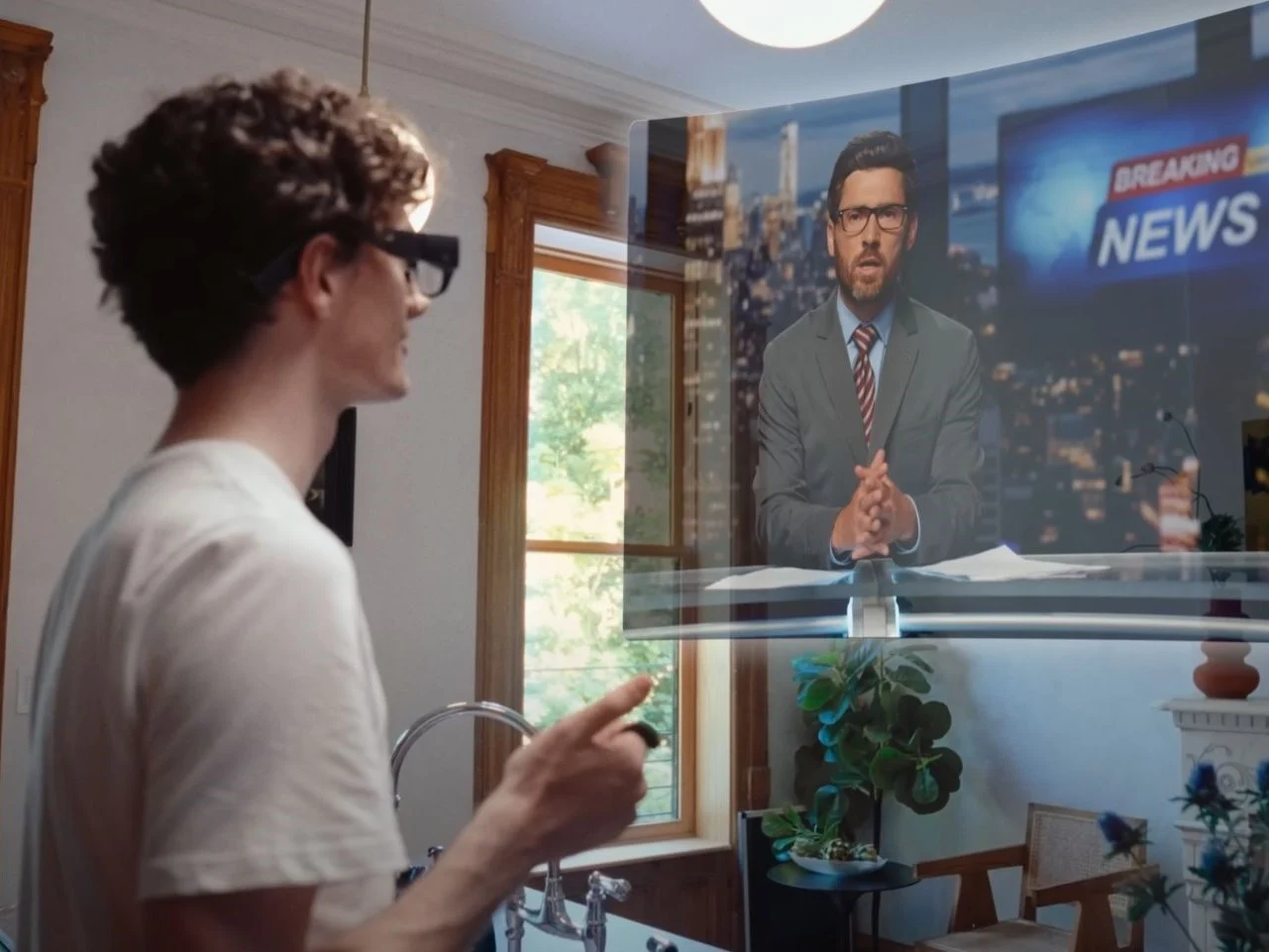
    The headset is pretty versatile for daily use. It can show real-time translations, act as a teleprompter, or provide turn-by-turn navigation with maps displayed right in front of your eyes. You can also stay on top of your schedule by viewing calendar entries without taking out your phone. It works with both Android and iOS devices and offers control through voice commands, gestures, or a small physical button, making it straightforward to operate. Currently, you can pre-order the MemoMind One from $599, and if you need prescription lenses, those can be added for extra fee. Keep in mind, reserving one requires a deposit, and some premium features might be part of a subscription plan.
    Sources
  • Immo Air 3: New Sony Micro-OLED AR Glasses Released

    Immo Air 3: New Sony Micro-OLED AR Glasses Released

    Key Takeaways

    1. The Immo Air 3 AR headset is available for $899 through a Kickstarter crowdfunding campaign, but there are financial risks involved.
    2. It features a 36-degree field of view, 1080p resolution, 600 nits brightness, and a refresh rate of 120Hz, with performance improving in dim light.
    3. Powered by a Snapdragon XR SoC, it allows users to arrange up to three virtual screens for multitasking and includes a built-in 16MP camera.
    4. The headset is controlled via a smart ring and features touch controls, microphones, and speakers for voice commands and AI interaction.
    5. Battery life is up to 1.5 hours during video playback, with a 660mAh battery that may require frequent recharging, potentially manageable with power banks.


    The new AR headset called the Air 3 is being offered by the manufacturer Immo at a special lower price through a crowdfunding campaign on Kickstarter. Backers can secure a device for $899. But it’s important to note that this isn’t a simple buy; there’s a financial risk involved that could lead to receiving a subpar product or, in the worst case, nothing. The expected delivery date is set for December 2025.

    Features and Display

    The Immo Air 3 is designed to project images right into the user’s view, making it distinct from traditional VR headsets or Apple’s Vision Pro, where the outside world is typically blocked out. This headset boasts a field of view measuring 36 degrees, alongside a Sony micro-OLED display. It offers a resolution of 1080p and brightness rated at 600 nits. Users need to keep in mind that how well they see the display will depend greatly on the surrounding light, with performance likely improving in dimmer settings. The manufacturer claims that the sRGB color space is completely covered, and the refresh rate is an impressive 120Hz.

    Performance and Usability

    These AR glasses come packed with a Snapdragon XR SoC featuring eight cores. Users can arrange up to three virtual screens, which could help replicate the experience of working with multiple monitors even when away from a desk. For instance, one could write while also streaming a video. There’s also a built-in 16MP camera that can record videos from the user’s point of view.

    The AR headset can be controlled using a smart ring that is part of the package. Touch surfaces are available on the headset itself, and there are microphones and speakers for voice commands and interaction with AI assistants. Finally, the manufacturer claims a battery life of up to 1.5 hours during video playback. However, the 660mAh battery may need frequent recharging during intensive use, although using power banks could be a viable solution in those scenarios.

    Conclusion

    In summary, the Immo Air 3 presents an enticing option for those interested in augmented reality experiences, but potential backers should carefully consider the risks involved with crowdfunding. With its unique features and capabilities, it aims to enhance productivity and entertainment, but users must be prepared for the possibility of challenges along the way.


  • Utrack AR Headset: Thermal Camera, Sonar & Endoscope Modes

    Utrack AR Headset: Thermal Camera, Sonar & Endoscope Modes

    Key Takeaways

    1. The Utrack AR headset functions as a thermal imaging device, identifying objects with different temperatures in various scenarios like search and rescue or building inspections.
    2. It features an infrared sensor with a resolution of 384 x 288 pixels and can detect temperature differences as small as 25 mK, with a detection range of up to 1,640 yards.
    3. Users can experience an 80-inch AR image with a refresh rate of 60Hz, and the headset is designed for comfort, accommodating prescription glasses.
    4. The headset has a 3,500mAh battery offering up to 3 hours of use, with a quick battery change feature to avoid interruptions.
    5. It is compatible with sonar and endoscopes for additional uses, such as fishing and pipeline repairs, and is available for pre-order at $1,498 during its crowdfunding campaign.


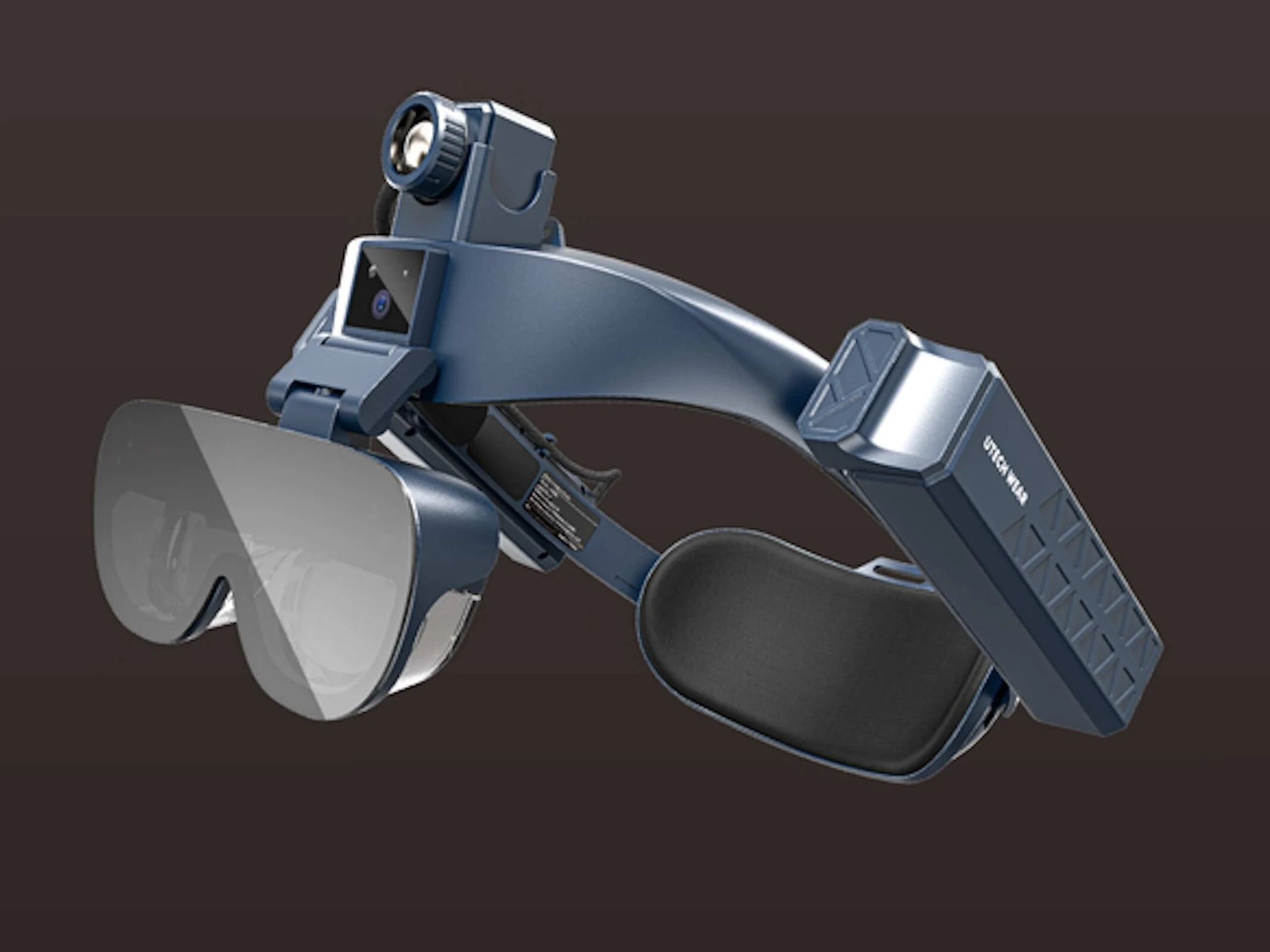
    The Utrack represents a fresh take on AR headsets, functioning essentially as a thermal imaging device. These glasses are capable of easily identifying objects that have a different temperature compared to their environment. This feature could be useful for locating missing individuals, spotting unauthorized intruders, aiding hunters, or finding thermal leaks in buildings.

    Specifications and Features

    The maker claims that the infrared sensor offers a resolution of 384 x 288 pixels and can detect temperature variances as small as 25 mK, which is significantly lower than one Kelvin. It boasts a detection range of up to 1,640 yards, along with various AI functionalities.

    User Experience

    On top of that, the Utrack AR headset can display an 80-inch AR image with a refresh rate of 60Hz. Users who wear prescription glasses can also comfortably use this gadget. Its 3,500mAh battery is said to provide up to 3 hours of use, and thanks to a buffer memory system, the main battery can be changed quickly without any interruption.

    Additional Capabilities

    These AR glasses are also compatible with sonar or an endoscope, making them handy for activities like fishing or repairs in pipelines. They might even serve as a vlogging camera. During the crowdfunding campaign, backers can secure one unit of the Utrack AR glasses for a pledge of $1,498. Note that the sonar and endoscope will incur additional costs. Deliveries are anticipated to commence in September, but as with all crowdfunding initiatives, there are inherent financial risks involved.

    Source:
    Link

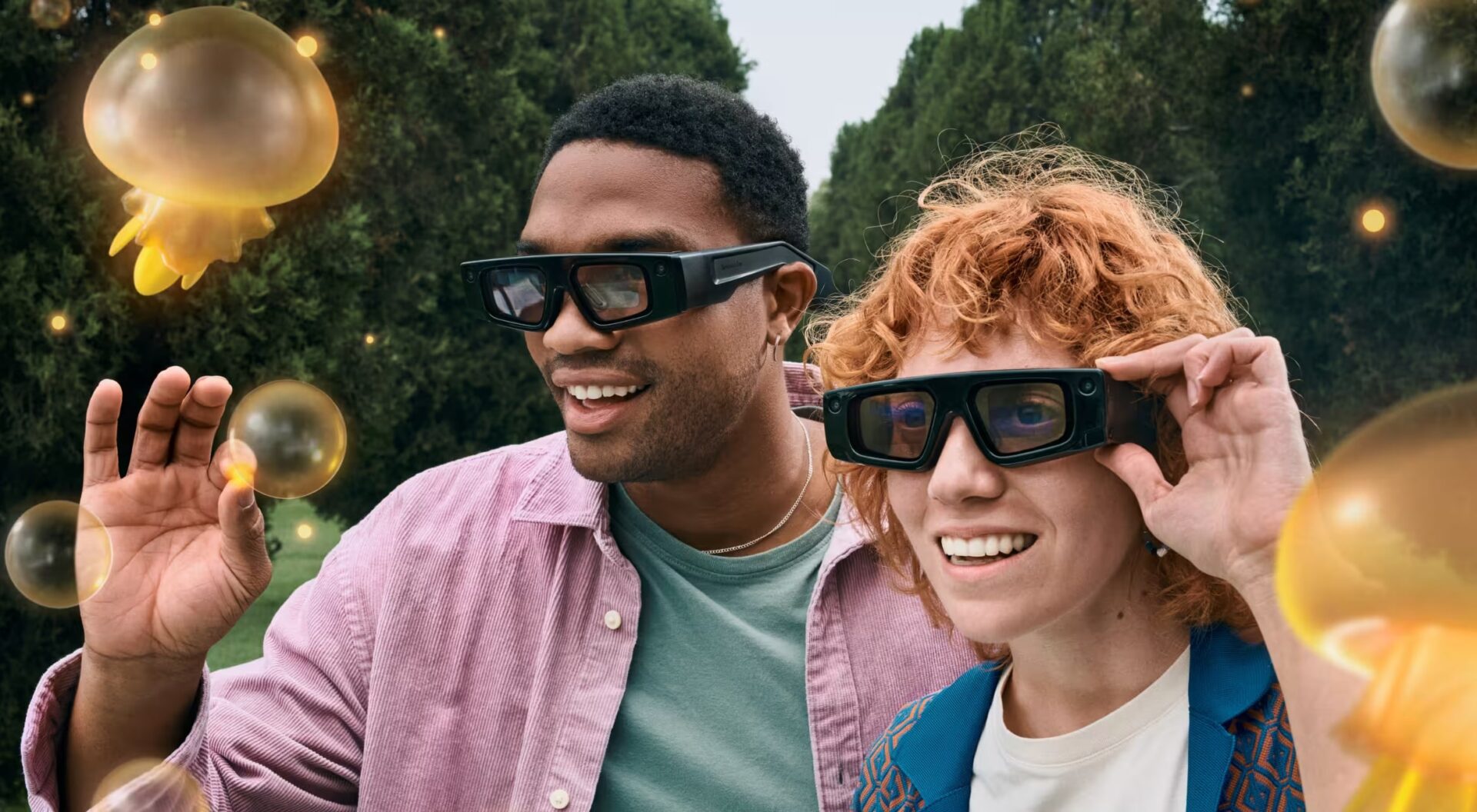
  • Spectacles ’24: Try On Snap Inc.’s New Glasses Today

    Spectacles ’24: Try On Snap Inc.’s New Glasses Today

    While it may not be a complete launch, Snap Inc. has revealed its newest version of Spectacles. Known as Spectacles ’24, this iteration utilizes the company’s expertise in augmented reality (AR) and incorporates a significant amount of artificial intelligence (AI). Spectacles ’24 is part of Snap Inc.’s ongoing mission to help users "Get closer with friends."

    Enhanced Features and Specifications

    Powered by Snap OS, Spectacles ’24 comes with new features that previous versions lacked. Users can still take snaps, but these spectacles also function as a standalone AR headset, equipped with "My AI" for launching immersive applications. The AR capabilities are driven by two unspecified Snapdragon processors, two high-resolution full-color cameras, two infrared computer vision cameras, and a 6-axis inertial sensor. Additionally, the glasses support WiFi 6 and Bluetooth. Designed for outdoor use, they include lenses that automatically dim in bright light.

    Engaging User Experience

    With a runtime of 45 minutes, users can explore a variety of experiences through their spectacles. Snap has integrated standard AR headset features such as AR gaming, web browsing, video viewing, and the ability to enhance the real world with 3D objects. Moreover, users can unlock extended functionality by connecting the glasses to the Spectacles App. This app allows users to mirror their phone screens or use their phones as controllers for Snap OS. To combat the loneliness sometimes associated with AR glasses, Spectacles ’24 enables others to view what the user is seeing via the linked phone.

    Focus on Mass Appeal

    Snap Inc. is clearly committed to creating a wearable device that appeals to a broad audience. By offering Spectacles ’24 exclusively to developers through a $99 monthly subscription, the company aims to refine the product into a consumer-ready version with an attractive feature set. Since the initial launch of Spectacles, Snap Inc. has faced challenges such as low sales, surplus inventory, and high return rates. However, the innovative features of this new release could signal a positive shift for the future.

  • Apple Vision Pro to Get AI Boost; Cheaper Version Coming Soon

    Apple Vision Pro to Get AI Boost; Cheaper Version Coming Soon

    Apple’s Vision Pro AR headset hasn’t quite met expectations. However, the company isn’t giving up just yet. Here’s an overview of the current status and future plans for Vision Pro, according to Mark Gurman from Bloomberg.

    Enhancing User Experience

    Apple is actively working on integrating its AI technology, known as Apple Intelligence, into the AR interface of the headset, visionOS. This integration aims to improve the overall user experience for Vision Pro users. In addition, Apple is revamping in-store demos to offer a more comprehensive experience. The new "Go Deeper" option allows potential buyers to test features such as office applications and video viewing. Soon, Vision Pro users will also be able to view personal videos and photos, including panoramas, within the headset. This feature is expected to be enhanced with the upcoming visionOS 2 update and its "spatialize" option, which can transform 2D photos into 3D experiences.

    Future Developments

    Rumors suggest that Apple is focusing on developing a more affordable headset targeted for release by the end of next year. The specifics are still unclear, with conflicting reports indicating either lower-resolution displays for a successor to the Vision Pro or a complete shift in focus towards this budget-friendly option. The primary challenge appears to be balancing cost with the high-resolution displays currently offered in the Vision Pro.

    While it’s too early to declare the Vision Pro a failure, Apple is likely to introduce a more affordable version of the headset. We will find out soon!

  • Insights Revealed by Former Meizu Executive on Upcoming Huawei Vision AR Headset

    Insights Revealed by Former Meizu Executive on Upcoming Huawei Vision AR Headset

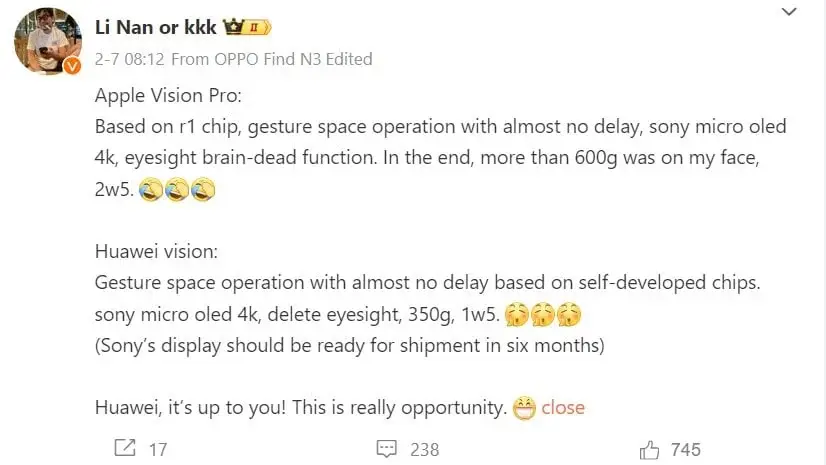
    With the launch of Apple Vision Pro, the headset market received much-needed attention from the masses. The already mature market includes players like Meta, Vive, and Valve, and the entry of Apple made it more competitive. Amid all this, a former Meizu executive, Li Nan, and the founder of Numiao Technology sarcastically shed some light on the expected Huawei Vision AR Headset via his official Weibo Handle.

    Huawei’s VR Headset Details

    As per the post shared, Li Nan claims that Huawei is working on a VR headset that will feature the company’s self-developed chipset, which would offer such exciting performance that there would be “no delay” in spatial renders. The VR headset will come with a Sony 4K micro-OLED display, which is expected to ship to the Huawei manufacturing unit within the next 6 months. The same display is part of Apple’s Vision Pro headset.

    Huawei’s VR headset will weigh around 350 grams, which is around half of the 600 grams measuring Apple’s Vision Pro.

    Pricing and Availability

    If we believe the story, then it would result in a great alternative to the Apple Vision Pro on the market. However, the pricing would be around 15000 Yuan, which roughly translates to ~$2100. We also expect it to be available for a lower price than Apple’s counterpart.

    Huawei’s Previous VR Efforts

    Huawei’s venture into VR is not entirely new, as the company introduced Vision Glass with a head-mounted display in 2021. It was bundled with a 1080P micro-OLED screen. This latest development aligns with Huawei’s previous efforts and its registration of the Vision Pro trademark back in 2019. Even some rumors state that Huawei is bringing its Mixed Reality headset.

    Additionally, Apple may need to change the Vision Pro name in China, as Huawei already has the same name trademark in China.