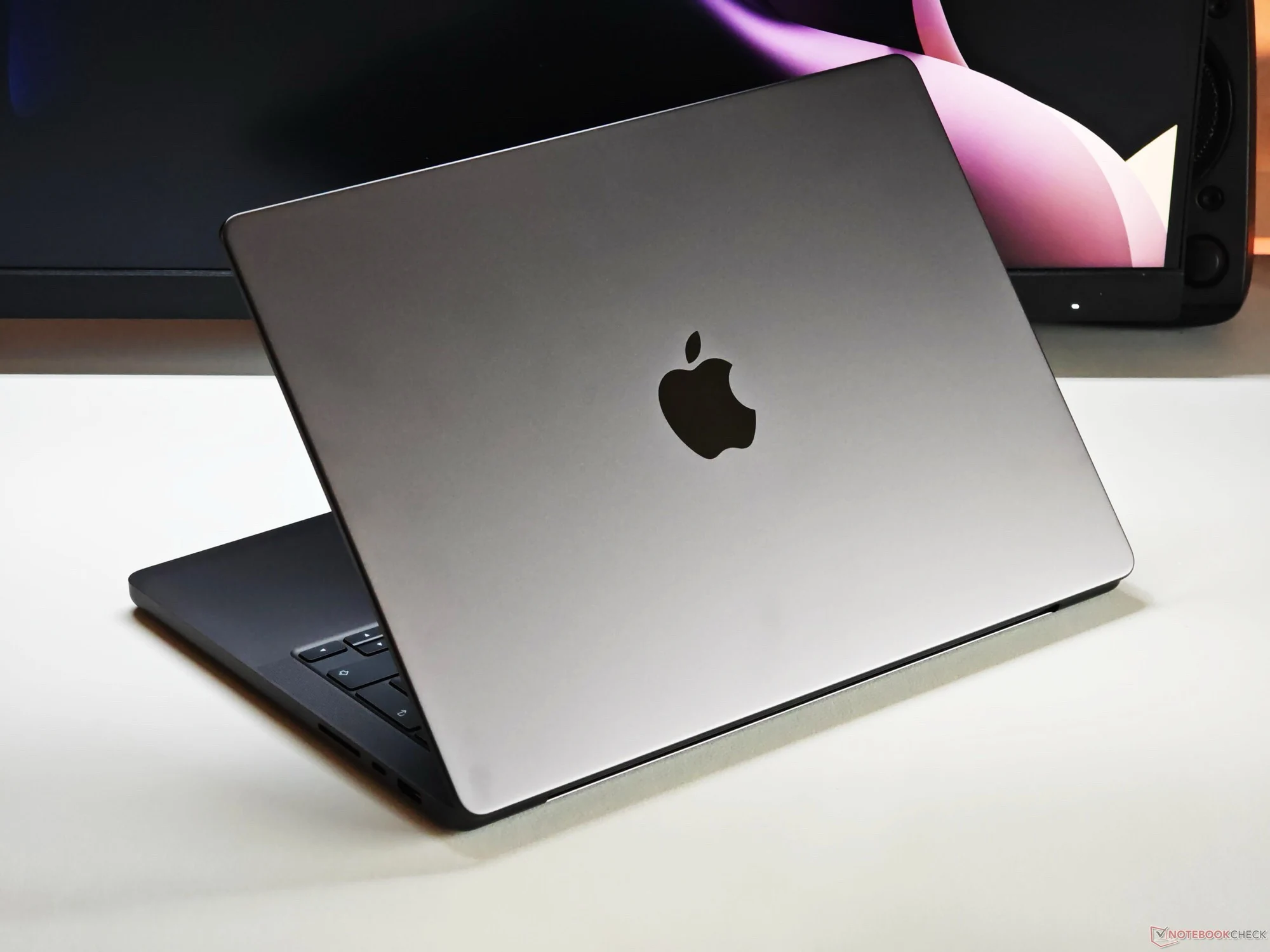
Tag: Apple MacBook Pro

  • Apple MacBook Pro with Tandem OLED Touchscreen Delayed by DRAM Crisis

    Apple MacBook Pro with Tandem OLED Touchscreen Delayed by DRAM Crisis

    Key Takeaway

    1. The new MacBook Pro is expected to feature a redesigned, thinner chassis, punch-hole display, and touchscreen OLED panel, marking the most significant update since 2021.
    2. Launch has been delayed to early 2027 due to supply chain issues caused by the DRAM crisis, despite software being on schedule for fall.
    3. The Mac Studio’s release has also been pushed to October, with improvements in performance through new chips but no design changes.
    4. The new MacBook Pro will include a new hinge and macOS adaptations but will not feature iPad-like functionalities such as Apple Pencil support.

    Future Changes for Apple MacBook Pro

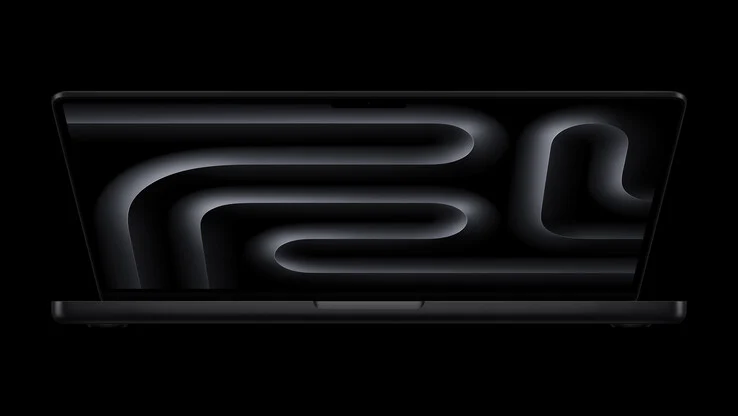
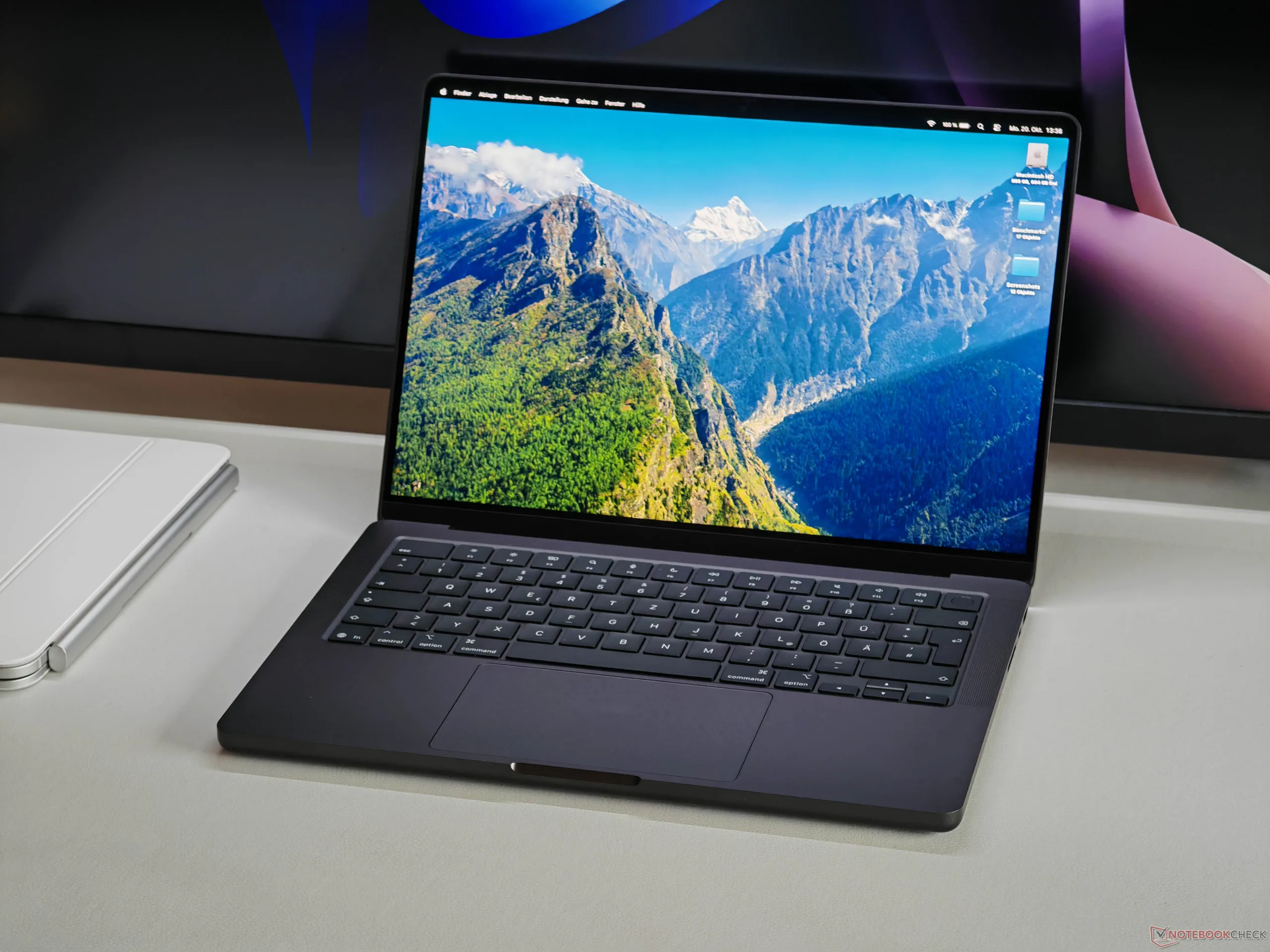
    The MacBook Pro, with its new pricing at around $1,759, along with the upgraded Apple M6 Pro and M6 Max, is all set for a one of the most anticipated design overhauls since the M1 series launched in the fall of 2021. This upgrade features a slimmer body, a modern punch-hole instead of the classic notch, and a touchscreen that incorporates a tandem OLED panel, making it rumored to be the most substantial update in ages.

    Delay Due To External Factors

    According to recent info, mostly from Bloomberg, Apple’s release schedule might be pushed back cos of issues with DRAM shortage. While most rumors indicate a launch around the tail-end of 2026, now it looks like the next-gen MacBook Pro might only hit the shelves by early 2027, which is later than earlier thought. This has some implications on their overall release plans.

    Software and Design Expectations

    Sources say that Apple’s software development is still on track for a fall release, despite the delays with hardware production. The new MacBook Pro is expected to feature a reworked hinge design plus some macOS updates to work better with a touchscreen. Still, it seems unlikely that Apple plans to turn it into a full iPad hybrid—features like the Pencil will probably stay exclusive to tablets, not laptops.

    Impact on Other Apple Devices

    This delay appears to extend beyond just the MacBook Pro. Bloomberg’s insiders suggest that the upcoming Mac Studio’s deliveries won’t kick off until October. No major redesign is anticipated for the Mac Studio, but it will be more powerful because of new chip options, likely with either an Apple M5 Max or an M5 Ultra, making it a serious upgrade in performance.

    Sources

  • Apple’s OLED Transition May Replace Mini LED in Premium Laptops

    Apple’s OLED Transition May Replace Mini LED in Premium Laptops

    Key Takeaway

    1. Global notebook display shipments are expected to decrease by 5% in 2026 due to rising memory costs.
    2. OLED notebook shipments will grow significantly by 33%, replacing Mini LED tech, which will decline by 43%.
    3. Apple’s adoption of OLED panels for upcoming MacBook Pro models is a major factor driving industry shift towards OLED displays.
    4. Industry will experience a normalization phase with advanced display demand slightly dipping by 1% in 2026, impacted by high component costs.

    The global market for notebook displays is facing some significant challenges, with a expected 5 percent decrease in shipments come 2026, according to new industry reports. This downturn happens after a period of positive growth in 2025, mainly driven by increased costs of key components like memory modules. The rising prices for RAM and SSDs are putting pressure on manufacturers, which force them to either raise prices or rethink their hardware setups to keep their profit margins sustainable.

    Market Trends and Industry Shifts

    In the wider screen market, things are shifting notably. The premium segment particularly will see a big change, with OLED panels expected to see a 33 percent increase in shipments next year. Meanwhile, Mini LED tech is expected to suffer a sharp 43 percent decrease, as brands start to prefer newer, self-emissive screens over the older backlight-based systems. This shift marks a clear move away from traditional display technologies to more advanced, efficient alternatives.

    Impact of Apple and Industry Adoption

    Apple is seen as a key player driving this move towards OLED screens. The tech giant is rumored to be switching its upcoming MacBook Pro models to OLED panels, which would lead to a decline in Mini LED usage within their high-end laptop lineup. Such changes at Apple tend to influence the entire industry, pushing competitors to adopt similar display technologies in a bid to stay relevant and competitive, warns industry watchers.

    Future Outlook and Challenges

    Even with the promising advances in display tech, the report warns that the industry will later enter a phase of stabilization. Overall, the demand for these new, advanced screens might shrink slightly, around 1 percent, in 2026. Despite the innovations, high component costs remain a major obstacle for growth in volume sales. While new hardware cycles and smarter AI software could help maintain some demand in the short run, the high prices still hinder large scale expansion overall.


    Sources

  • Apple 14-inch MacBook Pro: M5 Chip, 24-Hour Battery, $1,599.99

    Apple 14-inch MacBook Pro: M5 Chip, 24-Hour Battery, $1,599.99

    Key Takeaways

    1. Powerful Performance: The new 14-inch MacBook Pro features the Apple M5 chip, offering 3.5 times faster AI performance and 1.6 times quicker graphics performance than the M4 chip.

    2. Improved Battery Life: The MacBook Pro boasts a maximum battery life of up to 24 hours and features an SSD that is twice as fast, enhancing efficiency for demanding tasks.

    3. Familiar Design with Upgraded Features: The device includes a Liquid Retina XDR display, a 12MP Center Stage camera, and multiple connectivity options, while maintaining a traditional design.

    4. Focus on Sustainability: The MacBook Pro incorporates 45% recycled materials, including 100% recycled aluminum, and is packaged in fully recyclable materials, emphasizing Apple’s commitment to sustainability.

    5. Pricing and Availability: The starting price is $1,599, with pre-orders available now and a release date set for October 22.


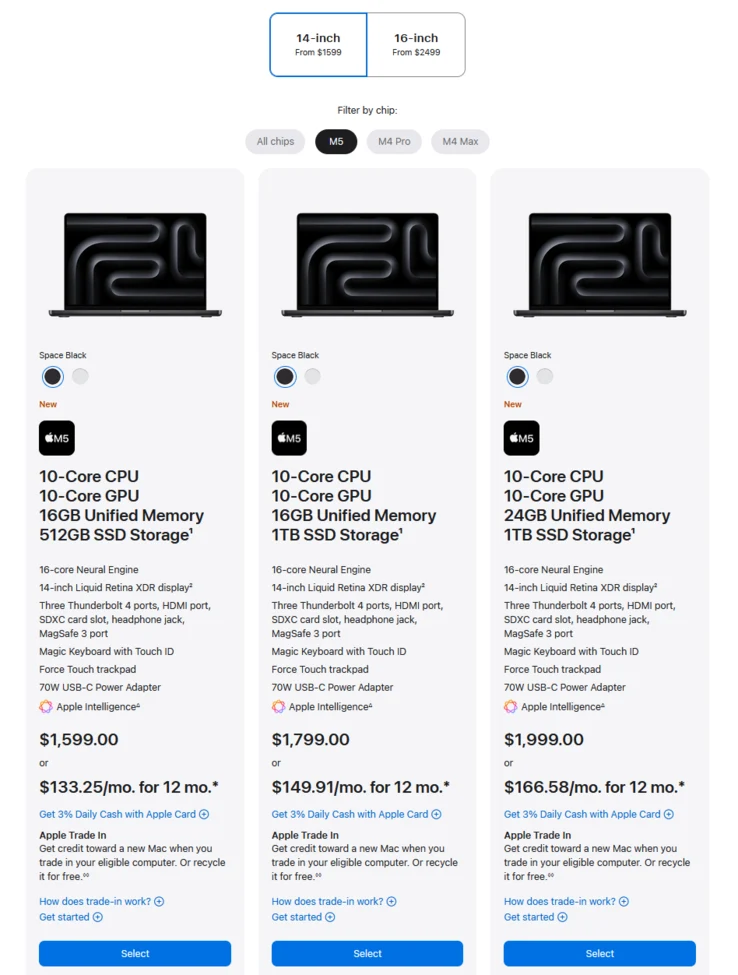
    Apple has officially unveiled its latest 14-inch MacBook Pro, which is powered by the new Apple M5 chip. This model brings faster performance, better power efficiency, and enhanced AI processing capabilities. It maintains the same starting price of $1,599, or $1,499 for those eligible for education discounts. Customers can start pre-ordering today on the Apple Store, with the product set to be available on October 22 in both space black and silver colors.

    Enhanced AI and Graphics Performance

    The M5 chip integrates a Neural Accelerator in each GPU core. According to Apple, this results in AI performance that is up to 3.5 times faster and graphics performance that is 1.6 times quicker than the previous M4 chip. With an upgraded CPU and higher unified memory bandwidth exceeding 150GB/s, users can expect better efficiency when handling demanding tasks such as 3D rendering, deep learning, and on-device large language models (LLMs). The new 16-core Neural Engine is said to enhance AI-driven applications and Apple Intelligence features within macOS Tahoe.

    Improved Battery Life and SSD Speed

    Battery longevity has also been improved, boasting a maximum of 24 hours, as per Apple’s claims. The SSD now offers performance that is twice as fast, making it easier to import RAW images or export large video files. The M5 chip is particularly optimized for creators, developers, and analysts, with Apple highlighting a 1.6 times increase in gaming frame rates and a 20% boost in multithreaded performance compared to the M4.

    Traditional Features and Sustainability

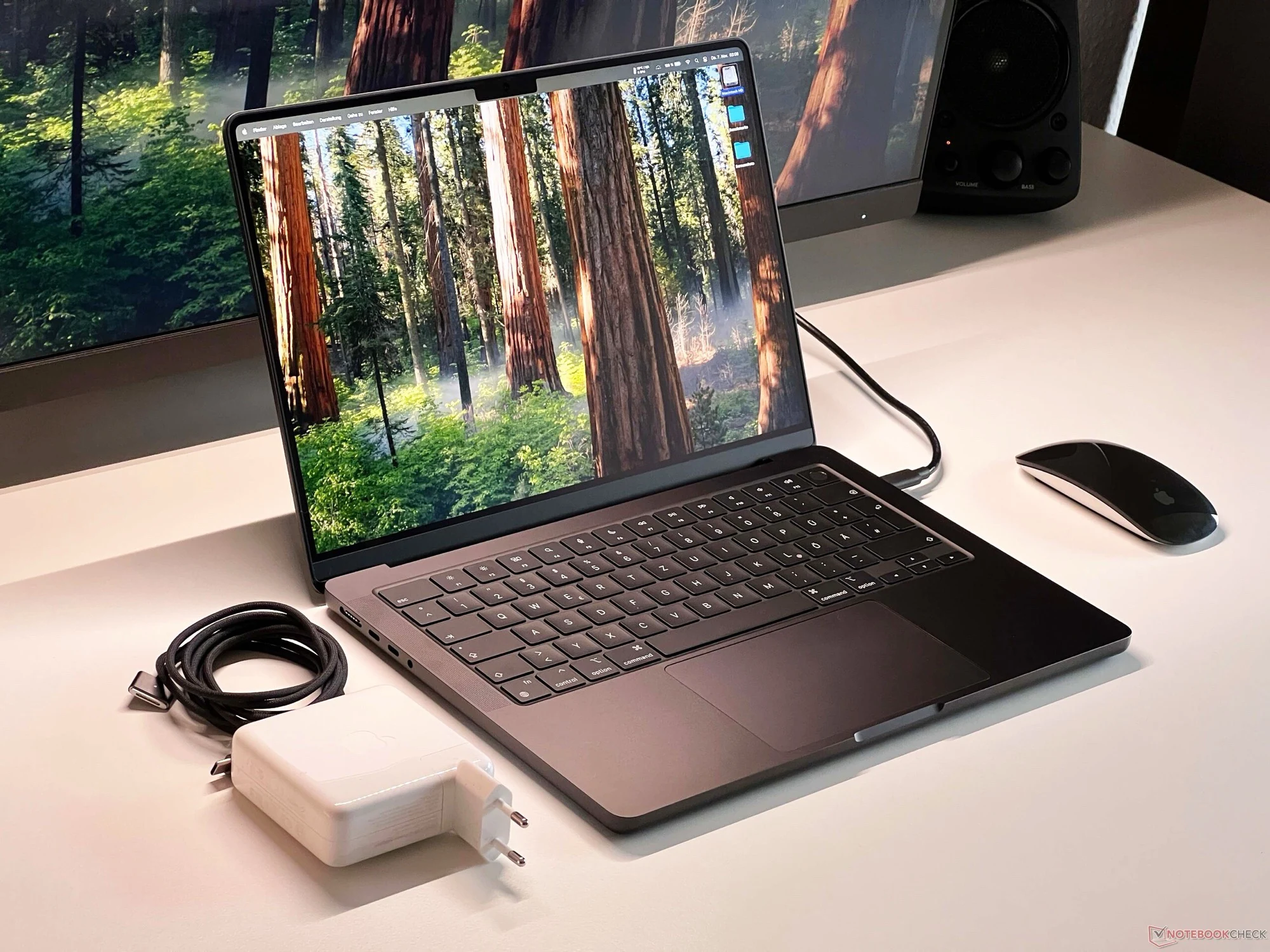
    The overall design remains familiar, featuring a Liquid Retina XDR display with a peak brightness of up to 1,600 nits, along with an optional nano-texture finish. The device also comes with a 12MP Center Stage camera and a robust six-speaker system. Connectivity options include three Thunderbolt 4 ports, an HDMI port, an SDXC card slot, a headphone jack, and a MagSafe 3 port. Additionally, macOS Tahoe introduces Apple Intelligence, Live Translation in apps like FaceTime and Messages, and wider capabilities for Shortcuts automation.

    Apple is also placing a focus on sustainability with this new MacBook Pro, which includes 45% recycled materials by weight. This encompasses 100% recycled aluminum and rare earth elements. The laptop is packaged in fully recyclable fiber-based materials and is assembled using 55% renewable energy, according to the company’s statements. A 70W USB-C power adapter is included in the package, although a recent report indicates that this charger won’t be part of shipments to the EU.

    As previously mentioned, the pricing for the 16GB/512GB variant is $1,599.99, while the 16GB/1TB variant costs $1,799.99. For those looking for the top-tier option, the 24GB/1TB version is available for $1,999.99.

    Source:
    Link


  • Samsung’s UT One OLED Panel May Reduce Power Use in Future MacBook Pro

    Samsung’s UT One OLED Panel May Reduce Power Use in Future MacBook Pro

    Key Takeaways

    1. Future MacBook Pro expected to feature an OLED screen, replacing mini-LED display.
    2. Launch of the first OLED MacBook Pro anticipated in 2026, using advanced Samsung panels.
    3. Samsung’s Gen 8.6 OLED panel is 30% slimmer and lighter, potentially reducing laptop weight by 50 grams.
    4. New panel offers a variable refresh rate down to 1 Hz, improving power efficiency.
    5. Intelligent Color Technology (ICT) enhances power efficiency and image brightness without noticeable flickering.


    Rumors have been going around for a long time that a future Apple MacBook Pro will come with an OLED screen, replacing the mini-LED display currently used in models priced around $1,780 on Amazon. The first MacBook Pro with an OLED display is anticipated to launch in 2026, with Apple reportedly selecting advanced eighth-generation tandem OLED panels, mainly sourced from Samsung Display.

    Cutting-Edge Technology

    Samsung Display has introduced its Gen 8.6 OLED panel, which is set to begin mass production next year. The timing and specifications match earlier rumors about the MacBook Pro, suggesting that this panel could have been specifically designed for Apple’s leading laptop. The Samsung “UT One” OLED panel is claimed to provide two notable advantages over existing standard OLED panels. It is 30% slimmer and lighter, which may result in a decrease in a laptop’s weight by approximately 50 grams (1.76 ounces). Additionally, it features a variable refresh rate that can decrease to as low as 1 Hz – a capability that has been common in smartphones but is a first for laptops.

    Improved Power Efficiency

    Samsung’s internal tests indicate that reducing the refresh rate to this extent can potentially reduce power consumption by 30%. The company also asserts that this UT One OLED panel will not show noticeable flickering, even at refresh rates below 10 Hz. The display can support refresh rates up to 120 Hz. Moreover, Samsung’s new Intelligent Color Technology (ICT) aims to enhance power efficiency further by dimming brightness while increasing saturation, which helps images to look brighter than they truly are.

    Source:
    Link


  • Nomad ChargeKey: 240W USB-C Charging Cable for Key Ring

    Nomad ChargeKey: 240W USB-C Charging Cable for Key Ring

    Key Takeaways

    1. Increased Power Delivery: The new ChargeKey can deliver power up to 240 watts, allowing for charging of high-powered laptops like the Apple MacBook Pro.

    2. Faster Data Transfer: The updated model supports data transfer speeds of up to 10 Gbit/s, significantly improving upon the original’s 480 Mbit/s limit.

    3. Compatibility with New Devices: ChargeKey V2 meets the data rate requirements for the Apple iPhone 15 Pro and iPhone 16 Pro, making it ideal for connecting external storage devices.

    4. Durable Design: The cable features a zinc alloy casing with integrated magnets for easy storage and a nylon braided exterior for enhanced durability.

    5. Affordable Pricing and Shipping: The ChargeKey V2 is priced at $25, with shipping options available for both U.S. and international customers.


    After launching the Nomad ChargeKey in 2023, the company is now bringing back the compact USB-C cable designed for key rings. The new version of ChargeKey can deliver power up to 240 watts, a significant upgrade from the previous 60 watts. This means that even high-powered laptops like the Apple MacBook Pro can be charged without any restrictions.

    Enhanced Data Transfer

    The improved model also offers better data transfer capabilities. While the original ChargeKey was limited to USB 2.0 and a speed of 480 Mbit/s, the new version enables data transfer speeds of up to 10 Gbit/s. According to Nomad, ChargeKey V2 thus meets the maximum data rate requirements of the Apple iPhone 15 Pro and iPhone 16 Pro, making it ideal for connecting an external SSD to these latest models.

    Design and Durability

    Nomad hasn’t changed much in terms of design. The USB-C casing remains made of zinc alloy, featuring integrated magnets that ensure the two ends of the cable stay together when not in use, preventing them from swinging around on your key ring. The cable measures 12.6 centimeters in total length and is reportedly quite durable due to its nylon braided exterior.

    The Nomad ChargeKey V2 is currently available on the manufacturer’s website for a price of $25. For customers in the USA, shipping costs are $6 for standard delivery and $11 for express delivery. Global shipping is also offered: import fees are included, but shipping costs will differ depending on the destination country.

    Source:
    Link