Tag: AMD Strix Halo

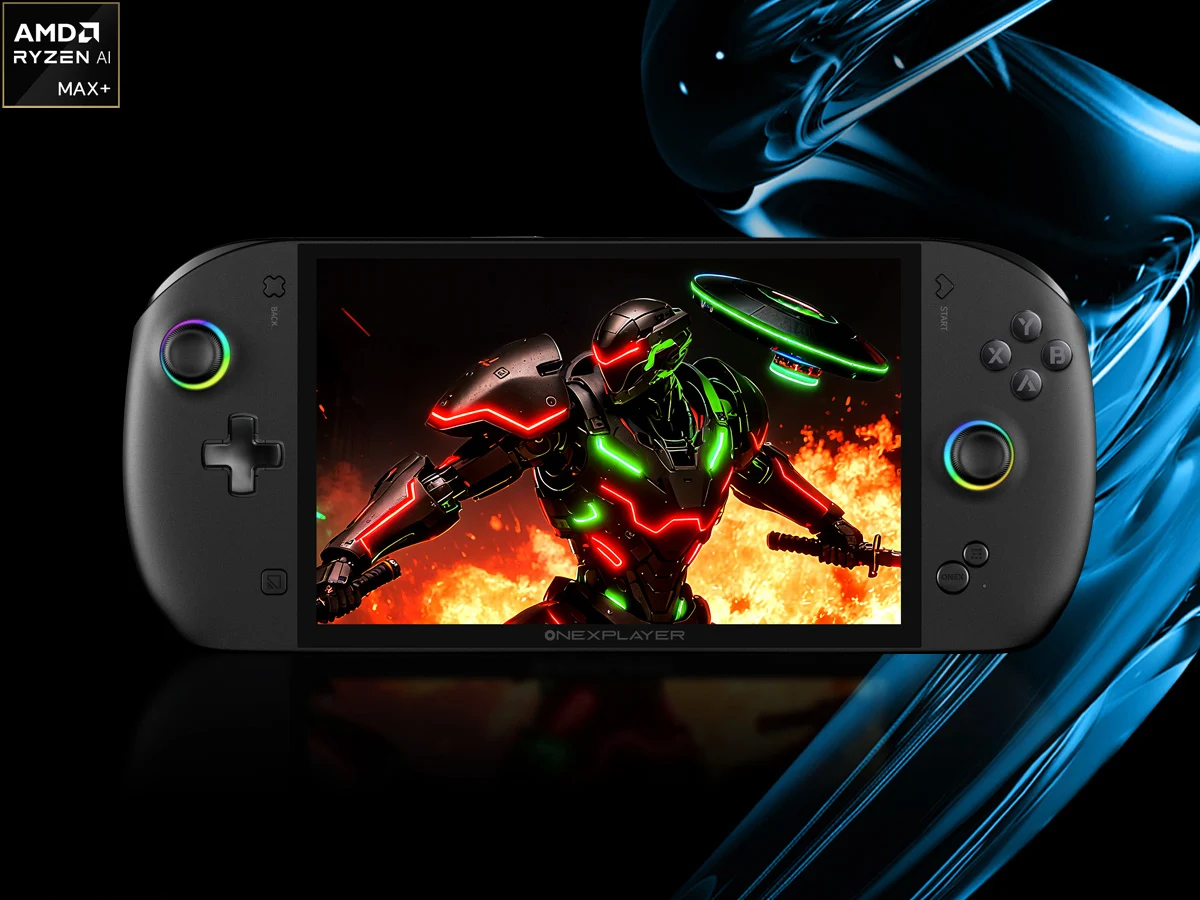
  • OneXPlayer Announces Global Launch for AMD Strix Halo and OneXFly Apex

    OneXPlayer Announces Global Launch for AMD Strix Halo and OneXFly Apex

    Key Takeaways

    1. OneXPlayer has launched the OneXFly Apex in China to compete with the GPD Win 5 at a lower price point.
    2. The OneXFly Apex will be available for pre-order on Indiegogo starting November 09, 2025.
    3. The international pricing for the OneXFly Apex is expected to be lower than the GPD Win 5, but higher than the Xbox ROG Ally X.
    4. The device features Ryzen AI Max+ 395 or AI Max 385 APUs with Radeon 8050S and 8060S integrated graphics.
    5. It includes an 8-inch VRR display with a 120 Hz refresh rate and a water-cooled model capable of delivering up to 120 W performance.


    OneXPlayer has introduced the OneXFly Apex in China, aiming to compete with the GPD Win 5 at a more budget-friendly price. At its debut, the company hinted that the new AMD Strix Halo gaming handheld would soon reach global markets, and now the date for its international launch has been announced.

    Launch and Pre-order Details

    The OneXFly Apex is set to be available on Indiegogo starting November 09, 2025. The company has also provided a timeline for pre-orders in various regions around the world (see the chart at the end). While the international pricing hasn’t been disclosed yet, it’s important to mention that the GPD Win 5 also made its global launch via Indiegogo.

    Pricing Expectations

    GPD’s AMD Strix Halo gaming handheld began at a price of $1,448 on Indiegogo, and the Ryzen AI Max+ 395 variant kicked off at a pre-order price of $1,650. The OneXFly Apex is anticipated to be priced slightly lower than the GPD Win 5, considering the price differences in China, however, it might still be pricier than the Xbox ROG Ally X (which has a non-X version available on Amazon).

    Specifications and Features

    In case you missed our previous coverage on the Chinese launch, the OneXFly Apex comes equipped with either the Ryzen AI Max+ 395 or the AI Max 385 APUs. These two configurations boast the Radeon 8050S and Radeon 8060S integrated graphics, making them some of the most powerful options currently available.

    This new AMD Strix Halo handheld sports an 8-inch VRR display with a refresh rate of 120 Hz, and the water-cooled model can deliver up to 120 W of performance. For more information, be sure to check out our earlier articles on the OneXFly Apex.

    Source:
    Link


  • Strix Halo Handheld: Cyberpunk 2077 on SteamOS vs. Windows 11

    Strix Halo Handheld: Cyberpunk 2077 on SteamOS vs. Windows 11

    Key Takeaways

    1. The GPD Win 5 runs SteamOS 3.8 natively, allowing full support for controllers, Wi-Fi, and Bluetooth.
    2. Power management in SteamOS on the GPD Win 5 requires additional tools, as TDP controls are not available in the native menu.
    3. Gaming performance on SteamOS is competitive, with titles like Marvel’s Spider-Man 2 and Cyberpunk 2077 achieving 70-74 FPS at 1080p.
    4. Windows 11 outperforms SteamOS in some games, such as Borderlands 4, suggesting better driver optimization for demanding titles.
    5. Battery life for AAA games is similar on both operating systems, approximately two hours at 25 W.


    The GPD Win 5 is said to perform nicely with Windows 11, which it comes pre-installed with, and it can run a range of indie and AAA games. This brings up the question of how well the new AMD Strix Halo-powered handheld would do with a lightweight, gaming-oriented Linux system like SteamOS.

    Exploring SteamOS on GPD Win 5

    This is what YouTuber ETA PRIME aimed to discover in their recent video. They started by loading the official SteamOS Hollow 3.8 main branch build onto the GPD Win 5, marking the first version that boots completely on AMD’s latest Strix Halo and Strix Point APUs.

    ETA PRIME explained that this particular release was selected because it fixes the long-standing boot issue that had stopped SteamOS from working on these processors. With the improved boot chain in version 3.8, the GPD Win 5 now runs SteamOS natively, providing full controller support, Wi-Fi, Bluetooth, and system-level features similar to those of the Steam Deck.

    Hardware Specifications

    The test unit features AMD’s Ryzen AI Max 385 APU working alongside a 30-CU Radeon 8050S iGPU. It’s loaded with 32 GB of RAM, which ETA PRIME set up to divide 16 GB for system use and 16 GB for the iGPU. SteamOS correctly identifies the platform under System settings as “Hollow 3.8” and lists the APU as model 385.

    Despite this progress, one limitation of SteamOS on non-Deck devices is the TDP control from the standard performance overlay. As shown by ETA PRIME, power limits do not show up in the native menu on the Win 5, leading them to install Decky Loader with the SimpleDeckyTDP plugin. With this configuration, the handheld can be adjusted anywhere from a low 4 W up to a reported 120 W slider range.

    Gaming Performance

    In practical terms, ETA PRIME keeps the power usage between 20 and 45 W for gaming on the go, noting that the Windows 11 “Performance” mode on the GPD Win 5 typically sits around 45 W and can peak to 65 W while on battery. For SteamOS, the YouTuber generally kept AAA games between 25 and 45 W.

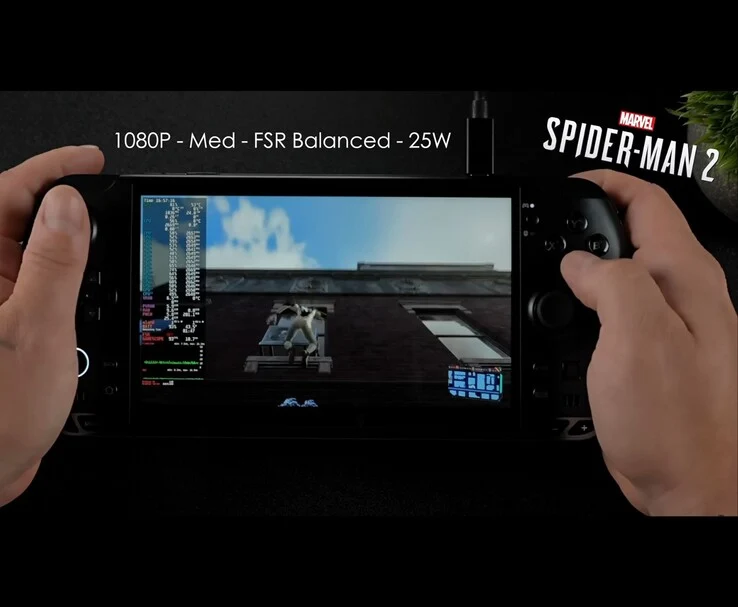
    During their tests, Marvel’s Spider-Man 2 was the first game they tried. At 1080p, Medium settings, FSR Balanced, and a 25 W TDP, the game averaged about 71 FPS without frame generation. Switching to the “High” preset could yield similar performance by raising power to around 35 W, the YouTuber noted.

    Next on the list was Cyberpunk 2077. Running at 1080p, Steam Deck preset, and a 25 W TDP, it averaged approximately 74 FPS. When set to 1080p, Ultra preset, FSR Quality, and a 45 W TDP, the game performed at roughly 71 FPS on average. The Ryzen Max chips were seen to scale effectively with power, with 45 W comfortably supporting 1080p Ultra gameplay. However, after 45 W, the Strix Halo chip’s performance begins to stabilize.

    Borderlands 4 at 1080p, Medium settings, FSR Balanced, and a 45 W TDP sometimes dipped below 60 FPS. In comparison, the same game runs about 13 FPS faster on Windows 11 with similar settings, indicating it might not be fully optimized for SteamOS just yet.

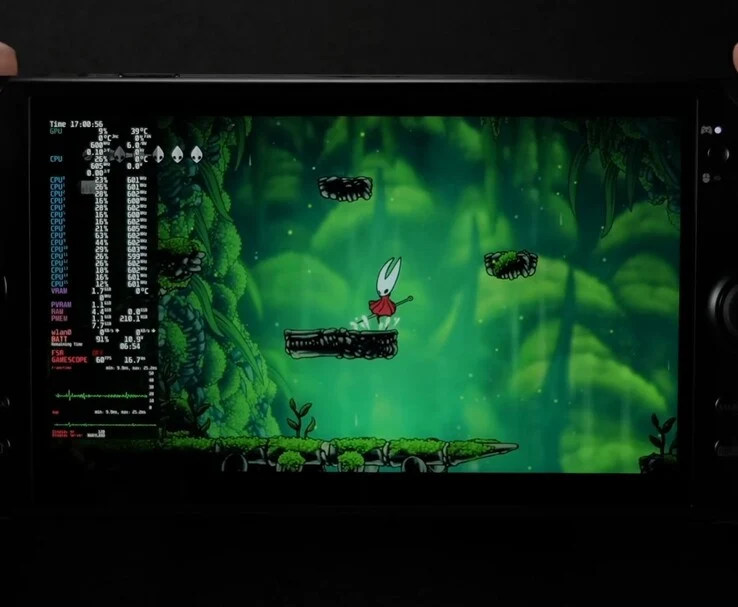
    Lastly, Hollow Knight: Silksong, a 2D indie game, was tested at a 6 W TDP with a frame rate capped at 60 FPS. The total system draw was around 10.5 W, suggesting nearly eight hours of gameplay.

    The YouTuber also checked out games like The Witcher 3: Wild Hunt, Elden Ring, and Doom: The Dark Ages in their video, which is linked below.

    Conclusion

    When looking at gaming performance between SteamOS and Windows 11 on the GPD Win 5, the results present a mixed picture. In Borderlands 4, Windows 11 has a clear advantage, averaging about 13 FPS higher at identical 1080p Medium settings and a 45 W TDP, implying better driver optimization on Windows’ part.

    Marvel’s Spider-Man 2 shows almost equal results between the two systems, with both holding around 70–74 FPS at Medium settings in the 25–28 W power range, though the Windows 11 test did not clarify whether FSR was set to Balanced.

    Battery life also remains roughly the same, offering about two hours of gameplay for AAA titles at 25 W on either operating system. Overall, while SteamOS 3.8 shows competitive performance in most cases, Windows 11 still holds a slight edge in more demanding games due to its well-developed drivers and broader game optimization.

    This indicates that although SteamOS and various Linux distributions are becoming more popular, there is still some work needed from developers to reach the same level of performance as Windows 11 in gaming.

    Source:
    Link



  • OneXPlayer OneXFly Apex: First Liquid-Cooled Gaming Handheld

    OneXPlayer OneXFly Apex: First Liquid-Cooled Gaming Handheld

    Key Takeaways

    1. The OneXFly Apex gaming handheld features AMD Strix Halo APUs, up to 128 GB of RAM, and an 8-inch VRR display.
    2. The device is powered by an 85 Wh battery and has been shown playing Cyberpunk 2077 at 1200p with over 60 FPS.
    3. One-Netbook has introduced an external liquid cooling system for the OneXFly Apex to manage a 120 W TDP.
    4. The OneXFly Apex is set to compete with GPD’s Win 5, which has a smaller 7-inch screen and focuses on enhanced cooling.
    5. A launch event for the OneXFly Apex is scheduled for October 28 at 11:00 UTC to provide more hardware details.


    Over a month ago, One-Netbook gave a sneak peek of the OneXFly Apex under its OneXPlayer brand. This new gaming handheld, the OneXFly Apex, features AMD Strix Halo APUs, offers up to 128 GB of RAM, boasts an 8-inch VRR display, and is powered by an 85 Wh battery. In the meantime, GPD launched the Win 5, which also uses the same AMD platform but has a smaller 7-inch screen, plus an external battery solution to enhance cooling performance.

    OneXFly Apex in Action

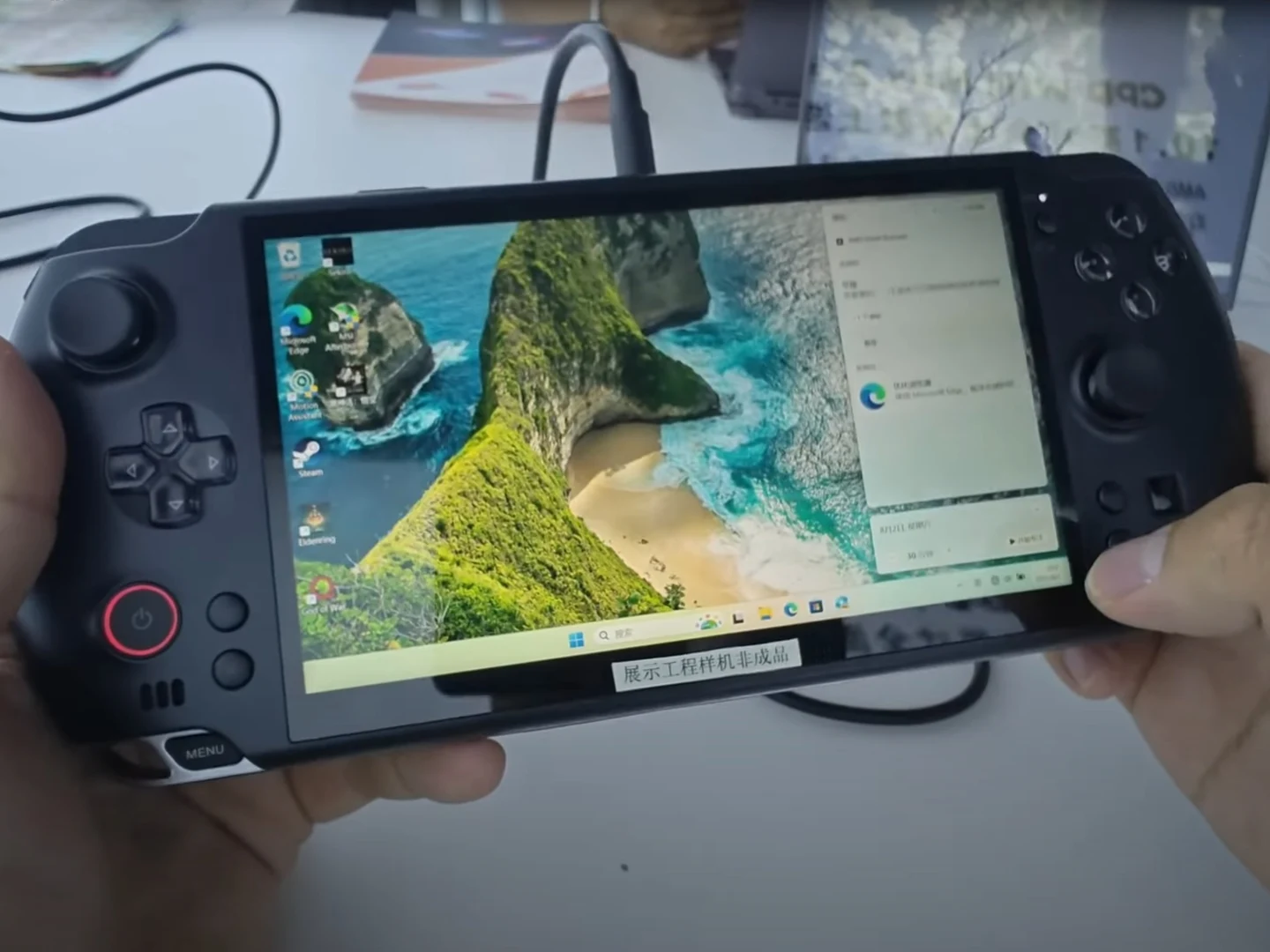
    Recently, One-Netbook has revealed its first AMD Strix Halo gaming handheld through a series of videos, including one uploaded to YouTube. The video features the OneXFly Apex playing Cyberpunk 2077 at 1200p with ray tracing turned on and DLSS upscaling off. Unlike AMD Strix Point handhelds such as the OneXFly F1 Pro (currently priced at $1,439 on Amazon), which struggle to perform, the OneXFly Apex maintains over 60 FPS consistently.

    Cooling Solutions and Launch Event

    In addition, One-Netbook has announced that the OneXFly Apex will be compatible with an external liquid cooling system designed to manage a 120 W TDP effectively. As of now, One-Netbook has not shown how this cooling solution functions or how it connects to the device. The company is planning to hold a launch event for the OneXFly Apex on October 28 at 11:00 UTC, where it is expected to reveal more about the hardware.

    Source:
    Link


  • Wee Beastie SFF PC with MXM RTX 4070: Affordable AMD Strix Halo Alternative

    Wee Beastie SFF PC with MXM RTX 4070: Affordable AMD Strix Halo Alternative

    Key Takeaways

    1. Powerful mini PCs for AI training, like the AMD Strix Halo and Nvidia DGX Spark, are expensive, often exceeding $2,000.
    2. The Wee Beastie mini PC offers a budget-friendly alternative, starting at $699, with an Intel processor and Nvidia RTX 4070 GPU.
    3. Wee Beastie features a compact design with superior cooling and significant gaming performance due to its 12 GB VRAM and AI processing speed of 466 TOPS.
    4. Despite its advantages, the Wee Beastie has limitations, such as its larger size and lower VRAM compared to the AMD Strix Halo for large model training.
    5. The Kickstarter campaign for Wee Beastie has been successful, leading to the introduction of two models, with production expected to start in December and shipping in March.


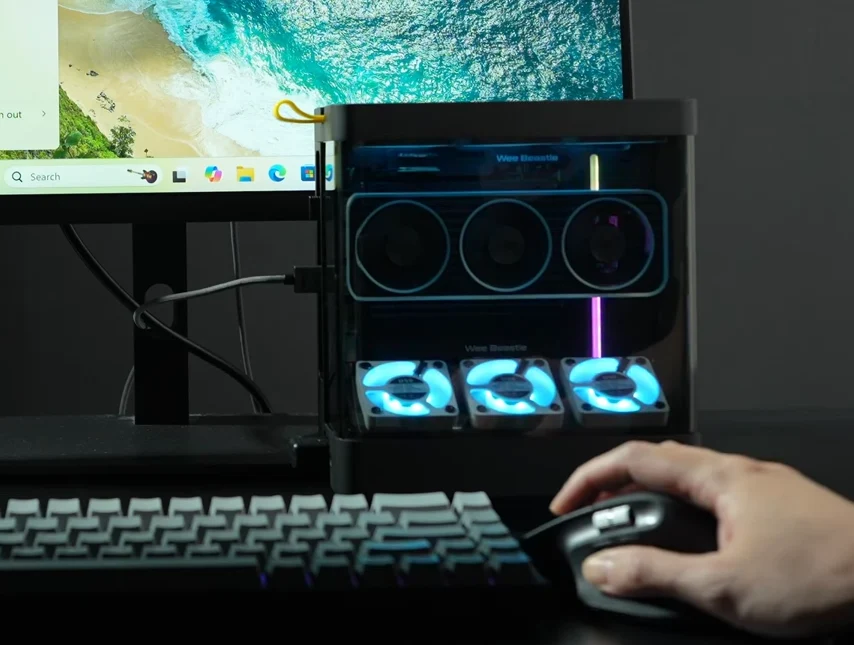
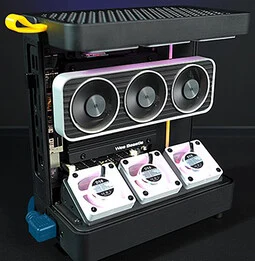
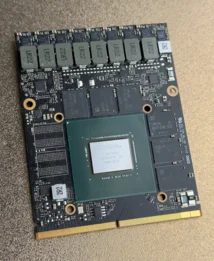
    This year has seen the rise of powerful mini PCs tailored for AI model training. Noteworthy among them are the AMD Strix Halo platform featuring the Ryzen AI Max+ 395 APU and the Nvidia DGX Spark platform equipped with the N1 processor, which merges ARM cores with an RTX 5000 GPU. However, these mini PCs are not widely available yet, mainly because their production costs are high, leading to prices that go over $2,000. To provide a more budget-friendly and simpler option for AI training, a group of engineers from China has launched a Kickstarter campaign for a compact 4.75-liter PC named Wee Beastie. This device combines the capabilities of an Intel processor with a desktop-grade Nvidia RTX 4070 GPU in an MXM form-factor, starting at a mere $699.

    Key Advantages of Wee Beastie

    Aside from the lower price tag, the Wee Beastie offers significant benefits compared to the Strix Halo mini PCs. Its MXM RTX 4070 card comes with 12 GB of VRAM, making it particularly advantageous in gaming situations, boasting an AI processing speed of 466 TOPS. Moreover, the 4.75-liter case is designed for superior cooling, featuring three intake fans positioned in the lower section, six exhaust fans at the top, along with a shroud that has three fans situated above both the GPU and CPU.

    Disadvantages to Consider

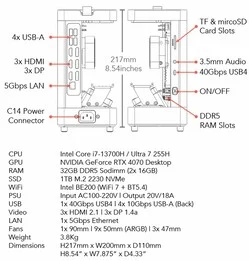
    However, there are some drawbacks to note. The Wee Beastie’s case is somewhat larger, measuring 217 mm in height, 200 mm in width, and 110 mm in depth, with a weight of 3.8 kg. While the RTX 4070 GPU may deliver faster performance in gaming, its VRAM is capped at 12 GB. In contrast, the AMD Strix Halo iGPU can utilize up to 96 GB of the total 128 GB system RAM. As a result, training large LLM models on the Wee Beastie is not feasible, despite its support for up to 128 GB DDR5-5600 RAM.

    The Kickstarter campaign has successfully achieved its funding goals, leading the Chinese team to introduce two models due to the stretch goals being met. The Wee Beastie Core, priced at $699, features an RTX 4070 MXM GPU paired with the older Intel Core i7-13700H processor. On the other hand, the Wee Beastie PRO comes with a more advanced Intel Core Ultra 7 255H processor. Both variants include a 400 W power supply, RGB lighting on the fans, 32 GB of RAM, and a 1 TB SSD as standard. They also support storage expansion up to 16 TB and RAM upgrades to 128 GB. Currently, the team is gauging demand, as the Core models are limited to 200 units, and the PRO models to 300.

    Solid Port Selection

    In terms of connectivity, the port options are impressive for a mini PC of this size. The left side is outfitted with four USB-A 10 Gbps ports, three HDMI 2.0, and three DP 1.4a video outputs, along with a 5 GbE Ethernet port. On the right side, there’s a USB4 connector, an audio jack, and a TF + microSD card reader. For wireless capabilities, the device is fitted with an Intel BE200 card offering Wi-Fi 7 and BT 5.4 speeds.

    According to the timeline shared on the Kickstarter page, the Chinese team is planning to kick off production this December, with a testing and quality assurance phase slated for January, followed by another production round in February. The first units are expected to start shipping in March of the following year.

    Source:
    Link


  • Minisforum MS-S1 Max: AMD Strix Halo APU, 80 Gbps USB4, dGPU Support

    Minisforum MS-S1 Max: AMD Strix Halo APU, 80 Gbps USB4, dGPU Support

    Key Takeaways

    1. The MS-S1 Max mini PC features an AMD Strix Halo APU and was showcased at IFA 2025.
    2. It includes two USB4 V2 ports with transfer speeds of 80 Gbps, doubling the previous version’s speed.
    3. The system supports a discrete GPU through an internal PCIe x16 slot, limited to small form factor GPUs.
    4. The mini PC is powered by a Ryzen AI Max+ 395 APU and Radeon 8060S, with a maximum memory capacity of 128 GB RAM.
    5. Connectivity options include two 10 GbE LAN ports, WiFi 7, and Bluetooth 5.4, alongside a built-in 320 W power supply.


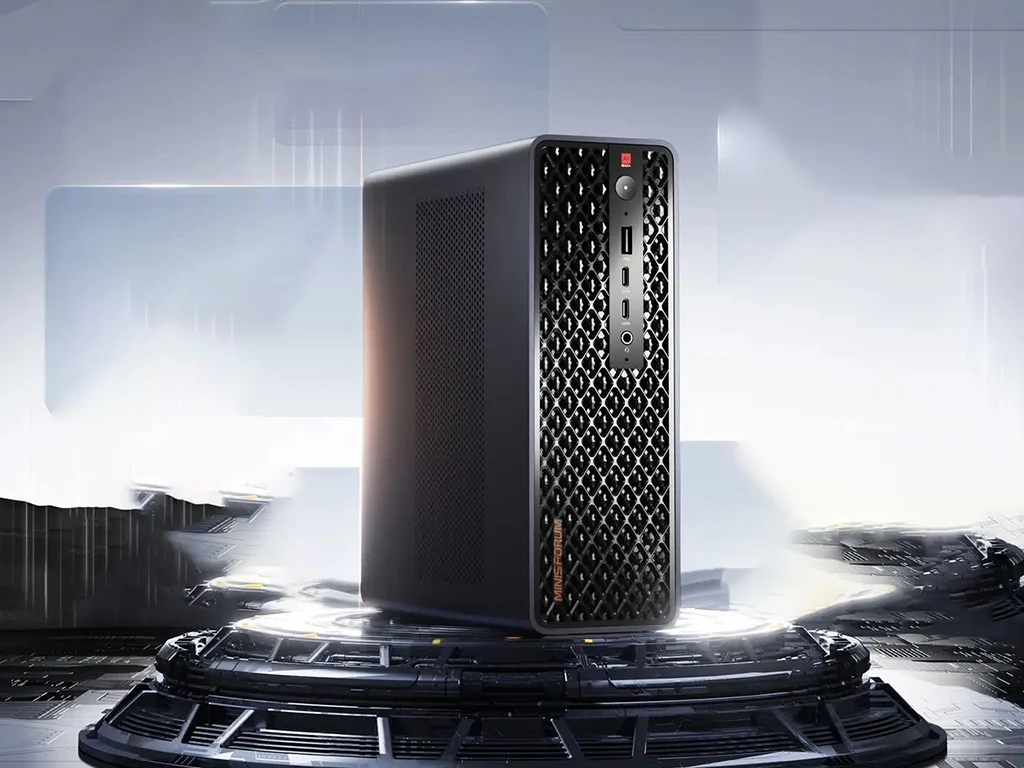
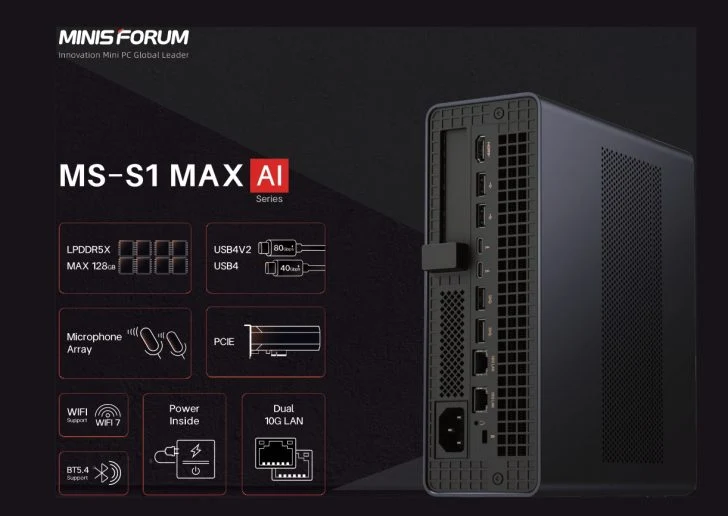
    Minisforum has recently given a sneak peek of the MS-S1 Max, a premium mini PC powered by an AMD Strix Halo APU. This system was presented at IFA 2025, where the company confirmed it’s among the first models to include two USB4 V2 ports, boasting an impressive transfer speed of 80 Gbps. This represents a twofold increase from the previous version, aligning with the capabilities of Thunderbolt 5.

    Connectivity and GPU Support

    In addition, the MS-S1 Max is equipped with two 40 Gbps USB4 ports and has the capability to support a discrete GPU through an internal PCIe x16 slot. However, it’s important to remember that any desktop GPU used must be of a small form factor (SFF) due to the limited space within the chassis (Asus SFF-ready RTX 5070 currently priced at $523.79 on Amazon).

    APU and Memory Specifications

    On the APU side, the mini PC is outfitted with the Ryzen AI Max+ 395 and the Radeon 8060S, allowing for a memory capacity of up to 128 GB of RAM. Minisforum also emphasizes the inclusion of two 10 GbE LAN ports for wired connections, along with WiFi 7 and Bluetooth 5.4 for wireless networking.

    Moreover, the system comes with a built-in 320 W power supply unit, a microphone array, and a stylish chassis. This chassis is optimized for rack use, featuring exhaust vents at the back. Minisforum has not yet disclosed the release date for the MS-S1 Max, nor the starting price, but it might be somewhere in the same price bracket as the GMKtec EVO-X2.

    Source:
    Link


  • Beelink GTR9 Pro: Affordable Mac Studio-like Ryzen Mini PC

    Beelink GTR9 Pro: Affordable Mac Studio-like Ryzen Mini PC

    Key Takeaways

    1. Beelink has launched the GTR9 Pro mini PC, featuring the AMD Strix Halo APU, available for pre-order at a discounted price of $1,985.
    2. The GTR9 Pro includes a single configuration with 128 GB of LPDDR5x RAM and 2 TB of storage, down from an original price of $2,399.
    3. The mini PC operates at a TDP of 140 W and utilizes an MSC 2.0 cooling system for efficient thermal management.
    4. It is equipped with a Radeon 8060S GPU, offering performance comparable to the Nvidia RTX 4070 Laptop, suitable for demanding AAA games.
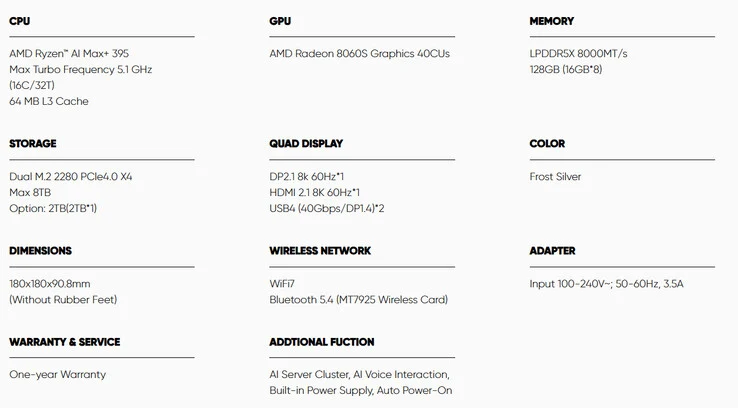
    5. The device features multiple ports, WiFi 7, Bluetooth 5.4, quad-display output support, a built-in fingerprint sensor, and an integrated 230 W PSU.


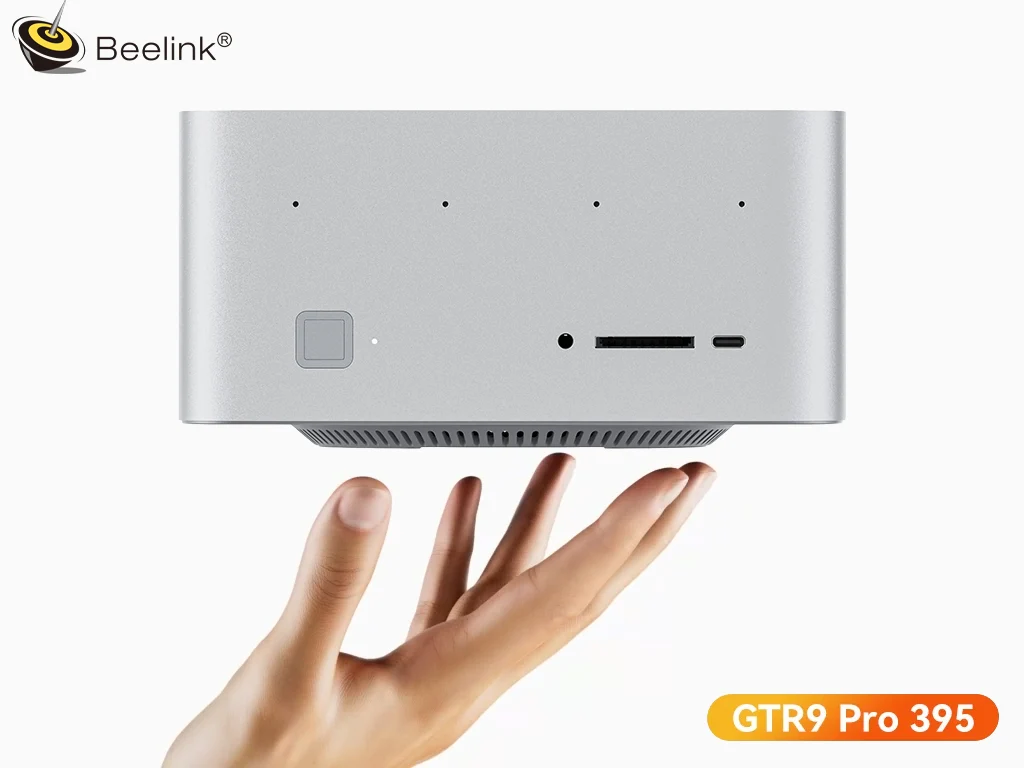
    Beelink has recently launched their latest mini PC model in China, known as the GTR9 Pro. This device is equipped with the cutting-edge AMD Strix Halo APU and is now available for consumers worldwide. Additionally, the company is providing a limited-time pre-sale discount, allowing customers to pre-order the Ryzen AI Max+ 395 for $1,985.

    Price Details

    This price represents a significant reduction from the original listing of $2,399. However, Beelink has not yet revealed when this pre-sale offer will conclude. Currently, there is only one configuration on offer, which includes 128 GB of LPDDR5x RAM along with 2 TB of storage.

    Configuration Insights

    In contrast to the GMKtec EVO-X2, there are no more affordable options for the Beelink Strix Halo mini PC at this time, especially given its Mac Studio-like aesthetic. As mentioned in our previous reports, the GTR9 Pro is said to operate at a TDP of 140 W, and it features an MSC 2.0 cooling system to maintain optimal temperatures during intense usage.

    With its Radeon 8060S, the Strix Halo mini PC proves itself as a reliable choice for gamers. Our analysis has shown that this integrated GPU competes closely with the Nvidia RTX 4070 Laptop, and Beelink states that the GTR9 Pro can effortlessly manage demanding AAA gaming titles.

    Port Features

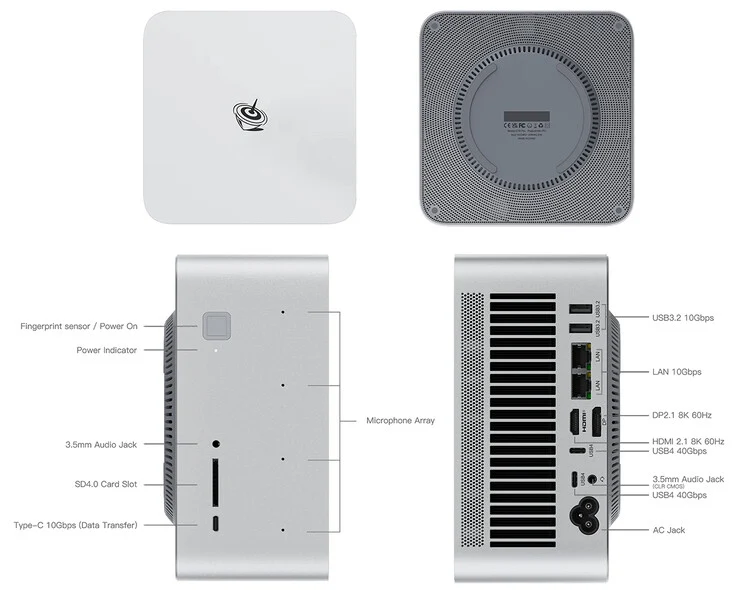
    Another standout aspect of the AMD Ryzen AI Max+ 395 mini PC is the variety of ports it offers. Specifically, the device includes the following ports:

    Additional features encompass WiFi 7, Bluetooth 5.4, support for quad-display output, up to 8 TB of storage capacity, a built-in fingerprint sensor with Windows Hello, and an integrated 230 W PSU. For more detailed information about the Beelink GTR9 Pro, check out the complete specifications sheet linked below.

    Source:
    Link


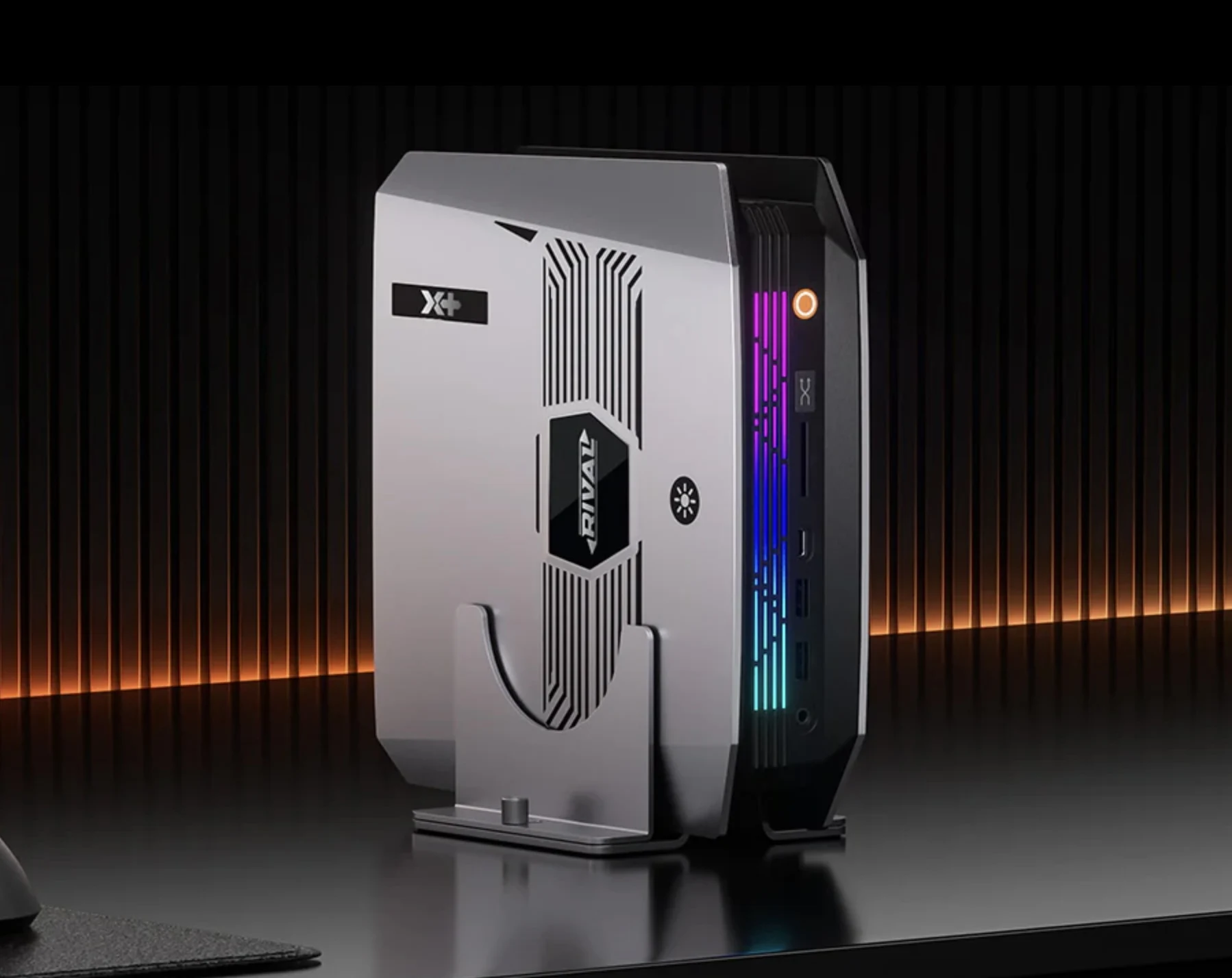
  • XPlus XRival: Affordable Gaming Mini PC with AMD Ryzen APU

    XPlus XRival: Affordable Gaming Mini PC with AMD Ryzen APU

    Key Takeaways

    1. The AMD Strix Halo series features premium APUs, including the Ryzen AI Max+ 395, which boasts 16 Zen 5 cores and 32 threads.
    2. The Strix Halo APU’s RDNA 3.5-based Radeon 8060S iGPU outperforms the RTX 4060 Laptop GPU, showcasing powerful graphics capabilities in mini PCs.
    3. The XPlus XRival mini PC includes 96 GB of LPDDR5X memory, 2 TB of storage, and offers user-upgradable M.2 slots.
    4. It has a compact design (22 x 11.9 x 5.7 cm) with a bold gaming aesthetic and features a dual-fan, triple-pipe cooling system.
    5. Priced at $1,479 with an introductory discount, the XRival mini PC is competitively priced compared to similar models, while an alternative option is the Minisforum UM880 Plus at $518.98.


    Ever since it first appeared, the AMD Strix Halo series of premium APUs has captured the admiration of mini PC fans. Featuring full Zen 5 cores alongside an impressive iGPU, the top-tier Ryzen AI Max+ 395 APU is now present in several high-end mini PCs, with the XPlus XRival being the newest member of the Strix Halo family.

    Powerful Specifications

    The AMD Ryzen AI Max+ 395 consists of 16 Zen 5 cores and 32 threads. In synthetic tests, this robust APU competes well with the Apple M3 Max and Intel Core Ultra 7 255HX in terms of multicore performance. The GPU capabilities of the Strix Halo APU are particularly outstanding, boasting an RDNA 3.5-based Radeon 8060S iGPU with 40 CUs that significantly outperforms the RTX 4060 Laptop GPU. Such exceptional performance was once unthinkable in a mini PC without dedicated GPUs, but that has changed.

    Impressive Memory and Storage

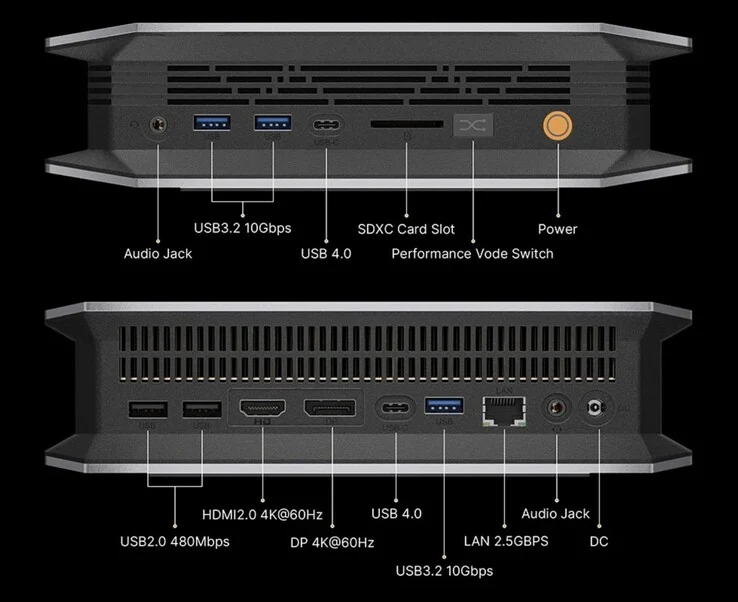
    The XPlus XRival mini PC is designed with 96 GB of LPDDR5X memory that is shared between the CPU and GPU. It also provides 2 TB of storage, which is located in an M.2 2280 slot and can be upgraded by the user. Additionally, there is another M.2 slot available. The design of the mini PC is notably bold, exuding strong gaming aesthetics, which could be seen as either a plus or a minus. The variety of ports available is impressive, including:

    Wireless features include Bluetooth 5.2 and WiFi 7. Measuring at just 22 x 11.9 x 5.7 cm, the XPlus XRival mini PC is quite compact and is outfitted with a dual-fan, triple-pipe cooling system, which appears to be quite efficient on paper. Naturally, the true performance of the Strix Halo mini PC can only be validated through real-world use.

    Competitive Pricing

    With a price tag of $1,479, which comes with an introductory discount, the XRival mini PC is reasonably priced when compared to other similar models from well-known brands. For those looking to save a bit of money while opting for an external GPU, the Minisforum UM880 Plus (currently priced at $518.98 on Amazon) is also a great option.

    Source:
    Link


  • GPD Win 5 Design Choices Spark Fan Discontent Over Win 4 Successor

    GPD Win 5 Design Choices Spark Fan Discontent Over Win 4 Successor

    Key Takeaways

    1. GPD is launching its first gaming handheld, the Win 5, at ChinaJoy 2025, featuring AMD Strix Halo processors.
    2. GPD released a nearly 30-minute video showcasing the Win 5’s design and its 80 Wh external battery pack.
    3. The Win 5 is claimed to deliver performance equivalent to an Nvidia GeForce RTX 4060 laptop, powered by the Ryzen AI Max+ 395.
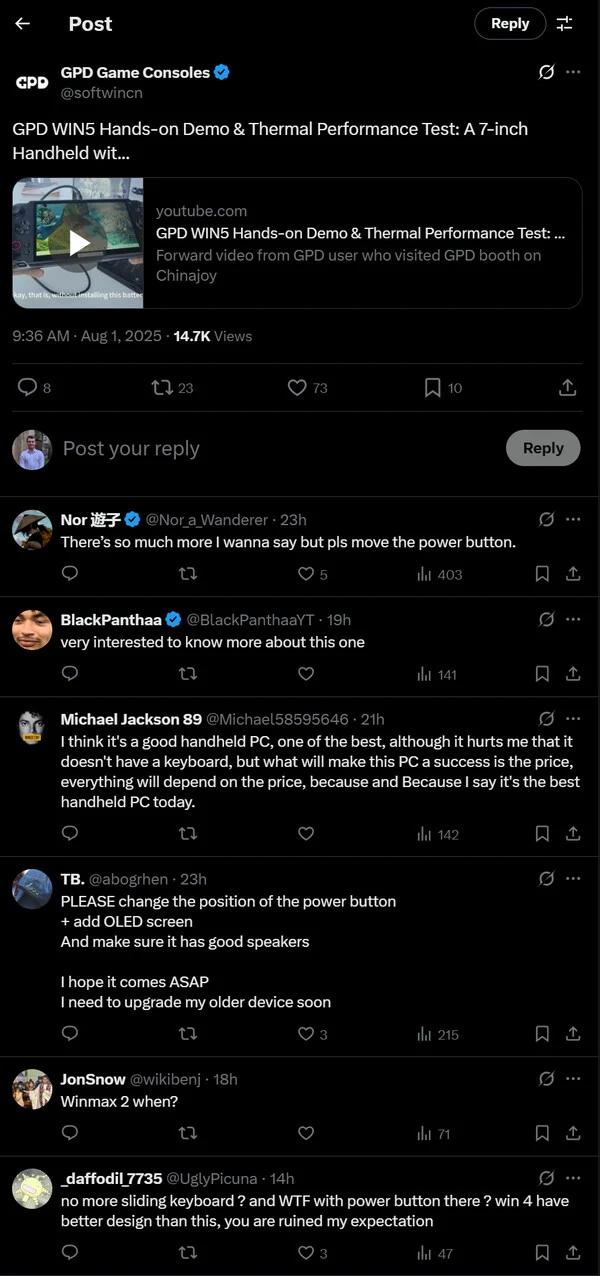
    4. Fan reactions are mixed, with some praising GPD’s innovation, while others criticize the power button’s placement and the lack of a keyboard and OLED display.
    5. GPD is comparing the Win 5 primarily with the Win Mini and Win Max 2, rather than the previous Win 4 model.


    GPD is debuting its first gaming handheld, which is powered by AMD Strix Halo processors, at the ChinaJoy 2025 exhibition in Shanghai. Coincidentally, Ayaneo is also set to showcase its rival device, the Next 2 handheld, during the same event.

    Video Release for Win 5

    In honor of the Win 5’s initial public reveal, GPD has shared nearly thirty minutes of videos on its social media platforms. The video, which is embedded below, explores the design of the Win 5 and highlights the device’s 80 Wh external battery pack. Interestingly, GPD has chosen to compare the Win 5 with the Win Mini and Win Max 2 (currently priced at $1,599 on Amazon) instead of the Win 4.

    Performance Highlights

    Moreover, the company is emphasizing the performance potential of the Ryzen AI Max+ 395. GPD claims that the Win 5 is a 7-inch gaming handheld that delivers performance levels equivalent to an Nvidia GeForce RTX 4060 laptop. Towards the end of the video, GPD notes that running the Ryzen AI Max+ 395 at 70 W creates several hotspots, with some surface temperatures exceeding 48 °C in certain areas.

    Mixed Reactions from Fans

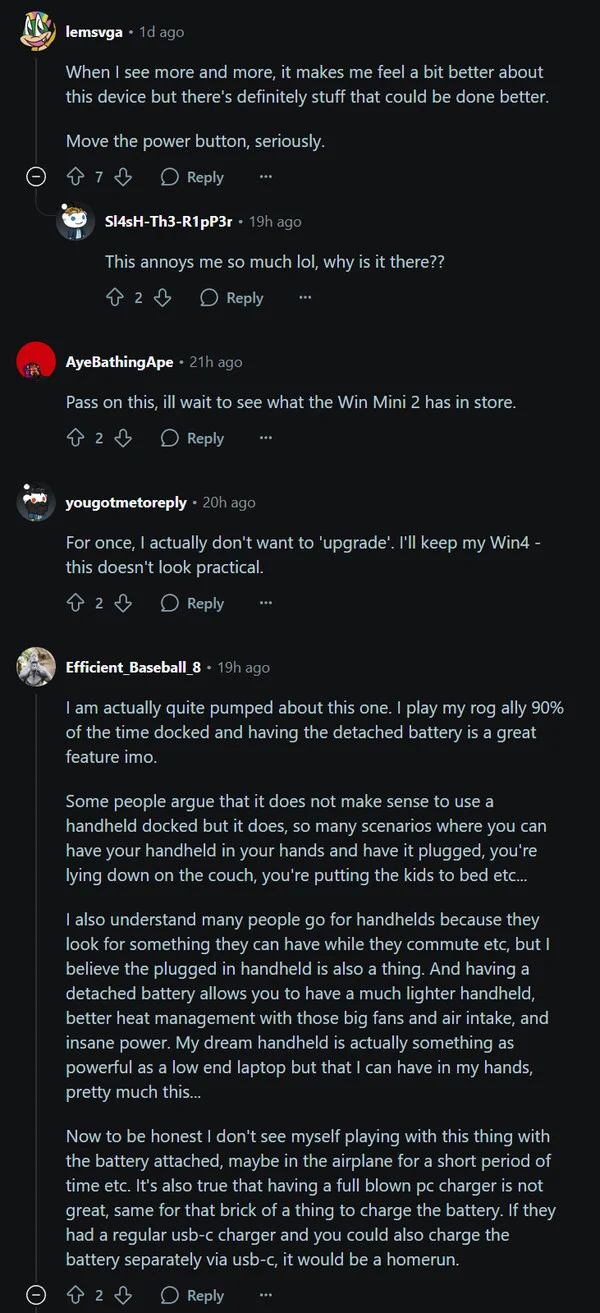
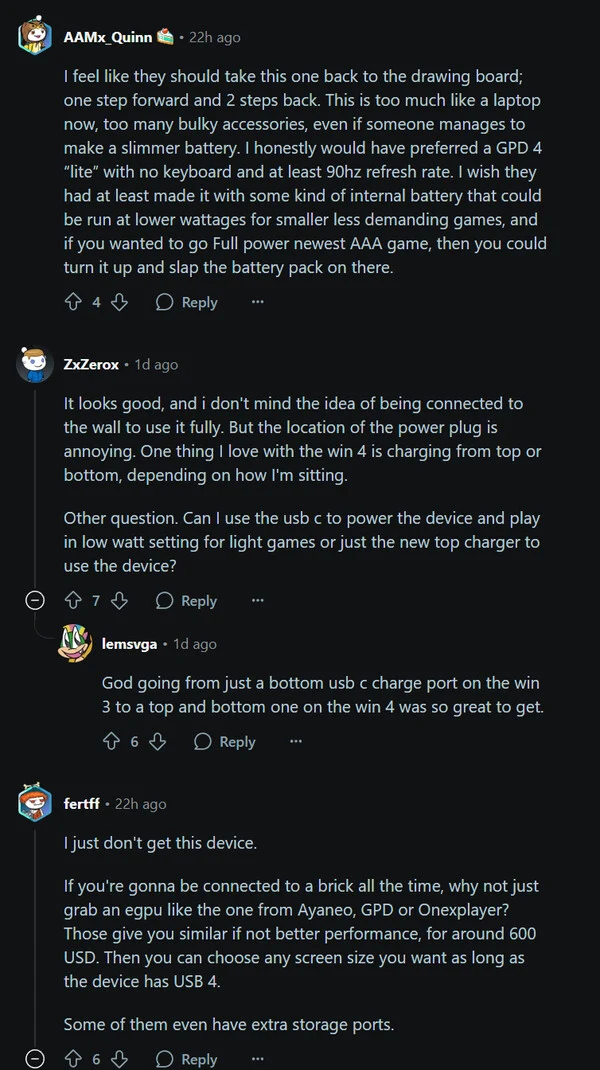
    As of now, feedback from fans has been varied. On one side, some fans seem to commend GPD for pushing the boundaries of what a gaming handheld can be. Conversely, many have expressed concerns regarding the placement of the power button, which seems to be located beneath where a user’s left hand would typically rest. Additionally, the absence of a keyboard and an OLED display have also been poorly received by members of the gaming handheld community.

    Source:
    Link


  • GPD Win 5 Design Unveiled After Ayaneo AMD Strix Halo Launch

    GPD Win 5 Design Unveiled After Ayaneo AMD Strix Halo Launch

    Key Takeaways

    1. The GPD Win 5 debuted as the only gaming handheld powered by AMD’s Strix Halo, followed by the introduction of Ayaneo’s Next 2 as a competitor.
    2. The external battery pack for the Win 5 connects through a unique port and is secured by two screw-in connectors for stability.
    3. GPD has designed a space between the external battery pack and the handheld to prevent obstruction of air intake, with an additional air intake added at the bottom.
    4. The external battery pack weighs approximately 343.5 g and the Win 5 itself weighs 556.5 g, making it 7% lighter than the Win 4.
    5. The total weight of the Win 5 with the battery attached will be around 900 g.


    The GPD Win 5 was the only gaming handheld powered by AMD’s Strix Halo when it debuted last week. Now, Ayaneo has introduced the Next 2 as a competing option, which includes all the input/output and cooling features of a Strix Halo mini-PC, similar to the GMKtec EVO-X2 (currently priced at $1,499.99 on Amazon). Just a day later, GPD has shared more insights about the Win 5 ahead of its complete launch next month at ChinaJoy 2025 in Shanghai.

    Battery Pack Details

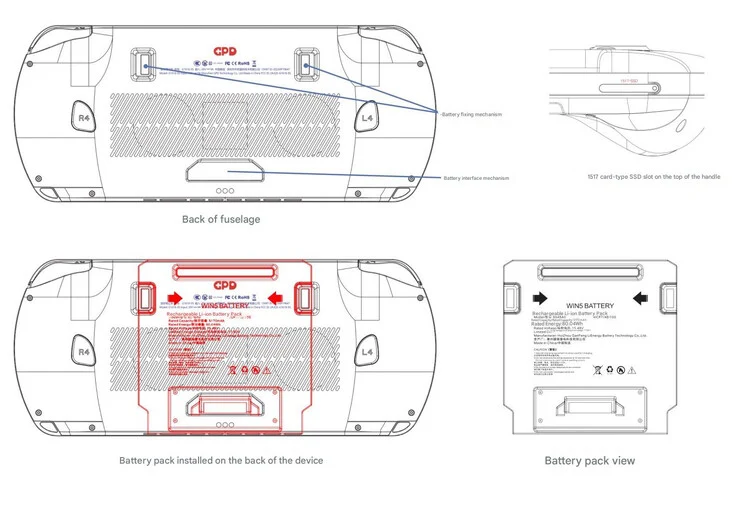
    Cary Golomb shared new details on X regarding the external battery pack for the gaming handheld. The image below illustrates how the battery pack connects through what seems to be a unique port located beneath the device’s rear fan grille and air intake. Furthermore, the battery pack is secured by two separate connectors, and these connectors can be screwed in for added stability.

    Air Intake Concerns

    At this point, it is still uncertain how much the external battery pack obstructs the Win 5’s air intake. However, Golomb hints that GPD has designed a certain amount of space between the battery pack and the handheld when they are connected. Additionally, it seems like GPD has added a second air intake on the bottom edge of the device as well.

    Weight Specifications

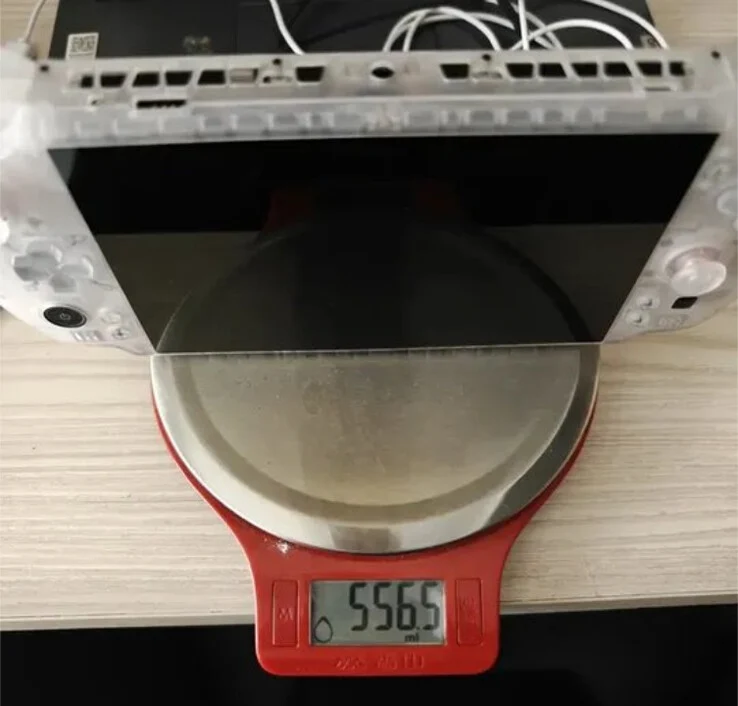
    The external battery pack is anticipated to weigh around 343.5 g, mainly due to its 80 Wh capacity. In comparison, the Win 5 itself weighs in at 556.5 g without the battery, making it roughly 4% heavier than the Nintendo Switch 2. Coincidentally, a weight of 556.5 g means the Win 5 is about 7% lighter than the Win 4, even with its 7-inch screen. However, the total weight will increase to around 900 g when the battery is attached. For complete specifications on the GPD Win 5 device, please refer to our previous article.

    Source:
    Link


  • GPD Win 5: Official Reveal of First AMD Strix Halo Handheld

    GPD Win 5: Official Reveal of First AMD Strix Halo Handheld

    Key Takeaways

    1. GPD has updated its gaming handhelds with AMD’s Strix Point series, featuring the Ryzen AI 9 HX 370 APU in models like the Win 4 and Win Max 2.
    2. The Win Mini 2025 shows significant changes from its 2024 model, including a larger casing and improved cooling features, priced at $1,509.99.
    3. GPD is developing new products using AMD’s Strix Halo architecture, including the Ryzen AI Max+ 395 and Radeon 8060S GPU.
    4. The upcoming Win 5 will feature AMD’s Zen 5 and RDNA 3+ APU, with a potential design change that may eliminate the built-in keyboard and sliding display.
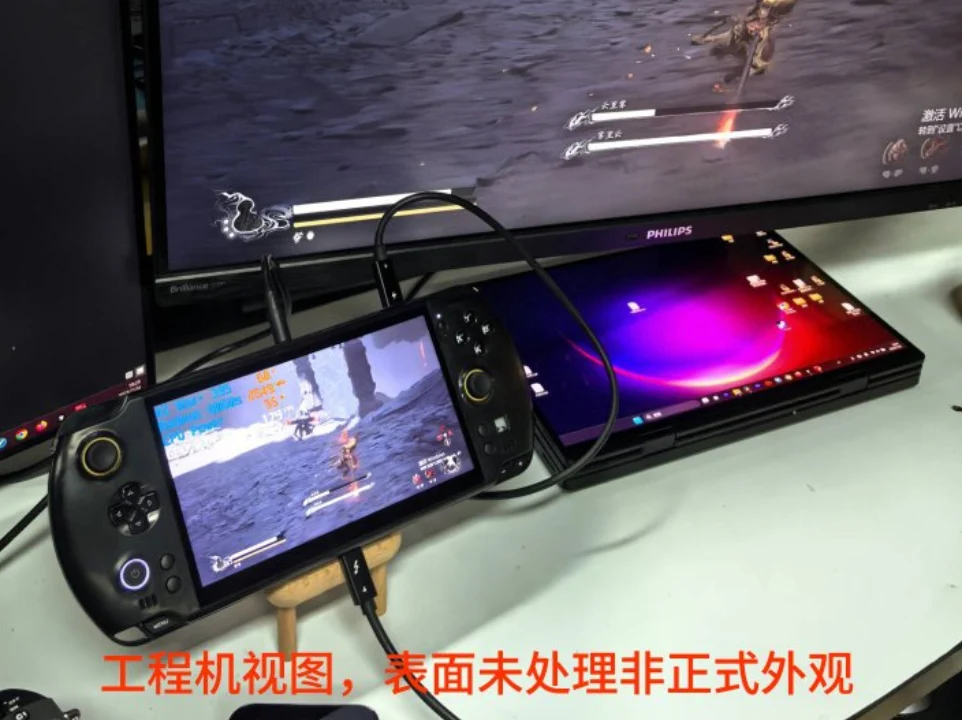
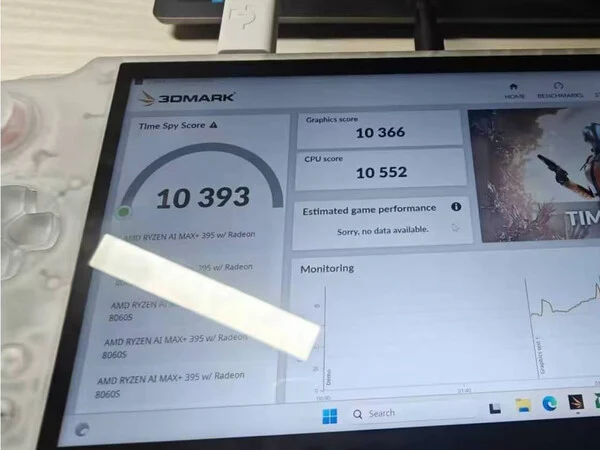
    5. GPD demonstrated the Win 5 running Black Myth: Wukong at 169-210 FPS with a power draw of 55-61 watts and a temperature of 64-66 degrees Celsius, with an official reveal set for ChinaJoy 2025.


    GPD has made updates to nearly all of its latest gaming handhelds by incorporating AMD’s Strix Point series, although they haven’t introduced a lot of new models recently. For example, the Win 4 and Win Max 2 are equipped with AMD’s Ryzen AI 9 HX 370 APU but maintain a similar look to earlier versions. In contrast, the Win Mini 2025 (currently priced at $1,509.99 on Amazon) shows more significant changes from its 2024 model, including a larger casing and better cooling features.

    New Developments on the Horizon

    Finally, GPD has announced that it is working on new products that are almost ready to be revealed. Recent speculations indicated that the upcoming device would be GPD’s first to utilize AMD’s Strix Halo architecture. As demonstrated in the video below, GPD has opted for the Ryzen AI Max+ 395 along with its Radeon 8060S integrated GPU, which is typically seen in high-end mini-PCs.

    Win 5 and its Features

    Additionally, GPD has confirmed that the next iteration of the Win 4 will be called the Win 5, which will include AMD’s powerful Zen 5 and RDNA 3+ based APU. For now, GPD is keeping the design of the Win 5 somewhat hidden. However, a previous leak suggested that the Win 5 might forgo the built-in keyboard and sliding display of the Win 4 while still keeping the PlayStation Portable aesthetic. Though GPD has not fully disclosed the Win 5’s design yet, it has hinted at its performance and thermal capabilities.

    Specifically, the company showcased the Win 5 running the game Black Myth: Wukong at approximately 169-210 FPS while drawing 55-61 watts and maintaining a temperature of around 64-66 degrees Celsius. Based on our tests, it’s likely that GPD set the game to 720p resolution with low graphics settings and Temporal Super Resolution (TSR) activated. That said, we do not have details on the specific settings GPD employed to achieve these frame rates or how aggressively the system’s fan was working to keep the temperature below 66 degrees. GPD plans to officially present the Win 5 at ChinaJoy 2025, which will take place from August 1 to August 4 in Shanghai.

    Source:
    Link