
Key Takeaways
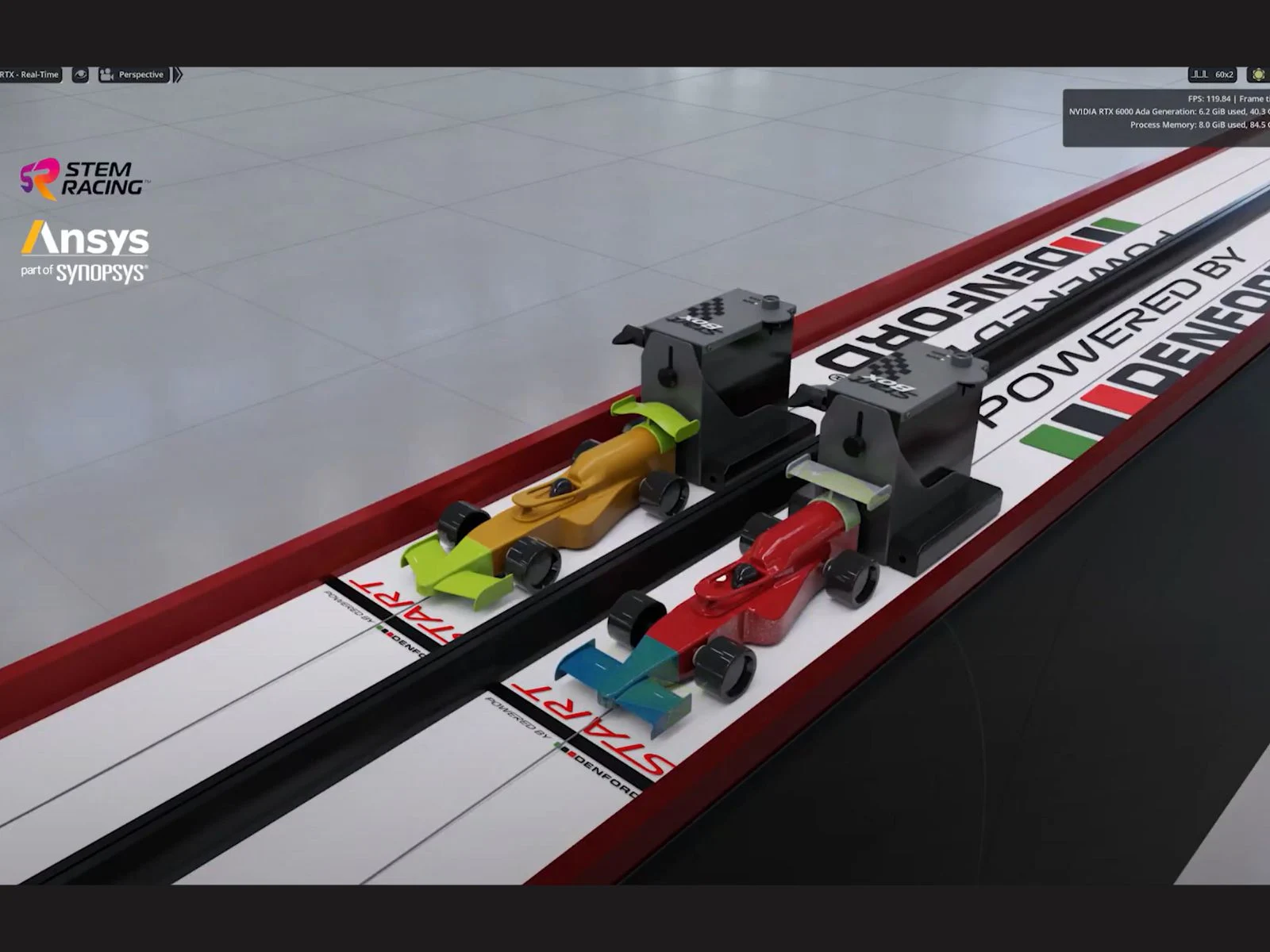
1. Collaboration for Innovation: Synopsys and Nvidia have partnered to create a digital twin racetrack for STEM Racing, combining Ansys Discovery and Nvidia’s Omniverse.
2. Cost and Time Efficiency: The digital platform allows students to conduct virtual test laps, reducing the need for expensive and time-consuming physical prototypes.
3. Engaging Learning Experience: Demonstrations at the World Finals let participants modify vehicle components and see real-time effects on performance, enhancing engagement.
4. Global Educational Impact: Synopsys supports over 400,000 students in 65 countries with free software and training, making advanced simulation tools more accessible.
5. Advancement in Engineering Education: The digital platform promotes data-driven design validation, preparing students for careers in next-gen engineering and aligning education with industry practices.
Synopsys, a well-known American technology firm, has teamed up with Nvidia through its Ansys division to launch a cutting-edge digital twin racetrack for STEM Racing. This innovative platform merges Ansys Discovery with Nvidia’s Omniverse, enabling students to create, evaluate, and fine-tune miniature F1-style vehicles entirely within a virtual setting. The complete launch is scheduled for the STEM Racing season of 2025–2026, while a basic version was showcased at the Aramco STEM Racing World Finals in Singapore from September 27 to October 2.
Transforming Prototyping
In the past, student teams had to construct and perfect physical models, which was often expensive and required a lot of time. However, with the new digital platform, they can conduct countless virtual test laps on a replica of the actual racetrack. By simulating factors such as airflow, drag, and downforce, students can access the same aerodynamic knowledge that professionals in motorsport and aerospace fields use.
Engaging Demonstrations
During the World Finals, a simplified demonstration allowed younger participants to change components like spoilers and car bodies, instantly observing how these alterations affected speed and overall performance. More advanced teams can upload intricate designs into Ansys Discovery for Computational Fluid Dynamics (CFD) analysis, with the outcomes visualized in Omniverse.
As the exclusive global CFD partner for STEM Racing, Synopsys is already aiding over 400,000 students in 65 countries by providing free software, training, and support. This new project further enhances this initiative by reducing barriers to advanced simulation and high-performance computing, creating a scalable method to introduce engineering tools into classrooms around the globe.
A New Era of Learning
Andrew Denford, who is the founder and chairman of STEM Racing, referred to digital twins as a significant advancement for student innovation and performance. Tim Costa, the GM of industrial and computational engineering at Nvidia, underscored how Omniverse can assist in optimizing cars for specific track conditions. Synopsys has emphasized that the platform incorporates “AI-driven capabilities” to equip students for careers in next-gen engineering.
This partnership signifies a change in the approach to design validation in STEM Racing. By shifting testing into the digital domain, Synopsys and Nvidia are establishing a system that is quicker, more accessible, and driven by data. For students, this translates to learning with tools that are influencing real-world industries, and for the competition, it signifies a significant advancement in the future of engineering education.
Synopsys’
Source:
Link

Leave a Reply