

Key Takeaways
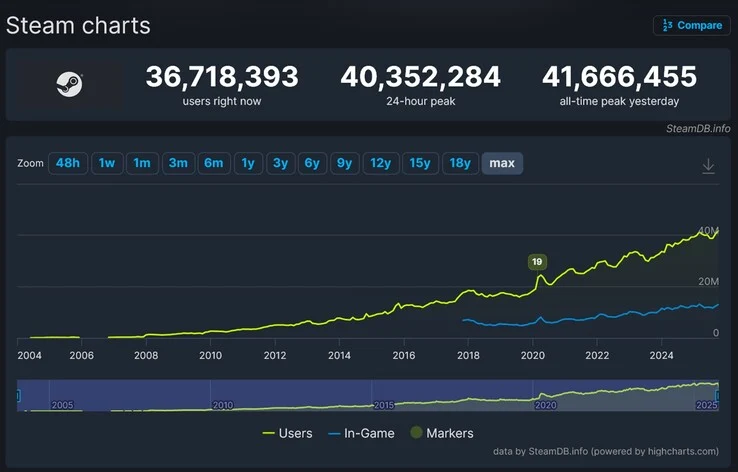
1. Steam reached over 41 million concurrent players, driven by popular game releases like Battlefield 6.
2. Launched in 2003, Steam has evolved from a platform for Valve’s games to a diverse marketplace for third-party titles and indie developers.
3. Long-standing games like Counter-Strike 2 and Dota 2 attract millions of daily players, contributing to Steam’s ongoing popularity.
4. The platform fosters a strong community through discussion forums, Steam Workshop for mods, and a review system for games.
5. Despite challenges such as criticism over moderation and competition from subscription services, Steam remains dominant in the PC gaming market.
Despite the rivalry from platforms like the Epic Games Store and various subscription models, Steam’s grip on the PC gaming market remains unshakeable. On Sunday, October 12th, Valve’s gaming platform achieved another milestone, reaching a peak of over 41 million concurrent players. This surge was largely driven by the release of popular titles such as Battlefield 6, which drew in gamers in droves.
The Evolution of Steam
Launched in 2003, Steam aimed to simplify the process of downloading, playing, and updating Valve’s games. A few years later, the introduction of third-party titles opened doors for significant growth. By 2008, SteamDB recorded that the platform had already welcomed its first million players. The COVID-19 pandemic further boosted its popularity, pushing the player count past 24 million in 2020, and by 2025, it had reached over 40 million.
Daily Engagement and New Releases
Long-standing games like Counter-Strike 2 and Dota 2 collectively attract over 2 million players each day. The recent launch of Battlefield 6 likely played a pivotal role in breaking the latest record, achieving a player count of over 747,000 on its release day. Moreover, the influx of indie developers into the marketplace helps ensure that Steam’s library remains diverse and appealing.
One key aspect of Steam’s thriving success is its ability to cultivate a strong community. Each game features its own discussion forum where players can exchange strategies or seek help with technical challenges. Some games also include Steam Workshop, making it easier for users to access mods and user-generated content. Its review and rating system, for better or worse, has become a popular method for gauging how new games are received.
Challenges and Market Dynamics
Valve does face criticism, particularly regarding the lack of moderation in forums and the presence of fake reviews. Despite this, it has bowed to demands from payment processors to restrict access to games with adult themes. Still, the introduction of subscription services like Xbox Game Pass has not dented Steam’s player numbers. Recent mass cancellations following a price hike of Microsoft’s service are not expected to affect Steam significantly. Many dedicated PC gamers prefer to build their own library of games, even if it means dealing with DRM restrictions.
Source:
Link
Leave a Reply