
Key Takeaways
1. Spotify Lossless audio is not truly lossless, as revealed by The Headphone Show’s investigation.
2. Tidal and Qobuz provide bit-perfect output, while Spotify fails to deliver the same unaltered file quality.
3. Spotify’s audio quality may be compromised on Windows due to lack of direct DAC access, routing audio through the operating system.
4. Spotify is developing support for WASAPI Exclusive Mode playback to improve audio output quality.
5. Until improvements are made, users can use third-party tools like FlexASIO and VB-CABLE as temporary solutions.
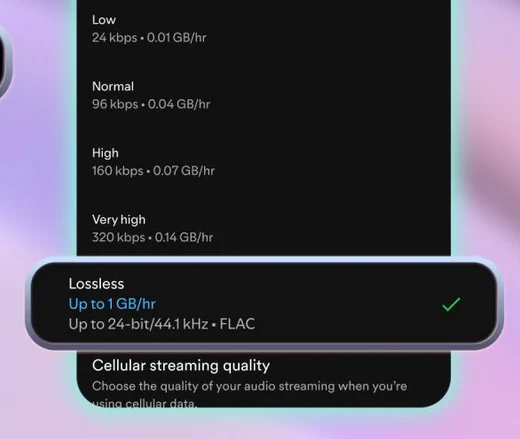
Spotify Lossless has been finally revealed after many years of delays, rumors, and speculation. However, a YouTuber known as The Headphone Show conducted a thorough investigation into the service and discovered that it is not as lossless as it claims to be. The testing involved a FLAC track sourced from a credible platform, which was compared against Tidal, Qobuz, and Spotify’s lossless audio.
Testing Equipment
On the technical side, the setup featured an APx555B Series Audio Analyser to evaluate the inputs, which were connected through a Holo Audio Red DAC and analyzed for accuracy using DeltaWave. Tidal and Qobuz delivered bit-perfect output, meaning they streamed the lossless file exactly as it is, without compression. In contrast, Spotify Lossless failed to provide the same exact file in its unaltered state.
Potential Issues with Spotify
However, it’s possible that the issue isn’t solely Spotify’s responsibility. On Windows systems, Spotify lacks a direct link to a DAC, resulting in all audio passing through the operating system, which might lead to loss of signal quality. Unlike Spotify, Tidal and Qobuz can send audio straight to a DAC, but Spotify currently does not have this capability, at least officially.
In a previous Reddit AMA, a manager from the Spotify community mentioned that they are developing support for WASAPI (Windows Audio Session API) Exclusive Mode playback. This feature would allow apps like Spotify to have direct access to audio output devices, such as a DAC.
Future Improvements
While there’s no specific timeline for when this feature will become available, it’s reassuring to know that work is underway. One can only wish it arrives more quickly than lossless audio itself. For the time being, third-party tools like FlexASIO and VB-CABLE Virtual Audio Device can serve as temporary solutions until Spotify improves its capabilities.
Source:
Link


Leave a Reply