
Key Takeaways
1. Titan, one of Saturn’s moons, likely formed from a violent impact involving a larger moon and a smaller celestial body.
2. Some Saturnian moons may have formed over 4.5 billion years ago, while others could be captured asteroids.
3. The Cassini-Huygens probe revealed a denser core in Saturn, possibly linked to an ancient moon.
4. Saturn’s iconic rings may have formed from impacts involving ancient moons, suggesting their development occurred only a few hundred million years ago.
5. The upcoming Dragonfly probe, set to land on Titan in 2034, aims to confirm these research theories.
The beginnings of many moons in our solar system remain unclear. However, a recent study suggests that Titan, one of the 274 moons orbiting Saturn, emerged from a violent impact.
Ancient Moons and Asteroids
Among the moons of Saturn, some may have formed around 4.5 billion years ago, coinciding with Saturn’s own creation, while others might be small asteroids that were pulled in by the planet’s gravity. The Cassini-Huygens probe has shown that Saturn has a denser mass at its core. Scientists believe this is linked to an ancient moon that once orbited the gas giant.
Collision and Formation
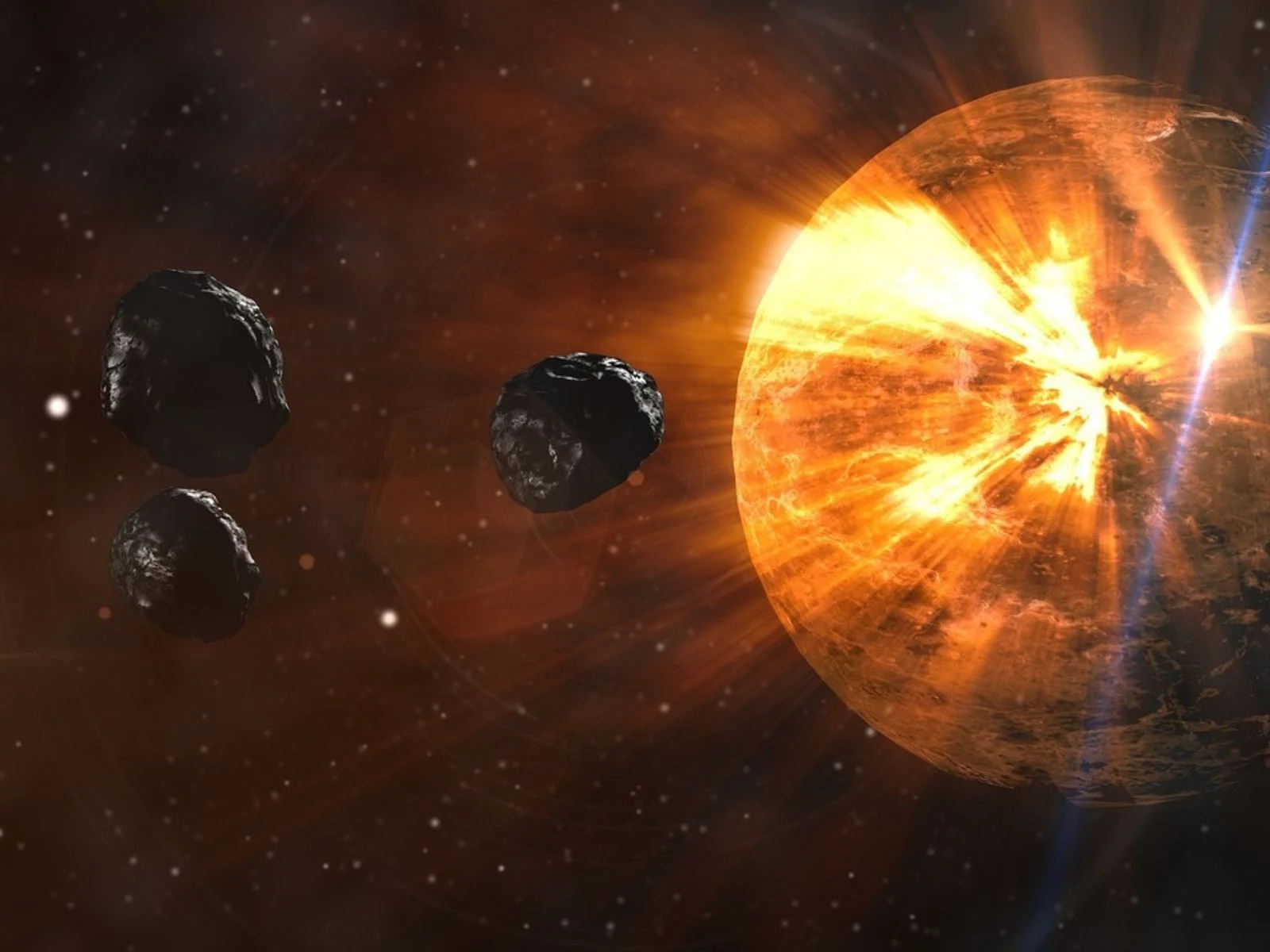
By running simulations, researchers found that Titan likely came into existence after a collision between this larger moon and a smaller celestial body many hundreds of millions of years ago. Interestingly, Hyperion seems to have experienced a similar event around the same timeframe.
Saturn’s Rings and Future Exploration
Researchers have also studied Saturn’s iconic rings, which attract many visitors, and their findings indicate that these rings could have been formed from several impacts involving ancient moons. Titan’s unusual orbit may be the cause of this phenomenon, suggesting that Saturn’s rings could have developed only a few hundred million years back. To confirm these theories, we will need to await the arrival of the Dragonfly probe, set to land on Titan in 2034.
Source:
Link
Leave a Reply