
Key Takeaways
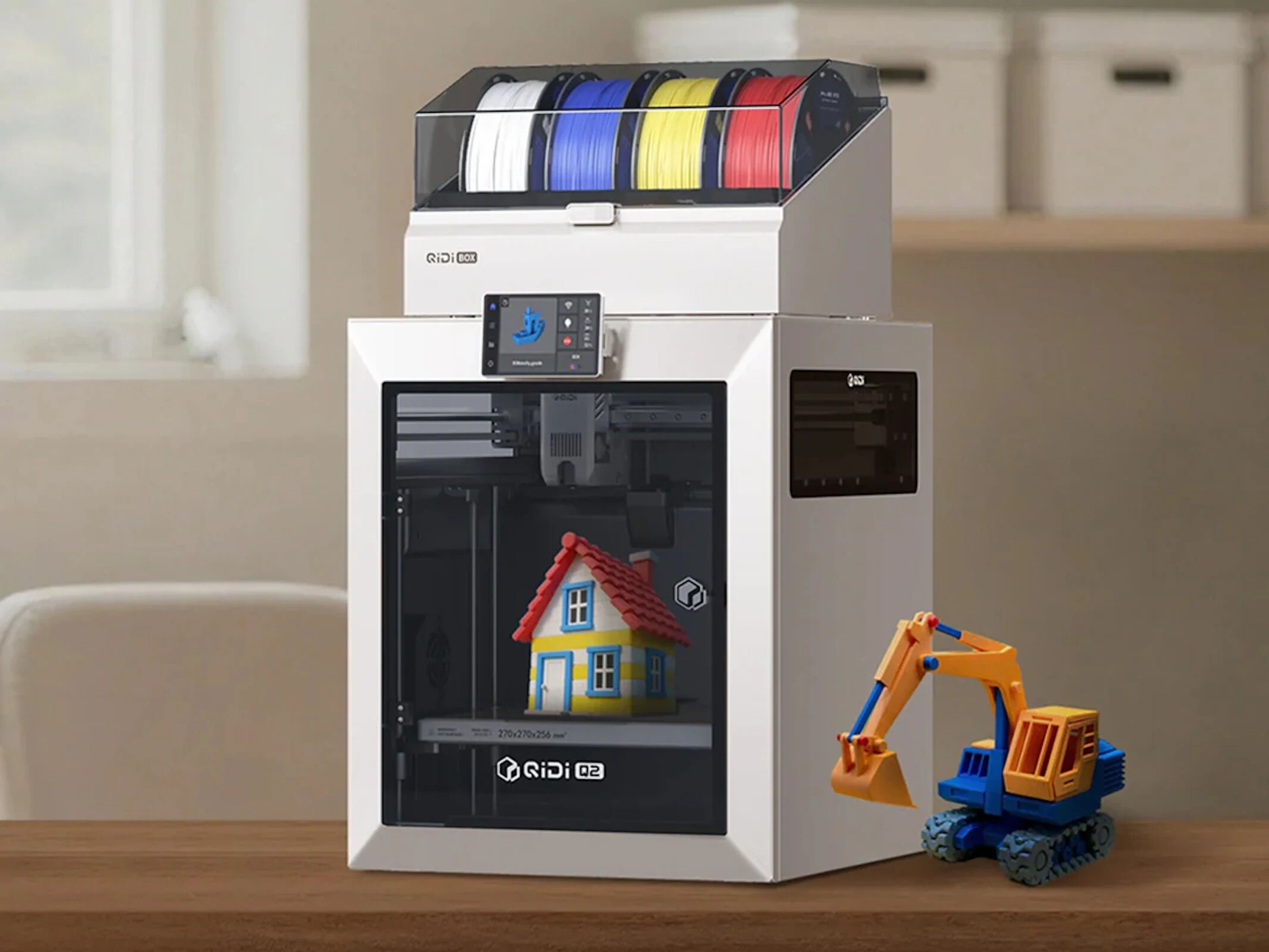
1. Qidi’s Q2 3D printer is priced at $549, with a combo version available that includes the Qidi Box for multi-color printing.
2. The Q2 has a build volume of 270 x 270 x 256 mm and can heat up to 65°C (149°F), suitable for various filament materials.
3. The printer can connect with up to four Qidi Boxes for simultaneous multi-color printing, but requires filament changes when switching materials.
4. It features an advanced leveling system that uses the nozzle as a sensor for precision, along with a high-tooth-density belt to reduce vibrations.
5. The Q2’s enclosed structure includes a three-stage air filtration system with activated carbon for effective air quality management.
Qidi has broadened its range of 3D printers with the introduction of the Q2. The standard model is priced at $549 on Amazon, while a more expensive combo version includes the Qidi Box. This box allows the printer to operate with up to four colors simultaneously. Not only does it provide storage for filaments, but it also keeps them at temperatures reaching 65°C (149°F). The Q2 can connect to as many as four Qidi Boxes, giving users the ability to print with multiple filaments during a single job. However, because the printer is equipped with just one print head, users will need to cut the filament when changing colors or materials.
Impressive Build Volume and Heating
The Q2 features a chamber with a build volume measuring 270 x 270 x 256 mm (10.63 x 10.63 x 10.08 in) and is capable of heating up to 65°C (149°F). Its enclosed structure allows for effective air filtration through a three-stage filter system that incorporates activated carbon. As per the official specifications, this 3D printer is compatible with a wide range of filament materials, such as PLA, ABS, PETG, and carbon fiber-reinforced polymer.
Advanced Leveling System
One notable aspect of the Q2 is its precision in creating the first layers. Qidi claims that the printer employs a novel leveling system where the nozzle functions as the sensor. Moreover, a unique belt with a higher tooth density reduces vibrations, leading to improved accuracy during printing.
Source:
Link
Leave a Reply