
Key Takeaways
1. Nissan is extending its partnership with AI expert Monolith for three more years to improve automotive development and reduce costly physical tests.
2. The AI system, named “Re:Nissan,” is crucial to Nissan’s global strategy and was first used in the development of the all-electric Nissan Leaf.
3. Monolith’s AI platform uses extensive historical data to predict outcomes of physical tests, allowing engineers to focus on problem-solving and decision-making.
4. The collaboration has already achieved a 17% reduction in physical tests for specific applications, with potential to cut testing time by up to 50% for the European vehicle lineup.
5. Monolith’s AI tools, including features like “Next Test Recommender” and “Anomaly Detector,” enhance product development while maintaining vehicle quality and performance.
Nissan is looking to speed up its automotive development significantly. To achieve this goal, the Japanese car maker is broadening its partnership with AI expert Monolith, extending their collaboration for an additional three years. The main aim of this partnership is to overhaul the entire development process and decrease the number of costly physical tests. The specialized AI technology is meant to assist Nissan in adopting innovations and producing new vehicles more efficiently and swiftly than ever.
AI as a Strategic Asset
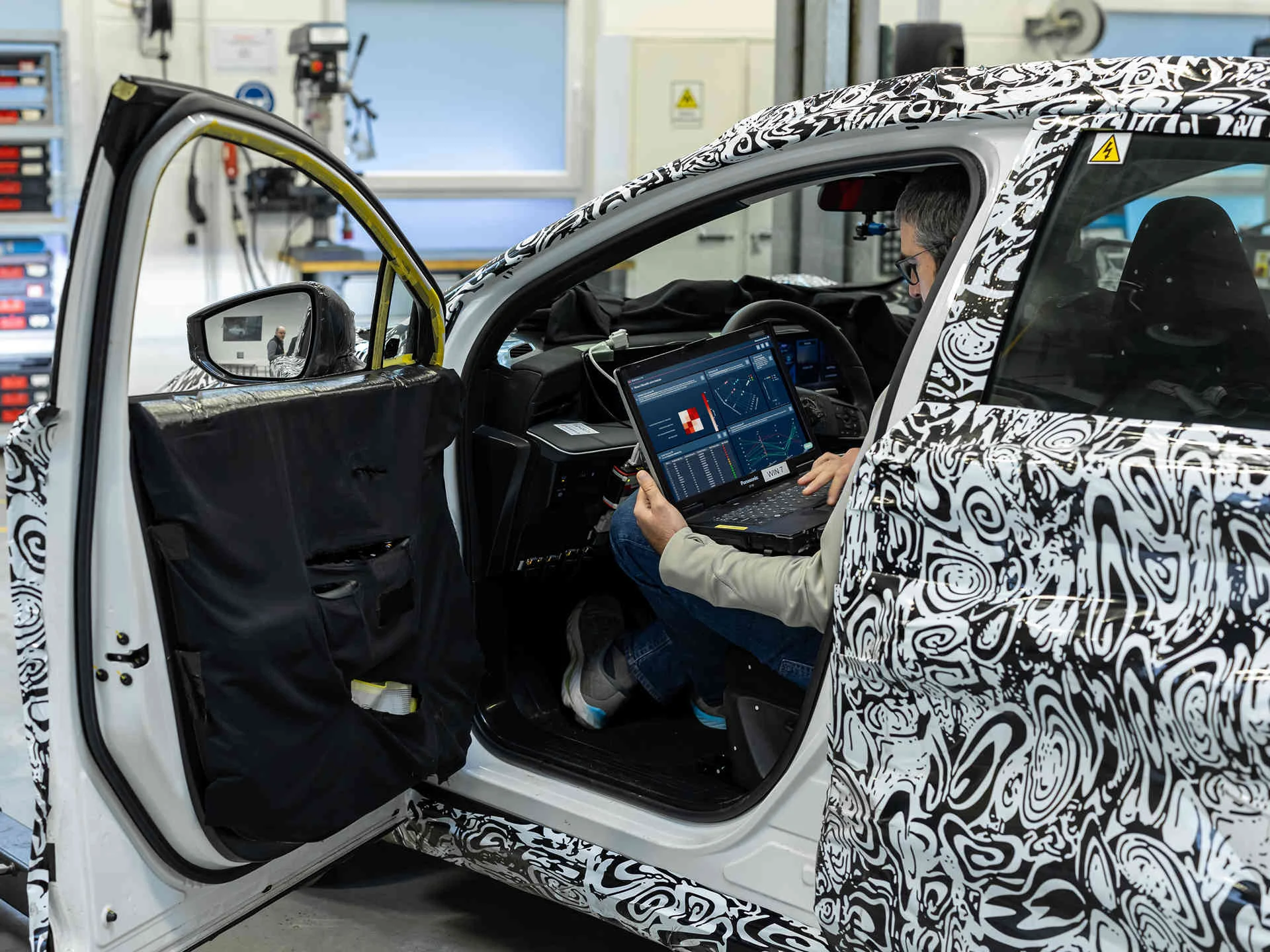
The Japanese automaker considers its AI system, created in partnership with Monolith, as a crucial part of its global business strategy. Named “Re:Nissan”, Nissan initially implemented Monolith’s technology during the creation of the new all-electric Nissan Leaf, using it for AI-based validation of vehicle tests. Nissan intends to apply this AI software in future models for the European market.
Advanced Data Utilization
Monolith’s technology goes beyond being just a simulation tool. The AI platform leverages an extensive data repository, which includes test data from vehicles gathered over ninety years of Nissan’s research and development. Engineers at the Nissan Technical Centre Europe located in Cranfield, UK, are already utilizing this software. The AI is crafted to accurately predict the outcomes of real-world physical tests. This decreases the dependence on physical prototypes, hence optimizing the whole process. As per Nissan’s statement, this enables engineers to concentrate more on practical problem-solving and making final decisions rather than repeating standard tests.
A Strategic Decision
The choice to prolong the project for three years wasn’t made casually. It comes after a successful collaboration on a specific application: during the pilot project, the AI technology identified the best torque range for screwing. The engineers were impressed with the AI software’s ability to reliably pinpoint which additional tests still required manual execution by specialists. Physical tests in this area were cut down by nearly 17% compared to traditional procedures without AI.
Nissan believes this 17% reduction is just the start. The company estimates that if the same AI method were used for the entire development of its European vehicle lineup, testing time could potentially be slashed by up to half. Emma Deutsch, Director at the Nissan Technical Centre Europe, confirmed that the machine learning models lessen reliance on prototypes. AI is set to play a pivotal role in delivering the next generation of vehicles to customers more quickly.
Enhancing Product Development
Dr. Richard Ahlfeld, CEO and founder of Monolith, states that these AI tools enhance product development across all sectors. The Monolith platform includes features like a “Next Test Recommender” and an “Anomaly Detector”. This allows development cycles to be reduced by fifty percent without sacrificing the quality and performance of the vehicles.
Source:
Link
Leave a Reply