
Key Takeaways
1. Ceres is the largest object in the asteroid belt between Mars and Jupiter, but current conditions are not suitable for life.
2. Previous research indicated the presence of brine and organic molecules on Ceres, suggesting it may have supported life 2–2.5 billion years ago.
3. A recent study used models to show that Ceres could have had a consistent supply of hot water with dissolved gases due to radioactive decay.
4. Hot water interactions in Ceres’ past could have created environments rich in chemical energy, similar to those on Earth.
5. While there’s no direct evidence of life on Ceres, findings raise the possibility that similar celestial bodies may have experienced life-supporting conditions.
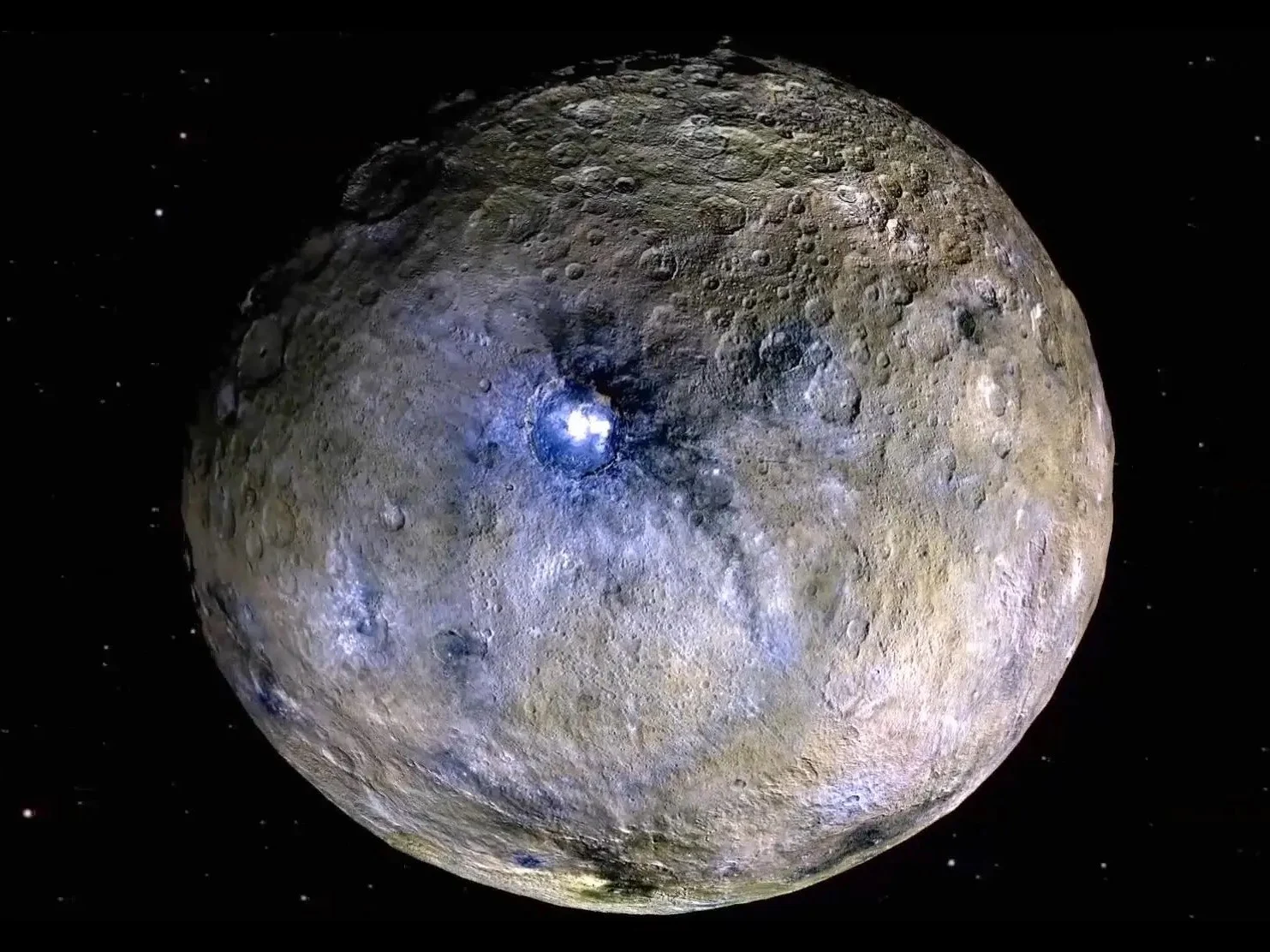
Ceres is a dwarf planet found in the asteroid belt that lies between Mars and Jupiter. It is the largest object in this area. While current conditions indicate that Ceres is not suitable for life, studies suggest that about 2–2.5 billion years ago, it might have been different.
Previous Research Findings
Earlier investigations showed that there was a source of brine beneath the surface that provided hot liquid to Ceres. Additionally, scientists have found organic molecules on the dwarf planet. These discoveries were made by the now-retired Dawn mission. Such findings hint at a time when Ceres could have supported life.
New Insights from Recent Study
A recently published study offers more backing for the earlier findings. The researchers developed thermal and chemical models to replicate the internal conditions of Ceres over time. They identified a process that is thought to be common throughout our solar system. Their results imply that Ceres could have had a consistent supply of hot water rich in dissolved gases. The heat was believed to stem from radioactive decay occurring within the rocky interior of the dwarf planet.
On our planet, when hot water from deep below merges with the ocean, it often creates a rich environment for microorganisms — a source of chemical energy. Therefore, understanding whether Ceres’ ocean once had hydrothermal fluids could have significant implications, as explained by Sam Courville, the lead author of the study.
Life on Ceres?
Despite these findings, no research to date has provided evidence that Ceres ever supported life. However, these results lead scientists to consider that other celestial bodies similar to Ceres might have also experienced conditions suitable for life at some point.
Source:
Link
Leave a Reply