
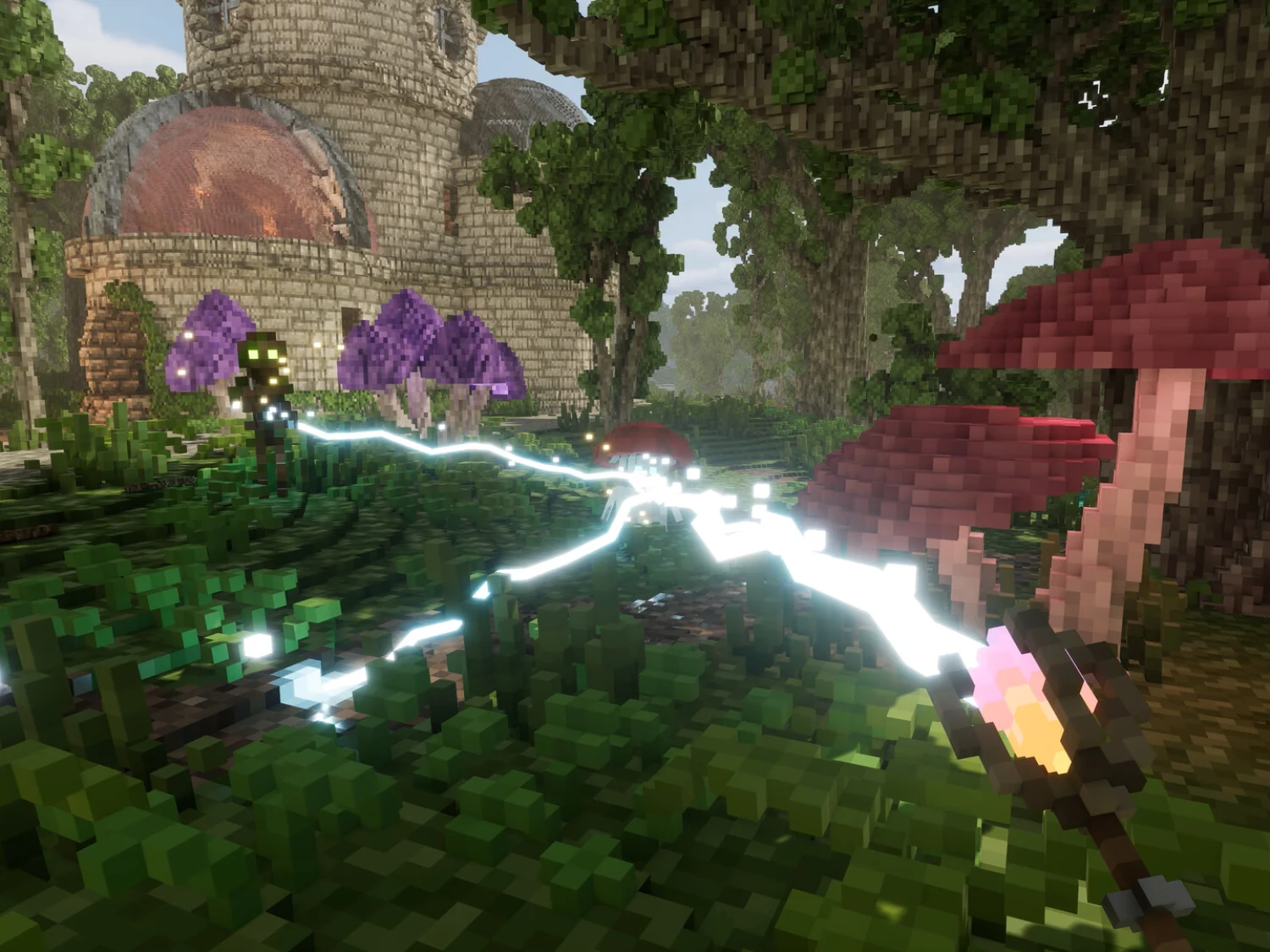
1. “Lay of the Land” offers a physics-heavy voxel sandbox experience with realistic environmental reactions and destructible terrain.
2. It features a procedural shape building system that allows for more natural and complex architectural designs beyond traditional grid-based construction.
3. The game emphasizes environmental manipulation for combat, enabling players to use the environment strategically against monsters and bosses.
4. Early reviews praise the depth of building mechanics but cite performance issues on certain hardware, with ongoing developer updates planned.
5. The game is solo-only with no multiplayer, focusing on a fully reactive, physics-based single-player adventure.
New Voxel Adventure Based On Physics
Recently, the long-anticipated game called Lay of the Land, created by solo dev Matt, went live on Steam. After a lot of fame on Patreon and YouTube, this game brings a fresh take, especially because it has physics that actually work. Normally in this kind of game, the world is made of blocks but doesn’t really act like real life—this one does, making every move feel more real. Plus, it has a cool discount: it costs $17.99 instead of $19.99 for the first two weeks. This immediately attracts players who wanna check out a sandbox game that feels more alive and unpredictable.
Innovative Building That Breaks The Mold
Instead of the usual blocky grids you see in sandbox games, Lay of the Land features a unique shape system. Like, instead of just squares, you can build with cylinders, cones, or sloped roofs which makes your structures look more natural and less like Lego sets. You can also change the landscape itself — carving roads or raising mountains with special tools. Inside your buildings, you are not just stuck with simple voxel blocks; you can place various furniture, turning empty shells into cozy homes or towering castles. The flexibility is astonishing for a voxel game and invites creative freedom.
Environmental Destruction and Combat
The game’s world isn’t just for exploring, it’s also a giant toolbox to fight enemies. You might chop down a tree to squash a monster or trigger a cave collapse to trap foes. You also have control over fire and water to manipulate the battlefield. Combat isn’t limited to melee; you can use ranged weapons or even magic. The loot system lets you try different gear setups, adding an element of experimentation. Because everything destructs realistically, battles are totally different every time, and a misfired spell might set a forest on fire or leave a big crater where you least expect it.
Player Reactions and Tech Challenges
- The community seems pretty happy overall, with a 76% “Mostly Positive” rating from over 260 reviews.
- Players praise the deep building options and physical interaction instead of menu-driven crafting.
- However, some folks are worried about how the game runs on hardware, especially the Steam Deck, where performance drops to 20-35 fps even on low settings. But the developer promises updates to fix these issues and make AI smarter, especially for dynamic and destructible terrain.
Price, Content, and Future Plans
For the cost, the game offers a lot of content. Not many multiplayer options are present intentionally, aiming for a solo adventure that really focuses on the physics-based world. Moving forward, the developer plans to improve the current features, making sure that the game’s bold claim of a fully physical environment holds true across different computers. Fans of sandbox survival games will definitely want to keep an eye on how it evolves, especially with ongoing updates that aim to smooth out technical hiccups and enhance gaming experience.

Leave a Reply