
Key Takeaways
1. Auroras are colorful displays in the sky created by charged particles colliding with Earth’s upper atmosphere.
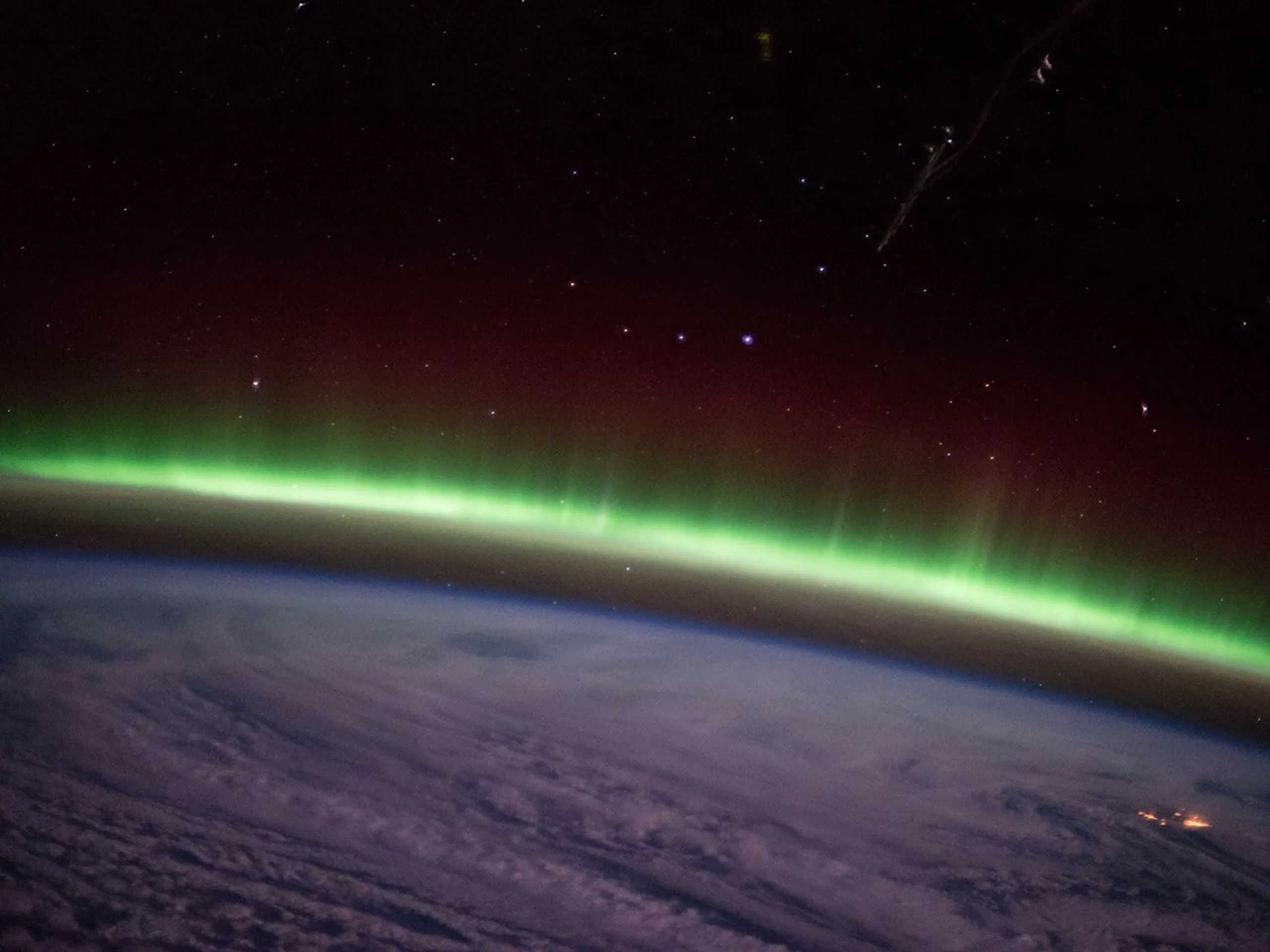
2. Auroral arcs appear as luminous curtains of light and a slender green line when viewed from space.
3. High-energy electrons from space interact with atmospheric atoms to produce auroras.
4. Auroral arcs are energized by Alfvén waves, which travel along Earth’s magnetic field lines.
5. Comprehensive observations using multiple instruments provided new insights into the conditions leading to auroral arcs.
When charged particles from beyond our planet hit Earth’s upper atmosphere, they create a colorful display in the sky. This event is known as an aurora.
Understanding Auroral Arcs
There exists a specific kind of aurora called auroral arcs. When viewed from the ground, these arcs appear like luminous curtains of light gliding across the nighttime sky. Observed from space, they manifest as a slender green line or arc that cuts through the atmosphere.
Auroral arcs are produced when high-energy electrons from space collide with atoms in Earth’s upper atmosphere. This interaction generates a unique natural light display. In essence, they are fueled by electric fields in space. But what exactly powers these electric fields? A group of scientists might have cracked the case.
The Role of Alfvén Waves
The researchers propose that auroral arcs are energized by a type of space wave known as Alfvén waves. These waves travel along the magnetic field lines of Earth. The scientists derived their findings from a simultaneous observation of an auroral arc that occurred in April 2015. This observation involved three instruments: NASA’s Van Allen Probes, the U.S. military’s Defense Meteorological Satellite Program F19 spacecraft, and ground-based cameras linked to NASA’s THEMIS (Time History of Events and Macroscale Interactions during Substorms) mission.
The simultaneous data from these three instruments offered a significant advantage. This allowed the scientists to view the same event from various angles over an extended period. Such comprehensive observation provided deeper insights into the space conditions that contributed to the formation of the auroral arc.
Source:
Link
Leave a Reply