
Key Takeaways
1. Solar events like flares and coronal mass ejections cause particles to move at high speeds, leading to solar radio bursts.
2. Energetic particles from these events can pose risks to astronauts and satellites outside Earth’s magnetic field.
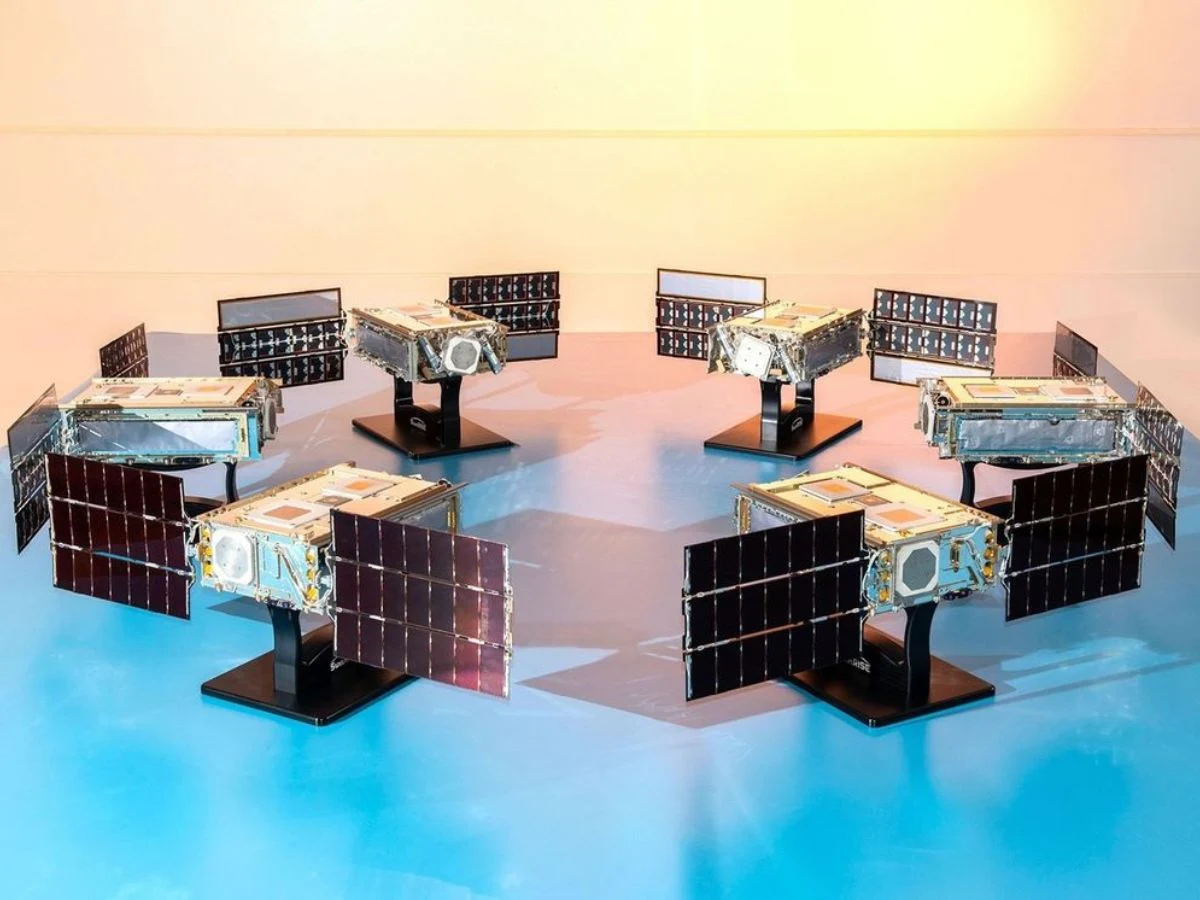
3. NASA’s SunRISE mission involves six small satellites working together as a large radio telescope to study solar radio bursts.
4. The mission aims to identify sources of radio bursts and track the paths of energetic particles to improve radiation event predictions.
5. SunRISE will launch on a United Launch Alliance Vulcan Centaur rocket and work alongside other heliophysics missions like STEREO, Parker Solar Probe, and Solar Orbiter.
During solar events such as solar flares or coronal mass ejections, particles are pushed to extreme speeds. This causes solar radio bursts to occur. The particles can move through the solar system but do so at a slower pace than the radio bursts.
Risks to Space Missions
These energetic particles can be dangerous for astronauts and satellites that are beyond the protective shield of Earth’s magnetic field. It is important to study these bursts and their formation to understand the effects of these radiation events.
NASA’s SunRISE Mission
This is the objective NASA is pursuing with SunRISE (Sun Radio Interferometer Space Experiment). SunRISE consists of six small satellites designed for a heliophysics mission. These satellites will be positioned in Earth’s orbit, approximately 6 miles (10 kilometers) apart.
They will collaborate as a large radio telescope by merging their signals through interferometry. The SunRISE mission aims to pinpoint the sources of the radio bursts and deduce the path taken by the energetic particles. This information will enhance the ability to predict the direction and effect of radiation events.
Launch Details
SunRISE is set to launch as a rideshare on a United Launch Alliance Vulcan Centaur rocket. It will operate alongside other heliophysics missions, such as NASA’s STEREO (Solar TErrestrial RElations Observatory), Parker Solar Probe, and the Solar Orbiter.
Source:
Link
Leave a Reply