
Key Takeaways
1. LG has introduced oxide LCD panels for laptops with variable refresh rates and lower energy consumption.
2. The oxide material allows the refresh rate to drop from 120 Hz to 1 Hz, significantly reducing power usage.
3. Oxide technology is not new; Sharp Japan’s IGZO technology was a pioneer in this field.
4. LG is producing these panels for high-end Dell XPS laptops and plans to increase production by 2027.
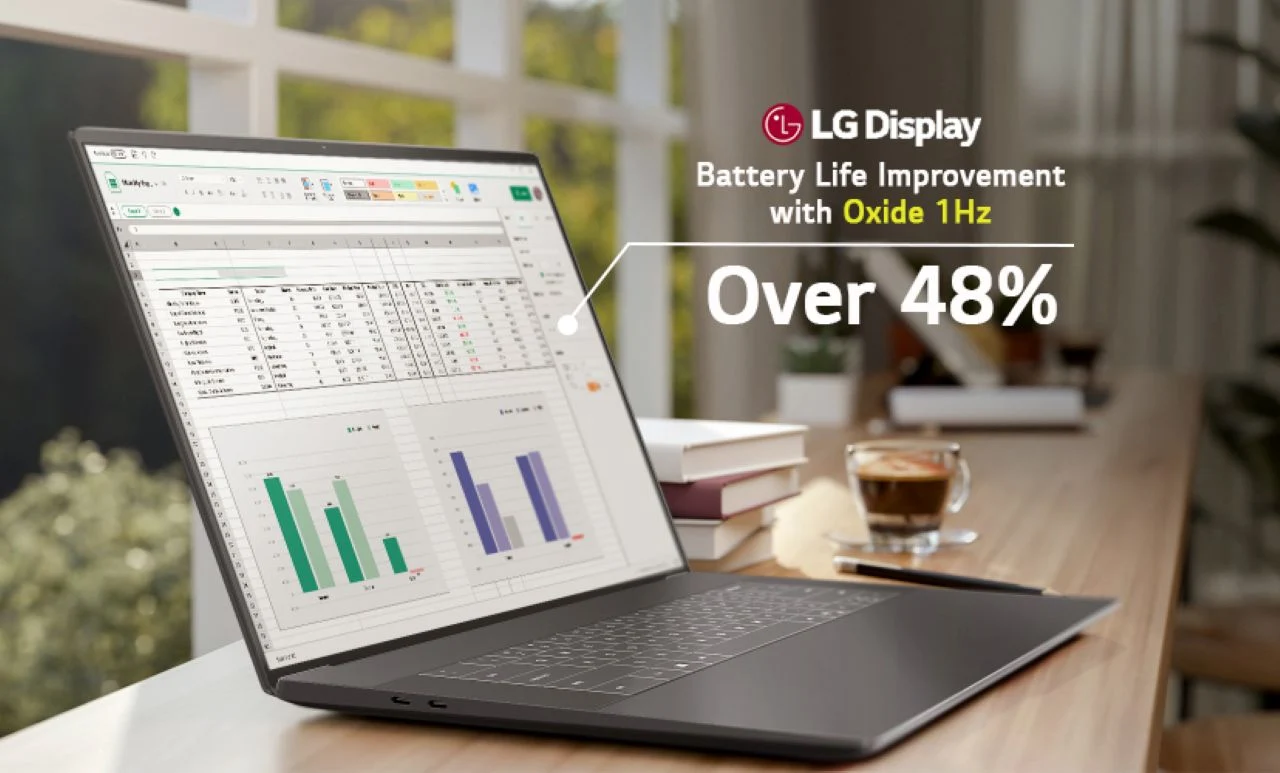
5. The new panels provide 48% more usage on a single charge, benefiting users of power-intensive applications.
LG has begun making oxide LCD panels aimed at laptops, boasting a variable refresh rate and lower energy usage compared to traditional versions. The oxide material used is unnamed, but it holds an electrical charge for a longer time, enabling the panel to cut its refresh rate from 120 Hz down to just 1 Hz. This feature leads to less power consumption, which means laptops can run longer on a single charge.
Historical Context
Oxide technology in LCD panels is not new. Sharp Japan was the first major player to create these panels with its IGZO technology for HDTVs, which also feature variable refresh rates and reduced power usage compared to standard panels. Today, these panels are found in Japanese smartphones like the Sharp Aquos R10 and on monitors available on platforms like Amazon. Additionally, BOE, a Chinese manufacturer, has showcased various oxide LCD panels, achieving refresh rates as high as 500 Hz for laptops while allowing as low as 1 Hz for smartphones.
Future Production Plans
LG is currently producing its oxide panels for certain high-end Dell XPS laptops, and the company plans to ramp up production by 2027. They claim that these panels offer “48% more usage on a single charge” compared to regular LCD displays, making them ideal for users who rely on power-intensive AI applications. Alongside the development of oxide LCD technology, display algorithms and other panel technologies were also fine-tuned to deliver these energy savings.
Source:
Link
Leave a Reply