
Key Takeaways
1. Ice exhibits flexoelectric properties, generating electricity when bent or distorted unevenly.
2. This finding enhances our understanding of ice and its role in the formation of lightning.
3. Uneven deformation of ice during collisions can create an electric charge, similar to that produced in lightning strikes.
4. At temperatures below −113 °C, ice can develop a thin ferroelectric layer that also produces electric charge.
5. The discovery may lead to new technologies utilizing ice as an active component in electronic materials.
A team of scientists has found that ice shows flexoelectric properties, meaning it can generate electricity when it’s bent or distorted unevenly. This groundbreaking finding, published in the journal Nature Physics, enhances our knowledge of ice, one of Earth’s most plentiful materials, and might even shed light on the phenomenon of lightning.
Understanding Lightning Formation
For many years, researchers have recognized that lightning forms from the interactions of ice particles in clouds. However, there has been no solid explanation for how these particles gain an electric charge, since ice doesn’t exhibit piezoelectricity, which is the ability to produce an electric charge through simple compression.
Flexoelectric Effect in Action
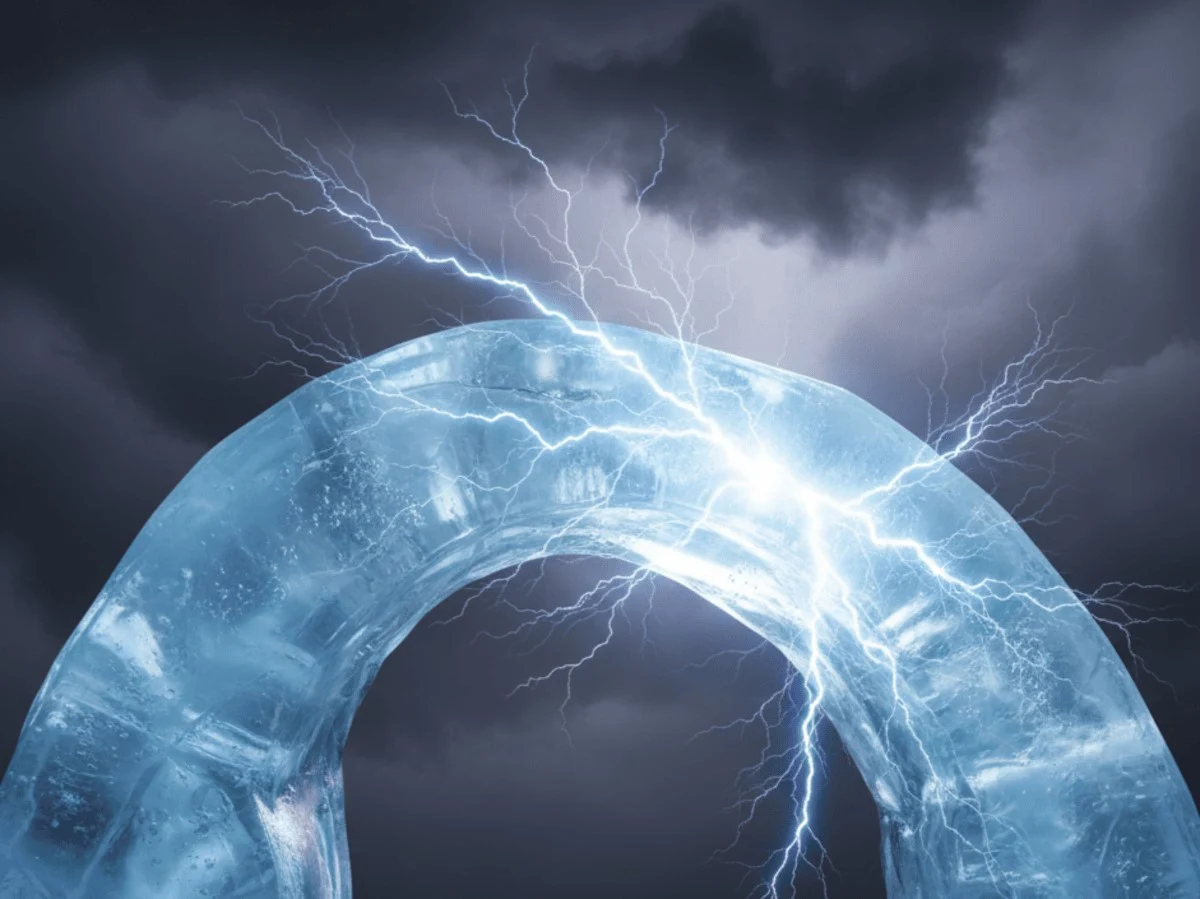
The recent research illustrates that when ice undergoes uneven deformation during collisions, it is sufficient to create an electric charge. The scientists calculated the amount of charge produced by this flexoelectric property of ice, finding it matched the levels of charge typically transferred during lightning strikes. This indicates that flexoelectricity is crucial in the electrification process of clouds.
Implications for Future Technologies
Additionally, the study revealed that at temperatures below −113 °C, a thin ferroelectric layer can form on the surface of ice, which also has the capacity to produce electric charge. This characteristic aligns ice with advanced electroceramic materials, such as titanium dioxide. The researchers believe this discovery could pave the way for new electronic materials that utilize ice as an active component.
Source:
Link
Leave a Reply