
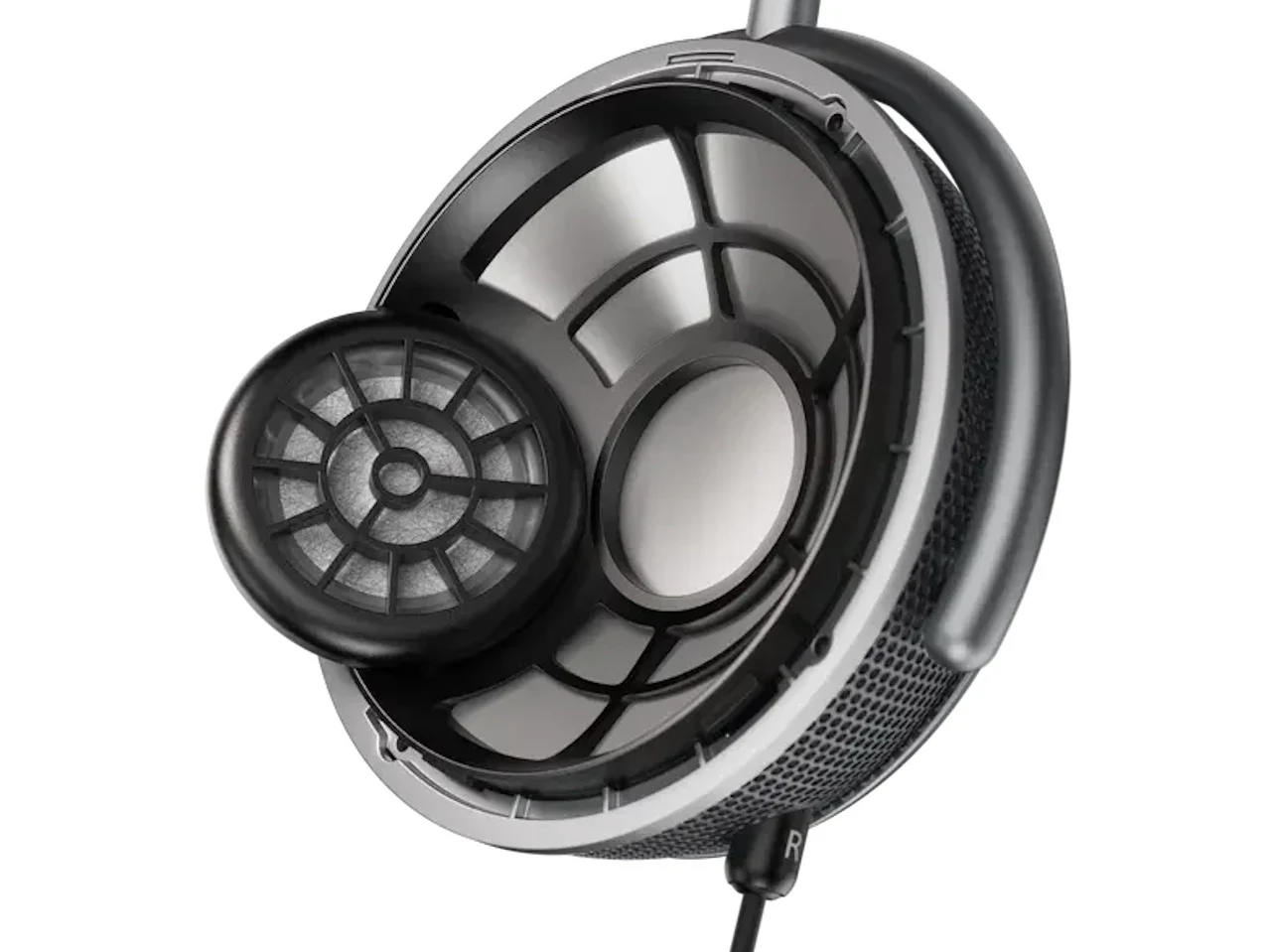
1. The Grell OAE2 headphones use angled drivers and FSFM technology to recreate the sound experience of listening to live performances, making sound appear to come from in front of the listener.
2. Designed by former Sennheiser engineer Axel Grell, the headphones feature bio-cellulose diaphragms with a broad frequency response of 12 Hz to 34 kHz.
3. Priced at $499, the headphones are available globally through select retailers, offering both unbalanced and balanced connection options.
Introduction to Grell OAE2
the Grell OAE2 open-ear headphones now can be bought in almost any part of the world after their release in Germany. Designed be Axel Grell, who used to work for Sennheiser, these headphones feature angled drivers specially made to make sound seem like its coming from the front of the listener. They cost $499 and can be bought from sellers like Grell, Bloom Audio, and Audio46.
Headphone Design and Sound Experience
Most traditional headphones have drivers right next to the ears, which is fine but doesn’t truly capture what it’s like to be in the middle of a live performance. For decades, headphones have tried to produce premium sound, but they don’t recreate the feeling of sounds coming from a stage or space in front of you, interacting with your outer ears first before hitting your inner ear.
Innovative Technology: FSFM
The company says its special technology called Front-sided Sound Field Modulation, or FSFM, helps with this issue. It uses 40 mm angled transducers so sounds can be experienced as if they are happening in front of you. According to Axel Grell, this gives the headphones a more natural feel. An interview with Axel reveals how they engineered these headphones to do this, making the sound more lifelike and immersive.
Technical Specs and Build
These headphones, weighing about 378 grams or 13.3 oz., are made in Germany. They have bio-cellulose diaphragms capable of covering a frequency range from 12 Hz to 34 kHz, with a low Total Harmonic Distortion of 0.05% at 1 kHz. They come inclusive of both 3.5 mm unbalanced and 4.4 mm balanced cables, which makes them compatible with various audio sources.
Leave a Reply