

Key Takeaways
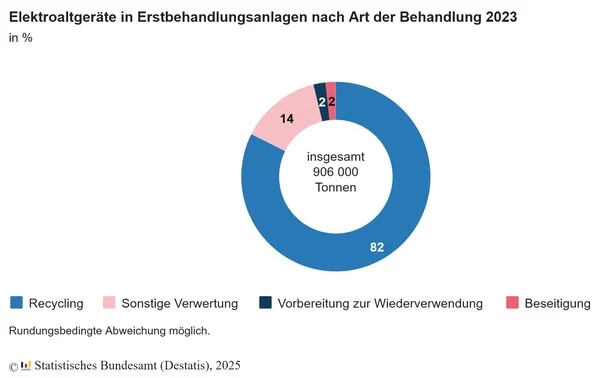
1. In 2023, Germany processed 906,100 tons of e-waste, achieving a recycling rate of 82.4%, with 747,000 tons successfully recycled.
2. The amount of e-waste processed in 2023 saw a slight increase of 0.6% compared to 2022 but remains below the peak of over one million tons during the pandemic in 2020.
3. Small appliances, such as remote controls and kettles, make up the largest share of e-waste at 31.7%, followed by large devices (27.7%) and heat exchangers (18.3%).
4. Recycling rates vary by category, with photovoltaic modules having the highest rate at 90.7%, while mass-produced small appliances have the lowest at 79.3%.
5. The Electrical and Electronic Equipment Act mandates that retailers over a certain size must accept e-waste returns, and consumers can also use municipal recycling centers and mobile collection services.
The recycling of electronic waste in Germany is a crucial matter for the shift toward sustainable raw materials. The German Federal Statistical Office (Destatis) reported that in 2023, 906,100 tons of e-waste were processed at certified primary treatment facilities. Out of this total, 747,000 tons were successfully recycled, resulting in a recycling rate of 82.4%.
Year-on-Year Comparison
When looking at the data from the previous year, 2022, the amount processed saw a slight rise of 0.6%. However, the overall volume is still significantly lower than the peak during the pandemic in 2020, when figures exceeded one million tons.
Breakdown of E-Waste Types
The data reveals that small appliances represent the largest share of e-waste. With 287,400 tons, they make up 31.7% of all processed electronic waste. This category encompasses common items like remote controls, electric toothbrushes, and kettles.
Following small appliances are large devices such as washing machines and e-bikes, which accounted for 250,700 tons (27.7%). Heat exchangers, including refrigerators and heat pumps, represented 18.3%, while small IT and telecommunications devices (like smartphones and routers) made up 10%.
Recycling Rates Variability
There are notable disparities in recycling rates among different categories. Photovoltaic modules achieved the highest recycling rate, with 90.7% of the 14,200 tons recorded being recycled. Conversely, mass-produced small appliances, the most frequently discarded type, had the lowest recycling rate at 79.3%.
The leftover 159,100 tons of non-recycled e-waste was either prepared for reuse (2.1%), used in alternative methods like energy generation (13.8%), or disposed of (1.7%) in landfills. It’s crucial to have separate collection systems in place to recover valuable raw materials like rare earth elements, copper, and gold.
Regulations on E-Waste Disposal
The Electrical and Electronic Equipment Act outlines the responsibilities regarding free e-waste disposal. Retailers and online stores with a sales or storage area larger than 400 square meters in the electrical sector (or 800 square meters in the food sector) are required to accept returns.
Consumers also have the option to use municipal recycling centers and designated collection points, including some mobile collection services.
Source:
Link


Leave a Reply