
Key Takeaways
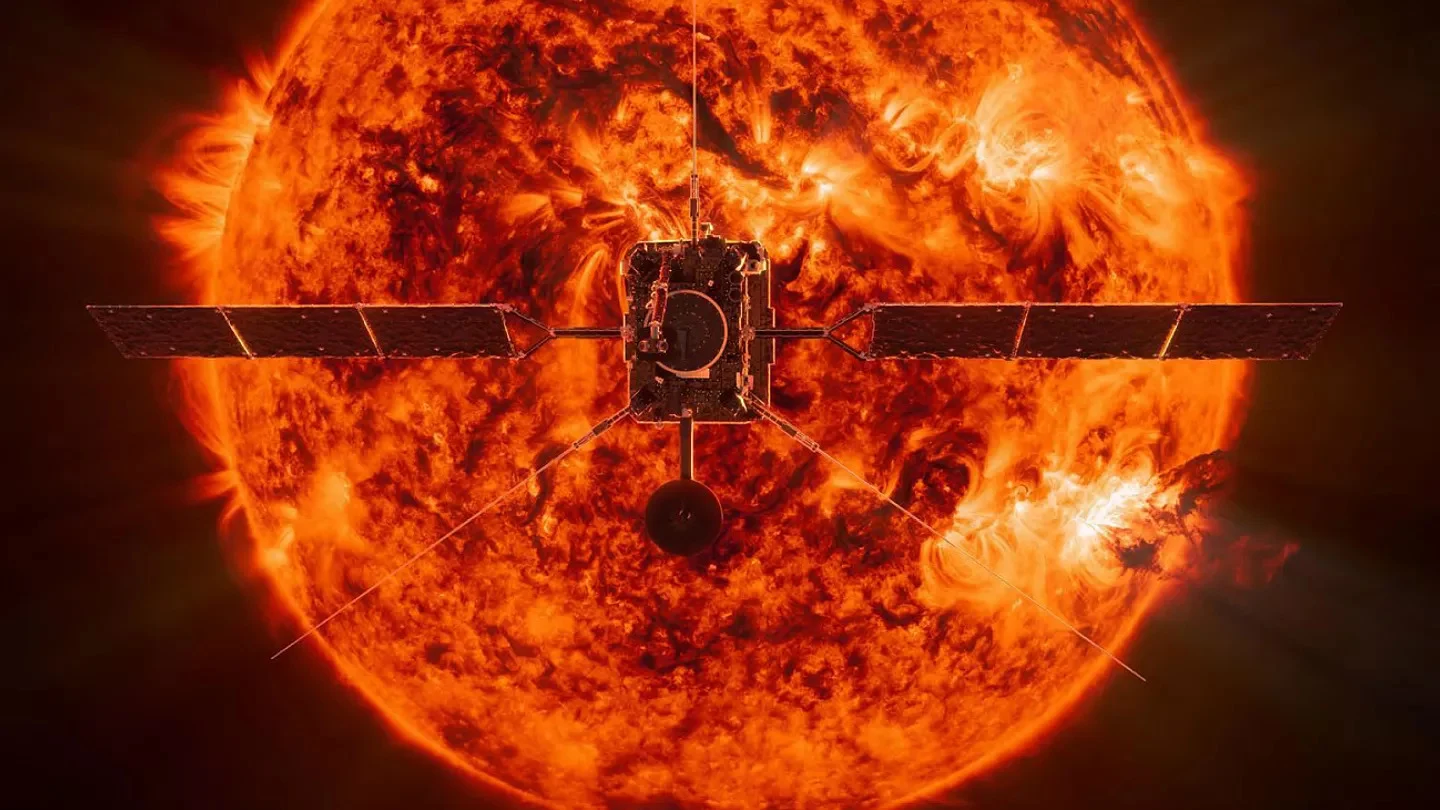
1. New images of the Sun’s South Pole were captured by the European Space Agency’s Solar Orbiter probe, revealing previously unknown details.
2. The Polarimetric and Helioseismic Imager (PHI) created detailed maps showing unusual magnetic field distributions, indicating a possible reversal of the Sun’s magnetic field.
3. The Sun experiences a normal 11-year cycle of activity, including solar minimum and maximum phases, where magnetic field reversals occur.
4. Sunspots and solar eruptions are indicators of the Sun’s activity levels throughout its 11-year cycle.
5. Further observations and sharper angles are needed for the Solar Orbiter to enhance understanding of the Sun’s phenomena.
Although the Sun has been shining on our planet for billions of years, helping life to develop, it still has many secrets. Recently, new images of the Sun’s South Pole came to light, showing a place that nobody really knew about before.
New Discoveries
These images were made public by the European Space Agency’s Solar Orbiter probe. Researchers managed to capture these stunning views by tilting the probe 17 degrees below the solar equator.
Captured on March 23, the images show details that were not visible before, like the solar winds and the magnetic field surrounding this star. Moreover, the instruments aboard the probe collected a large amount of data across different wavelengths, including both visible light and ultraviolet.
Instrument Insights
One of the key instruments used, called the Polarimetric and Helioseismic Imager (PHI), produced detailed maps of the Sun’s magnetic fields. These maps showed a very unusual distribution of magnetic polarities at the South Pole. If that sounds confusing, it actually indicates that a reversal of the Sun’s magnetic field might be on the way.
But there’s no need to panic about potential disasters. This kind of event is quite normal and happens roughly every 11 years, signaling the shift between solar maximum and minimum.
Cycle of Activity
This activity can be tracked using sunspots and solar eruptions, which vary in frequency throughout the cycle. At the start of each cycle, we enter a solar minimum, where activity is low. It then progresses to a maximum, during which the reversal happens, and finally returns to the minimum. The 11-year cycle is a result of the Sun’s dynamic processes.
For the Solar Orbiter, while these images are remarkable and enhance our understanding of the Sun, there is still more work to be done. The mission will require different and sharper angles of inclination to deepen its observations and insights regarding these phenomena.
Source:
Link
Leave a Reply