
Key Takeaways
1. The Milky Way’s stars revolve around a distorted galactic disk, which experiences wobbles over time, as shown by Gaia data from 2020.
2. Gaia has discovered a significant wave traveling through the galaxy, affecting stars up to 65,000 light-years from the center.
3. Evidence of the wave includes vertical rippling movements observed in the positions of young giant stars and Cepheids, which move in sync with the wave.
4. The wave’s cause is still unknown, with theories suggesting it may result from a previous collision with a dwarf galaxy or be linked to the nearby Radcliffe Wave.
5. A new data release from Gaia is expected in December 2026, promising to enhance understanding of star positions and movements in the Milky Way.
Over time, researchers have found that the stars in our galaxy revolve around its center within a distorted galactic disk. In 2020, Gaia showed that this warped disk experiences wobbles as time passes.
A New Discovery
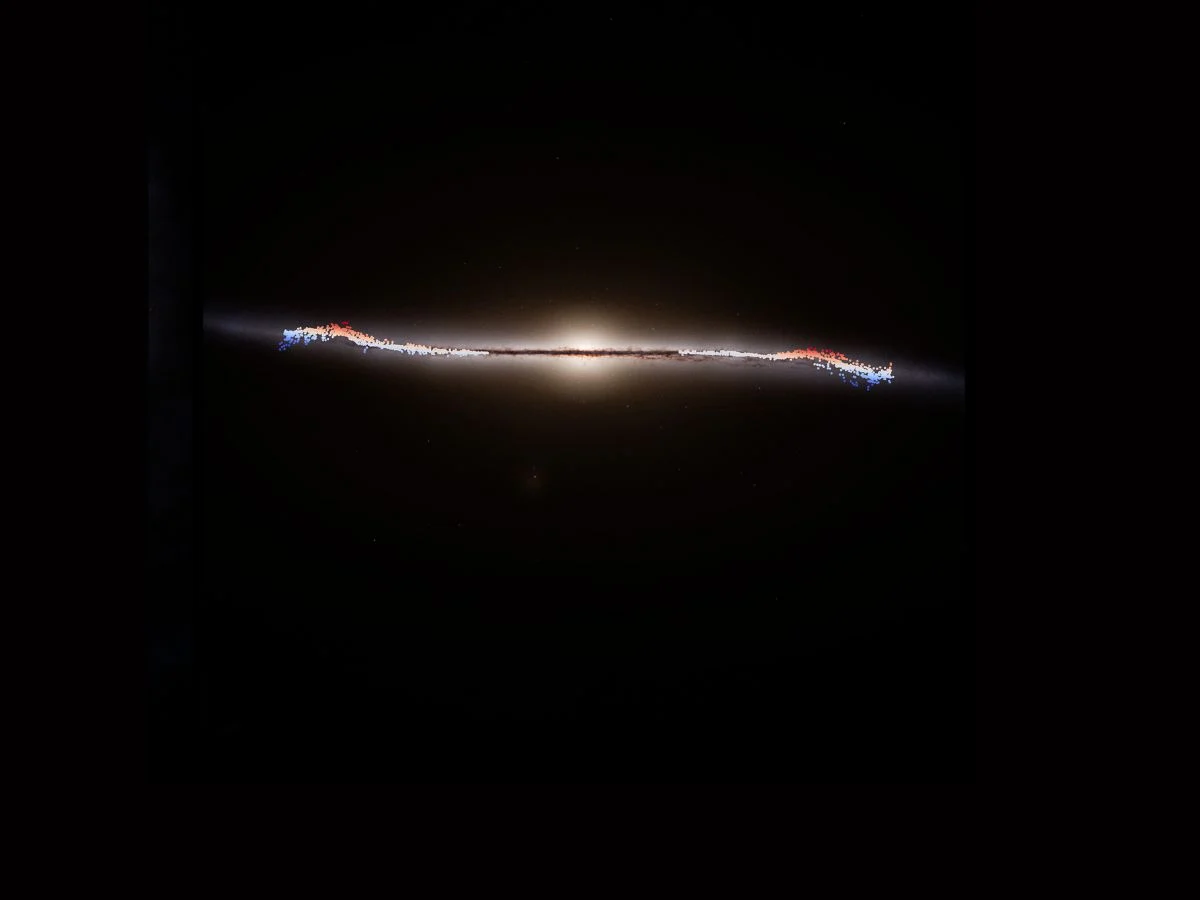
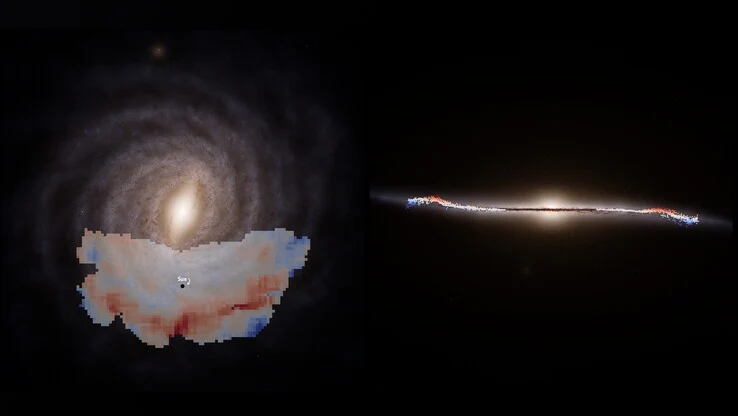
Recently, Gaia has uncovered that a significant wave is traveling through the galaxy. The data from Gaia indicates that this wave is extending outward from the galaxy’s core, affecting stars located as far as 30,000 to 65,000 light-years from the center.
Evidence of the Wave
Gaia’s three-dimensional edge-on mapping of the Milky Way has shown a vertical rippling movement. This serves as evidence for the existence of the great wave. Astronomer Eloisa Poggio and her team utilized Gaia’s data to monitor the wave’s motion.
They accomplished this by analyzing the locations and movements of young giant stars and Cepheids. Cepheids are a type of star that changes brightness in a predictable manner and can be observed from distant locations. The young stars and Cepheids seem to be moving in sync with the wave.
Possible Causes
Since these stars are created from interstellar gas, scientists believe that the gas that formed them was also moving in a similar wave-like manner. However, the source of the wave remains unknown. One theory suggests that it may have originated from a previous collision with a dwarf galaxy.
Another theory ties the wave to the Radcliffe Wave, which is a smaller ripple located 500 light-years away from our Sun. Researchers are eager to learn more. A new data release from Gaia is anticipated in December 2026, which will enhance our knowledge about the positions and movements of stars within the Milky Way.
Source:
Link
Leave a Reply