Tag: Gaia

  • Pleiades Star Cluster Could Be 20 Times Larger Than Expected

    Pleiades Star Cluster Could Be 20 Times Larger Than Expected

    Key Takeaways

    1. The Pleiades star cluster is now believed to be 20 times larger than previously thought.
    2. It is located about 444 light years away from Earth, with only 5 to 11 stars visible to the naked eye.
    3. Research using TESS and Gaia satellites has revealed that many Pleiades stars are spread across various parts of the universe.
    4. Scientists can determine the ages of stars by analyzing their rotation speeds, with younger stars spinning faster.
    5. Researchers are now investigating the origins of our Sun, potentially linking it to the Pleiades cluster.


    If you ever looked up at the night sky, you’ve seen the Pleiades, a cluster of shining stars. However, a new study suggests that this group might actually be 20 times bigger than we previously thought.

    Distance and Visibility

    The Pleiades cluster is situated about 444 light years from our planet, and it has been recognized for thousands of years. Yet, with the naked eye, we can see only between five and eleven of its stars. Thanks to the TESS and Gaia satellites, researchers have found that many stars from this cluster are located in various parts of the universe.

    Birth and Evolution of Stars

    Stars are formed in these clusters, but they drift apart over millions of years. By looking at the rotation speeds of known stars, scientists can determine their ages because younger stars spin faster than older ones. This is how they reached their new conclusions. Andrew Boyle, a researcher from the University of North Carolina at Chapel Hill, expressed this insight:

    “This study changes how we see the Pleiades, not just seven bright stars, but thousands of long-lost siblings scattered across the whole sky.”

    The Sun’s Origins

    Moreover, while many stars from the Pleiades are dispersed throughout space, scientists are now focusing on our Sun. There are still many unanswered questions about where it came from. With the methods they have developed, it could be possible to identify the cluster that birthed our star.

    The Astrophysical Journal, Eurekalert.

    Source:
    Link


  • ESA Discovers Massive Wave in Milky Way from Galaxy Collision

    ESA Discovers Massive Wave in Milky Way from Galaxy Collision

    Key Takeaways

    1. The Milky Way’s stars revolve around a distorted galactic disk, which experiences wobbles over time, as shown by Gaia data from 2020.
    2. Gaia has discovered a significant wave traveling through the galaxy, affecting stars up to 65,000 light-years from the center.
    3. Evidence of the wave includes vertical rippling movements observed in the positions of young giant stars and Cepheids, which move in sync with the wave.
    4. The wave’s cause is still unknown, with theories suggesting it may result from a previous collision with a dwarf galaxy or be linked to the nearby Radcliffe Wave.
    5. A new data release from Gaia is expected in December 2026, promising to enhance understanding of star positions and movements in the Milky Way.


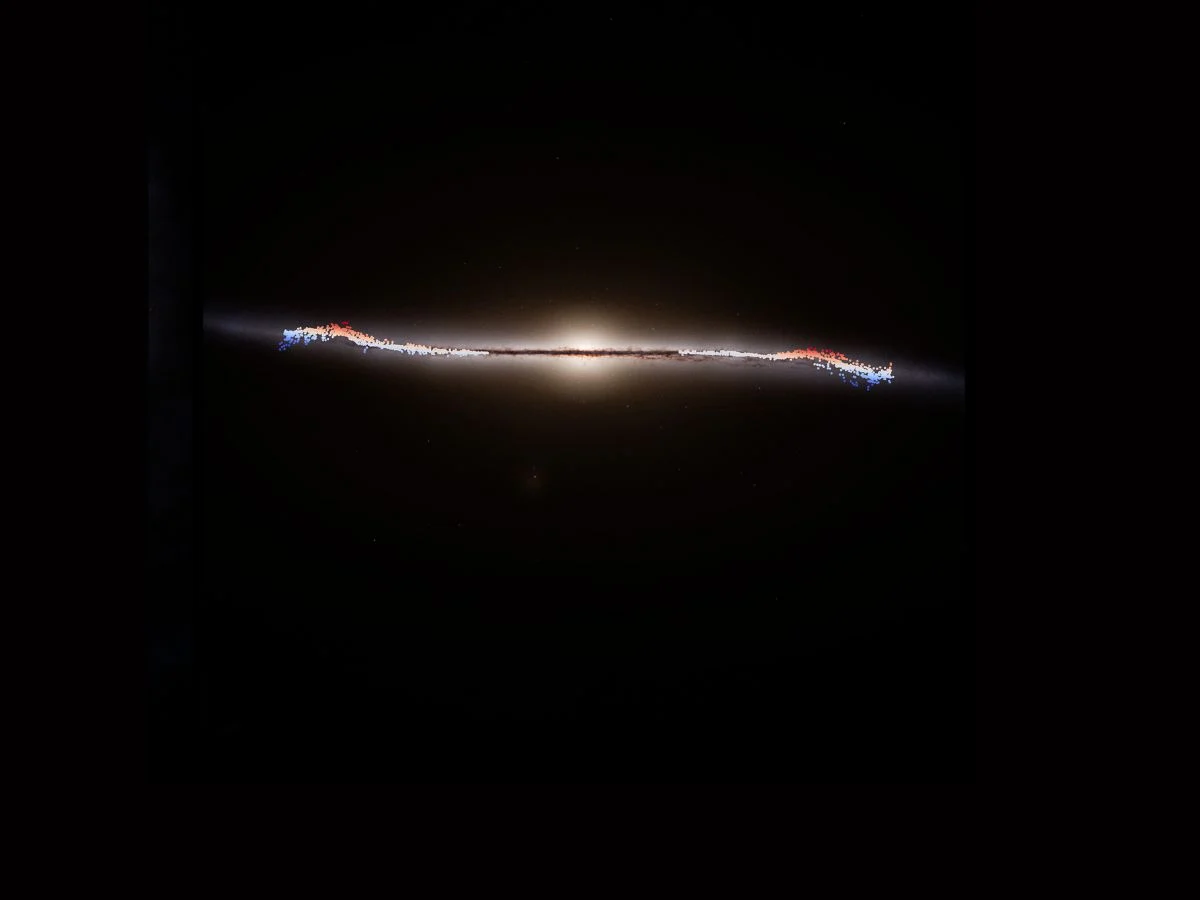
    Over time, researchers have found that the stars in our galaxy revolve around its center within a distorted galactic disk. In 2020, Gaia showed that this warped disk experiences wobbles as time passes.

    A New Discovery

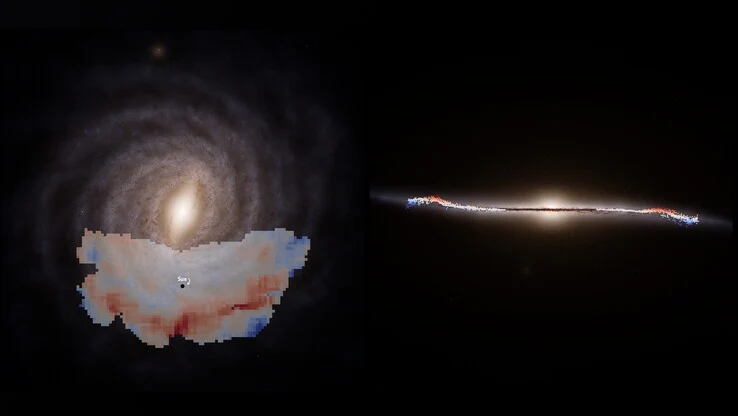
    Recently, Gaia has uncovered that a significant wave is traveling through the galaxy. The data from Gaia indicates that this wave is extending outward from the galaxy’s core, affecting stars located as far as 30,000 to 65,000 light-years from the center.

    Evidence of the Wave

    Gaia’s three-dimensional edge-on mapping of the Milky Way has shown a vertical rippling movement. This serves as evidence for the existence of the great wave. Astronomer Eloisa Poggio and her team utilized Gaia’s data to monitor the wave’s motion.

    They accomplished this by analyzing the locations and movements of young giant stars and Cepheids. Cepheids are a type of star that changes brightness in a predictable manner and can be observed from distant locations. The young stars and Cepheids seem to be moving in sync with the wave.

    Possible Causes

    Since these stars are created from interstellar gas, scientists believe that the gas that formed them was also moving in a similar wave-like manner. However, the source of the wave remains unknown. One theory suggests that it may have originated from a previous collision with a dwarf galaxy.

    Another theory ties the wave to the Radcliffe Wave, which is a smaller ripple located 500 light-years away from our Sun. Researchers are eager to learn more. A new data release from Gaia is anticipated in December 2026, which will enhance our knowledge about the positions and movements of stars within the Milky Way.

    Source:
    Link


  • Naked Eye Interstellar Visitor Could Soon Appear in Night Sky

    Naked Eye Interstellar Visitor Could Soon Appear in Night Sky

    Key Takeaways

    – 3I/ATLAS is an ancient celestial object, approximately three billion years old, traveling at 210,000 kilometers per hour.
    – Researchers at Oxford University are using updated computer models and data from the Gaia space observatory to study its origin in the Milky Way.
    – The object contains a significant amount of water ice, which may create a visible tail when it approaches the Sun.
    – Its exact path is not fully known, but it is expected to come near Mars, requiring further observations to determine its trajectory.
    – Studying 3I/ATLAS could provide valuable insights into the universe and events beyond our solar system.


    A few days back, an object from beyond the stars was detected within our solar system. Astronomers are keeping a close eye on it, as they think it might soon be visible to everyone without a telescope when it gets near the Sun.

    Its Age and Speed

    This celestial body, called 3I/ATLAS, might be one of the oldest things humans have ever seen. It’s estimated to be about three billion years old, zooming through space at an impressive speed of 210,000 kilometers per hour. Scientists suggest that it comes from a different part of the Milky Way than the area where we are currently located.

    Research Findings

    In more detail, researchers at Oxford University have created and updated a computer model to study this object. They use data from the Gaia space observatory, which helps pinpoint its origin in the “thick disk” of our galaxy, an area known for being the birthplace of many ancient stars.

    Composition and Visibility

    What truly fascinates researchers is the makeup of this interstellar visitor. It contains a lot of water ice, which may cause it to develop a tail when it gets close to the Sun, as the heat turns the ice into vapor. This sight would undoubtedly be amazing and visible to the naked eye.

    Even though this sounds like something from a sci-fi movie, similar to the comet C/2020 F3 Neowise, we need to proceed with caution. The exact path of 3I/ATLAS isn’t precisely known yet, but we do know it will come near Mars. More observations are essential to figure out its route through our solar system and whether it will create a stunning display over several days.

    Importance of 3I/ATLAS

    Besides this, the study of 3I/ATLAS will help scientists gain a clearer understanding of the universe and the events happening beyond our solar system. There’s no doubt that ongoing research will reveal new insights, even if certain unanswered questions linger.

    Source:
    Link