
Key Takeaways
1. NASA plans to send astronauts back to the Moon and establish a base there.
2. The Mobile Autonomous Prospecting Platform (MAPP) rover will analyze lunar dust and geology during the Artemis IV mission.
3. MAPP is equipped with scientific tools like the EDA and RESOLVE to study dust particles and their effects on the Moon’s surface.
4. Understanding lunar dust is crucial for astronaut safety and preparing for future space missions, including those to Mars.
5. While MAPP is not the first lunar rover, subsequent missions like the IM-3 mission in 2026 will continue lunar exploration efforts.
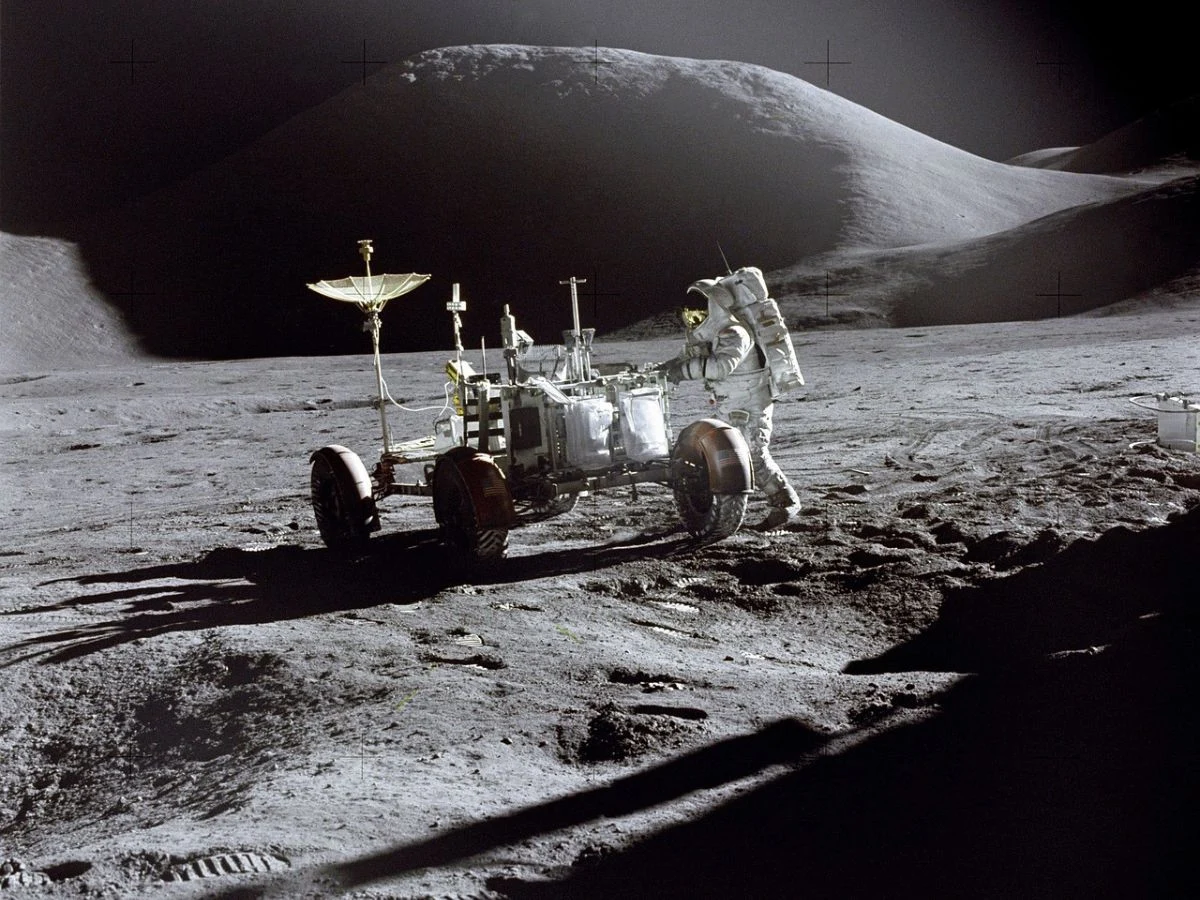
NASA has been working for many years on plans to start sending astronauts back to the Moon, with hopes of setting up a base there soon. To make this happen, numerous studies are needed to gain a better understanding of the Moon. To assist with the first missions, a rover, which might remind some of a droid from the Star Wars films, will be used by astronauts.
Introducing MAPP
This rover, called MAPP (Mobile Autonomous Prospecting Platform), is created by Lunar Outpost and will be sent to the Moon during the Artemis IV mission. While one might picture astronauts being followed by a droid like in Star Wars, MAPP will serve a totally different purpose.
Analyzing Lunar Dust
MAPP won’t be battling foes; instead, it will analyze lunar dust and the geology of the Moon. It will carry the DUSTER tool, which includes the EDA (Electrostatic Dust Analyzer) and the RESOLVE tool (Relaxation SOunder and differential VoltagE). These devices will examine dust particles and their density, helping to understand how human activities might affect the Moon’s surface.
NASA emphasizes the importance of these studies, stating they are crucial for recognizing and preparing for the risks associated with dust particles on space suits. Nicky Fox, the associate administrator of the Science Mission Directorate at NASA Headquarters in Washington, explained:
The Role of Science in Space Exploration
“The Apollo Era showed us that as humanity ventures further from Earth, our reliance on science to safeguard and sustain life on other planets increases. By sending these two scientific instruments to the lunar surface, our testing ground, NASA is paving the way for a guide to interplanetary survival that will ensure the health and safety of our spacecraft and human explorers as we embark on our grand adventure back to the Moon and eventually to Mars.”
Although MAPP will not be the first rover to land on the Moon, as a second rover is planned for launch in 2026 as part of the IM-3 mission, caution is needed. Each mission carries a considerable risk of failure.
Source:
Link
Leave a Reply