
Key Takeaways
1. The Peregreen 3 drone achieved a record speed of 585 km/h, surpassing the previous record by 27 km/h.
2. It features a significant power boost with a peak power draw of 16.2 kW, nearly double that of its predecessor.
3. The drone weighs 2.77 kg, which is heavier than earlier models, to support the increased power.
4. Design challenges included balancing issues and a switch from a carbon fiber frame to a 3D-printed body, along with the introduction of a water cooling system.
5. The battery lasts about 23 seconds at full throttle and typical flight times are around 110 seconds before needing to land.
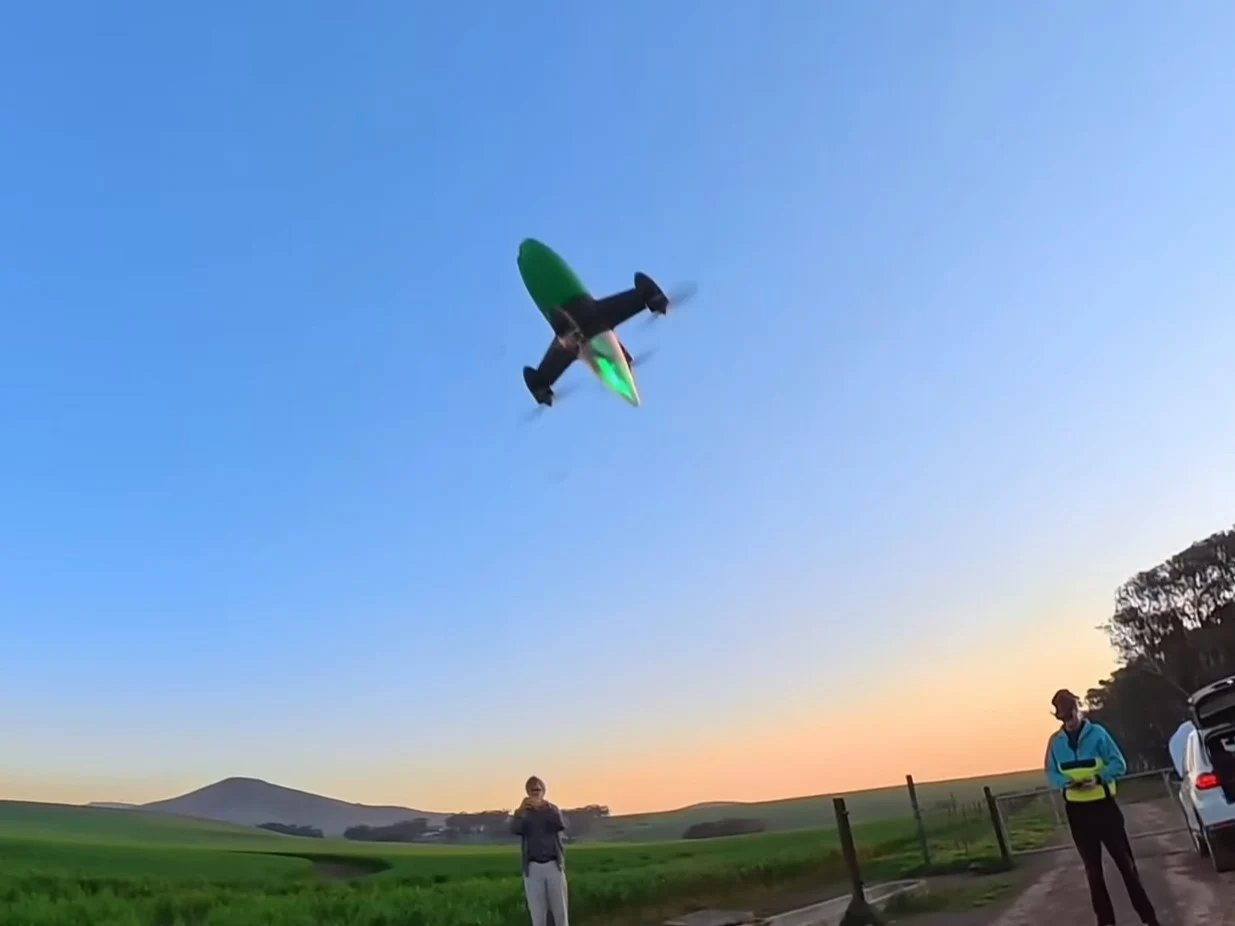
DIY engineer Mike Bell and his son Luke Maximo Bell have taken back the title for the fastest drone in the world with their latest creation, the Peregreen drone, now in its third version. This new quadcopter achieved a top speed of 585 km/h, surpassing the previous record set by a Swiss team by 27 km/h.
Major Power Boost
The Peregreen 3 shows a huge improvement in power compared to the earlier models. It boasts a peak power draw of 16.2 kW, which is nearly double the 8.9 kW of Peregreen 2 and over three times the original drone’s 5.2 kW. This impressive power comes from a battery that can deliver 16 kW.
Weight vs. Power
To achieve this power, the engineers had to compromise on weight. The Peregreen 3 weighs 2.77 kg (6.1 lbs), heavier than the Peregreen 2, which weighed 1.85 kg (4.1 lbs). To convert this power into speed, the drone is equipped with custom APC propeller blades designed with a high pitch, which was crucial to prevent the tips of the blades from exceeding supersonic speeds.
Design Challenges
The design of the drone went through various changes. Initial tests that used a carbon fiber frame showed issues with balance and GPS signals. These issues were addressed by attaching the GPS receiver directly to the camera module. After finding the frame inadequate, the team switched to a 3D-printed body. Unfortunately, an air-cooled prototype caught fire, prompting the design of a small 50 ml water cooling chamber that proved to be much more effective than air cooling, allowing them to eliminate air vents and lower aerodynamic drag.
In the end, the drone reached a speed of 585 km/h (363.5 mph). However, this extreme performance does come with drawbacks; the battery lasts only about 23 seconds at full throttle, and typical flights are limited to around 110 seconds before needing to land with 20% battery remaining. Although the new record has been documented, it hasn’t yet been validated by Guinness World Records. However, since this isn’t their first attempt, it’s likely they will receive recognition for this achievement.
Leave a Reply