
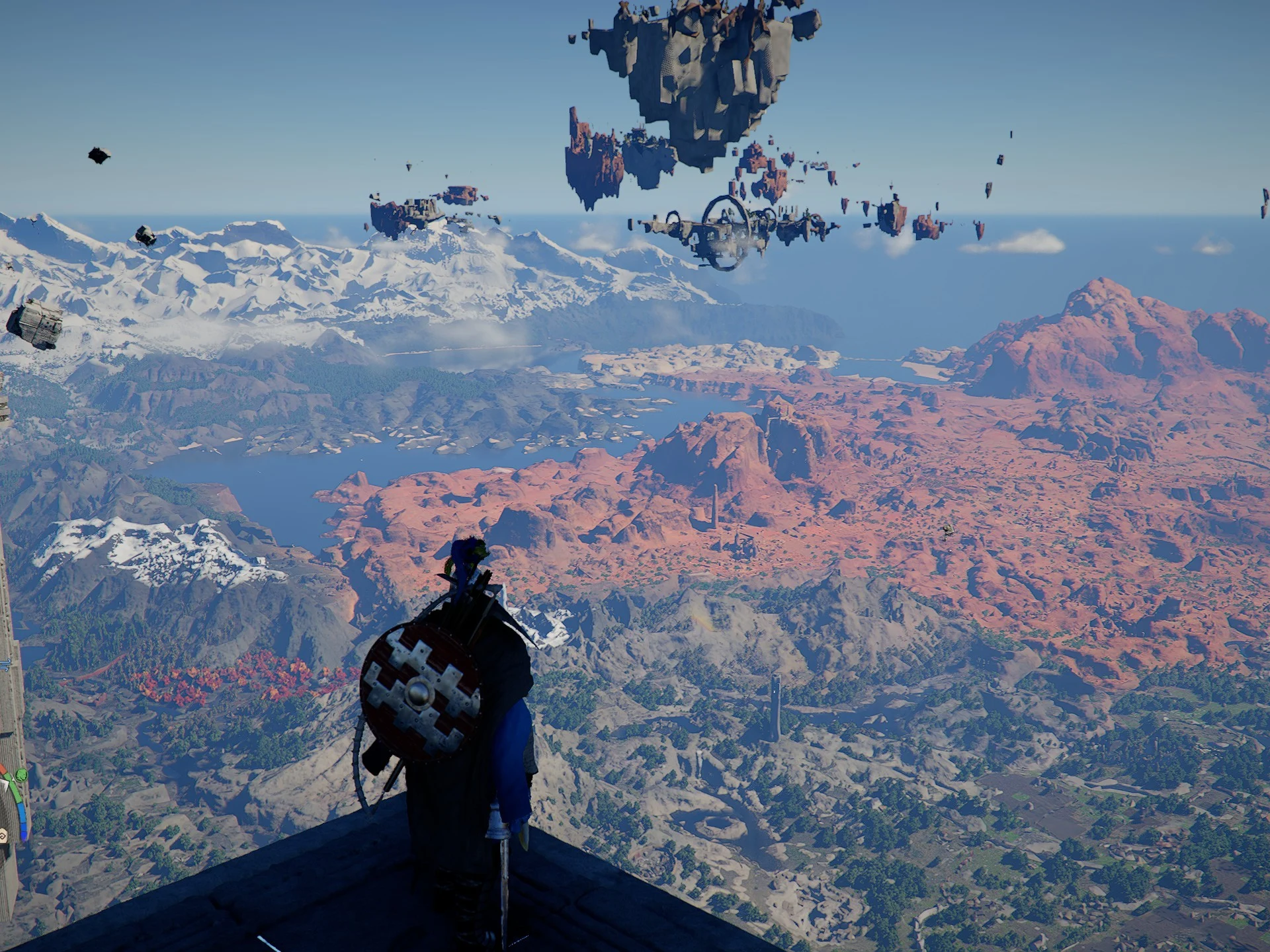
1. Crimson Desert offers a vast, visually appealing open world with complex systems, but its quest design often lacks depth and meaningful integration of exploration.
2. The game combines elements from titles like Assassin’s Creed, Zelda, and Breath of the Wild, but is limited by a linear narrative and restricted decision-making options.
3. While delivering engaging combat and challenging boss fights, some gameplay mechanics, like meal preparation, can become frustrating due to menu navigation and animations.
4. The game’s broad scope and systemic features may appeal to players interested in witnessing industry trends firsthand, but its repetitive quests and shallow moments reflect modern gaming’s formulaic tendencies.
Remembering the Launch of Fallout 3
I remember the moment when Fallout 3 was first released—holding that special lunchbox, and knowing I was in for some serious gaming sessions over the next couple of days. Back then, I was still young, my responsibilities minimal, and every dollar I spent on games felt like a great value for the hours of fun I would get. But now, in 2026, things have changed quite a bit: I have a job, a mountain of games to play, and a lot more options to choose from. So, every gaming choice is now measured against other activities and a huge library of titles, not just the fun of playing itself.
Crimson Desert: A Industry Trend Snapshot
Much has been said about Crimson Desert already, including some of our own impressions. I’m not here to declare if the game is outright good or bad but rather to acknowledge that it might turn out to be a game worth trying, especially for those curious about recent big industry trends, even if not paying full price. When compared to upcoming titles like Grand Theft Auto VI, Crimson Desert could be seen as a candidate for the zenith of open-world games, featuring complex systems, boss battles, and camp management features. The game seems to tap into modern gaming’s appetite for rich, varied experiences, which makes it an interesting one to watch or play firsthand.
Different Perspectives on Crimson Desert
Approaching Crimson Desert is like viewing it from several different lenses. Some might say it’s a blend of Assassin’s Creed and Zelda: Tears of the Kingdom—in terms of exploration and open-world mechanics—though it’s immediately clear that the game is rooted in the online role-playing genre, especially with Black Desert Online’s influence. The story remains linear, no choice-driven branching here, which might be seen as a missed opportunity—imagine being able to strike a deal with a criminal instead of always turning them in. The protagonist, Kliff, guides us through his story vividly, but players don’t get to make decisions that affect the narrative arc directly.
Choices and Systems in Gameplay
On the systemic front, the game offers plenty of decision points. You can’t always settle conflicts peacefully, but you are free to pick how to handle combat situations. Expanding camps or taking control of other main characters is something you can do within specific limits, using a camera zoom similar to GTA V. As the game shows its inspiration, flying Abyss or wings, it echoes moments from Breath of the Wild and Tears of the Kingdom, emphasizing freedom and vertical exploration. It’s interesting how these elements, especially with wings and floating abilities, contribute to a more immersive experience, yet also highlight the game’s familiar design influences.
Storytelling and Exploration
While it’s understandable for games to follow a set story path, Crimson Desert as an action-adventure sometimes feels limited when the open world is inviting to explore but does not significantly influence the story. For instance, a quest involving a saddler wondering about how a saddle was received by a customer ends in a rather unremarkable fashion, with dialogue that could have been more meaningful. Despite the satisfaction shown by the customer, the ending feels somewhat hollow, missing an opportunity to add emotional weight or depth. Many quests suffer from similar repetitiveness, lacking meaningful engagement and emotional impact, which is unfortunate given the potential of such a vast world.
Quest Design and Player Engagement
- Repetitive quests aren’t all bad—they can be relaxing and help players learn about the game world.
- However, Crimson Desert seems to waste some of the player’s time, especially compared to modern online RPGs that manage to keep presentation quality high even during simple tasks.
- Even with its flaws, the game’s exploration remains a standout, offering visually stunning landscapes and atmospheric cities.
Gameplay Depth and Combat
In terms of gameplay, Crimson Desert provides both breadth and depth—particularly with its combat system and tough boss fights. When things get too hard, players can level up or upgrade their gear, similar to Dark Souls or Elden Ring, where preparing meals for health regeneration adds a strategic touch. Preparing these meals is animated, with Kliff presenting the finished dish, which is a nice detail. But navigating menus and watching animations for every meal can become tedious, gradually shifting from engaging to frustrating as the game progresses. Such shifts are indicative of how modern games sometimes struggle to maintain player enjoyment during repetitive tasks.
Reflection on Gaming Preferences
Back in my teenage years, Crimson Desert would probably have felt more exciting and immersive than it does today. That’s the reality of changing priorities and the growth of alternative entertainment. The phrase “It’s not you, it’s me,” feels fitting—it’s about how our relationship with games and time itself evolves. Crimson Desert isn’t terrible; there are moments where it genuinely shines, offering a complex, expansive experience. Nevertheless, it’s also a reminder of how modern game design can sometimes be more about quantity than quality—full of hype, patches, and updates that shift difficulty levels unexpectedly. That is the gaming landscape of 2026—sometimes under the early access or ongoing development model, which means patience and updates are the norm rather than the exception.
Final Thoughts
While Crimson Desert may not be perfect, it undeniably stands out for its scale and scope. It’s a game that, despite some shallow moments, offers a mixture of compelling combat, exploration, and beautiful environments. Like many modern titles, it’s a reflection of a broader industry in flux—constantly evolving, sometimes overhyped, but still capable of delivering memorable experiences for players willing to look past its flaws.
Leave a Reply