
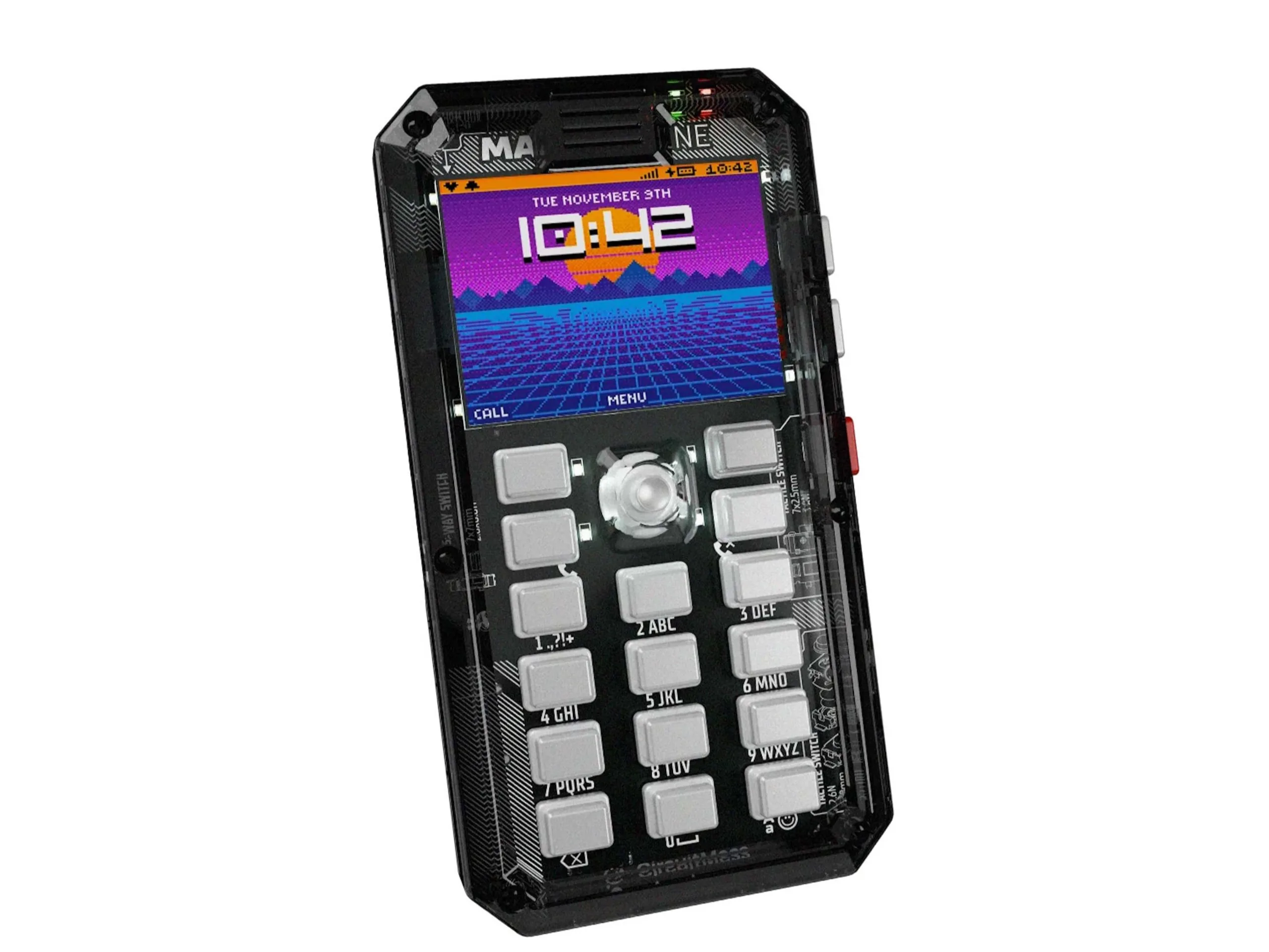
– Makerphone 2 is a modular, solder-free DIY mobile device with 4G LTE and phone-call capability.
– It ships with multiple expandable modules (infrared, camera, speaker, LEDs, environmental sensor, and a perfboard for custom sensors).
– It runs a non-Android/非-Qualcomm et al. solution, focusing on modular hardware rather than a traditional smartphone OS.
– Crowdfunding launches in Q2 2026 with a super early bird around $99.
CircuitMess might already ring bells for some, and the DIY gadget maker now brings a fresh item to the table. The so-called Makerphone 2 is a DIY mobile phone, yet the producer calls it both a mobile phone and a smartphone. In this case, the line between the two isn’t crystal clear. That’s partly because the concept itself is modular, so the feature set hinges on which modules get used. A handful of modules are included already. There’s an infrared module for operating older televisions, for example. Other add-ons include a camera module, a 2-watt speaker, a LEDs module, a sensor module for reading temperature and humidity, and a perfboard to hook up personal sensors.
Modular design and compatible tech
Indeed, this is not built around a standard Qualcomm or MediaTek SoC, and you can’t run a conventional Android OS on it. The maker states that Makerphone 2.0 can be assembled without any soldering know-how and should be fairly painless to assemble. It ships with 4G LTE cellular support, which also enables ordinary phone calls. The project is planned to run a crowdfunding push in Q2 2026, targeting a launch by the end of June. Folks backing the campaign can lock in a super early bird price of $99 for a symbolic dollar.
What’s in the box and future expectations
Users can expect a platform that prioritizes adaptability over rigid specifications, with the ability to swap in modules to tailor the device to personal needs. The use-case spectrum ranges from educational tinkering to practical everyday use, but the exact performance and supported features will scale with the modular lineup. The absence of a traditional smartphone OS means enthusiasts may experiment with bespoke firmware or lightweight, non-Android software tailored to the hardware.

Leave a Reply